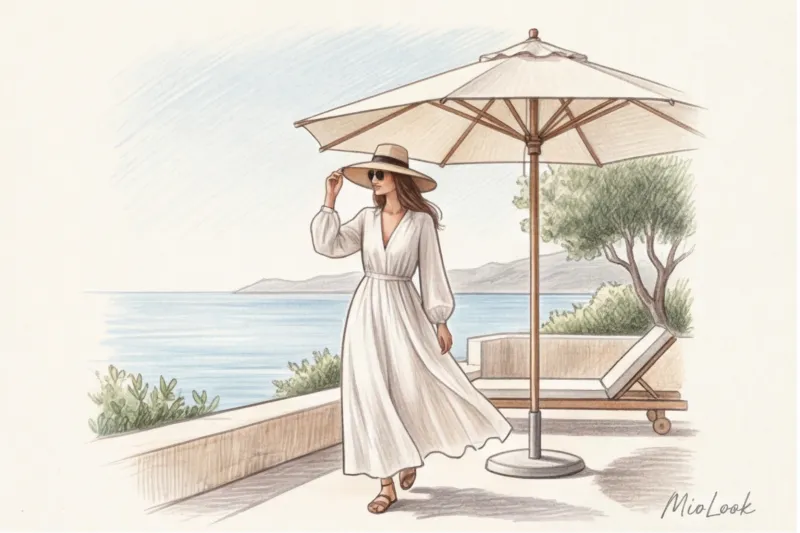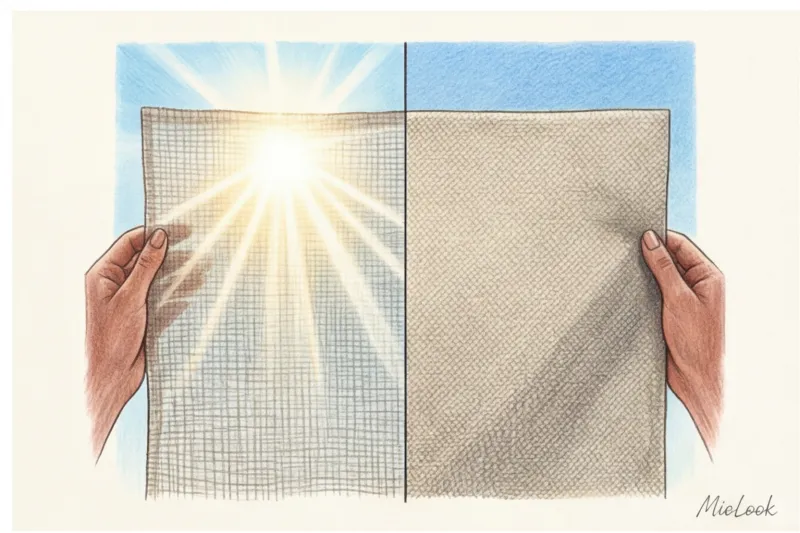
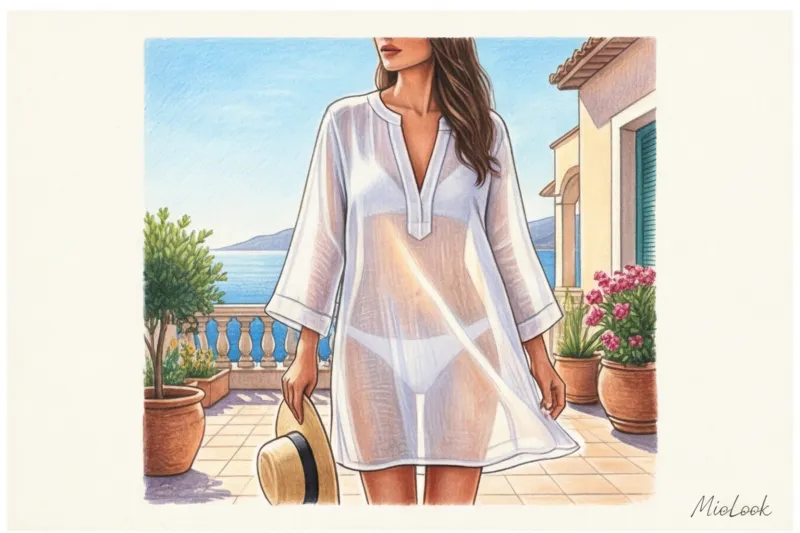
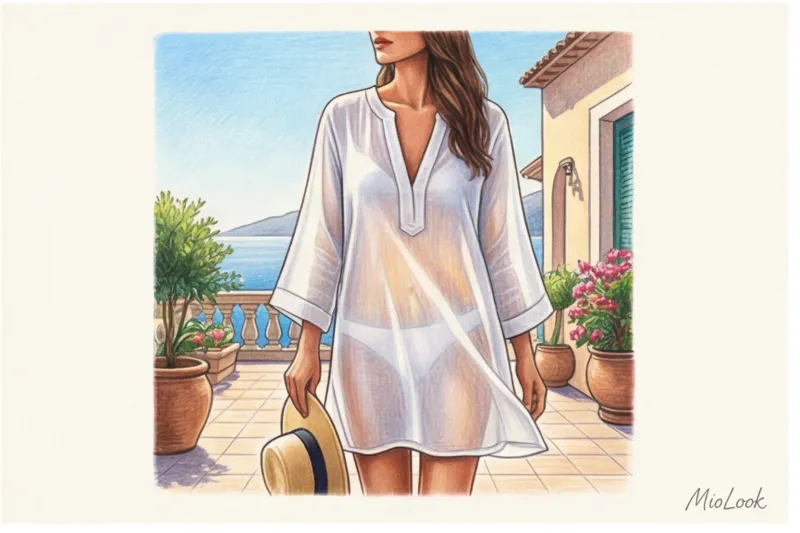
Last summer, a client called me in tears. "Darina, I don't understand! I spent the entire day on a yacht in a full-length white linen tunic, and by evening my shoulders were covered in terrible blisters." This is a classic situation I encounter as a stylist every season. We're conditioned to think that any long garment automatically protects us from UV rays, and white is the best color for scorching heat. Spoiler alert: this is a dangerous misconception.
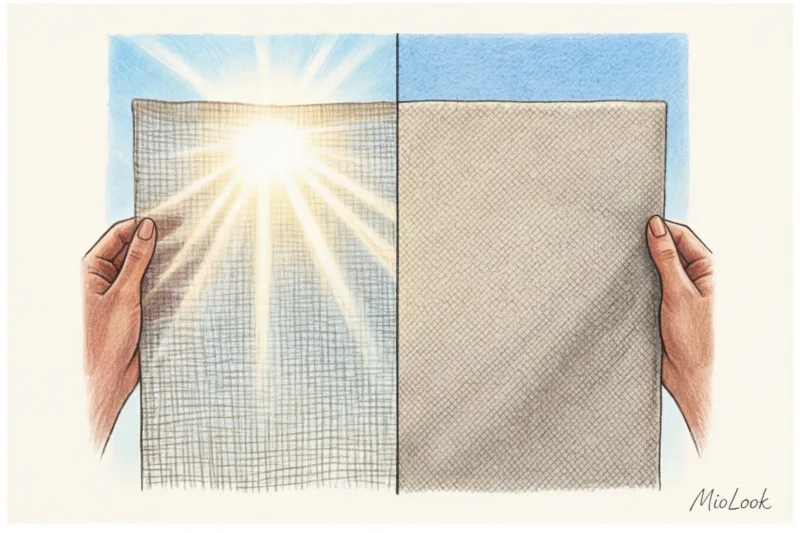
A regular white cotton t-shirt doesn't protect your skin as well as the cheapest SPF 10 sunscreen. If you're interested in the best fabrics for summer clothing, you can check out our detailed a stylist's guide on this issue And today we will take a closer look sun protection fabrics I'll share my experience as a colorist and explain how to find a healthy compromise between comfort at 30°C, a beautiful palette, and real protection against photoaging.
UPF vs. SPF: How Sun Protection Fabrics Work
We've all learned the acronym SPF (Sun Protection Factor) from sunscreen bottles, but when it comes to clothing, you need to look for a different marker—UPF (Ultraviolet Protection Factor). The difference is crucial: SPF indicates the time it takes for your skin to burn, while UPF measures the specific percentage of UVA and UVB rays a fabric can block.
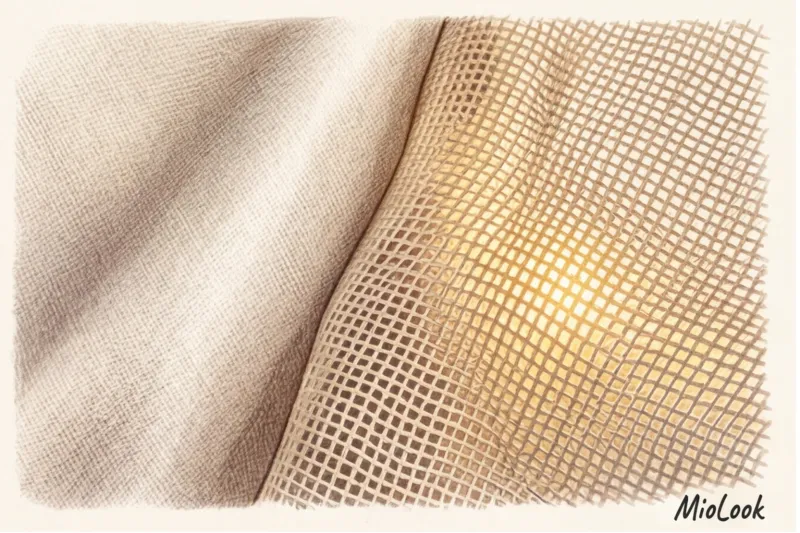
According to data Skin Cancer Foundation (2024) Clothing has historically been the first and most reliable barrier against UV radiation. But not every item works as a shield. Over 12 years of working with wardrobes, I've developed a golden "Rule of Exposure" for myself and my clients. Hold your summer item up to a lamp or bright sunlight. If you can clearly see the light source through the fibers, the UV rays are already bombarding your skin unimpeded.
In addition, the level of protection drops dramatically in two cases:
- Tension. When you wear a tight top, the fibers of the fabric stretch, creating micro-windows for UV rays.
- Getting wet. Wet cotton fabric loses its optical properties. Water fills the spaces between the threads, turning the fabric into a kind of lens. The UPF of a wet white T-shirt drops to 3.
This is where the "closed body = protected body" rule breaks down. What matters isn't the presence of the fabric itself, but its physical characteristics.
The White Linen Myth: Why Summer Classics May Be Letting You Down
Walk into any mass-market store like H&M or Zara in June, and you'll be greeted by endless racks of snow-white, thin linen and fine cotton. "Wear white in the heat!" fashion magazines scream. Yes, from a physics perspective, white reflects visible light and generates less heat. But ultraviolet light is an invisible spectrum.
A white cotton T-shirt or a gauze linen shirt allows up to 20% of UV rays to pass through (its UPF is around 5-7). By comparison, classic blue denim blocks 99% of the radiation and has a UPF of around 1700.
That same client on the yacht got sunburned precisely because she chose the finest bleached linen and draped it over her damp swimsuit. The water and the loose weave of the white threads created a magnifying glass effect. If you're planning a long walk in the blazing sun, a tour of ancient ruins, or a trip to sea, a thin white shirt will be your worst enemy.
Your perfect look starts here
Join thousands of users who look flawless every day and create safe summer capsules with MioLook.
Get access — €0.99 onceTop 5 Summer Fabrics with Natural UV Protection
So how should you dress to avoid going crazy in thick denim without getting sunburned? The secret lies in choosing the right materials with a natural barrier. Here's my list of favorites that provide natural protection and allow the body to breathe.
Unbleached cotton and thick linen
Pay attention to the word "unbleached." Raw, untreated linen and cotton (oatmeal or kraft fabrics) retain natural lignins—polymers that plants use as their own shield against UV radiation. These polymers are destroyed during the chemical bleaching process. Therefore, choose items made of dense, unbleached linen: they hold their shape well and provide much better protection.
Thick silk
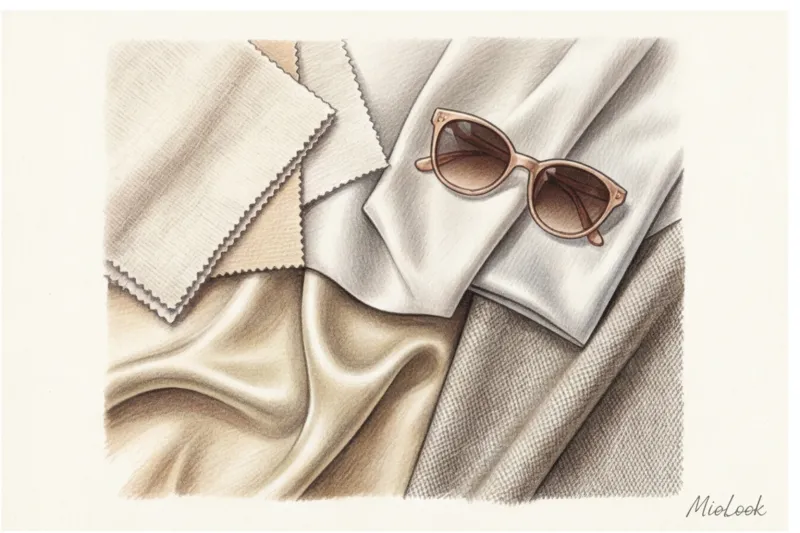
Silk has a unique ability to reflect light thanks to the structure of its fibers. But there's a catch. Translucent chiffon won't save you. But heavy matte crepe de chine or thick satin work beautifully. Silk feels pleasantly cool on the skin, making it ideal for urban summer looks when you want to look classy and feel protected.
Innovative viscose and lyocell (Tencel)
Lyocell (often sold under the brand name Tencel) is my absolute favorite for summer capsules. It's a man-made fiber made from wood cellulose. The production technology ensures the yarns are perfectly smooth and dense. High-quality Tencel with a density of 180 g/m² or more forms beautiful, heavy folds, creating a reliable physical barrier against the sun, yet is breathable better than cotton.
Color Matters: How Palette Affects UPF Levels
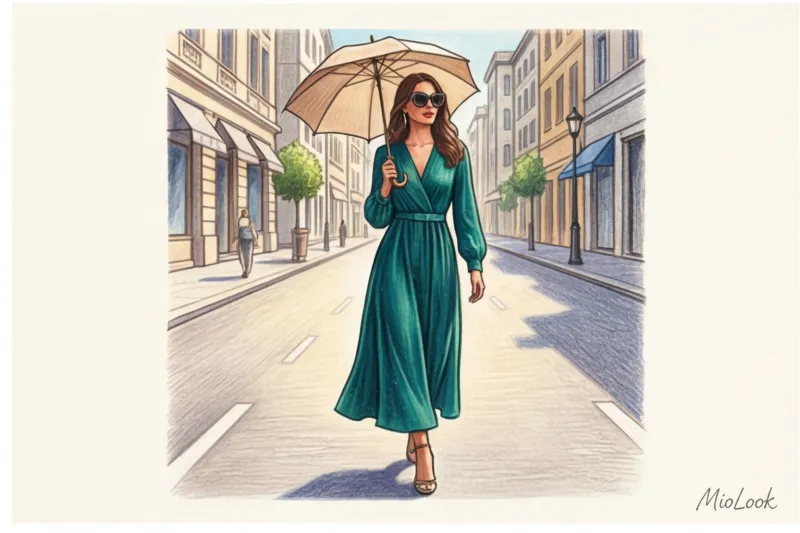
As a certified colorist, I love to bust the myth that brunettes and redheads need to immediately switch to dull pastels in the summer. In fact, the darker and more saturated the color of the fabric, the better its UV protection.
The study, published in the journal Industrial & Engineering Chemistry Research , clearly demonstrated that dyes in both dark and bright colors act like a sponge, absorbing UV rays and preventing them from reaching the skin. The same T-shirt in pale yellow will have a UPF of 10, while in a rich blue or emerald, it will have a UPF of 50.
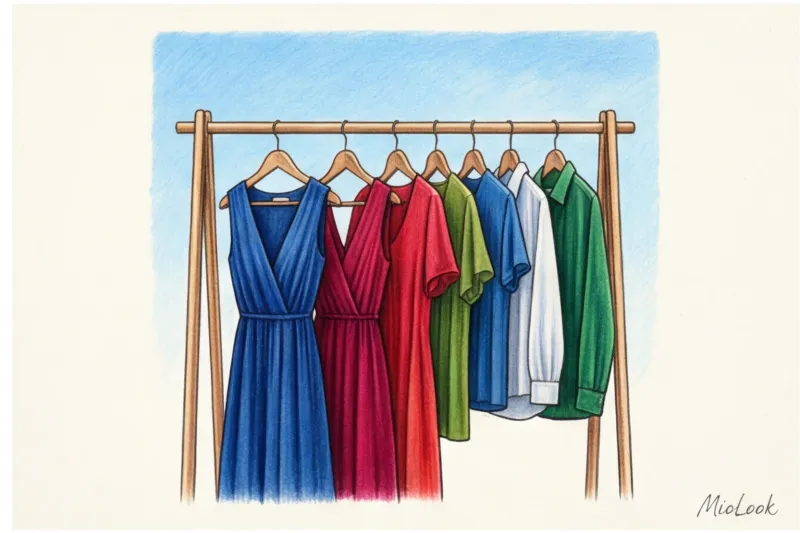
If you're worried about feeling too hot in a black dress (black attracts infrared radiation, or heat), choose deep shades from your seasonal palette: sapphire, ruby, forest green, or deep purple. The key is to keep the dress loose-fitting. A loose-fitting dark blue shirtdress will create a microclimate inside: the fabric will absorb UV rays, and the air layer will prevent your body from overheating.
And when does this advice NOT work? If you're in a climate with 100% humidity and absolutely calm air (for example, in the tropics before a rainstorm), wearing thick, dark clothing without even the slightest breath of wind can actually cause overheating. In these conditions, it's best to rely on light-colored, technical clothing with a special coating.
Access to MioLook for €0.99 — one-time payment
A smart AI stylist will select the perfect summer palette that will complement your appearance and complement your wardrobe.
Get access — €0.99 onceUPF-treated clothing: marketing or necessity?
Today, the market is flooded with brands offering UPF 50+ products. Typically in the budget segment (€30–€80), this is achieved by integrating titanium dioxide or zinc oxide microparticles into the fiber structure itself or by applying a special washable impregnation.
Is it worth the extra cost? Yes, if you fall into one of the following categories:
- You are going hiking or to the mountains (where UV radiation levels are critically high).
- You plan to spend a lot of time in open water on SUPs or a yacht (water reflects rays, enhancing their effect).
- You have sensitive skin, a sun allergy, or are undergoing a course of aggressive cosmetic procedures.
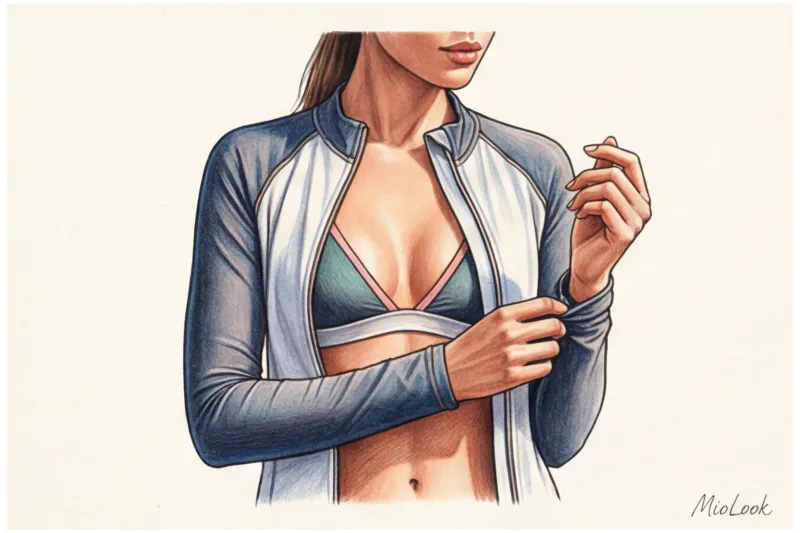
I often see women, in pursuit of protection, buying sports rashguards and trying to wear them around town, looking like professional surfers on Patriarch's Ponds. Don't make this mistake. If you need UPF protection for the city, look for brands (like Uniqlo's technical lines or COS's sporty casual) that disguise their protective properties as basic urban cardigans and shirts.
Important care tip: If UPF protection is achieved through surface chemical impregnation (often found in cheaper alternatives), it will wash out after 30-40 washes. Always check the label to see if the protection is built into the yarn itself (inherent UPF).
Styling for Protection: How to Create a Safe and Cool Look (Checklist)
Let's move from theory to practice. How to style sunscreen fabrics, for example, for a Friday office dress code where relaxed looks are allowed, but you want to look put-together and safely walk to the subway in the scorching sun?
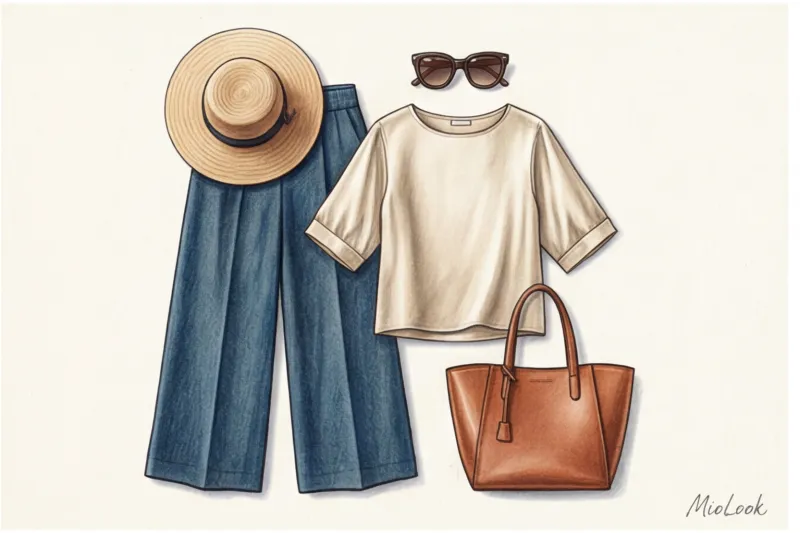
- Layering for summer. Wear a lightweight silk or viscose top with thin straps, and layer a loose-fitting shirt made of thick lyocell in a rich shade over it. Outdoors, the shirt acts as a shield, but indoors, you can remove it.
- Free fit rule. Forget skinny jeans and form-fitting dresses. Palazzo pants made of thick, flowing Tencel will create a cushion of air around your legs—you'll stay cooler than shorts, and your skin will thank you.
- Protection of risk areas. The back of the neck, shoulders, and décolleté are the most common areas to burn. If you're wearing a shirt, turn up the collar (an old-money technique that's purely practical) or tie a thick silk scarf around your neck.
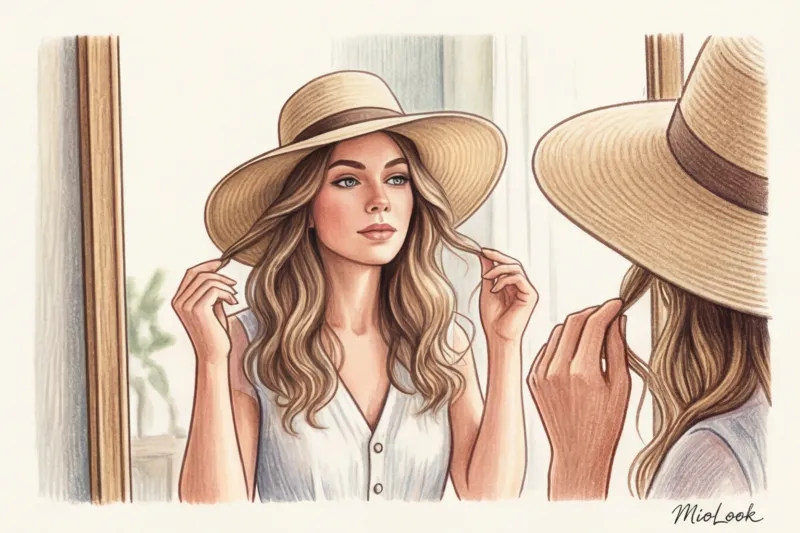
- Selection of accessories. A cheap straw hat with large holes is just decoration. Choose boaters or fedoras with the tightest possible weave to block out any light.
Stylist's Summary: Your Top Sun-Safety Rules
To summarize: sun-protective fabrics don't have to be boring synthetics from the sporting goods store. Your stylish urban wardrobe can be a great shield if you eschew translucent textures in favor of tightly woven fabrics (lyocell, heavy silk, unbleached cotton) and stop being afraid of rich, dark, and bright colors.
Final tip: don't try to completely overhaul your closet in one day. Start by swapping out one basic white linen shirt for a chunky indigo or emerald Tencel. You'll be surprised how much more comfortable you'll feel outside. And to easily integrate new, safe pieces into your current looks, try uploading your wardrobe to MioLook app Artificial intelligence will help you create dozens of safe and stylish summer capsule outfits in just a few minutes.