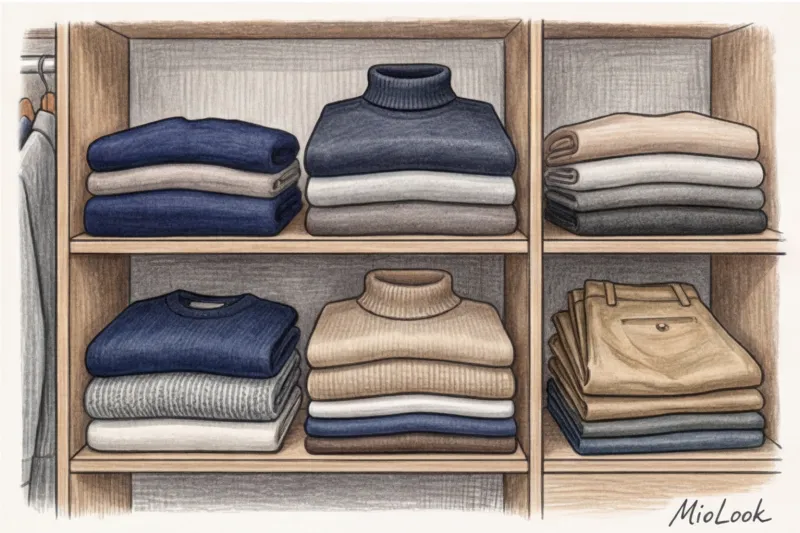
It's morning. Your man (or client, if you're a stylist) opens the closet, where five perfectly folded sweaters are neatly folded on a shelf. He looks at them for a few seconds, sighs, closes the door, and puts on his favorite washed-out hoodie again. Sound familiar? In 12 years of working as a personal shopper in Europe, I've seen this scenario hundreds of times. Basic men's sweaters are one of those items where aesthetics are absolutely powerless against tactile discomfort.
Most online articles offer generic lists of "must-have items for a successful man." But they miss the point: men's knitwear doesn't work if it's itchy, makes you sweat in the washing machine, or loses its shape after the first wash. Today, we'll put aside the glossy clichés and examine men's essentials from a hard, pragmatic perspective—using "bite" indexes, temperature regulation, and cost per wear (CPR). We've covered the fundamental rules of building a closet in more detail in our A complete guide to creating a basic men's wardrobe without mistakes.
Why Basic Men's Sweaters Often Stay in the Closet: The Psychology of Comfort
The biggest mistake women make when buying knitwear for their partners is choosing with their eyes. You see a beautiful, complex shade, a trendy cable knit, imagine how stylish it will look, and take the item to the checkout. But men's comfort psychology works differently.
My clients, among whom there are many top managers and IT executives (by the way, if this area is close to you, take a look at the article about Hidden Style Rules for IT Professionals ), are ready to sabotage any wardrobe item, even the most expensive, if it restricts movement or irritates the skin. For the modern man, the concept of "quiet luxury" isn't about the absence of logos on the chest. It's about the confidence that a garment adapts to his lifestyle, and not the other way around.
The 19.5-Micro Rule: How to Avoid the "Prickly" Effect
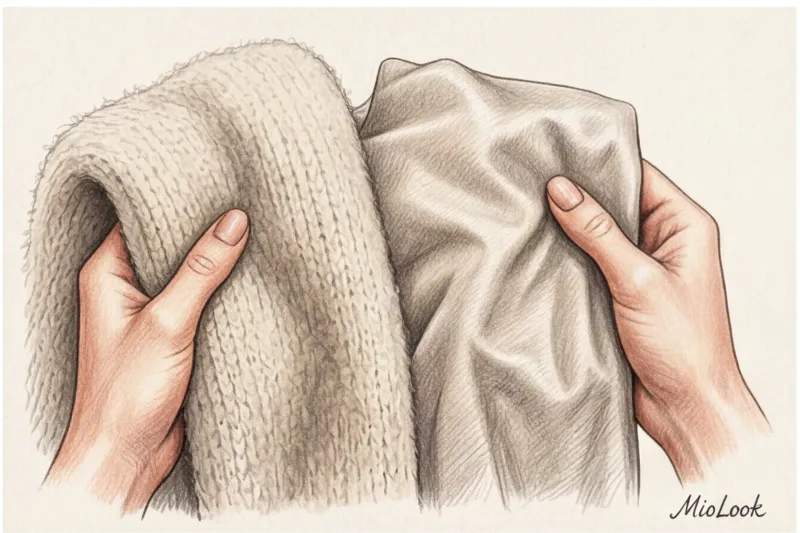
Did you know that the "itchiness" of a sweater isn't a subjective sensation, but a physical measurement? According to certification standards, The Woolmark Company The comfort of a wool product directly depends on the thickness of the hair, which is measured in microns. The limit of tactile comfort for most people (and men's neck skin is often more sensitive due to regular shaving) is at 19.5 microns.
Anything thicker than this will itch, no matter how much you wash it with fabric softener. Regular sheep's wool is often 22-24 microns thick—this is what consigns a sweater to the back of the closet. A hidden danger also lurks in cheap mass-market fabrics: adding acrylic and polyester doesn't make a garment softer for long, but it instantly creates a greenhouse effect. A man walks from a freezing street into a heated office or gets into a warm car, and within five minutes his back is damp.
Your perfect wardrobe without mistakes
Try MioLook for free: A smart AI stylist will analyze your clothes and create comfortable looks for every day.
Get access — €0.99 onceChoosing the perfect jumper: a composition that makes every cent worth it
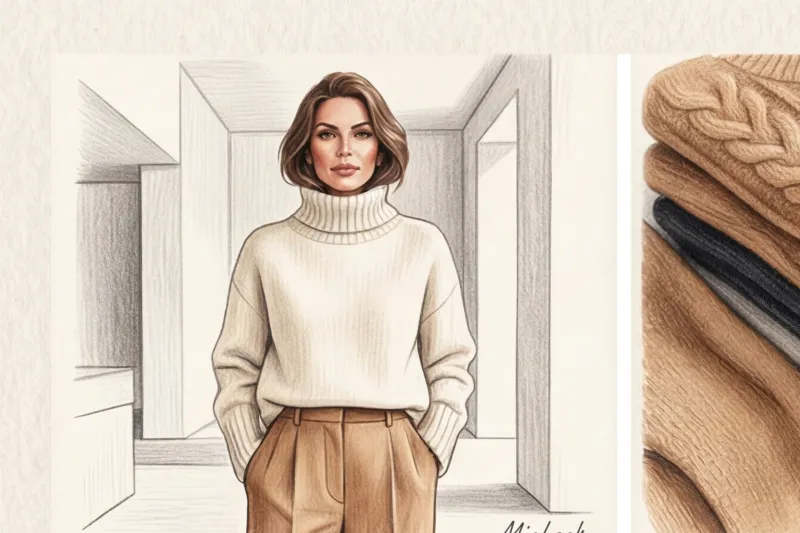
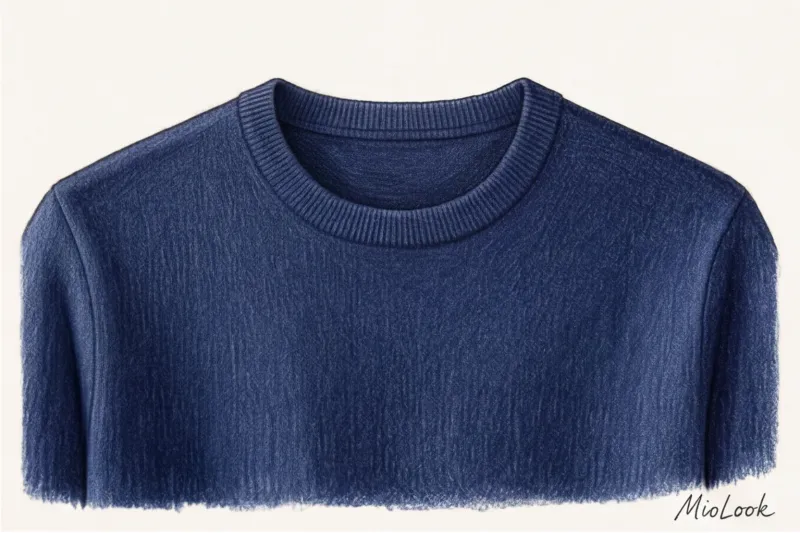
To create a versatile smart-casual base, I always recommend starting with a sleek crewneck. Despite designers' attempts to bring it back to the runway, the V-neck often looks dated in real life or requires a shirt and tie.
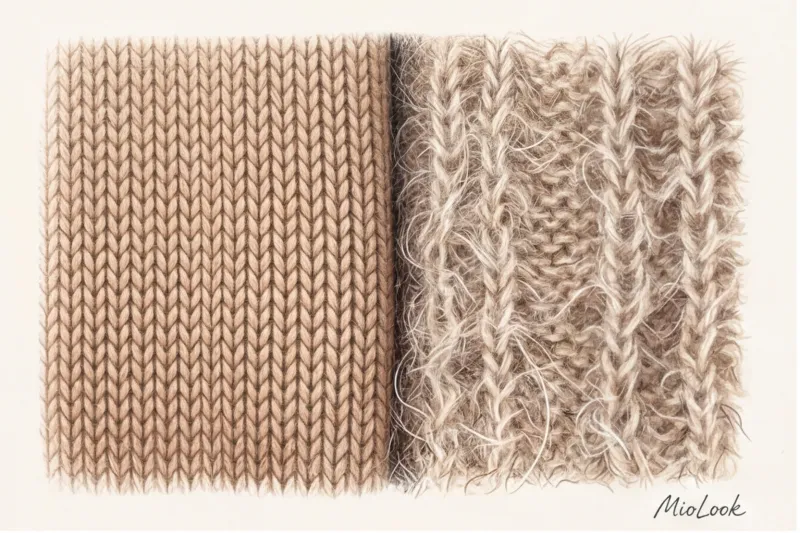
A flat knit is the foundation. Textured arans (cables) visually add volume and are much more difficult to style under a classic coat or jacket. A jumper should fit well enough to be worn over a basic t-shirt (the collar can peek out slightly—this is a trendy technique), but it shouldn't hang loosely.
Merino vs. Cashmere: A Stylist's Unexpected Verdict
If you walk into any upscale boutique, the consultants will try to convince you to invest in cashmere. As a practicing stylist, I'll tell you straight: Cashmere is a bad investment for a man's everyday essentials.
A real-life story: My client, a sales director, bought a luxurious cashmere jumper for €300. He wore it on a business trip: three hours behind the wheel of an Audi, followed by a meeting in an office with powerful radiators. The result? He was sweaty, and the seat belt from that one trip left noticeable pilling on the soft cashmere. He never wore it again.
My absolute favorite is - Extra Fine Merino Wool (extrafine merino wool). Let's calculate the cost per wear. An acrylic jumper for €30 will pill after 5 wears—its CPW is €6. A merino jumper for €60–80, which a man can wear 50 times per season without losing its appearance, will cost only €1.2–1.60 per outing. For hot offices, a dense cotton jersey, such as Pima long-staple cotton, is an excellent alternative.
Turtleneck: a status item or torture for the neck?
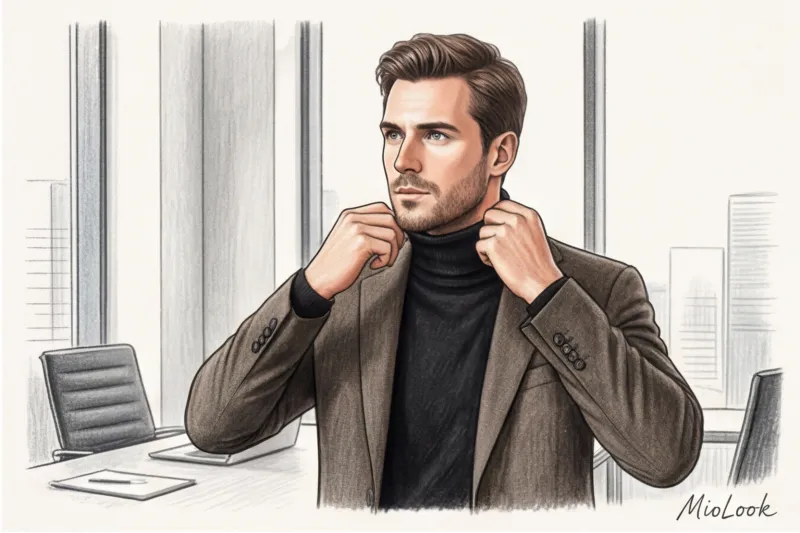
A thin rollneck is a secret weapon of men's style. It instantly elevates elegance and works as a better, more comfortable alternative to a shirt under a jacket. Remember Steve Jobs's image: a simple black turtleneck created an aura of absolute expertise around him. (By the way, you can read about how details shape the image of a professional in the article about status accessories ).
But there is a strict limitation here that fashion magazines often remain silent about: A turtleneck with a tight-fitting high neck is contraindicated for men with a short neck, a large chin, or excess weight in the facial area. It will visually "cut off" the head from the body, creating a spherical effect. In such cases, we use sweaters with a mock neck, which only reach halfway up the neck and don't require a turn-up.
Men's Cardigan: How to Incorporate It into Your Basics Without Looking Grandpa-ish
The most fatal mistake in men's knitwear is buying a thin, tight-fitting cardigan with buttons. When worn over a shirt, it will bunch up in unsightly folds, highlighting even the slightest imperfections (even those that don't exist), and adding ten years to a man's age.
A proper cardigan works differently. We need a thick, chunky knit cardigan with a shawl collar ( shawl collar Structurally, it replaces an unstructured blazer. It should hold its shape, be heavy, and have enough volume to easily accommodate a basic, thick T-shirt, turtleneck, or even a denim shirt.
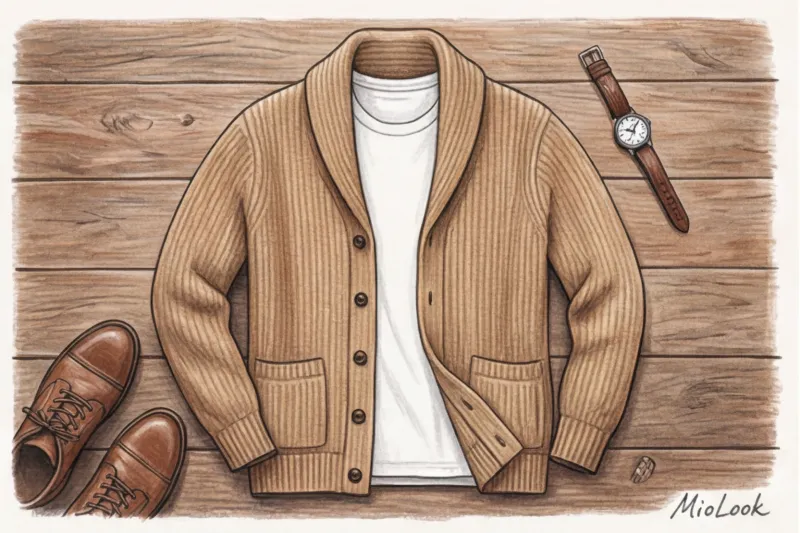
Wear it unbuttoned with straight-leg jeans or chinos. It's that perfect balance between "I didn't try too hard" and "I look great" that most men strive for.
Don't know what to wear with a cardigan?
Upload photos of your items to MioLook. Our AI stylist will create dozens of stylish outfits in seconds.
Find looks in MioLookEuropean mass-market and middle-segment: an honest rating of brands
Where can you find high-quality knitwear if your budget doesn't allow you to shop at Loro Piana? Over the years of guiding customers around Europe, I've conducted my own crash test of basic lines. My clients and I monitored the condition of items after 15 washing cycles. Here's my honest ranking of high-end and mid-market items:
- Massimo Dutti (from 50 to 100 €): Here are the best basic turtlenecks made of fine wool. The shades are always luxurious, and the patterns are tailored for the European body type. Minus: They often have disproportionately long sleeves (designed for heights over 185 cm).
- COS and Arket (from 70 to 120 €): Why go to Scandinavians? For stunning, dense cotton and minimalist cuts. Their jumpers hold their shape perfectly. The fits are loose, often slightly oversized, which conceals any bulging areas around the stomach.
- Uniqlo (from 40 to 60 €): Their line Extra Fine Merino — This is the benchmark for basic merino wool at a great price. It's thin, smooth, and machine washable (on a wool cycle). Nuance: Japanese patterns run small. If your man wears a European size L, get an XL at Uniqlo.
- Zara and H&M (from 40 to 80 €): In the main collection, 90% of the knitwear is plastic, which creaks in your hands. But in these stores, you have to go specifically to the rails with the inscriptions. Origins (at Zara) or Premium Quality (at H&M). You can find excellent 100% wool sweaters with minimal pilling there for a reasonable price.
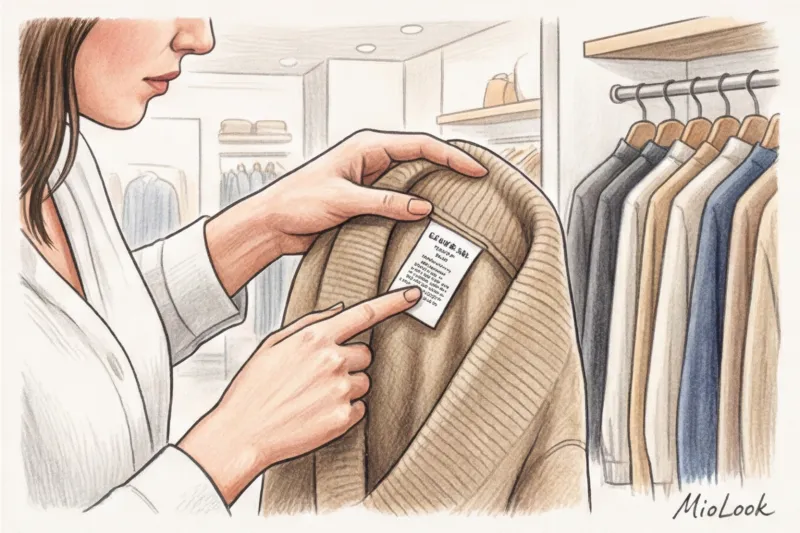
A practical checklist: how to check knitwear in a store in 2 minutes
You don't need to be a sewing technologist to distinguish a good item from a disposable one. Follow these 4 steps right in the fitting room (or teach your man):
- Translucent test. Hold the sweater up to a lamp. If you can clearly see the outline of your fingers through the knitting and the lamp, the yarn is loosely twisted. This type of sweater will lose its shape and stretch out at the elbows within a week.
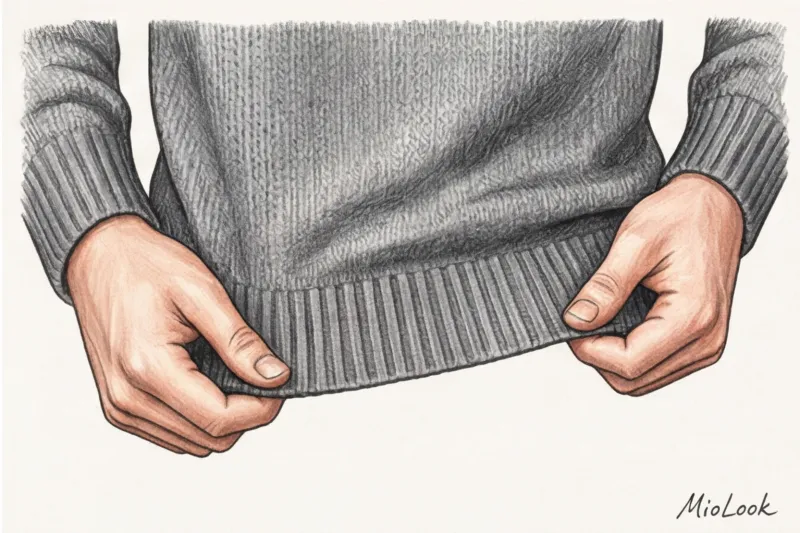
- Recovery test (return test). Gently, without overdoing it, pull the elastic (ribbing) on the cuff or hem to the sides, then release. A quality item will snap back to its original shape instantly. If the elastic remains stretched, leave the item in the store.
- Checking the kettle (seams). Look at the seam where the collar meets the main fabric. High-quality knitwear will have a flat seam, stitch-to-stitch, without thick, rough seams inside that will chafe your neck.
- Reading hidden shortcut. Brands love to emblazon "CASHMERE BLEND" on the tag in huge letters. You look at the inside tag (in the left side seam), and it says: 60% polyester, 30% viscose, 10% cashmere. Remember: 10% wool or cashmere won't keep you warm. That's just marketing. Look for blends that contain at least 80% natural fiber (merino, cotton, viscose).
Men's Knitwear Care: Lazy Rules That Extend the Life of Your Items
No man, even the most disciplined, will "dance with a tambourine" around a basin of cool water every week. Grooming should be pragmatic and lazy. It's enough to implement four strict rules.
Firstly, throw away your regular wool washing powder Universal capsules and powders contain enzymes that break down protein stains. The trick is that wool is also a protein. Regular powder literally "eats" the fibers of your jumper, leaving it stiff and dull. Buy the most basic liquid gel labeled Wool/Silk (it's enzyme-free) - it will save your wardrobe.
Secondly, dry sweaters only on a horizontal surface (on a towel or a special drying rack). If you hang a wet wool sweater on a drying rack or, heaven forbid, on a hanger, the weight of the water will cause it to stretch 10-15 centimeters. There's no turning back.
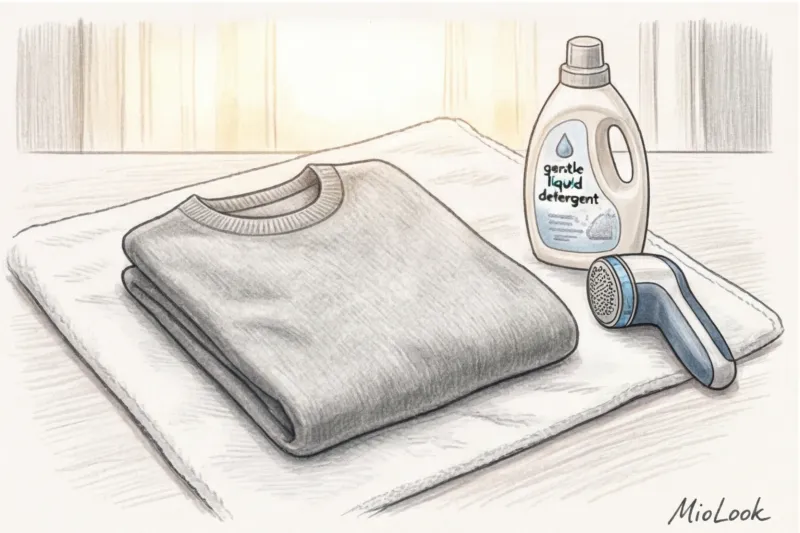
Third, buy a fabric shaver. This €15 gadget will save you hundreds of euros a year. Even the most expensive 100% wool will pill in areas exposed to friction (armpits, sides, seat belt area). Five minutes of use and your garment will look like it came from a boutique.
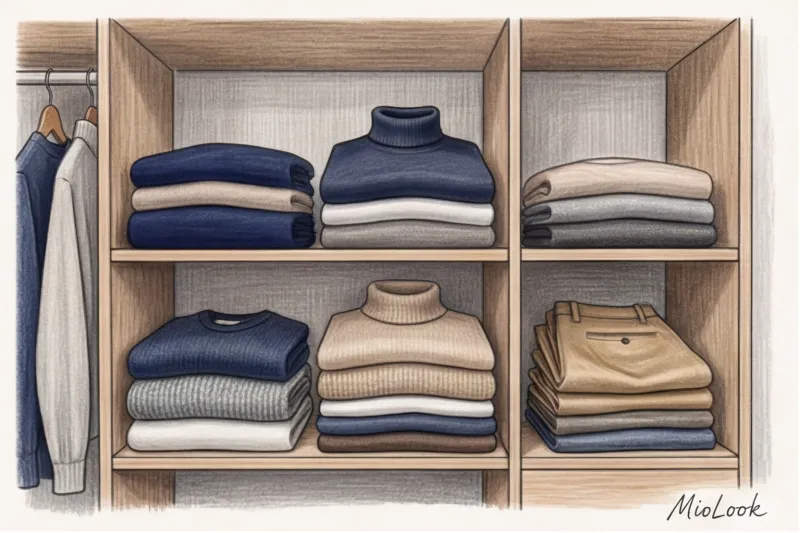
And one last storage rule: basic men's sweaters shouldn't be hung on hangers in the closet. Their own weight will cause them to deform, and unsightly, elongated "ears" will form on the shoulders. Store them neatly, folded, on shelves only.
Choosing men's knitwear isn't magic or an innate sense of taste. It's the simple math of comfort, knowing the composition, and understanding your lifestyle. Stop buying "pretty" itchy sweaters that you only wear once. Invest in the right smooth-knit merino, and you'll forget about the "nothing to wear" problem during the colder months.