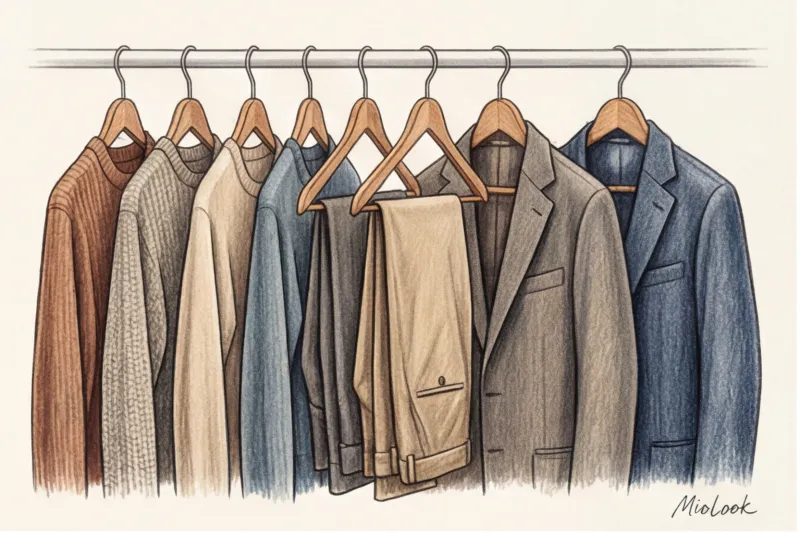
Recently, a client of mine, a stern systems architect, threw a perfectly tailored white shirt on the table and said, "I feel like I'm in a cardboard box in this; I can't think in it." This phrase perfectly illustrates the main misconception of the glossy magazines: the common belief that men don't like to dress stylishly. In reality, men simply hate the physical discomfort that often accompanies stereotypically "stylish" clothing.
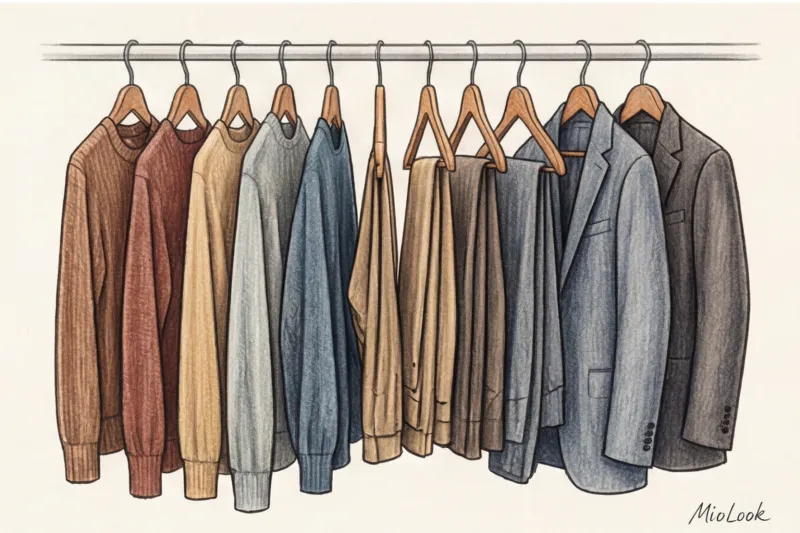
We talked about the classical approach to the database in more detail in our A complete guide to creating a basic men's wardrobe without mistakes But today, the rules of the game have changed. A modern neural network for choosing men's clothing isn't a magical way to generate pretty but unviable images. It's a rigorous analytical tool that solves a purely engineering problem: how to find a balance between tactile comfort, fabric quality, and social status, without wasting a single extra minute in the mall.
Why a man's wardrobe is a math problem that AI can easily solve
Over 12 years as a stylist, I've peered into hundreds of men's closets and always seen the same thing: the Pareto Principle in action. Men wear 20% of their wardrobe 80% of the time. The rest hangs there, dead weight, because they're either too tight, require complex care, or simply don't fit into their daily routine.
For most men, clothing is a functional tool. Logic, not emotion, is key. And that's precisely why artificial intelligence handles men's style much better than women's. The algorithm isn't influenced by mood; it operates on raw data: body geometry, color contrast, and the technical characteristics of materials.
According to a McKinsey report (2024), up to 40% of returns in men's online shopping are not due to the wrong size, but to disappointing expectations regarding feel and fit. A man won't wear an uncomfortable item—he'll simply return it or hide it in the back of his closet.
AI transforms the chaos of choosing from thousands of items on marketplaces into a structured, predictable system, where every item offered is mathematically justified based on your parameters.
Access to MioLook for €0.99 — one-time payment
A smart AI stylist will select the perfect look based on your preferences and parameters.
Get access — €0.99 onceHow a neural network works to select clothes for men in an app
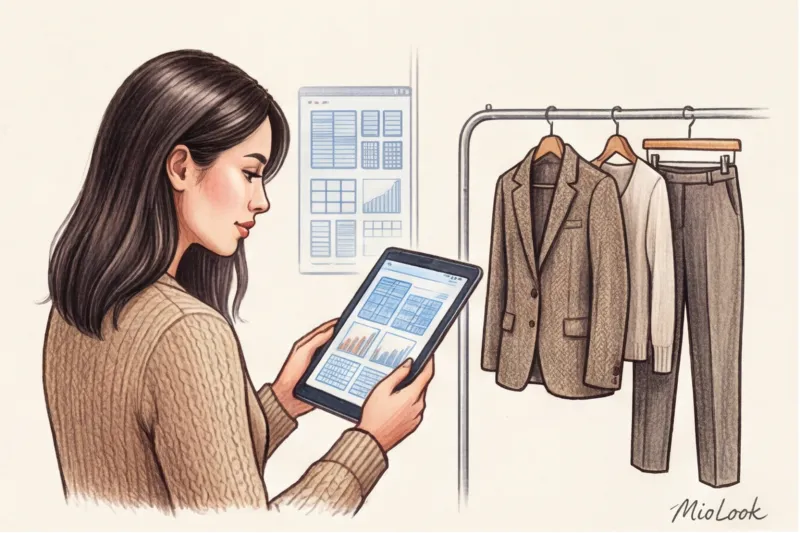
When I first tested clothing recognition algorithms based on metadata, I was amazed at how deeply machines had learned to “understand” textiles from a flat image. MioLook It doesn't just scan your color type. It uses predictive analytics to predict whether you'll be comfortable in a particular jacket or sweater.
Digitizing Habits: How an Algorithm Learns Your Comfort
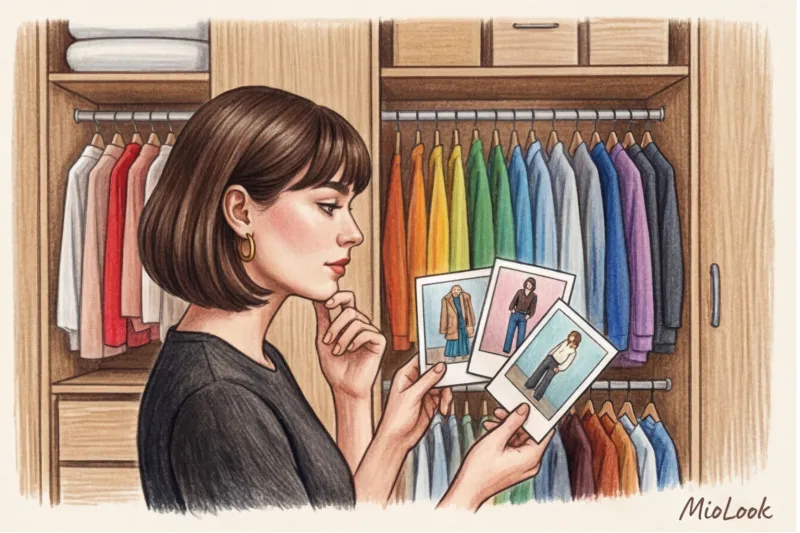
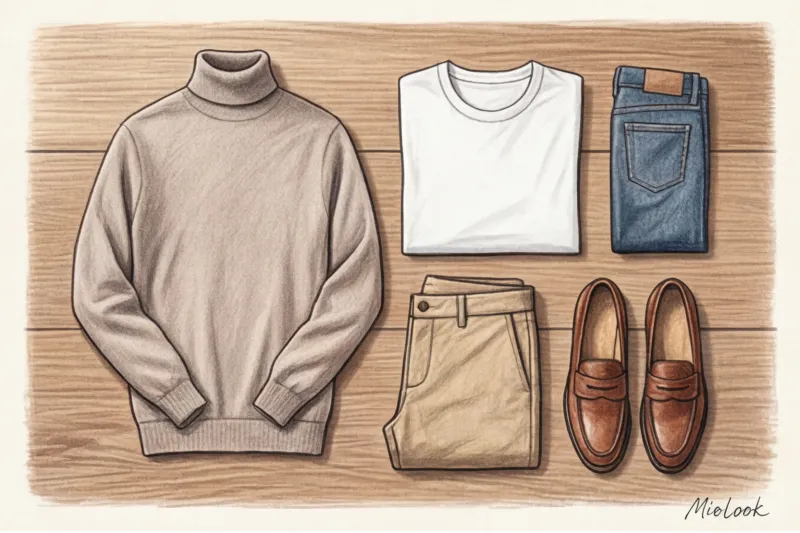
It all starts with uploading photos of the looks you feel most confident in. Machine vision analyzes your favorite silhouettes. But the most interesting part happens at the metadata level: the neural network reads the weave type, elastane percentage, and ease allowance in the reference images. If you always wear raglan-style garments, the system will stop suggesting jackets with stiff set-in sleeves.
Taking into account lifestyle and social role
The algorithmic results for a creative director of an IT startup and a partner at a law firm will be radically different, even if they have the same height and weight. In the former case, the neural network will select a "quiet luxury" aesthetic—deconstructed blazers, soft shapes, and cashmere. In the latter case, it will integrate a strict dress code with structured cuts, but will select fabrics with a natural stretch effect (without synthetics).
From the Virtual Fitting Room to Real Life: The Critical Role of Fabric Quality
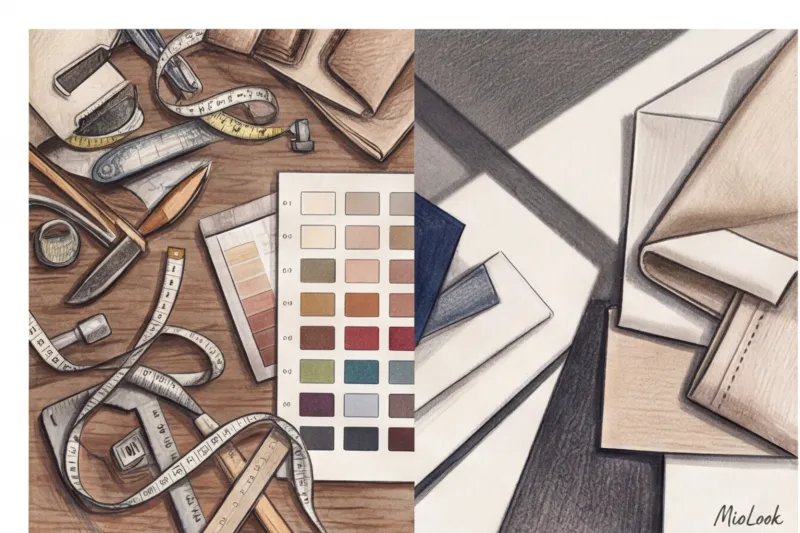
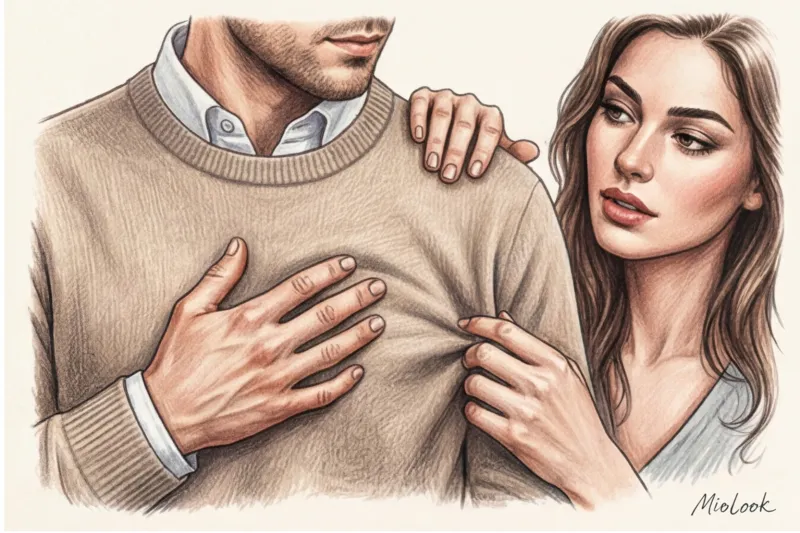
Artificial intelligence can select the perfect color palette. But if the recommended shirt is made of cheap, itchy synthetic fabric, you'll only wear it once. As a textile materials scientist, I always teach my clients one rule: the cut is eye-catching, but the fabric is what you wear.
Smart search in modern apps is based on filtering raw materials. A quality men's wardrobe rests on three pillars:
- Merino wool: Fine-wool wool is non-itchy, thermoregulates, and doesn't absorb odors. The ideal weight for a basic jumper is 12 to 16 gauge.
- Long staple cotton: Egyptian or Pima cotton with a density of at least 160 g/m². It retains its shape after 50 washes and does not pill.
- Premium blended fabrics: Wool with added silk or linen for jackets. This adds texture while maintaining a lightweight feel.
By investing in such materials, you not only ensure comfort but also support sustainable fashion. A good basic merino polo will cost between €80 and €150, but it will last five times longer than a mass-market equivalent for €30.
Your perfect look starts here
Join thousands of users who look flawless every day with smart styling tips.
Get access — €0.99 onceBlindly copying trends: the main mistake when using AI
Herein lies the main pitfall: neural networks are trained on massive amounts of internet data, and the internet is overflowing with glossy clichés. If you don't set the right filters, the algorithm will happily spit out the classic "must-have list": a crisp white poplin shirt, stiff raw denim, and a thick cardigan.
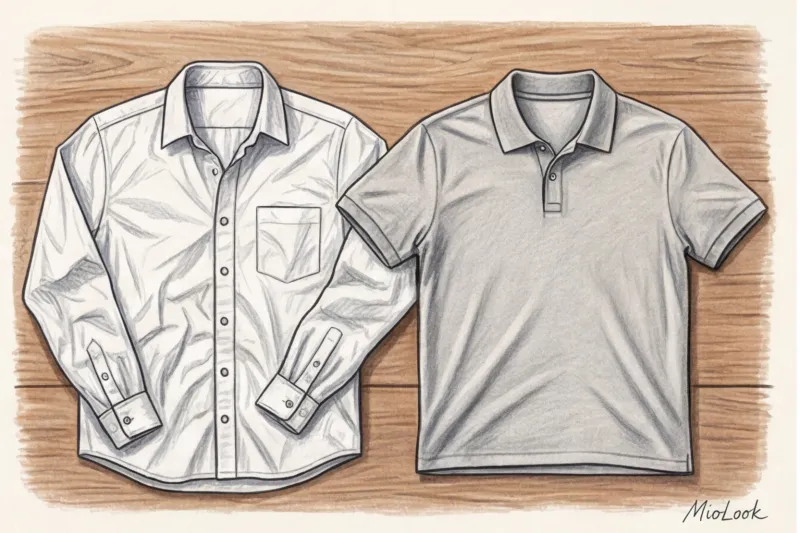
One of my clients decided to surprise her husband and completely revamped his wardrobe following advice from a fashion magazine. The result? He wore the items for photos and continued wearing his old, worn-in, but incredibly soft hoodie. Stiff denim requires months of painful break-in, and wrinkle-prone poplin leaves you feeling rumpled by the middle of the workday.
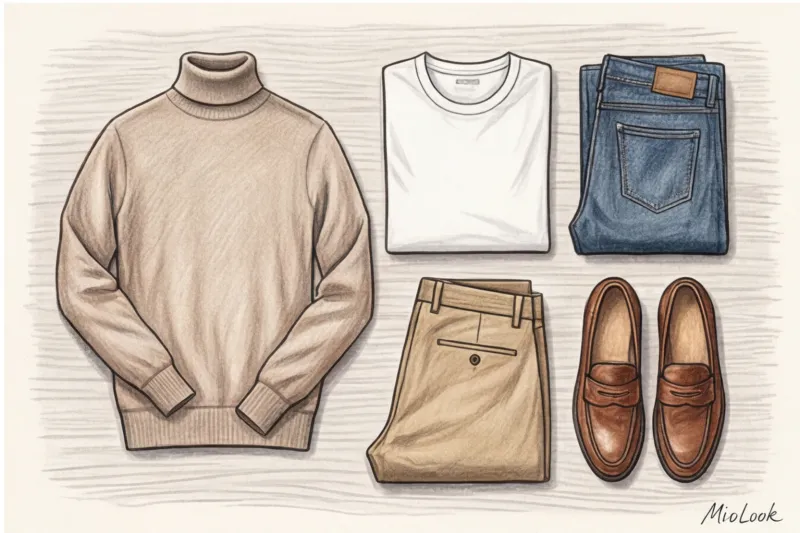
When AI DOESN'T work: The algorithm will make mistakes if you upload photos of David Beckham instead of your real data, hoping to emulate someone else's lifestyle. The AI will give you Beckham-style clothes, but you'll have to wear them—on the subway, in the car, or in your office chair. To avoid glossy stereotypes, always prioritize stretchy fabrics (for example, jersey shirts over poplin) and semi-fitted fits in the app.
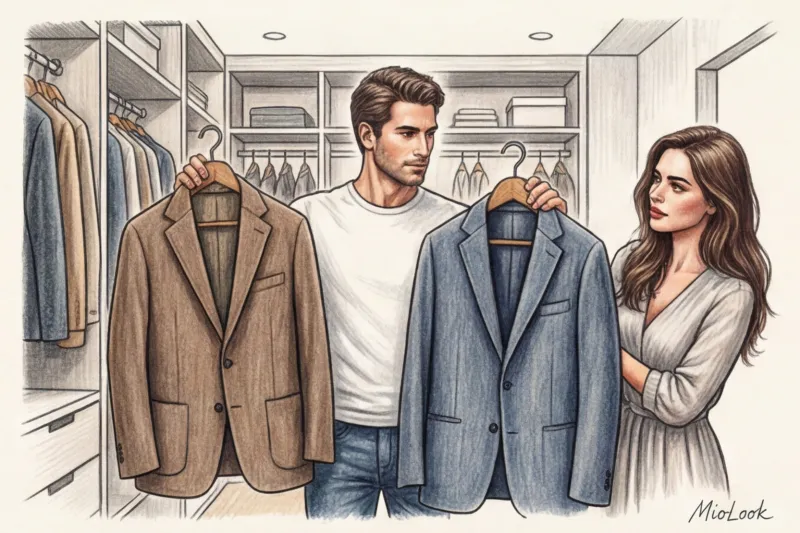
Checklist: How to properly upload your data to the app for ideal results
To make algorithms work for you, not against you, you need to properly initialize them (set them up). Take these four steps today:
- Audit of favorite things: Take out three or four items you've worn to the point of holes. Take photos of them in daylight and upload them to the app. This will give the neural network an understanding of your actual (not imaginary) comfort level.
- Honest Geometry: Don't underestimate your belly size or exaggerate your height. If you have broad shoulders and an unusual height, mention it. AI is great at compensating for proportions (for example, by adjusting lapel width or garment length), but only if it knows the truth.
- Hard filters by composition: Avoid 100% acrylic, polyester (unless it's high-tech sportswear), and low-quality viscose. Stick with natural fibers with 2–5% elastane for freedom of movement.
- Price segment calibration: Set realistic limits for status investments. For example, shoes and outerwear should be in the €200–€500 range, while basic T-shirts should be in the €30–€60 range. This will help the algorithm create capsules with the right budget allocation.
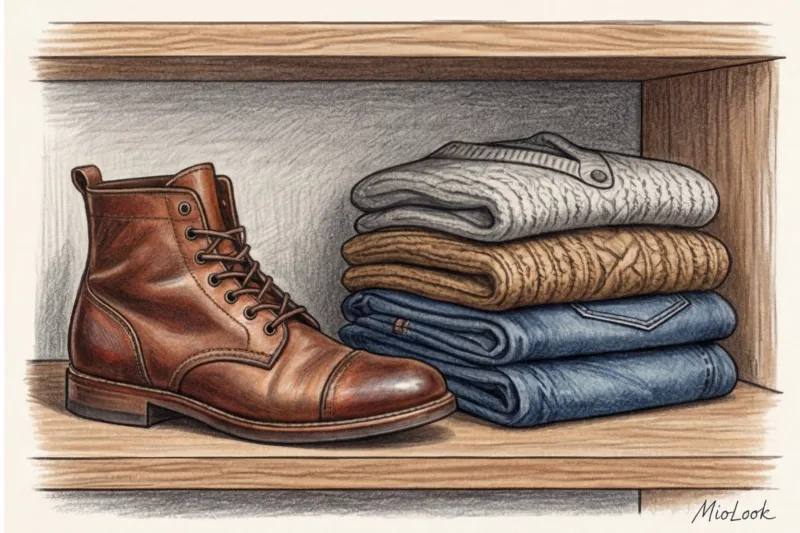
An Effortless Eco-Friendly Wardrobe: How Technology is Reducing Impulse Buying
As a proponent of sustainable fashion, I see AI not just as a toy, but as a powerful tool for environmental protection. A 2023 study by the analytical agency WGSN showed that the life cycle of men's clothing directly depends on how carefully the garment is selected from the start.
Algorithms are well-suited to the Cost Per Wear concept. Buying a high-quality wool sweater for €150 and wearing it 100 times (€1.50 per wear) is a more mathematically and environmentally sound decision than buying an acrylic sweater for €40 that will pill after three washes (€13.30 per wear).
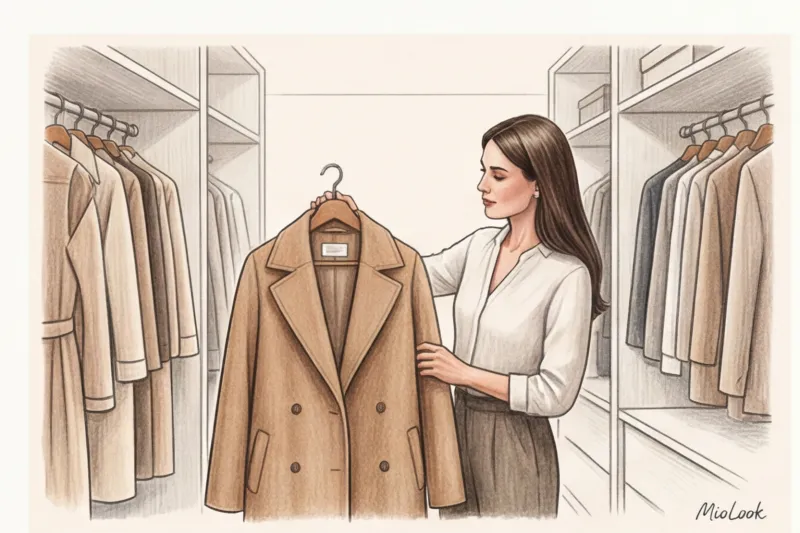
By digitizing your wardrobe, you stop buying duplicates. You know for sure that you already have a navy blue polo, and the app simply won't let you impulsively buy another similar one on sale. This is a direct way to reduce your personal carbon footprint by reducing returns of unsuitable clothes and avoiding fast fashion.
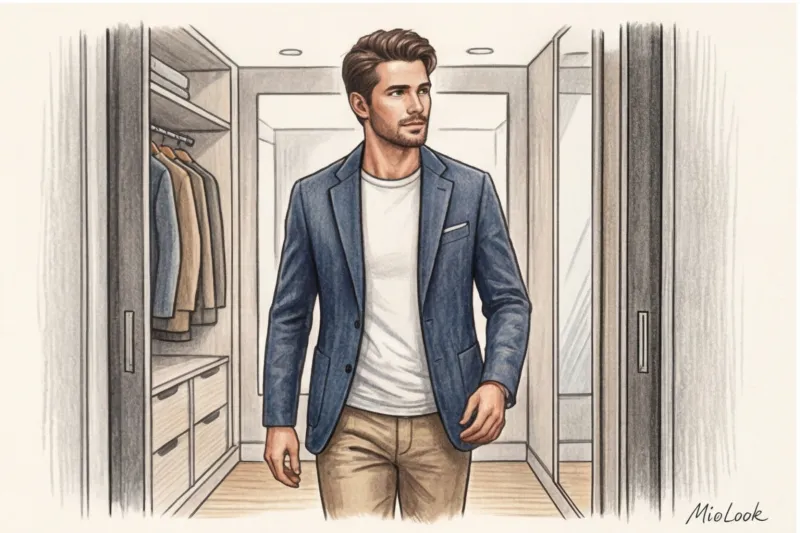
Summary: The Future of Men's Personal Style
Technology is forever freeing men from the stress associated with traditional shopping—stuffy fitting rooms, pushy salespeople, and the agony of choice. The harmonious combination of machine intelligence, understanding the mathematics of proportions, and knowledge of textile comfort delivers 100% results.
Don't try to overhaul your entire style at once. Start small: choose three of the most comfortable items in your closet, digitize them right now, and let the algorithm match them with just one mathematically perfect new item.