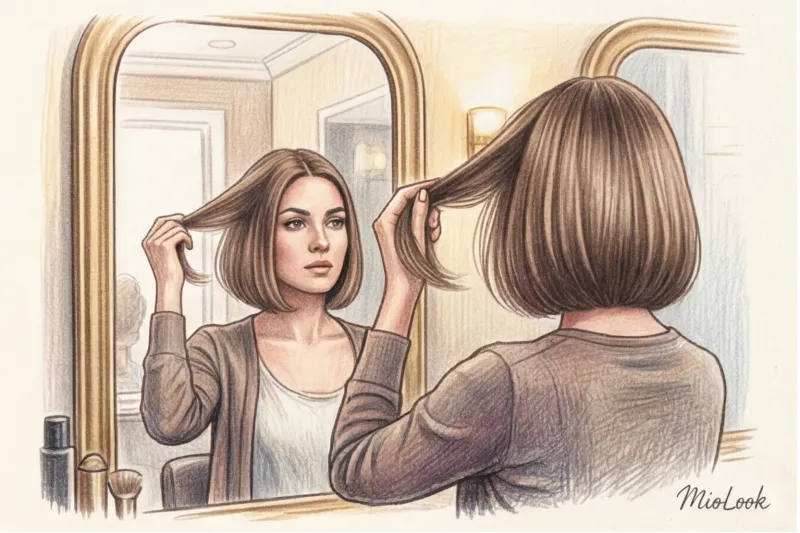
According to research agency WGSN (2023), approximately 40% of women experience so-called "regret syndrome" in the first 48 hours after cutting off more than 15 centimeters of hair. Tears, panic, and a frantic search for hair growth products—sound familiar? Over 12 years of working as a personal stylist, I've come to understand the root cause of this drama: women choose their haircuts by looking only at their faces in the mirror, completely ignoring their bodies and wardrobe.
I'm Isabella Garcia, and in my practice, I approach any beauty transformation through the lens of Total Look. Your hairstyle isn't an isolated object. It's an architectural element that changes the proportions of your figure, requires a new neckline, and even forces you to reposition your back. Before you decide on a radical cut, you need to be sure. Find out if a short haircut will suit you from a photo , but do so taking into account your head position and shoulder width. We've covered the evolution of virtual fitting rooms in more detail in our complete guide: How to choose a hairstyle from a photo: MioLook neural network.
Let's explore the anatomy of the perfect choice—from jaw geometry to a closet overhaul.
The 5.7cm Rule: Why Facial Geometry Is Just the Beginning
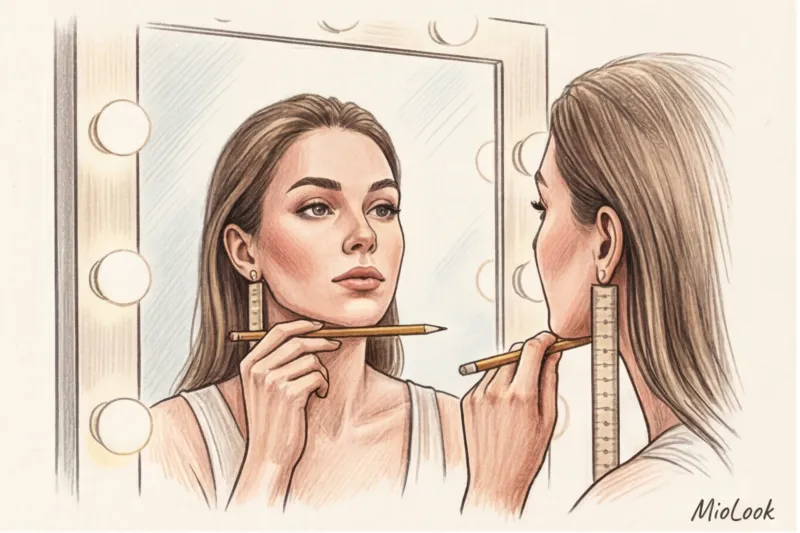
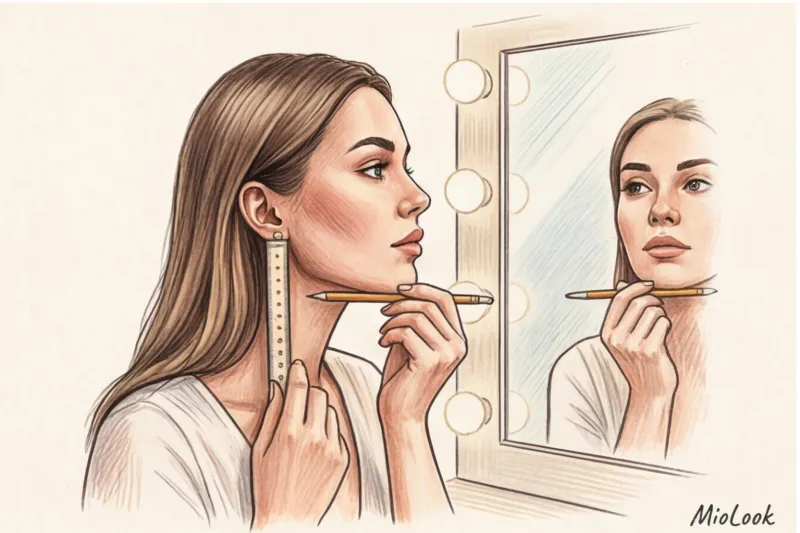
If you've ever Googled how to choose hair length, you've likely come across the legendary 5.7 cm (2.25 inch) rule. It was coined by John Frieda, a British celebrity stylist, back in the '90s. It's simple: place a pencil horizontally under your chin and a ruler vertically from your earlobe. If the distance between the two ends is less than 5.7 cm, a short haircut is right for you. If it's longer, it's better to keep it long.
As a home test, this is a great starting point. But in my practice, I often see this math fail. Why? Because the formula ignores your hair's texture, density, and porosity.
"The haircut's architecture is based not on the length of the chin, but on the angle of the jaw. It is the jawline that dictates where the bob's cut should end," state the basic principles of the Vidal Sassoon Academy.
Furthermore, this rule doesn't work for curly or porous hair—if it's short, it will inevitably bounce, creating unwanted volume at the cheekbones. Therefore, facial geometry is merely the foundation upon which we'll build our look.
How to use AI to find out if a short haircut will suit you based on a photo
Do you remember those terrifying apps from the 1920s that would simply "glue" a flat wig, cut out in Photoshop, onto your photo? It was funny, but completely useless. Technology has advanced incredibly far these days.
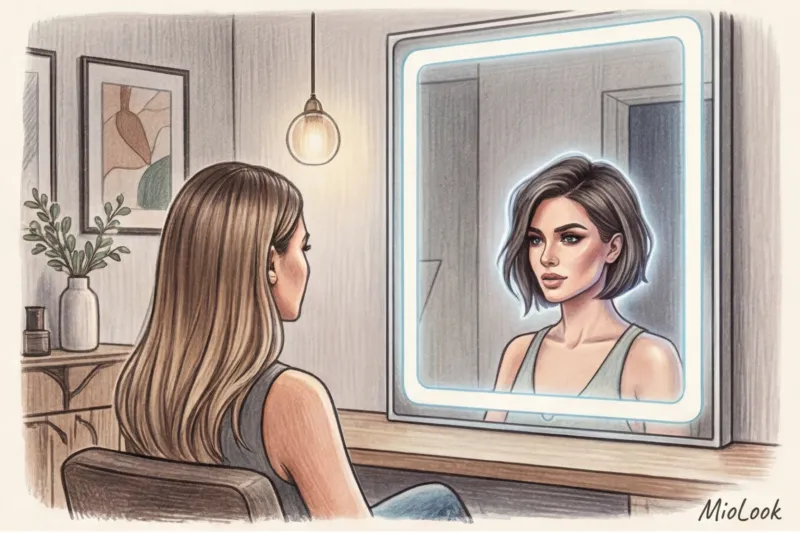
If you want to do it without risk Find out if a short haircut will suit you from a photo , neural networks have become the main tool for stylists. In the application MioLook The algorithms analyze more than just the facial contours. They also consider the light and shadow, texture of your natural hair, and the volume of your skull, generating a photorealistic result.
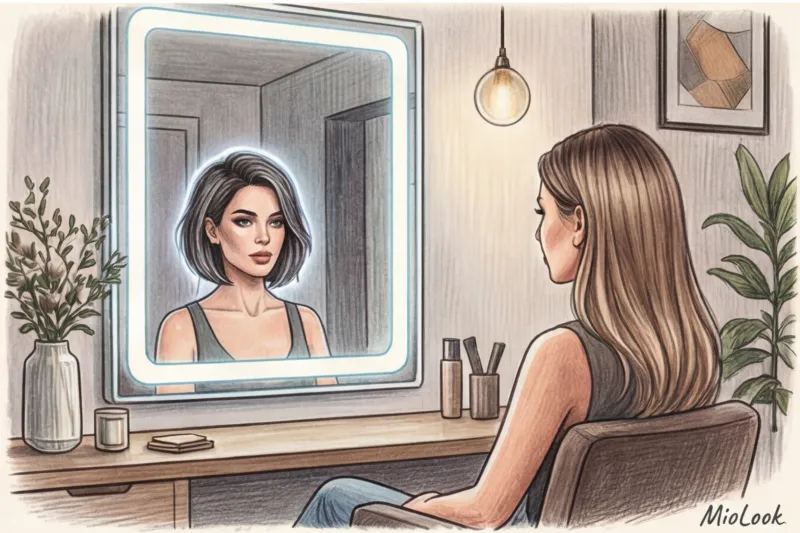
But here's an insider's secret: when I test clients' looks in the neural network, I always ask them to take a baseline photo in the clothes they wear most often (for example, a basic white shirt or a favorite sweater). We need to see how the new head shape will fit with their usual collar. Before the photo, their hair should be slicked back and pulled into a tight bun, and the lighting should be natural, falling directly on the face.
Access to MioLook for €0.99 — one-time payment
A smart AI stylist will select the perfect look and show you how you will look with a new haircut.
Get access — €0.99 onceBob or Pixie? The Anatomy of the Perfect Choice
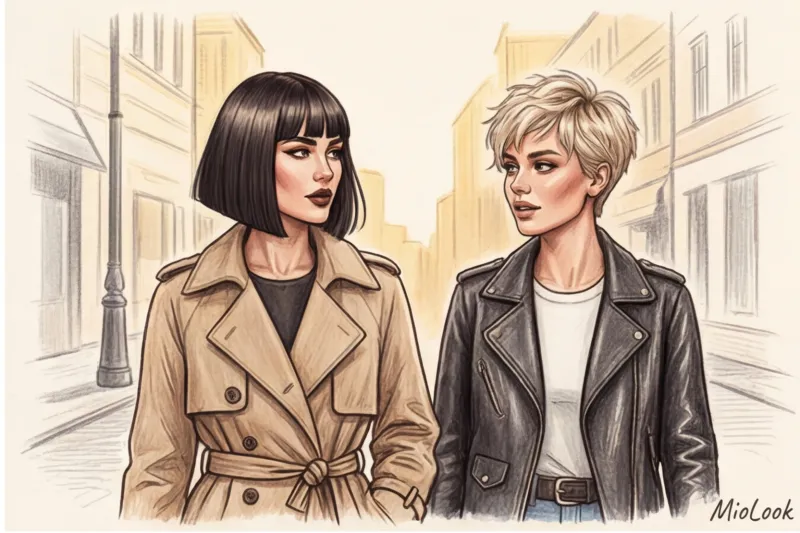
Any hairstyle is a social marker. In sociology, there's the concept of a "beauty premium"—a premium placed on attractiveness and grooming that directly influences career advancement. A short haircut is almost always a signal of confidence. You're literally revealing your face to the world by shedding the protective "curtain" of your hair. But what exactly are you trying to convey?
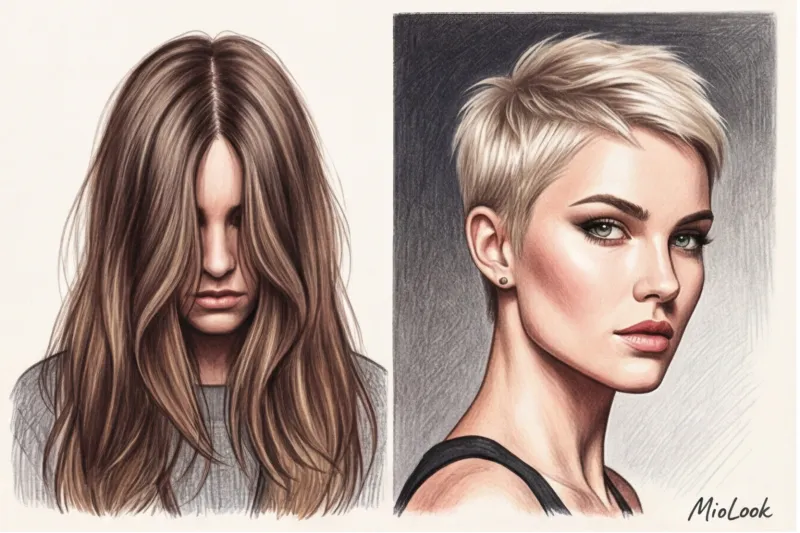
Bob: Who Suits French Chic?
The bob is all about status, geometry, and poise. The key question here is where to cut it: chin-length or collarbone-length?
- Straight cut The blunt bob is ideal for fine but straight hair. It visually thickens the edges, creating the illusion of thickness.
- Graduation saves heavy, thick hair, preventing it from turning into a triangular "house" on the head.
A bob works beautifully with chunky turtlenecks, V-necks, and architectural jackets with pronounced shoulders. It's a choice for those who want to add a touch of sophistication and polish to their look without going too long.
Pixie: Boldness, texture, and an open neck
I want to debunk the most annoying myth I hear from hairdressers: "A pixie cut doesn't suit a round face." This is absolute nonsense! It's not the face shape that matters, but the distribution of volume. A properly textured pixie with long bangs and volume at the crown visually elongates a round face much more effectively than long, shapeless strands hanging at the sides.
But be prepared for two things. First, a pixie cut requires more dramatic makeup—the focus immediately shifts to the eyes and cheekbones. Second, it's expensive. Maintaining the perfect shape will require salon visits every 4-6 weeks. On average, this will increase your annual beauty budget by €400-600.
Wardrobe Test: Is Your Outfit Ready for a Radical Haircut?
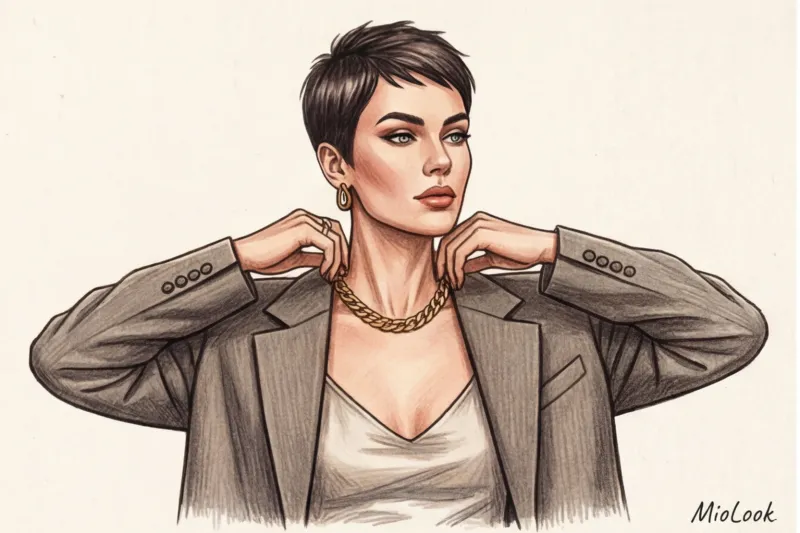
Have you ever noticed that sometimes after a haircut, your old clothes just don't fit right? A new hairstyle often entails a complete wardrobe overhaul. Here's why.
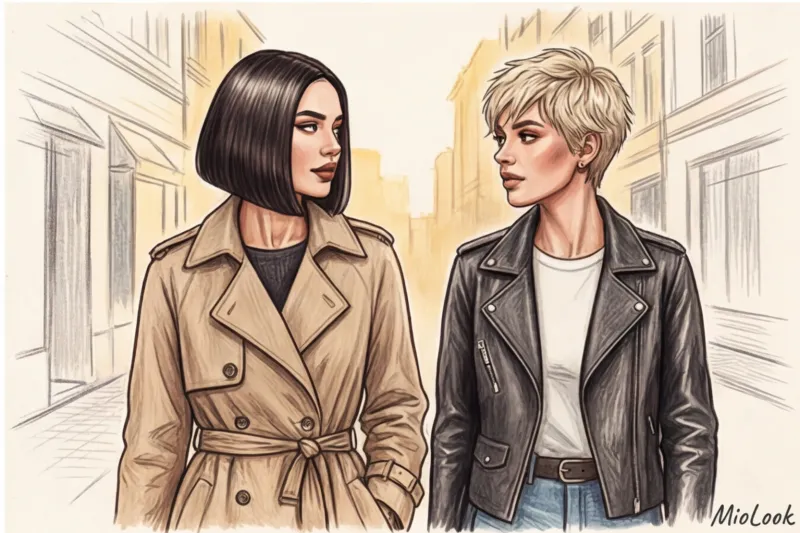
One day, a client named Maria came to see me. She had long, light brown hair, and her closet consisted of flowing chiffon dresses with tiny floral prints, soft cardigans, and round collars. She'd gotten a bold, asymmetrical pixie cut. Suddenly, her dresses weren't working anymore—with the new haircut, they looked childish and awkward, creating a stark stylistic clash. We had to completely overhaul our wardrobe.
When we swapped out flowing viscose for heavyweight cotton (180 g/m² and up), added structured wool-blend jackets (in the vein of COS or Massimo Dutti) and silk tops, her cut instantly clicked into place. Short hair transforms a formal business suit into a true expert's armor. By keeping the hair off the neck, you change the rules of the accessory game: large hoop earrings, statement chokers, and stand-up collars are now your best friends.
Your perfect look starts here
Join thousands of users who look flawless every day with MioLook, choosing a haircut and clothes in a consistent style.
Get access — €0.99 onceThe stylist's main secret: shoulder line, neck, and posture
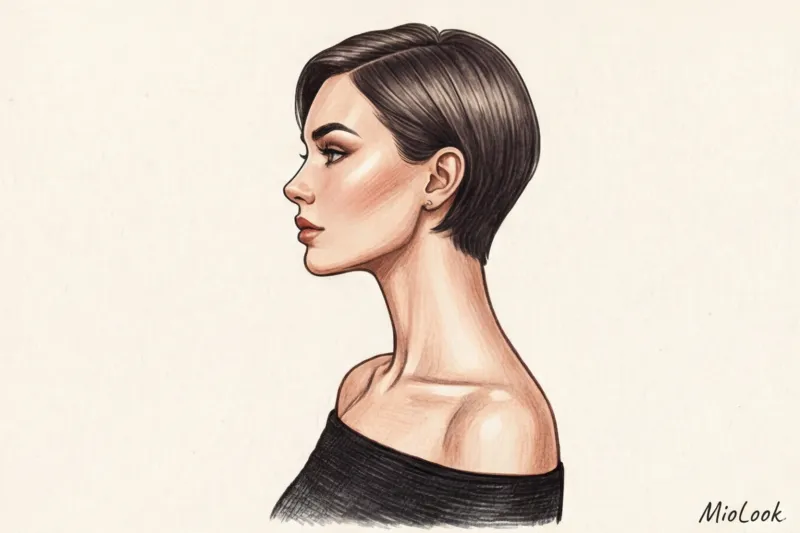
This is what image consultants teach, but hairdressers in salons are suspiciously silent about: hair is camouflage for the back. Long locks mercifully conceal a slight stoop, a hump on the neck, and asymmetrical shoulders. As soon as you get a short bob or pixie, your posture mercilessly takes center stage.
The second hidden problem is the head-to-body ratio. If you have broad, athletic shoulders or a full bust, an ultra-short, boyish haircut can disrupt the balance, making your head appear too small in relation to your massive torso. In this case, I always recommend a voluminous, mid-neck bob—it creates the necessary visual counterbalance.
Conversely, if you have narrow, sloping shoulders, a classic pixie cut with an open neck will elongate your silhouette and make you look more statuesque. Your neck will become the main focus of your look.
Pre-salon checklist: 5 steps to a new you
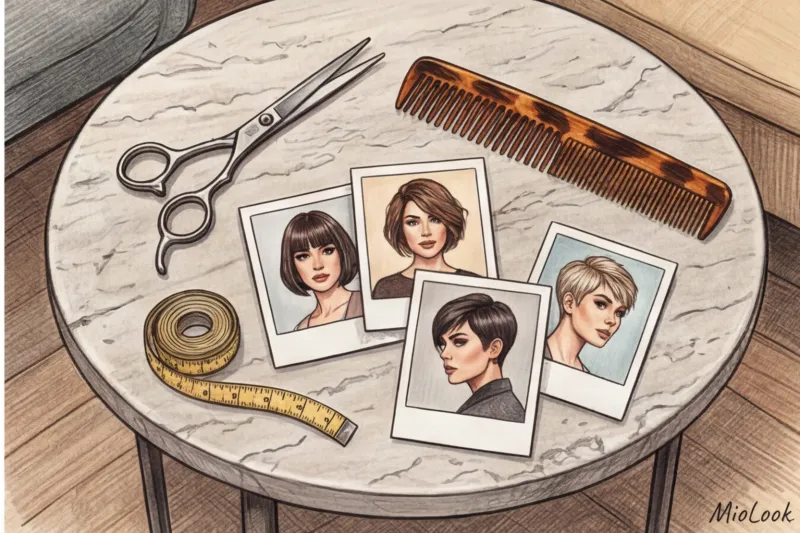
To join the 60% of women who love their new haircut from the very first second, follow this algorithm before the stylist picks up the scissors:
- Collect the right references. Don't save photos of Zendaya or Charlize Theron if your hair thickness and texture are completely different. Look for models with your face shape and hair type.
- Take a virtual test. The most reliable way Find out if a short haircut will suit you from a photo - run your photos through AI fitting room from different angles and in different clothes.
- Fake bob test. Put on a black turtleneck. Gather your hair into a tight low bun, mimicking the length of a bob in the front. Take photos of yourself in profile and from the front. Do you like your jawline?
- Assess readiness for installation. A short haircut requires washing and styling with a blow dryer/paste almost every day. Are you willing to spend 15-20 minutes on this every morning?
- Choose a master based on their portfolio. Cutting long hair and creating the perfect pixie are two completely different skills. Look for a hairstylist whose Instagram feed predominantly features short, architectural cuts.
Your hair will grow back, of course. But your self-confidence shouldn't be tied to the waiting period. View a haircut not just as a new hairstyle, but as a powerful accessory that should fit perfectly with your personal brand, your wardrobe, and your lifestyle.