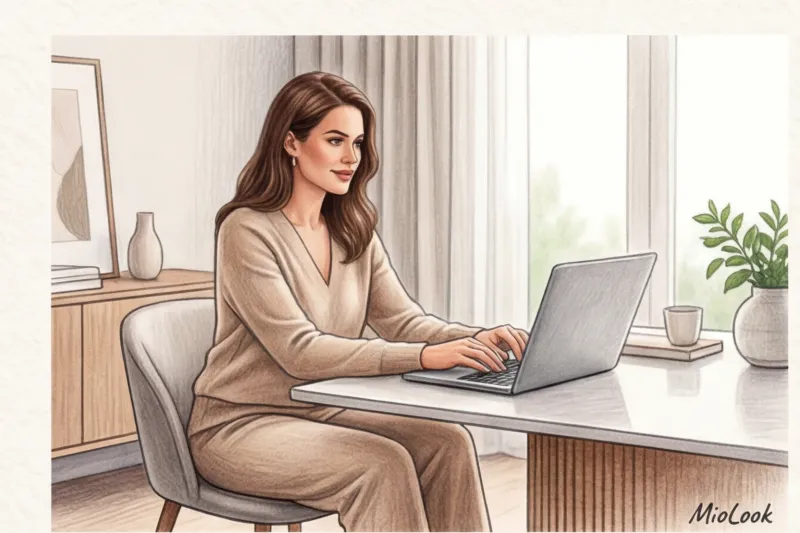
Have you noticed how your voice changes when you put on a smart, well-tailored jacket? It becomes deeper, more confident, and the pauses become more weighty. Now remember how you feel when you're giving an important status call in cozy teddy bear pants, even if you're wearing a perfect white shirt over it. The physical dissonance is unsettling, isn't it?
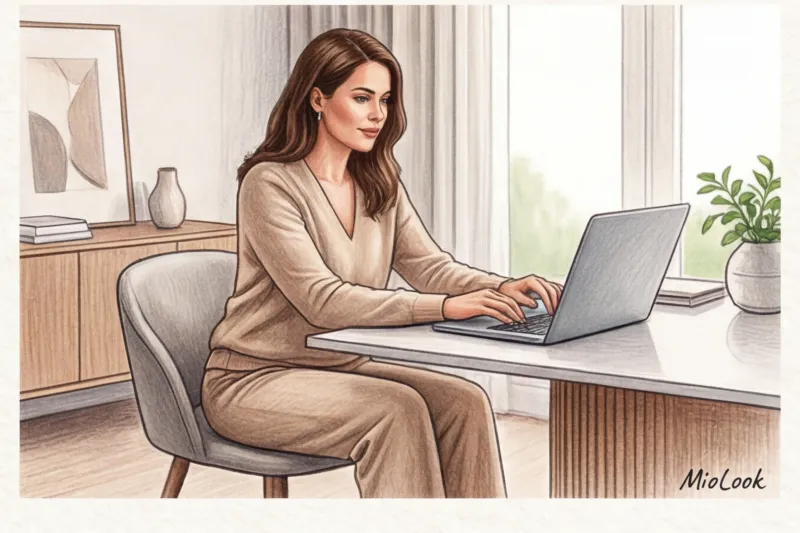
More than 70% of remote workers report a decrease in productivity if they work in their pajamas for more than three days in a row. And it's not because they're lazy. The right home clothes for remote work It's not just a matter of aesthetics; it's a switch that switches your brain into work mode. I've already covered more details on how to build a foundation for working outside the office in our guide. The Perfect Freelance Wardrobe: A Hybrid Capsule , and today we will look specifically at the home segment.
The Psychology of Remote Work: Why Pajamas Are Stealing Your Productivity
I had a revealing case study. Anna, a senior UX designer, had been struggling to break through the financial ceiling and raise a project fee above €4,000 for over a year. She had a stellar portfolio, but she was flustered during online negotiations, conceded on price, and seemed... "too casual." We reviewed her work routine and removed the baggy hoodies and soft leggings from her schedule.
A month later, her conversion rate from calls to contracts doubled. Magic? No, pure neurobiology.
In 2012, researchers at Northwestern University discovered the phenomenon Enclothed Cognition (embodied cognition). Scientists have proven that the brain literally reads the texture and symbolism of the clothes we wear and adapts our cognitive processes to them. By putting on a robe or pajamas, you physically signal your nervous system to "relax and prepare for sleep." Your focus dissipates, and your reaction time slows.
"Clothes aren't just a shell; they're the programming code for your brain. If you're dressed for leisure, you'll have to expend twice as much willpower to force yourself to work"—I repeat this principle to every client.
The biggest myth of the Zoom era: why the "shirt on top, sweatpants on the bottom" rule no longer works.
Remember the quarantine-era jokes about "Business up top, party on the bottom"? A smart top for the camera and pajama bottoms for yourself. Well, as a stylist, I can tell you: this is a trap that ruins your professional charisma.
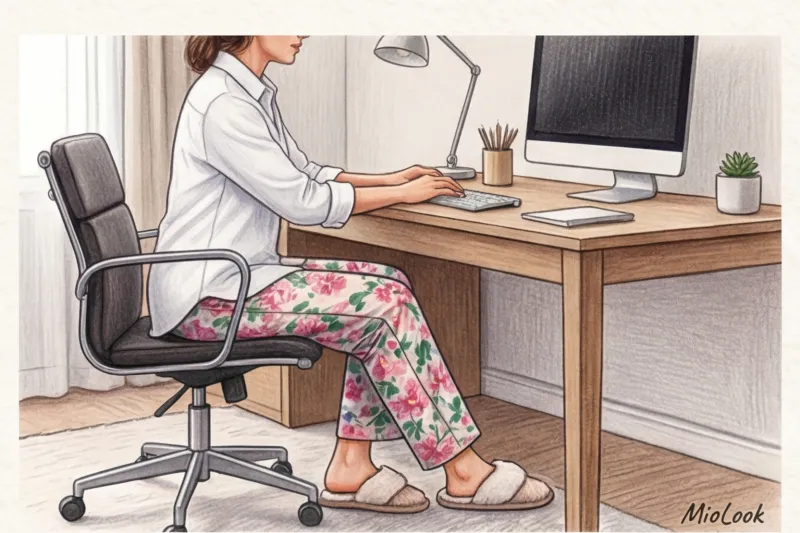
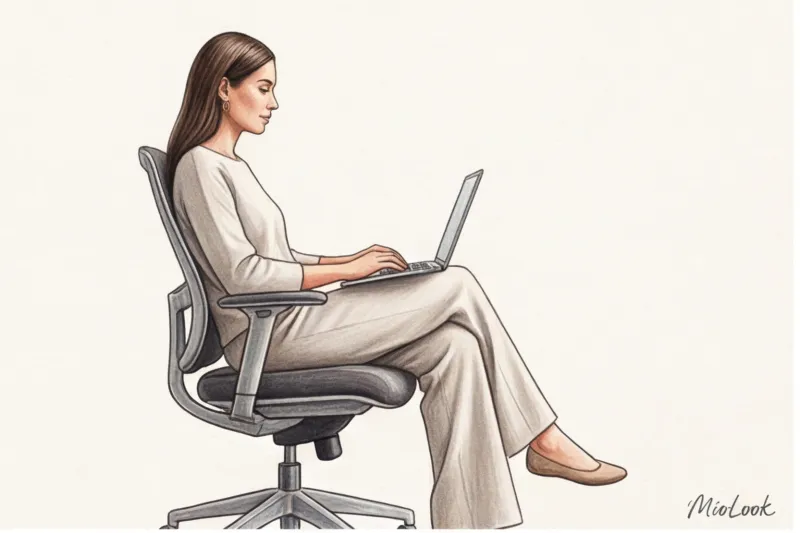
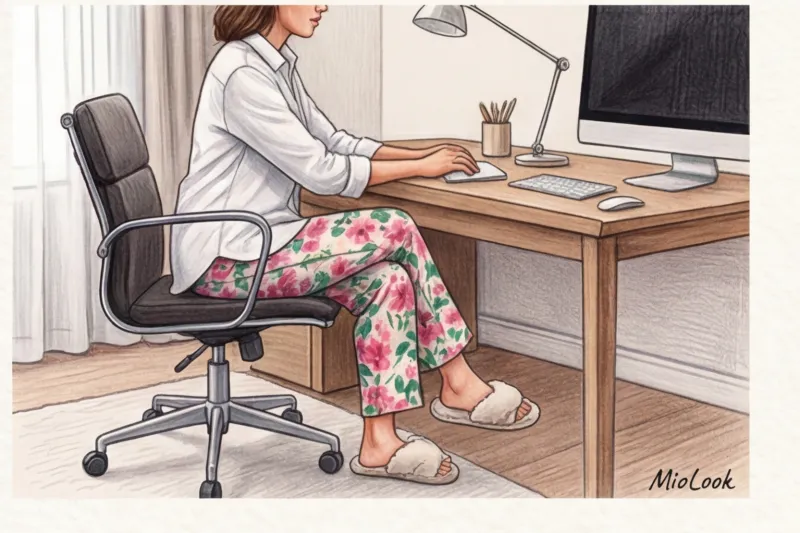
I conducted a personal experiment. One week I conducted online consultations in soft joggers, and the next week in loose but structured trousers made of thick jersey. The difference was colossal. Soft, shapeless trousers with an elastic waistband physically force you to slouch in front of the monitor. You tuck your leg under yourself, slide down in the chair, and your diaphragm tightens.
When your diaphragm tightens, your voice loses support, sounds higher and quieter. Subconsciously, your interlocutor perceives this as a lack of confidence. Furthermore, research on frame geometry shows that the difference in perceived expert status is directly related to the shoulder girdle. Trust in clear, defined lines in a frame is 40% higher.
Your perfect look starts here
Join thousands of users who look flawless every day with a smart algorithm.
Get access — €0.99 onceThe formula for perfect home clothes for remote work: 3 golden rules
Workwear shouldn't be as stiff as a formal suit. But it should be flattering. I've developed a simple formula for my clients: Tactile comfort + Visual structure = Status.
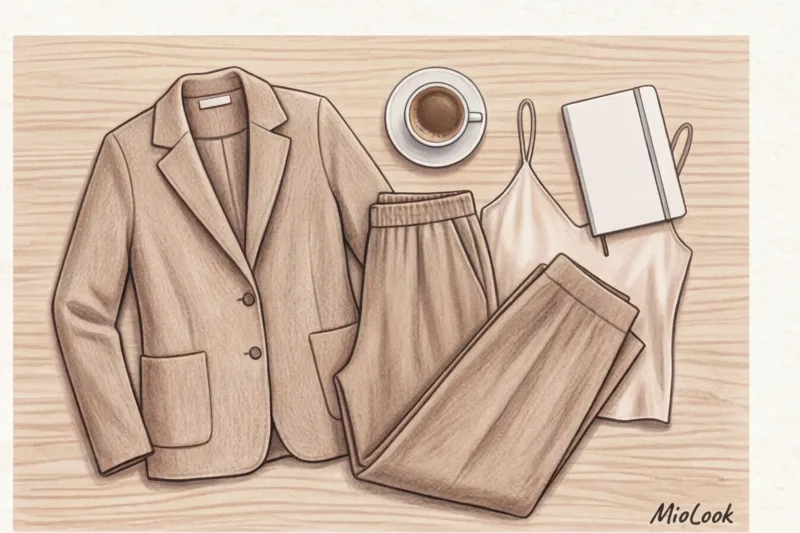
- Balance of softness and lines. If the bottom is soft (wide knit trousers), the top should have a collar or a clear shoulder line (for example, a polo).
- The "three layers" rule. At home, it works flawlessly. A basic top and a chunky knit cardigan or a long knit vest instantly transform the look from "I just woke up" to "I'm ready to tackle the day."
- Taboo on sleeping markers. No thin jersey, lace inserts, childish animal prints, or ties. These are the trappings of sleep.
To be fair, there's an exception to this rule. If you have high sensory sensitivities or neurodiversity, a rigid structure can actually be distracting. In this case, opt for a premium texture (cashmere) with a completely loose fit.
Fabrics, textures, and cuts: what's comfortable to work in for 8 hours
Throw away thin cotton. It quickly loses its shape, wrinkles at the elbows and stomach, and stretches at the knees. For comfortable computer work, we need materials that breathe, stretch, and still hold their shape.
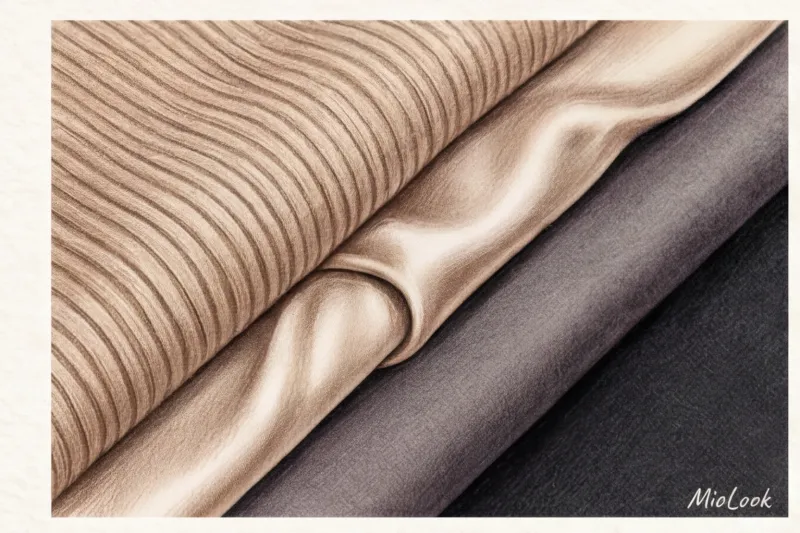
My favorite for my home wardrobe is fabric. Ponte (Ponte di Roma) and heavy jersey. Trousers made of this material may have an elastic waistband (hidden elastic), but they will visually fall in heavy, elegant folds, like classic palazzo pants. You get the comfort of sweatpants but look like a CEO.
Invest in cashmere or high-quality merino wool. Yes, a good cashmere suit will cost between €150 and €300, but it's an investment in your work ethic. Unlike fleece, merino wool regulates temperature: it won't overheat in a heated apartment or feel cold in a draft.
Density is everything: how fabric reveals cheapness
Thin knitwear is your worst enemy on camera. It highlights the slightest unevenness, makes underwear see-through, and creates untidy folds. Thick fabric, on the other hand, creates a clean, geometric silhouette. The camera "eats" volume, making us appear flat, so textured fabrics (rib, tight knit, bouclé) add depth to the look.
Access to MioLook for €0.99 — one-time payment
A smart AI stylist will analyze your appearance and select the perfect textures for your home office.
Get access — €0.99 onceColor as a Focus Control Tool (Colorist Tips)
As a certified colorist, I often see the same mistake: buying gray melange suits for home use. Gray melange is the color of fatigue for a webcam.
The light from your monitor has a cool, bluish tint. When this light hits your gray hoodie, it reflects onto your face, highlighting the dark circles under your eyes and making your skin tone sallow. You look exhausted, even if you've slept for nine hours.
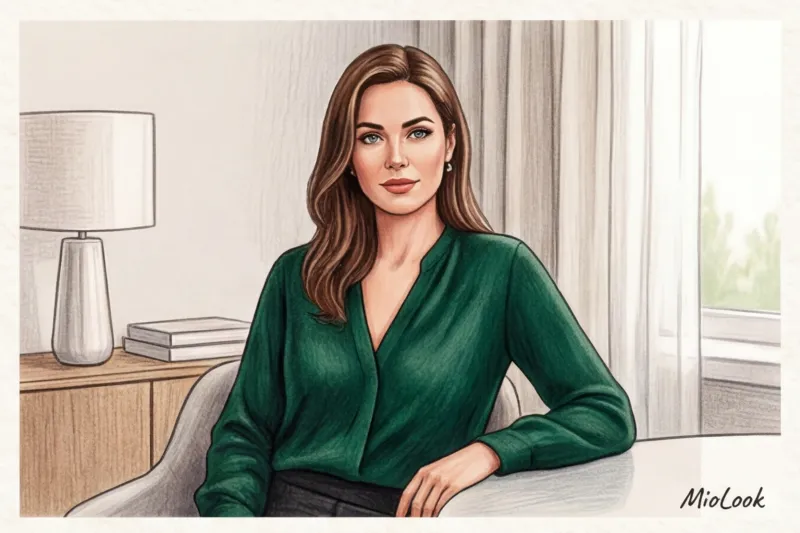
What can replace basic gray and black? Let's look at the Pantone Color Institute's principles. Complex, deep shades boost your productivity:
- Emerald and pine: According to color psychology, the green spectrum reduces eye strain and helps with concentration when working at a screen for long periods of time.
- Sapphire and cobalt: Blue is associated with logic and expertise. It's ideal for calls that require persuasion.
- Burgundy and wine: add contrast to the face, replacing the need for bright makeup in the frame.
If you like light shades, choose off-white or ecru instead of pure white—they highlight the face more softly.
Putting together a capsule wardrobe: 5 items that will replace your stretched-out T-shirts
To avoid wasting resources in the morning choosing clothes (after all, that's why we went freelance, right?), create a micro-capsule. Just five right pieces will get you through 90% of your work tasks.
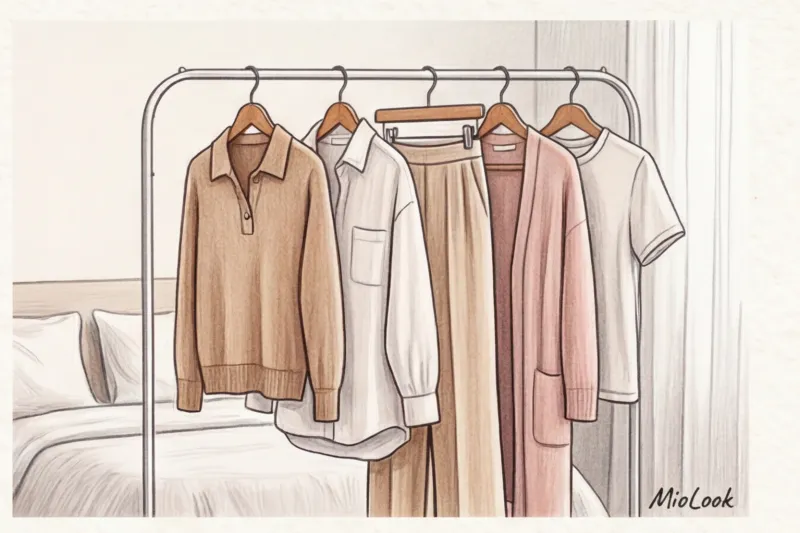
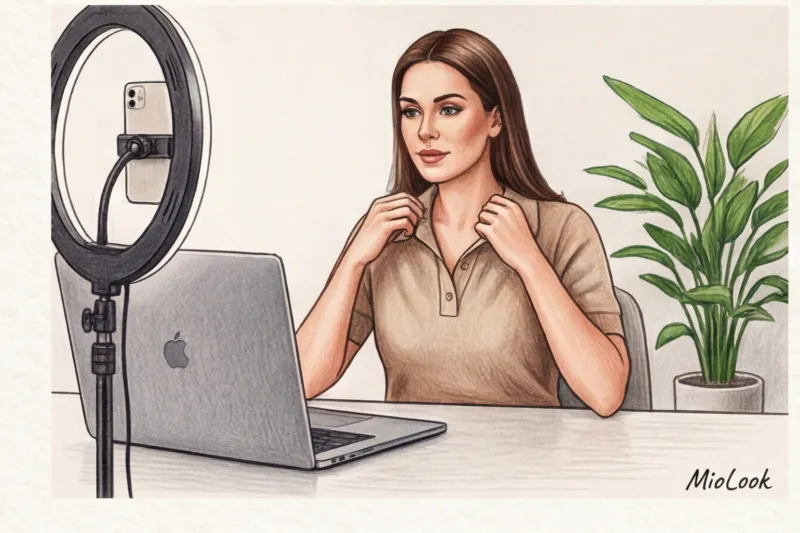
- Knitted polo shirt with long or short sleeves. It's a brilliant hybrid: the softness of a T-shirt and the structure of a shirt. The collar creates a portrait area for the camera.
- Wide-leg trousers made of thick jersey. Look for styles with a hidden drawstring or a flat elastic waistband. Paired with the right top, they're even suitable for casual wear.
- Loose cardigan jacket. Not your granny's fine-knit sweater, but a chunky, structured cardigan. Throw it on over a basic top, and you're ready for a Zoom call with a client.
- Top made of thick silk or viscose. The matte sheen of silk looks great in artificial light. It's also a great base: check out our ideas in the article. basic jewelry wardrobe to understand how to complement such a top with a minimalist necklace.
- Midi sweater dress. A lifesaver for those days when you absolutely don't want to combine tops and bottoms. A single vertical color elongates the silhouette.
My advice: to avoid having to remember these combinations, take a photo of your capsule and upload it to the app. MioLook An AI assistant will help you mix and match these items to create a new look every day without buying too much.
Checklist: How to Make Sure Your Look is Suitable for Work Video Calls
Before you sit down at your laptop, do a quick self-assessment. I call it the "unexpected courier test." Are you ready right now, without changing, to open the door to a stranger, sign for a package, and not feel awkward? If your hand is reaching out to throw something on, the image isn't working.
Final check:
- Portrait zone in the camera: Make sure the neckline isn't too deep (the camera often crops the frame so it looks like you're naked). Is there a contrast between your clothes and the background of the room?
- Shoes matter: Break out the fuzzy bunny slippers. Seriously. Soft soles relax your feet and improve your posture. Invest in leather mules, anatomical clogs (like Birkenstocks), or stylish loafers for home. A firm sole grounds you and provides a physical sensation of support.
Remote work blurs the physical boundaries between home and office, so we must establish these boundaries visually. When you get dressed in the morning, remember: you're not dressing for your colleagues on the other side of the screen. You're dressing for yourself, to respect your work and your time.