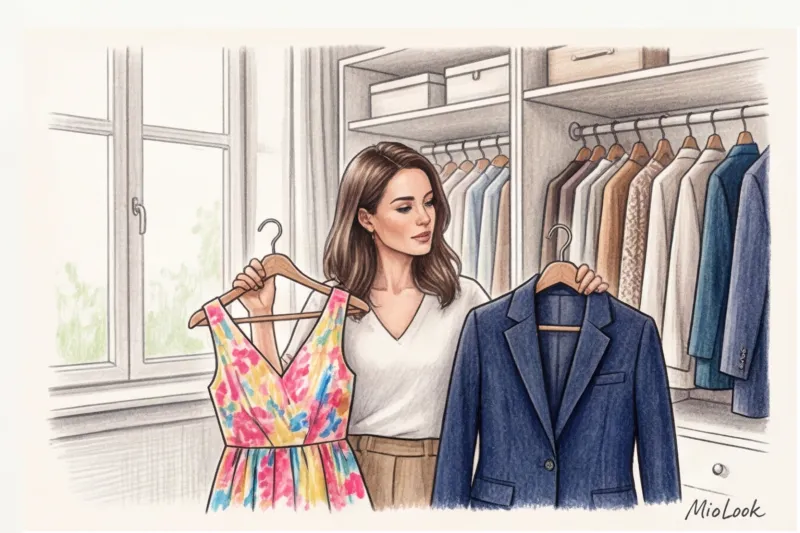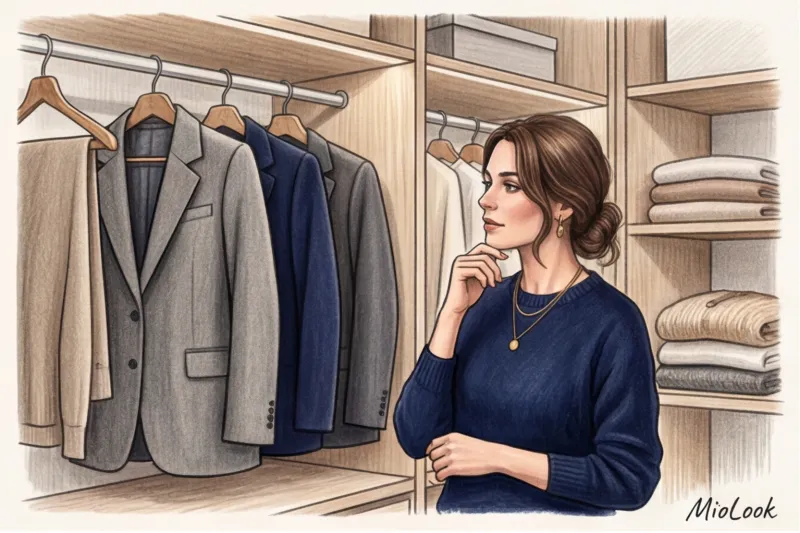
I remember the day my client Anna, a 31-year-old marketing director, sank to the floor in despair in front of her open closet. "I have 150 hangers, and yet I'm going to a strategy session in this same short, mass-market jacket. The rest of my clothes look like I borrowed them from a student," she confessed. Her wardrobe was bursting with trendy pieces for the season, but every morning she started out stressed.
By the time they reach their thirties, most women face this style crisis. What looked natural at 23 now triggers a mild case of impostor syndrome at important career and personal milestones. If you're struggling with this right now, How to find your clothing style at 30 , take a deep breath and forget the glossy clichés. You don't need to immediately change into a boring "uniform" of a beige trench coat and a strict pencil skirt. We've covered this in more detail in our a complete guide to style and the status of a basic wardrobe.
True style at this age is built not on blindly copying Pinterest templates, but on tactile luxury, architectural cuts, and uncompromising compliance with your real lifestyle.
Wardrobe Psychology: Why Old Formulas Stop Working at 30
In our twenties, we use clothes to "appear." We try on different roles: bohemian, strict businesswoman, party animal. Clothes scream with logos and complex cuts. In our thirties, the focus shifts from "appearing" to "being."
Rejecting physical discomfort is the main marker of maturity. The end of the era of uncomfortable shoes that only allow you to stand gracefully and scratchy acrylic sweaters. In the Italian school of styling (Sartorial tradition), which I deeply study and practice, there is a golden rule: clothes should embrace your body, not encase it in armor. Luxury is when you are comfortable.
Clothes should no longer be your main statement. They become a subtle tool for impression management and, more importantly, for saving your energy in the morning.
That same client of mine, Anna, felt insecure among her senior colleagues after her promotion. But the problem wasn't her skills, but her status projection. We replaced 15 pairs of synthetic pants, which were constantly wrinkling and losing their shape by lunchtime, with two pairs of palazzo pants made of fine Italian wool. The result? She stopped tugging at her clothes in meetings, her body language became more relaxed, and her confidence skyrocketed.
Your perfect look starts here
Join thousands of users who look flawless every day with MioLook.
Get access — €0.99 onceReality Audit: How to Find Your Style at 30 Through Lifestyle Analysis
Blindly copying "essential wardrobe lists" from the internet is the most expensive mistake you can make. If you work from home and spend weekends out of town, you don't need three crisp white shirts and classic pumps, even if the glossy magazines recommend it.
According to McKinsey's extensive study "The State of Fashion" (2024), today's consumers aged 30+ are demonstrating a radical shift toward mindful consumption. They no longer want to buy things for an "imaginary" life.
The Calendar Method: An Honest Look at Your Time
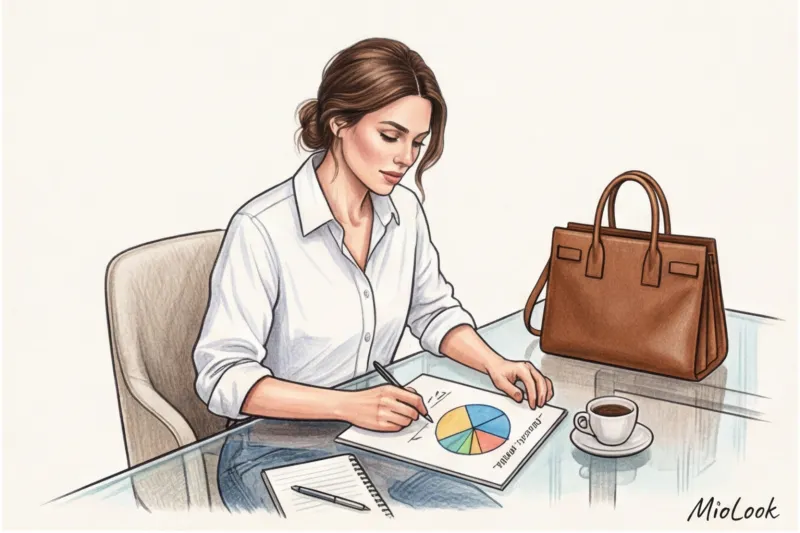
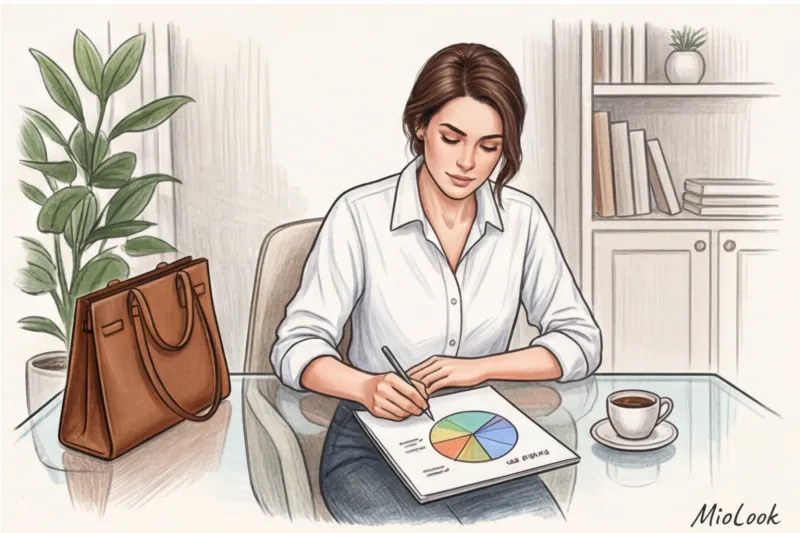
During my first consultation with VIP clients, I always use the calendar method. I ask them to open their planner for the last 14 days and write down all their activities.
- Office with a strict dress code: 0%
- Remote work (zooms): 40%
- Meeting with friends/cafes: 20%
- Walking with children/dog: 30%
- Evening outings (theater, dates): 10%
Now take a look at your closet. Do your clothes' proportions match these figures? If evening wear accounts for 10% of your time, and formal dresses take up half your closet, we've found the root of your "nothing to wear" problem.
From Quantity to Quality: Cut Architecture and Tactile Luxury
The difference between fast fashion and premium isn't found in the logo on the chest. It's hidden in the cut, the quality of the hardware, and the inside of the garment.
Over 12 years of working as a stylist, I've learned to spot a high-status item blindfolded. How? By the density of the fabric and the quality of the seams. The magic of luxury looks is built on natural materials: flowing silk, soft cashmere, dense cotton (from 180 g/m²), and merino wool with a minimal amount of elastane (no more than 5% to maintain shape).
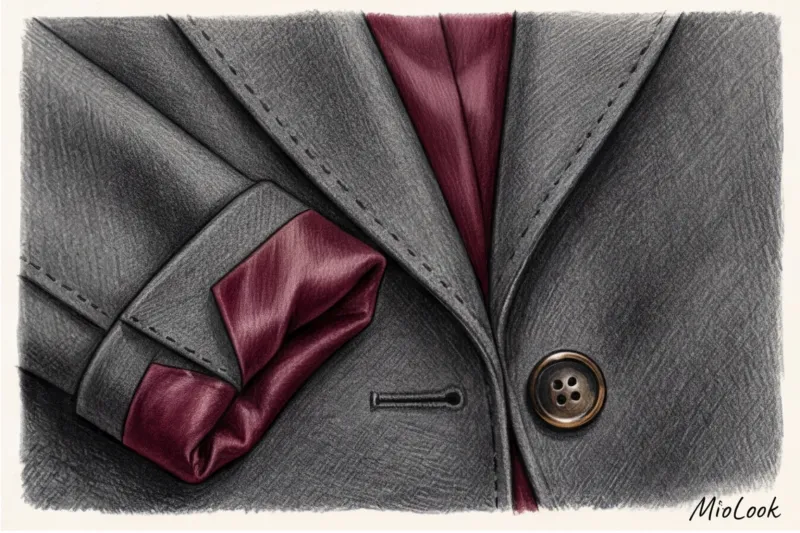
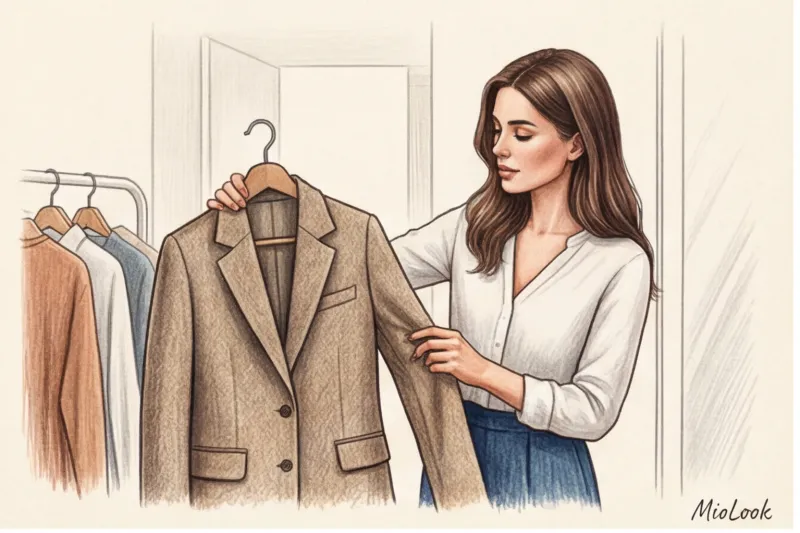
Let's take a closer look at the anatomical structure of a proper jacket. A classy jacket always has a slightly higher armhole (the place where the sleeve attaches to the shoulder)—this allows for freedom of arm movement without raising the entire jacket. The lining is made of breathable viscose or cupro, not "greenhouse" polyester. Buttons are made of horn or metal, not flimsy plastic.
Advice from a stylist: It's better to buy basic jeans or trousers from Massimo Dutti or COS and take them to a tailor (fitting will cost around €20-30) than to wear expensive luxury items that don't fit well. A perfect fit can make any item look several times more expensive.
Investing Against Momentum: The Math of Cost-Per-Wear
My favorite tool for transforming my thinking is the Cost-Per-Wear (CPW) formula. It's the cost of an item divided by the number of times you'll wear it. This is where the paradox lies: "expensive" items end up costing you less in the long run.
Let's do the math. You buy a trendy polyester coat from a mass-market retailer for €100. It starts to pill and lose its shape after 10 washes. Your Cost-Per-Wear is €10 per washer.
Now imagine investing in a classic 100% wool coat for €500. You wear it for three seasons in a row, 40 times each (120 total). Your Cost-Per-Wear is only €4.10 per wear. What's more, you look expensive and feel luxurious for each of those 120 days.
What you absolutely shouldn't save on at 30:
- Shoes: shapes gait, posture and back health.
- Bags: The rigid shape and high-quality leather elevate the whole look.
- Outerwear: This is what people see first for 6 months of the year.
What you can and should save on: cotton T-shirts (they quickly lose their freshness, you can buy them at Uniqlo or Zara), ultra-trendy accessories for one season, summer sundresses for vacation.
Ready to get started?
Try the free plan—no commitments. A smart AI stylist will help you find the perfect look.
Get access — €0.99 onceDecluttering like an adult: what you need to say goodbye to ruthlessly
Before buying anything new, you need to clear the canvas. A closet full of clothes drains your energy. We all know the Pareto principle: we wear 20% of our clothes 80% of the time. The rest is visual noise.
Fair warning: this stage can be painful. You must ruthlessly get rid of things that require constant monitoring. A skirt that needs tugging down when you walk? Trash it. A blouse with buttons coming apart at the chest? Donate it. Jeans that are impossible to sit in after lunch? Goodbye.
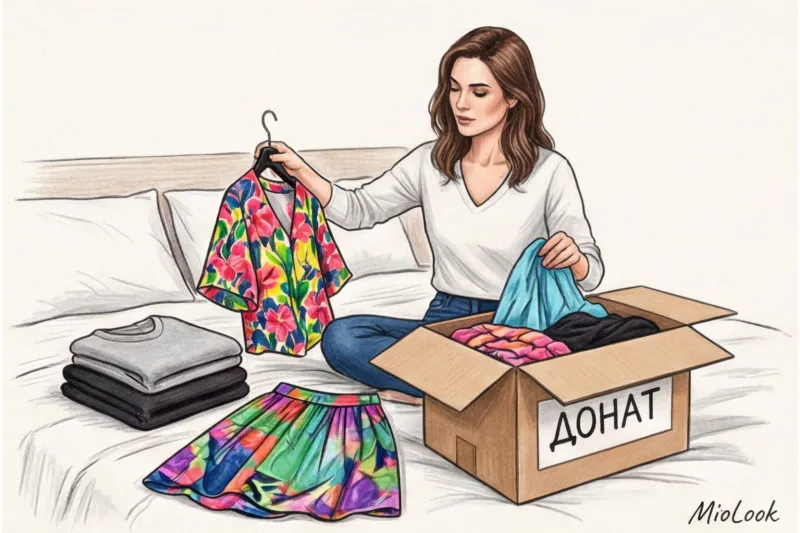
We will also have to part with two dangerous categories:
- Things of Hope: Those same size 42 jeans you're planning to fit into after your diet. They only generate daily feelings of guilt. Read more about this psychological trap in our article about Why is storing weight loss clothes harmful?.
- "Things-memories": A dress from a first date ten years ago. Clothes are meant to be worn, not stored like a museum piece.
When in doubt, use this simple rule: if an item hasn't been worn for exactly one year, put it in a box and hide it out of sight. If you don't remember it in the next six months, feel free to recycle it. To make the process of saying goodbye and planning easier, I often advise my clients to use smart features. MioLook , which helps to take inventory and visualize those same 20% of working combinations.
A step-by-step plan: how to put together a basic wardrobe for a thirty-year-old woman
Building a wardrobe is like architecture—we start with the foundation and only then add decor.
Step 1: Determine a neutral palette.
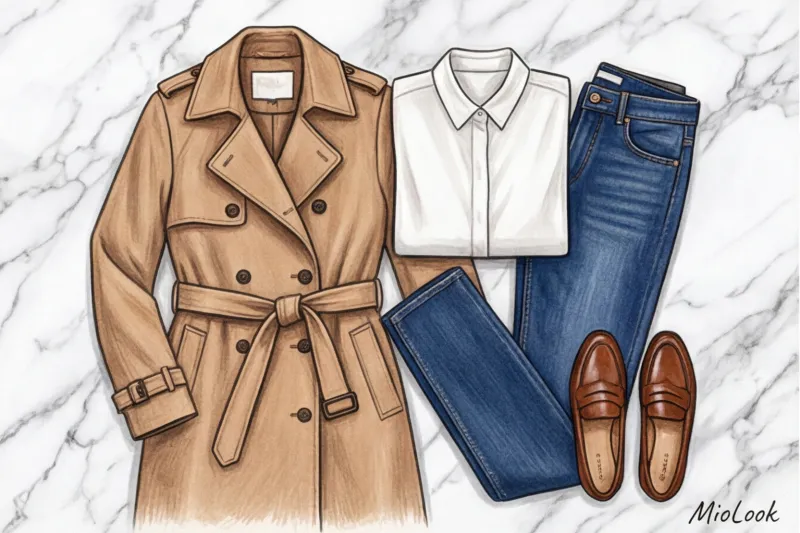
The base doesn't have to be black and white. According to the Pantone Color Institute, deep, complex neutrals look much more expensive. Choose your three base colors. These could be navy, chocolate, graphite gray, olive, or camel.
Step 2: Choose the perfect bottom.
This is your foundation. Find your perfect pair of straight-leg jeans made of thick denim (without any fraying or holes) and well-fitting trousers with a high or mid-rise. The entire silhouette is built from the bottom.
Step 3: Layering and Toppings.
Add a structured jacket, a couple of silk or quality viscose blouses, and a cashmere or merino jumper. The third layer rule instantly makes the image complex and complete.
The Rule of 3 Premium Accessories
Here's a secret that all European stylists use: quality shoes, a structured bag, and an elegant watch elevate even the simplest basics to a luxurious level.
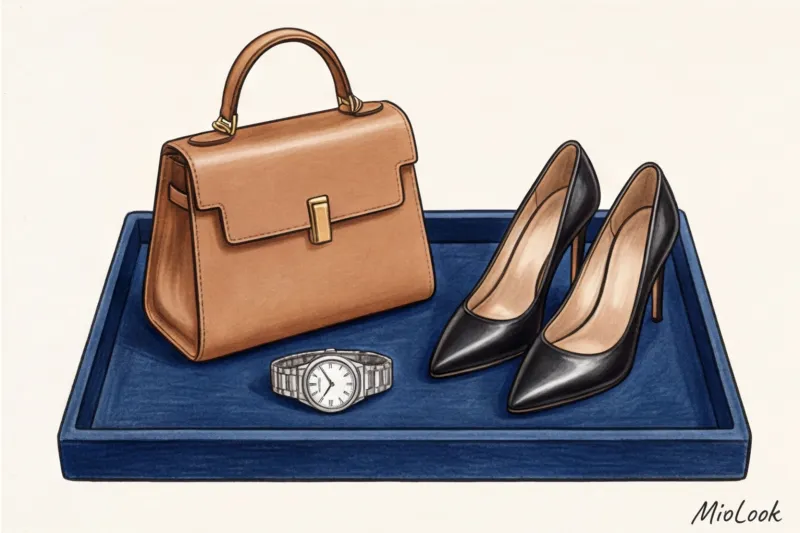
If you're wearing basic straight-leg jeans from Zara and a white T-shirt from Uniqlo, but you're also carrying a Polène bag (or a similar quiet luxury brand for €300-€400) without flashy logos and wearing leather loafers, the whole look feels expensive. It's the halo effect created by the accessories.
Access to MioLook for €0.99 — one-time payment
Start creating your perfect looks with the help of artificial intelligence. Upload your items and receive ready-made capsule collections for every day.
Get access — €0.99 onceThe biggest mistakes you make when trying to find your own style at 30
During the transformation process, many people fall into two extremes. The first is getting stuck in teenage trends Crop tops, micro skirts, and acid colors from TikTok rarely fit with the image of a mature, confident woman.
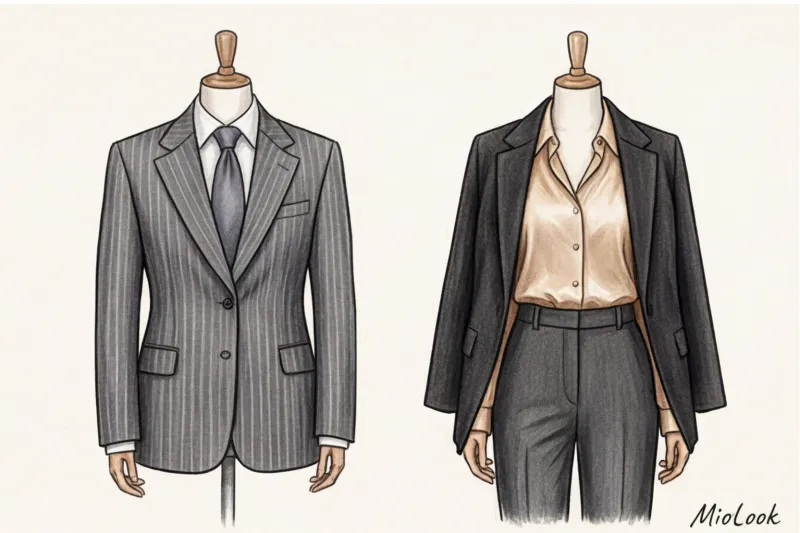
The second extreme that I see all the time in the corporate environment is "straight A student syndrome" The woman tries to look so "respectable" that she dresses in stiff, conservative two-piece suits, button-down shirts, and old-fashioned pumps. The result? A visual 10-year age added to her passport.
The third mistake is ignoring one's actual body architecture For the sake of trends. The global hyper-oversized trend, set by Balenciaga, looks great on the runway and on tall women with petite figures. But if you have feminine curves and are petite, a stark oversized look without any accents will turn you into a monolithic square. Don't be afraid to show off your wrists, ankles, and accentuate your waist—airiness in a silhouette always works in your favor.
Fair warning: This mathematical and structured approach doesn't work for everyone. If you're a representative of a vibrant creative industry (art director, artist, avant-garde stylist), where outrageousness is part of your personal brand, CPW's strict framework and formulas may only limit you. But for 90% of women living the fast pace of the modern city, it's a lifeline.
Style in your 30s isn't a restriction, it's a liberation. This is the moment when you finally stop adjusting to your clothes and make them work for you. Start by auditing your schedule and decluttering your closet—and you'll be surprised how few items you actually need to look impeccable every day.