Четыре года назад в крошечном винтажном магазинчике Берлина мои пальцы случайно скользнули по неприметной черной блузке. Она висела между скрипучим полиэстером 80-х и растянутым акрилом. Бирок не было, освещение оставляло желать лучшего, но мои руки уже отправили сигнал в мозг: «Берем, не глядя». Это оказалась винтажная шелковая блуза Max Mara, которая обошлась мне в 4 евро. Секрет этой находки не в удаче, а в банальном знании материаловедения.
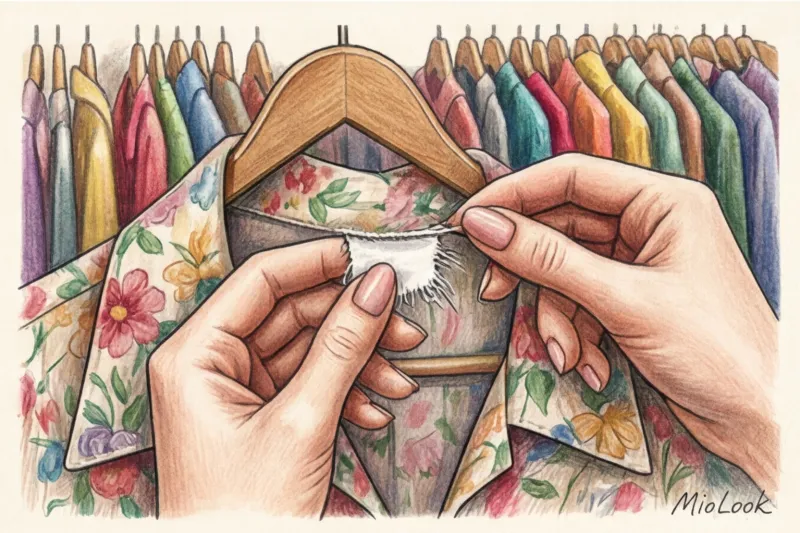
Интернет переполнен советами в духе «просто подожгите ниточку». Давайте будем реалистами: если вы достанете зажигалку посреди магазина, вас в лучшем случае выведут охранники. Поэтому сегодня мы поговорим о том, как узнать шелк в секонд хенде исключительно с помощью сенсорного анализа. Мы задействуем оптику, акустику и теплопроводность. Подробнее о базовых свойствах и ценности этого материала мы уже говорили в нашем полном гиде по статусной ткани, но сегодня мы переходим от теории к суровой, но увлекательной практике.
Срезанные ярлыки: почему биркам в секонд-хенде нельзя верить
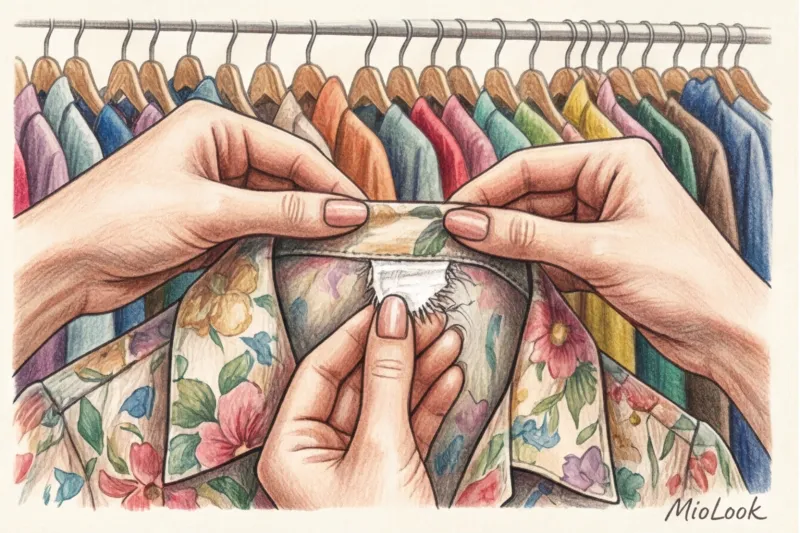
Если вы часто бываете в винтажных лавках, то знаете: на самых интересных вещах состав обычно отсутствует. И дело не в заговоре продавцов. Натуральный шелк часто носят на голое тело, и жесткие синтетические ярлыки нещадно царапают кожу. Их срезают в первую же неделю после покупки.
Но есть и вторая, более коварная проблема — маркировки масс-маркета. Бренды обожают писать на этикетках «silky touch» (шелковистое прикосновение) или «artificial silk» (искусственный шелк). Одна из моих клиенток, Аня, однажды с гордостью принесла на разбор гардероба роскошное платье из «тяжелого шелка», купленное с рук. Увы, это оказалось купро. Да, купро — прекрасный, дышащий материал из переработанной целлюлозы, но это не шелк, и его рыночная стоимость в разы ниже.
Более того, полагаться только на глаза в секонд-хенде — роковая ошибка. Дешевые люминесцентные лампы искажают цветопередачу и заставляют блестеть даже откровенную пластмассу. Нам нужны более надежные инструменты.
Ваш идеальный образ начинается здесь
Присоединяйтесь к тысячам пользователей, которые каждый день выглядят безупречно с MioLook. ИИ-стилист поможет вписать винтажные находки в современный гардероб.
Начать бесплатноОптика ткани: жемчужное свечение против глянцевого блеска
Давайте обратимся к физике. Нить дешевого полиэстера в разрезе круглая и гладкая. Она работает как зеркало, отбивая свет прямо вам в глаза. Именно поэтому синтетика дает плоский, резкий, белый блик — эффект дешевого глянца.
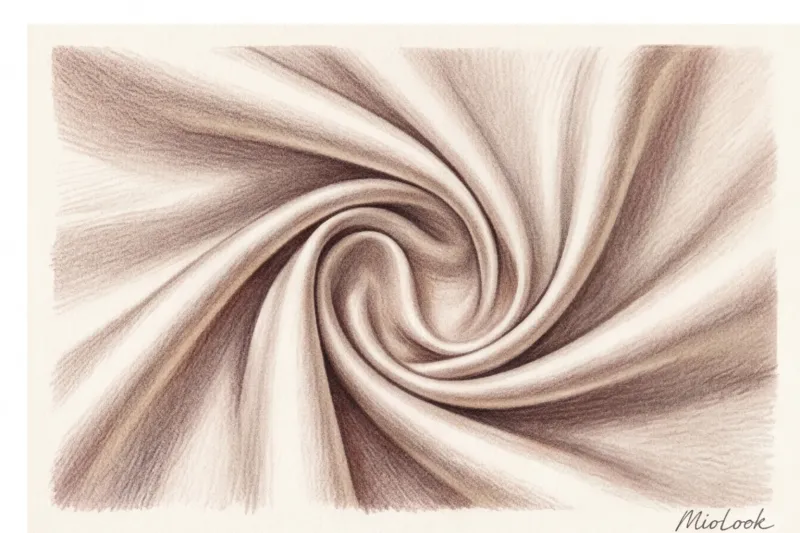
Волокно натурального шелка (фиброин) имеет форму треугольной призмы. Когда свет попадает на эту микроскопическую призму, он не просто отражается, а преломляется, рассеиваясь под разными углами. Как результат? Шелк не блестит. Он светится изнутри мягким, жемчужным сиянием, которое плавно перетекает в складках.
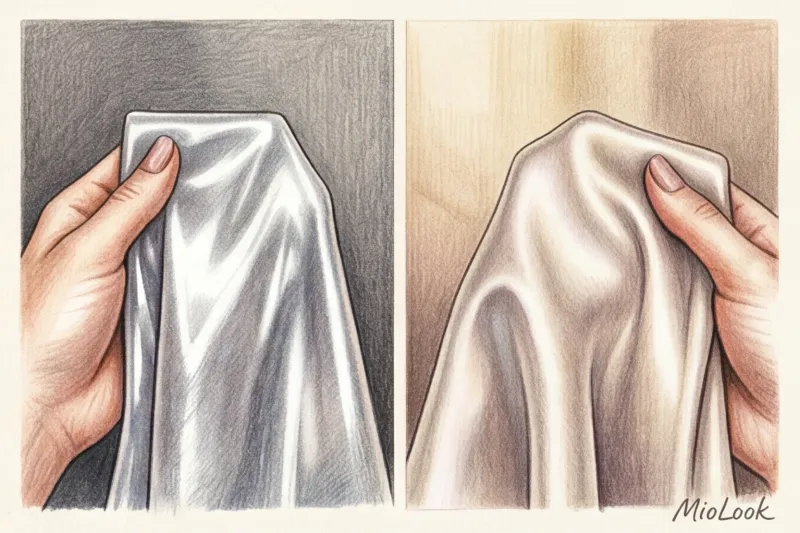
«Натуральный шелк впитывает краситель глубоко в структуру белковой нити. Полиэстер же окрашивается поверхностно. Поэтому цвета на шелке всегда выглядят сложными, многогранными и глубокими, в то время как синтетический пигмент часто кажется плоским и кричащим».
Как колорист, я всегда обращаю на это внимание. По данным отчета Textile Exchange (2023), натуральные белковые волокна удерживают пигмент на молекулярном уровне иначе, чем синтетика. Если вы видите сложный, глубокий изумрудный или богатый винный оттенок, который слегка меняет температуру при наклоне ткани — перед вами, скорее всего, благородный материал.
Тактильная экспертиза: 3 способа почувствовать статус
Наши пальцы и рецепторы кожи — лучший спектрометр, если знать, как их использовать. Переключаем внимание с глаз на ощущения.
Температурный тест (тест на щеке)
Полиэстер — это пластик (полиэтилентерефталат). Он всегда ощущается прохладным, безжизненным и чужеродным. Если вы приложите его к коже, он останется холодным или заставит вас мгновенно вспотеть, создав парниковый эффект.
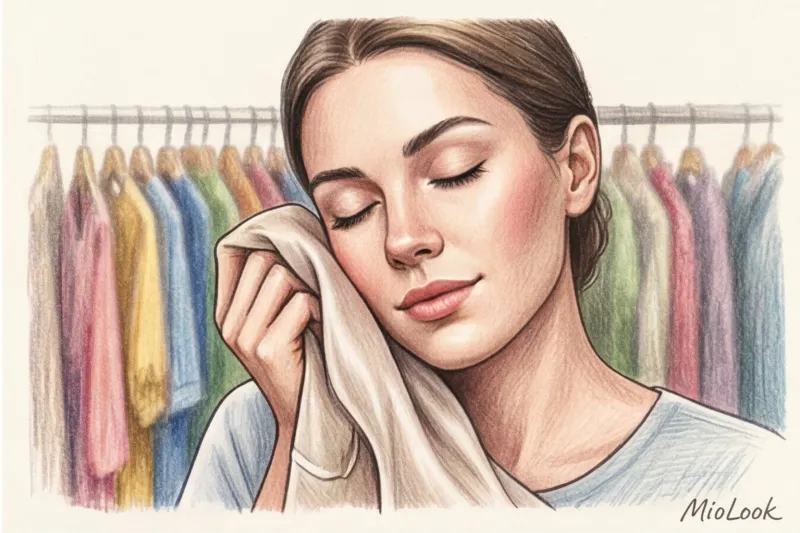
Сделайте так называемый «тест на щеке». Приложите ткань к запястью (где тонкая кожа) или к щеке. Натуральный шелк обладает феноменальной теплопроводностью. Буквально за 2-3 секунды он нагреется до температуры вашего тела и перестанет ощущаться как инородный предмет. Он словно сливается с кожей.
Акустический тест (Scroop-эффект)
Мало кто знает, но настоящий шелк умеет «разговаривать». В текстильной промышленности есть специальный термин — scroop (скруп), что переводится как шелковый хруст.
Поднесите край изделия близко к уху и крепко сожмите ткань в кулаке, слегка потерев слои друг о друга. Натуральный шелк издаст характерный, мягкий хруст — звук, похожий на шаги по свежевыпавшему, сухому снегу. Вискоза в такой ситуации промолчит, а полиэстер будет дешево шуршать или поскрипывать, как пластиковый пакет.
Тест на текучесть («эффект воды»)
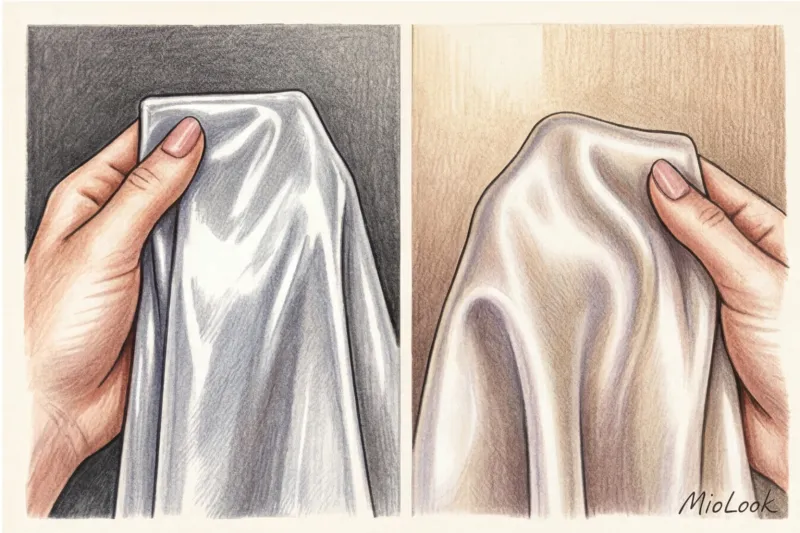
Ткань нужно проверять в динамике. Соберите изрядный кусок подола или рукава в ладонь, сожмите, а затем разожмите пальцы, позволив ткани выскользнуть вниз.
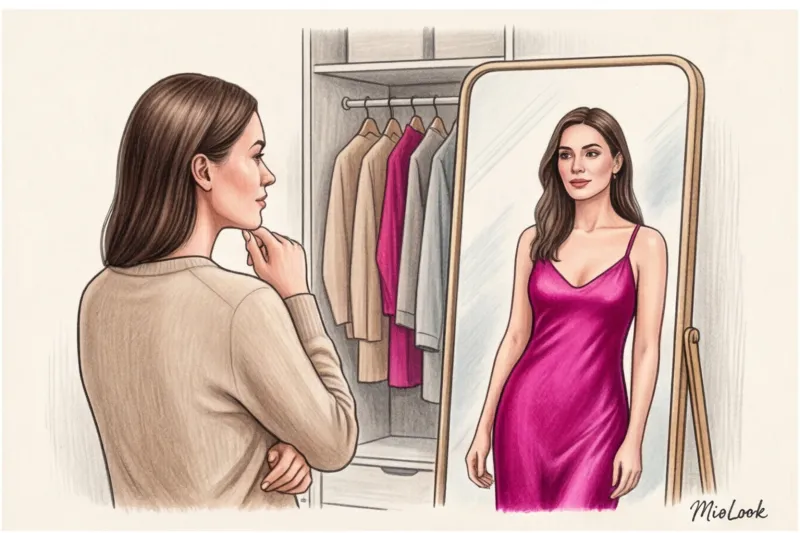
Шелк струится, как тяжелая вода. Он буквально утекает сквозь пальцы, мгновенно расправляясь под собственным весом. Синтетика же из-за жесткости нитей будет топорщиться, «пружинить» и цепляться за неровности кожи. Кстати, когда вы найдете свою идеальную шелковую блузу, я рекомендую добавить ее в умный гардероб MioLook — приложение поможет составить с ней десятки неочевидных комплектов для разной погоды.
Попробуйте MioLook
Умный AI-стилист подберёт идеальный образ за вас и поможет организовать ваши винтажные находки.
Начать бесплатноРазрушаем мифы: когда шелк не похож на шелк
Здесь кроется главная ловушка для новичков. Многие уверены: настоящий шелк — это всегда идеально гладкая, блестящая атласная ткань. Это опасный миф, из-за которого охотники за винтажом упускают самые дорогие вещи.
Миф 1: Шелк всегда блестит.
Ничего подобного. Крепдешин, хаботай или шелковый шифон — абсолютно матовые. Их поверхность слегка шероховатая, зернистая.
Миф 2: Шелк идеально ровный.
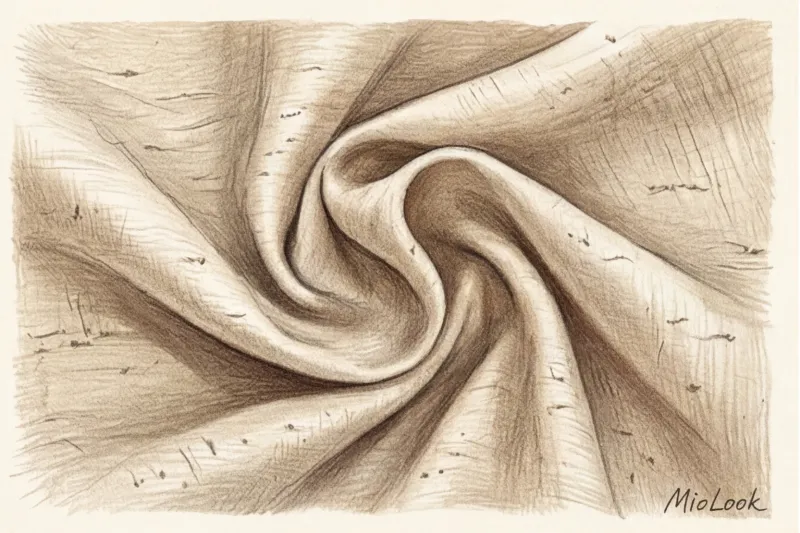
Познакомьтесь с диким шелком (бурет, тусса, чесуча). Это пряжа, которую собирают после того, как бабочка покинула кокон. Нить получается короткой и толстой. Ткань из дикого шелка имеет узелки, неровности и внешне больше напоминает грубоватый лен или плотный хлопок. При этом она сохраняет феноменальную терморегуляцию: в ней не жарко в +30°C. Важное ограничение: визуальные тесты на свечение для буретного шелка НЕ работают, здесь поможет только тест на тепло и горение.
Миф 3: Шелк не мнется.
Мнется, и еще как. Но делает это иначе. Синтетика и жесткая вискоза заламываются острыми, колкими углами (вспомните заломы на сгибе локтей у дешевых пиджаков). Шелк образует мягкие, плавные, округлые складки, которые часто расходятся сами под воздействием тепла тела.
Изнанка статуса: как крой и швы выдают дорогую вещь
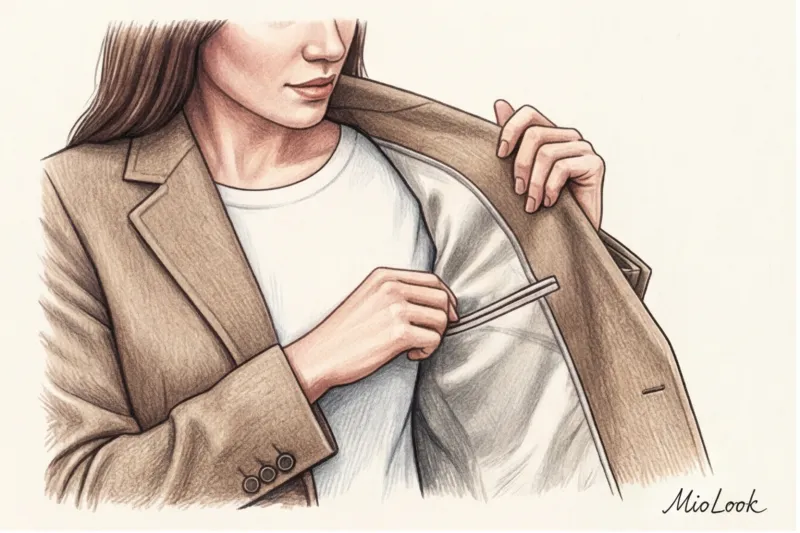
Даже если у вас насморк, плохое зрение и перчатки на руках, вы можете вычислить люкс по изнанке. Дорогие бренды никогда не шьют статусный шелк дешевыми методами. Ткань капризна, она сыплется и ползет по швам, поэтому требует сложной портновской работы.
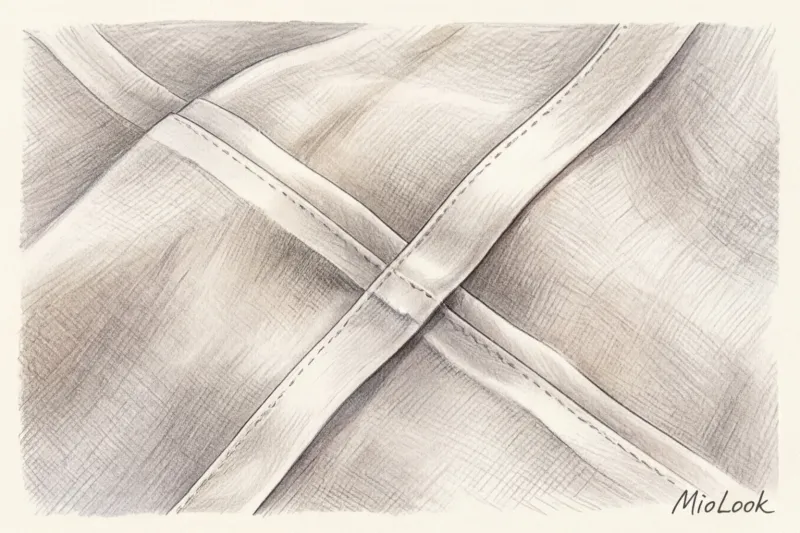
Выверните вещь наизнанку. Что вы видите?
- Французский (бельевой) шов. Если внутри вы видите аккуратный, закрытый со всех сторон рубчик, а не торчащие нитки от машинки-оверлока — перед вами качественная вещь. Производители масс-маркета не тратят время и метры ткани на закрытые швы.
- Ручной роуль (hand-rolled hem). Если вы выбираете шелковый платок (каре), посмотрите на его края. У люксовых платков (стандарт, заданный домом Hermès) край подвернут валиком на лицевую сторону и подшит вручную невидимыми стежками. Машинная строчка — признак дешевого производства.
Домашняя лаборатория: тест на горение для купленной вещи
Вы купили вещь. Вы принесли ее домой. И теперь червячок сомнения требует стопроцентных доказательств. Вот теперь можно использовать огонь. Найдите незаметную ниточку на внутреннем шве или аккуратно вытяните волокно из припуска.
Как горит синтетика (полиэстер, нейлон):
Она плавится. Нить съеживается, капает, превращается в жесткий, неразбиваемый черный или коричневый пластиковый шарик. Запах — резкий, химический, сладковатый (как от жженой пластмассы).
Как горит целлюлоза (хлопок, вискоза, купро):
Горит быстро, ровным пламенем, оставляет легкий серый пепел. Запах — как у горящей бумаги или осенних листьев.
Как горит настоящий шелк:
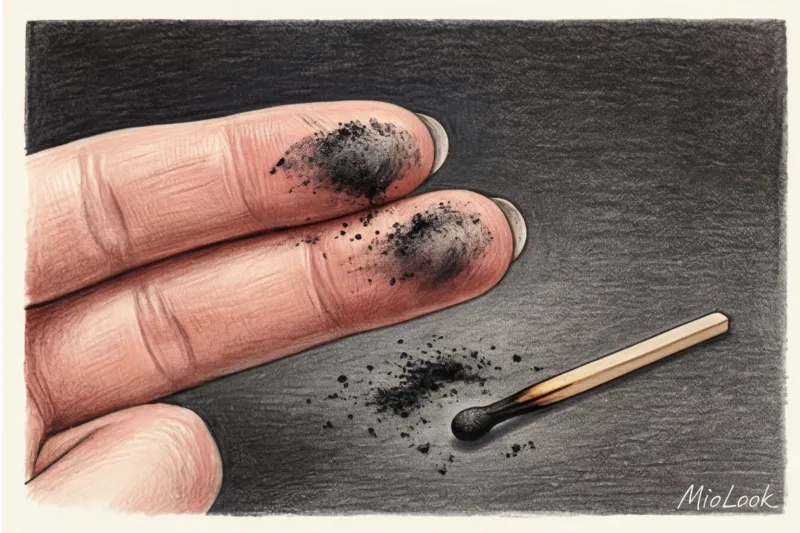
Шелк — это животный белок. Он горит неохотно, затухает, если убрать пламя. Пахнет исключительно жженым волосом или паленым пером. Оставшийся черный комочек пепла легко растирается между пальцами в мельчайшую пыль, не оставляя твердых фракций. Но будьте внимательны: если ткань смесовая (например, 70% шелка и 30% полиэстера), результаты теста будут смазанными — вы почувствуете оба запаха, а пепел будет полутвердым.
Чек-лист: как узнать шелк в секонд хенде за 5 минут
Поиск статусных вещей среди хаоса секонд-хенда — это не лотерея, а навык. Тренируйте насмотренность и чувствительность пальцев. Чтобы не забыть теорию в магазине, сохраните этот быстрый алгоритм:

- Свет: Ищите глубокое жемчужное свечение в складках, избегайте плоского белого блика.
- Тепло: Приложите к щеке. Нагрелось за 3 секунды? Отлично. Холодит? Вешаем обратно.
- Звук: Сожмите ткань у уха. Ищем мягкий «хруст снега» (scroop-эффект).
- Конструкция: Смотрим изнанку. Ищем закрытые французские швы и отсутствие неряшливого оверлока.
Тренируйте этот сенсорный паттерн каждый раз, когда заходите в магазин. Очень скоро ваши руки начнут автоматически выхватывать люксовые ткани из плотных рядов вешалок, даже если глаза этого еще не заметили. Умение «читать» ткань руками сэкономит вам десятки тысяч евро и кардинально изменит визуальную дороговизну вашего гардероба.