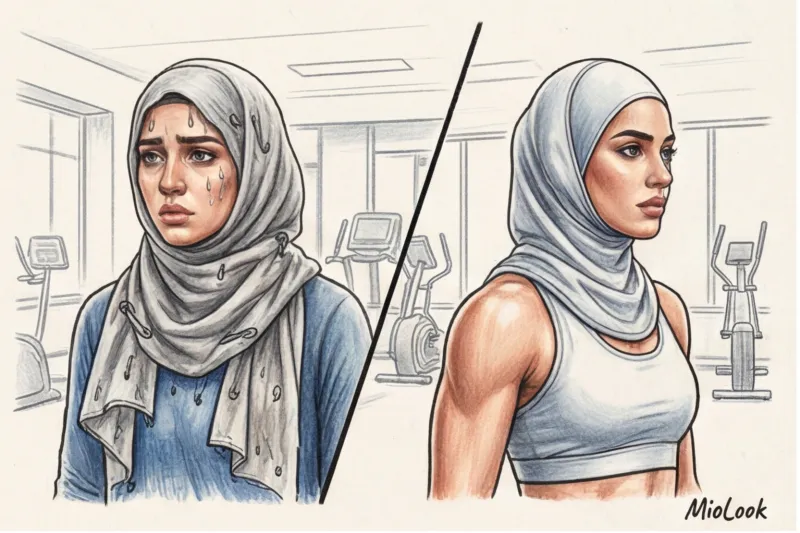
Анализируя гардеробы пользователей в базе MioLook, я наткнулась на пугающую статистику: около 80% мусульманок при первых походах в тренажерный зал используют старые повседневные палантины. Мы так привыкаем к своим любимым шифоновым или хлопковым шарфам, что нам кажется логичным просто надеть их с худи и отправиться на пробежку. Но как стилист и энтузиаст умного гардероба, я вынуждена сказать прямо: повседневный шарф в спортзале — это не просто неудобно. Это реальная угроза вашему здоровью и спортивным результатам.
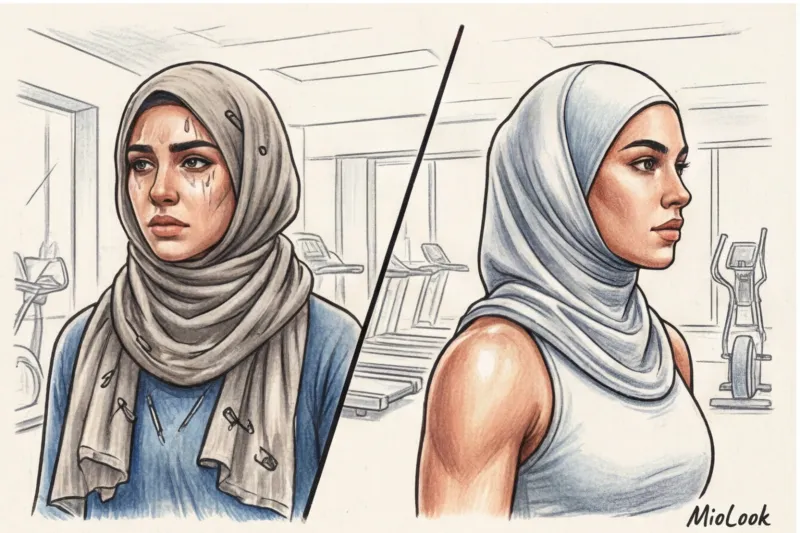
Подробнее об истории развития и базовых принципах такой экипировки мы рассказали в нашем полном гиде по спортивной одежде для мусульманок: выбор для фитнеса. А сегодня мы углубимся в биомеханику и текстильную инженерию. Если вы задаетесь вопросом, как выбрать спортивный хиджаб, который не придется поправлять каждую минуту, забудьте советы из глянца. Мы будем выбирать его так же, как профессиональные атлеты выбирают кроссовки.
Почему повседневный хиджаб саботирует ваши тренировки
Замечали, как после 20 минут интенсивного кардио лицо краснеет, пульс зашкаливает, а единственное желание — сорвать с себя слои ткани? Дело не в вашей слабой выносливости. Дело в физике.
Голова и шея — важнейшие зоны терморегуляции нашего тела. Блокируя отведение тепла плотным повседневным шарфом, вы искусственно создаете эффект «теплицы». Согласно исследованиям спортивных физиологов (в частности, данным Института спортивной медицины за 2023 год), нарушение терморегуляции головы во время HIIT-тренировок снижает общую выносливость организма на 15–20%.
На моей практике была клиентка, которая никак не могла преодолеть плато в беге. Когда мы заменили её многослойный хлопковый капор на технологичный спортивный хиджаб, её средний пульс при той же нагрузке снизился на 15%. Организм перестал тратить колоссальные ресурсы на охлаждение мозга.
Давайте разберем три главные ошибки:
- Хлопок и шифон. Хлопок — ваш главный враг при нагрузках. При намокании от пота он увеличивает свой вес до 3 раз, перестает дышать и блокирует до 70% теплоотдачи. Шифон же абсолютно не эластичен и сковывает движения шеи.
- Металлические булавки и сильные магниты. Использование иголок при динамических нагрузках повышает риск микротравм шеи на 45%. Одно неловкое движение со штангой — и булавка впивается в кожу.
- Объемные драпировки. Ткань, свободно свисающая на грудь, цепляется за тренажеры, рукоятки эллипсоида и мешает правильной биомеханике дыхания.
Главный миф, который я постоянно слышу: «чем плотнее и больше ткани, тем лучше соблюдается скромность». На самом деле, все работает ровно наоборот. Объемные хлопковые шарфы при намокании тяжелеют и намертво прилипают к телу, обрисовывая контуры шеи и плеч гораздо сильнее, чем анатомический спортивный хиджаб из правильного спандекса, который отводит влагу и остается сухим.
Попробуйте MioLook бесплатно
Умный AI-стилист подберёт идеальный образ и поможет собрать функциональную капсулу для спорта.
Начать бесплатноКак выбрать спортивный хиджаб: анатомия идеальной модели
Современный спортивный хиджаб — это инженерная конструкция. Забудьте о наматывании ткани слоями. Самый безопасный и аэродинамичный вариант — это форма pull-on (надевание через голову, как балаклава или капор).
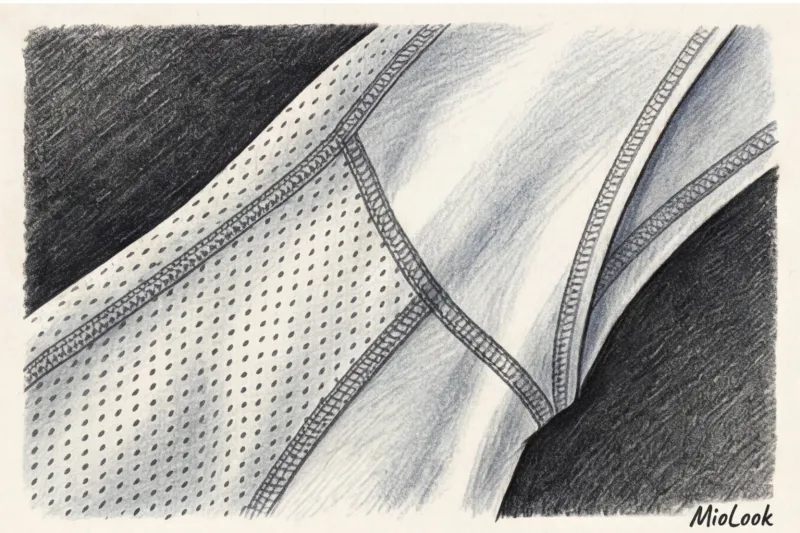
Правильная модель строится по принципам профессиональной экипировки марафонцев. Обратите внимание на изнанку изделия: там обязательно должны быть плоские швы (технология flatlock). Обычные выпуклые швы при трении влажной кожи во время бега стирают её до крови уже на пятом километре.
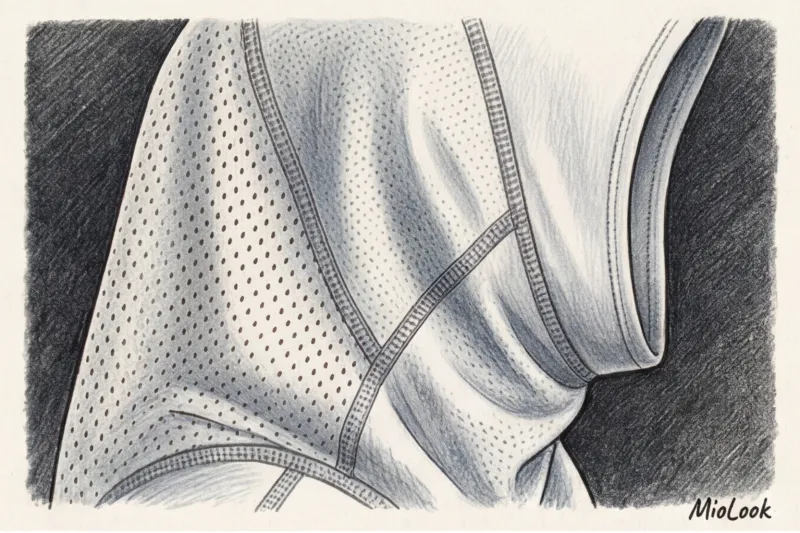
Также ищите скрытые силиконовые ленты по внутреннему краю у лица. Они работают как стопперы: даже если вы делаете берпи или прыгаете на тумбу, ткань не сползет на глаза и не откроет линию роста волос.
Технологичные ткани: читаем состав как профи
Никогда не покупайте спортивный хиджаб без изучения ярлыка. По данным отчета текстильной лаборатории WGSN (2024), идеальный коэффициент отведения влаги (moisture wicking) демонстрируют только синтетические смеси.
Что должно быть в составе:
- Полиэстер (80-85%) + Эластан/Спандекс (15-20%). Этот дуэт забирает пот с поверхности кожи и мгновенно выводит его на внешнюю сторону ткани для испарения.
- Перфорированные вставки (mesh panels). В качественных моделях (ценового сегмента 40–80 €) в зоне ушей, на затылке и шее используется ткань в микро-сеточку для направленной вентиляции.
- Антибактериальная пропитка. Технология anti-odor препятствует размножению бактерий. Это критически важно, так как синтетика впитывает запахи быстрее натуральных тканей. (Кстати, о том, какие ткани лучше маскируют следы пота в повседневной жизни, мы писали здесь).
Подбор модели под вашу тренировочную рутину
Как стилист, собирающий фитнес-капсулы в MioLook, я всегда говорю клиентам: универсального спортивного хиджаба не существует. То, что идеально для бега, станет пыткой на пилатесе. Выбирать нужно, отталкиваясь от биомеханики ваших основных движений.
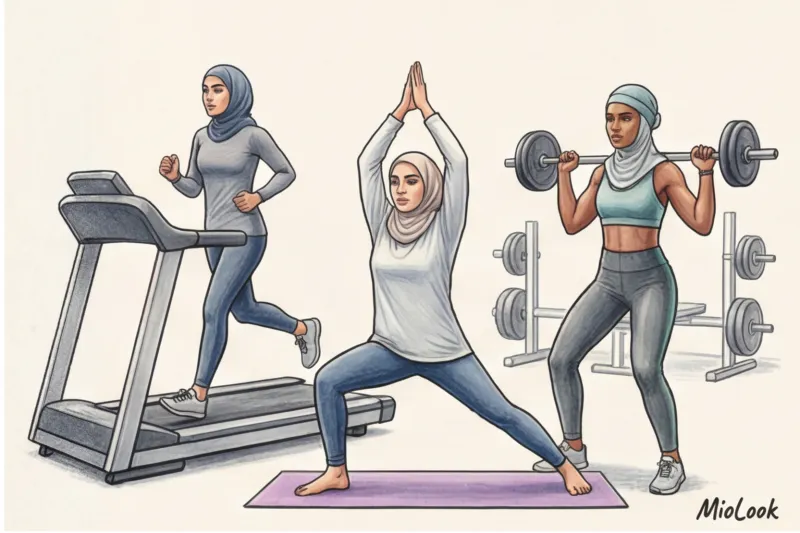
Для кроссфита, бега и HIIT (Высокая интенсивность)
Здесь главное — аэродинамика и отсутствие парусения. При беге встречный поток воздуха не должен задувать под ткань.
Выбирайте ультра-прилегающий крой. Идеальное решение — укороченные модели, которые плотно обхватывают шею и заканчиваются чуть ниже ключиц. Такие хиджабы заправляются под спортивную футболку с высоким воротом. Это гарантирует, что при выполнении рывка гири или работе с канатами ткань ни за что не зацепится.
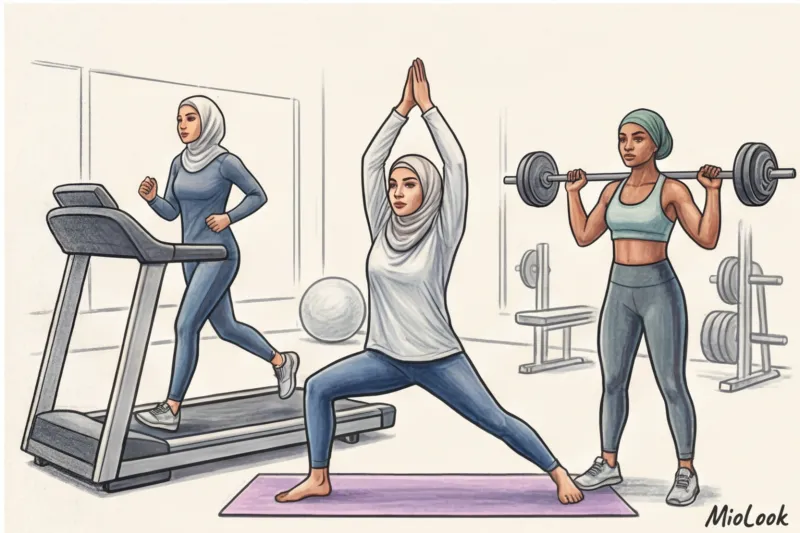
Для йоги, пилатеса и растяжки (Низкая интенсивность)
Тут правила меняются. Когда вы делаете «собаку мордой вниз» или стойку на плечах, укороченный хиджаб выбьется из-под футболки и откроет шею.
Для этих практик ищите удлиненные спереди модели (доходящие до середины груди), которые свободно лежат поверх майки. Ткань должна быть более мягкой и эластичной (с бóльшим процентом спандекса). Важно, чтобы при сильных наклонах головы вперед горловина не сдавливала трахею.
Ваш идеальный образ начинается здесь
Присоединяйтесь к тысячам пользователей, которые каждый день выглядят безупречно с MioLook. Оптимизируйте свой спортивный гардероб.
Начать бесплатноСпорт, хиджаб и гаджеты: как носить наушники
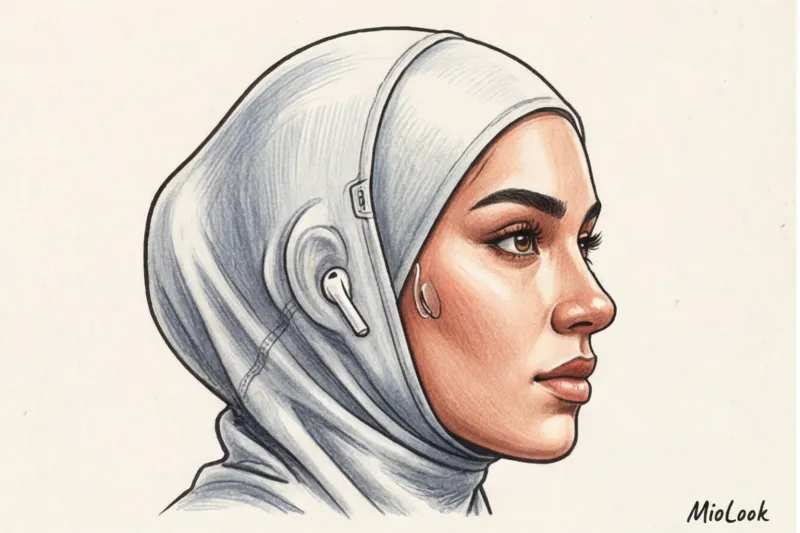
Это боль, о которой редко пишут бренды, но с которой сталкивается каждая мусульманка в зале. Вы надеваете тугой спортивный капор, вставляете беспроводные наушники (например, AirPods), и через 15 минут давление ткани на пластик вызывает невыносимую боль в ушных раковинах.
Как эксперт по продуктивности и интеграции гаджетов в стиль, я предлагаю три рабочих решения:
- Хиджабы со скрытыми прорезями. Некоторые инновационные бренды делают небольшие клапаны в области ушей. Через них можно продеть дужки солнцезащитных очков (для бега на улице) или вставить наушники так, чтобы они не были зажаты тканью.
- Наушники с костной проводимостью. Мой абсолютный фаворит для бегуний. Такие гаджеты (например, от бренда Shokz) надеваются поверх хиджаба на скуловую кость. Вы слышите музыку за счет вибраций, уши остаются открытыми для вентиляции, а ткань ни на что не давит.
- Полноразмерные наушники поверх мягкого хиджаба. Этот вариант работает только для силовых тренировок с низкой интенсивностью. Убедитесь, что амбушюры сделаны из влагоотводящего материала, иначе они быстро придут в негодность.
Краш-тест в примерочной: 4 действия перед покупкой
Никогда не покупайте спортивную экипировку, просто покрутившись перед зеркалом. Я разработала для своих клиенток жесткий алгоритм тестирования спортивной одежды прямо в примерочной. Если хиджаб не прошел хотя бы один тест — вешайте его обратно на рейлинг.
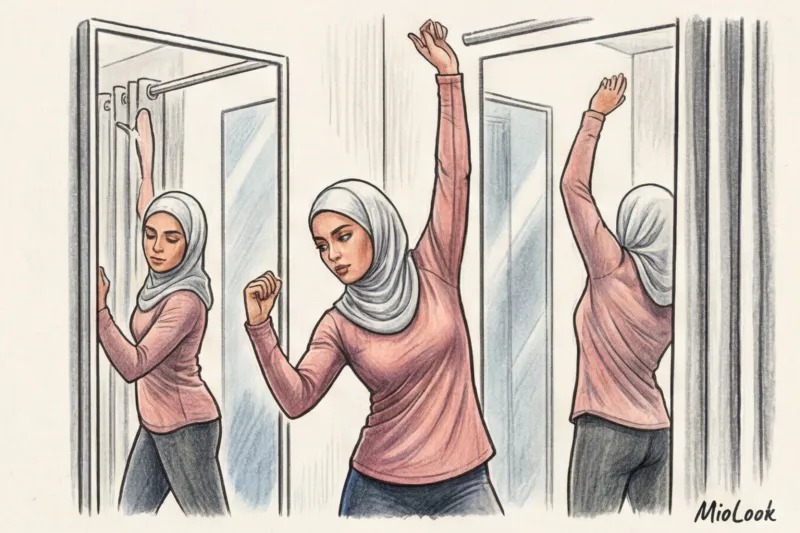
- Тест на периферическое зрение. Наденьте хиджаб и резко поверните голову влево, затем вправо на 180 градусов. Ткань должна двигаться вместе с головой, а не оставаться на месте, перекрывая вам обзор. Слепые зоны в спортзале опасны.
- Тест на «задирание». Резко поднимите обе руки вверх, как будто тянетесь к перекладине для подтягиваний. Оголилась ли шея? Выскользнул ли край из-под футболки? Если да — ищите модель подлиннее.
- Тест на наклон. Наклонитесь и коснитесь пальцев ног. Ткань на лбу не должна сползать на брови и глаза. Если она съезжает, значит, силиконовая лента слабая или размер вам велик.
- Тест «глубокий вдох». Опустите подбородок к груди и сделайте максимально глубокий вдох. Почувствуйте, не давит ли шов на кадык и щитовидную железу. В момент пиковой нагрузки на тренировке даже минимальное давление вызовет чувство удушья.
Честное ограничение: этот чек-лист работает не для всех. Если у вас очень длинные и густые волосы, собранные в объемный пучок, стандартные pull-on хиджабы будут тянуть ткань назад. Вам придется искать модели, состоящие из двух частей: отдельной плотной шапочки-андеркэпа и свободного верхнего слоя.
Как стирать технологичные ткани, чтобы хиджаб не потерял форму
Покупка премиального хиджаба за 60 € не имеет смысла, если вы «убьете» его после первой же стирки. Спортивная микрофибра требует особого отношения.
Самая фатальная ошибка — использование кондиционера для белья. Молекулы кондиционера обволакивают волокна ткани силиконовой пленкой. Эта пленка навсегда забивает микропоры спандекса. Хиджаб станет мягким и будет приятно пахнуть, но он навсегда потеряет способность отводить пот, превратившись в полиэтиленовый пакет.
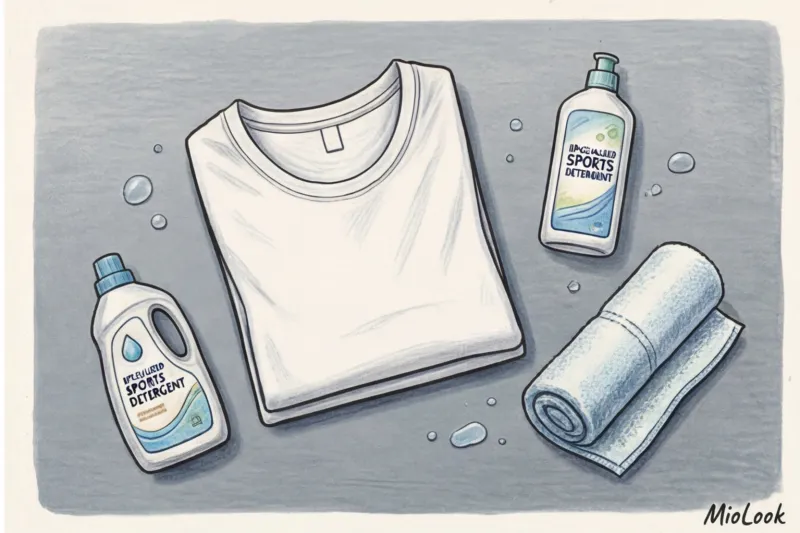
- Стирайте только в холодной воде (до 30 градусов). Горячая вода разрушает структуру эластана.
- Используйте специальные жидкие гели для спортивной одежды (в них есть энзимы, расщепляющие белки пота), а не сыпучие порошки, которые плохо выполаскиваются из микрофибры.
- Строгий запрет на машинную сушку и батареи. Сушите хиджаб только в расправленном виде при комнатной температуре. Благо, правильный полиэстер высыхает за 30–40 минут.
Выбор спортивного хиджаба — это инвестиция в вашу безопасность и результативность. Перестаньте идти на компромиссы со старыми шарфами. Относитесь к этому элементу гардероба как к профессиональной экипировке, тестируйте биомеханику перед покупкой, и вы удивитесь, насколько легче вам станет дышать на последних минутах сложной тренировки.