Чому утворюються катишки: анатомія проблеми та пастка м'якості
Минулого року моя клієнтка купила розкішний кашеміровий светр за 1000 € перед діловою поїздкою до Мілана. Він був неймовірно ніжним, буквально танув у руках. Але після одного перельоту і цілого дня шкарпетки з кроссбоді-сумкою він покрився катишками так, ніби пережив десяток років суворої експлуатації. "Джулія, чому?" — спитала вона мене у розпачі.
Це найчастіше питання, яке я чую з настанням холодів: який трикотаж не скочується та як перестати викидати гроші на одноразові речі? Докладніше про архітектуру теплого гардеробу ми говорили у нашому повному гіді по базовому трикотажному гардеробу Але сьогодні я хочу дати вам зовсім інший, інженерний погляд на цю проблему.
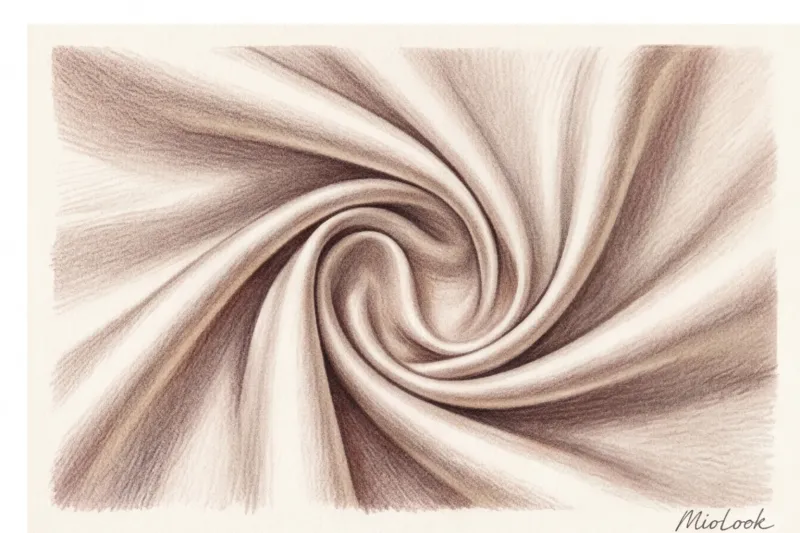
Пілінгування (утворення катишків) – це суто механічний процес. Короткі волокна пряжі вибиваються з нитки під впливом тертя, сплутуються між собою та утворюють щільні кульки на поверхні тканини. І тут криється головна пастка мас-маркету - пастка м'якості. Бренди знають, що ви приймаєте рішення про покупку в перші три секунди, торкнувшись речі. Тому вони штучно розпушують нитку і стирають її з ензимами, щоб светр здавався «хмарою». Але така пухка, нічим не закріплена структура приречена на появу катишків у зонах підвищеного тертя: пахвами, на боках (там, де висить сумка) та на внутрішній стороні рукавів.
Гребінна або апаратна пряжа: секрет, про який мовчать бренди
У текстильній інженерії існує два принципово різні способи створення вовняної нитки. Саме від них залежить, чи виживе ваш светр.
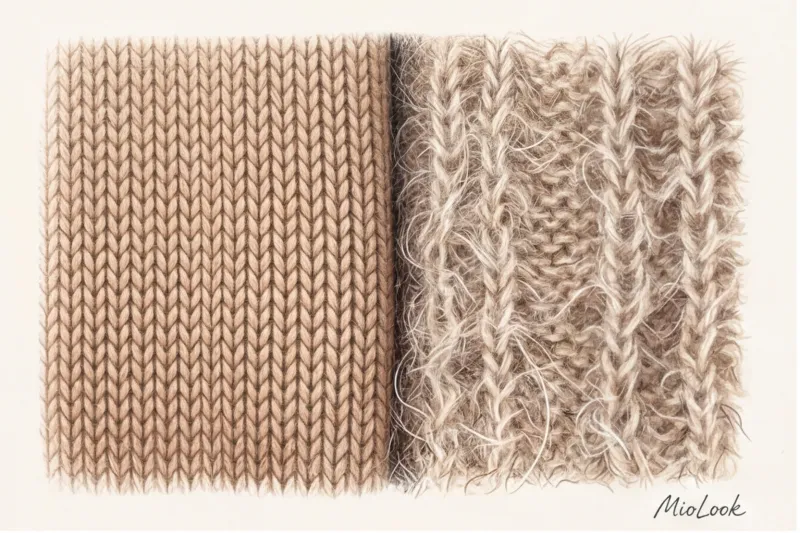
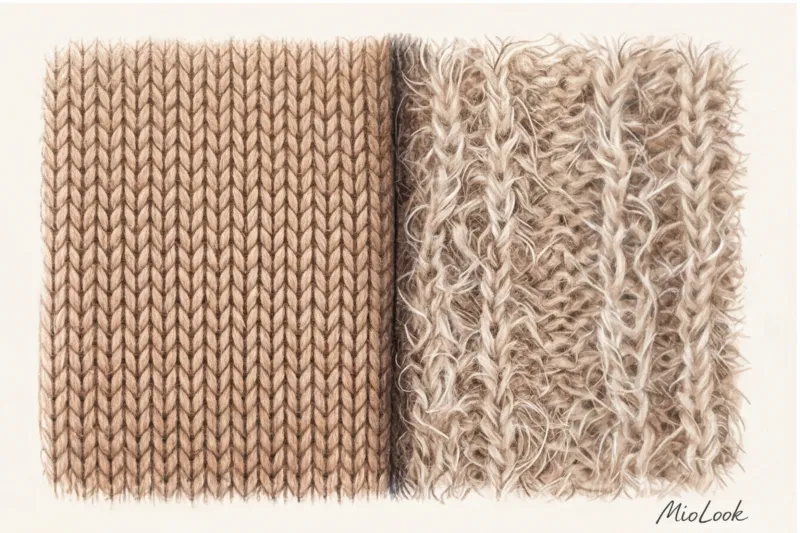
- Гребінна пряжа (worsted yarn): довгі волокна ретельно вичісуються, вирівнюються паралельно одне одному і туго скручуються. В результаті виходить гладка, шовковиста і дуже міцна нитка. Такий трикотаж виглядає структурно, має легкий блиск і практично не скочується.
- Апаратна пряжа (woolen yarn): короткі волокна скручуються слабо і хаотично, щоб захопити якнайбільше повітря для об'єму та тепла. Так, такий светр буде пухнастим, але він почне втрачати «волосся» і скочуватися буквально першого ж дня.
Як їх відрізнити візуально? Подивіться на поверхню тканини на рівні очей проти світла. Якщо ви бачите густий, нерівномірний «ореол» з гармати (halo) – перед вами апаратна пряжа. Якщо поверхня гладка, а петлі читаються як ідеальні геометричні фігури – це гребенна пряжа, ваша найкраща інвестиція.
Спробуйте MioLook безкоштовно
Розумний AI-стиліст підбере ідеальний образ щодня і допоможе зібрати бездоганну капсулу.
Почати безкоштовноЯкий трикотаж не скочується: читаємо склад як професіонал
Багато хто наївно вважає, що напис «100% натуральна шерсть» гарантує якість. Це найнебезпечніший міф. Дешева, коротковолокниста 100% шерсть скочується катастрофічно швидко. Для створення статусного гардеробу я рекомендую клієнтам шукати суміші з благородними волокнами.
Абсолютний чемпіон у опорі пілінгу – це мікс гладкої вовни мериноса та довговолокнистої бавовни або натурального шовку. Шовк у складі (навіть 15-20%) працює як природна арматура, надаючи нитці міцності та неймовірно красивого делікатного блиску. Такі речі роками зберігають свою первісну «архітектуру».
«Кашемір кашеміру різниця. Грейд волокна вирішує все: розкіш над назві матеріалу, а його фізичних властивостях».
Окремо варто сказати про кашемір. Індустрія швидкої моди знецінила це поняття. За стандартами якості справжній преміальний кашемір (Grade A) складається з волокон довжиною 34–36 мм і товщиною не більше 14 мікрон. За рахунок довжини волокно надійно тримається у крутці. Те, що продається в мас-маркеті за 100-150 € з гордою биркою "100% Cashmere" - це часто Grade C. Це короткі очеси (менше 28 мм), іноді навіть перероблені. Вони не здатні втриматися в нитці і миттєво збиваються у неохайні грудки.
Допустима синтетика: коли поліамід рятує річ
Давайте розвінчуємо головний страх перед синтетикою. Не вся синтетика – зло. Зло це акрил. Акрилові волокна утворюють дуже тверді катишки, які намертво зчіплюються з тканиною. Спроба відірвати акриловий катишок часто призводить до витягування нитки та псування виробу.
А ось 5–10% якісного поліаміду чи еластану у складі вовняного светра – це чудова новина. За даними досліджень Інституту текстилю, невелике додавання гладкого синтетичного сполучного збільшує міцність на розрив на 30% і значно знижує збитки від тертя. Поліамід допомагає светру тримати форму на ліктях та горловині, запобігаючи ефекту «домашньої піжами».
Ваш ідеальний образ починається тут
Приєднуйтесь до тисяч користувачів, які щодня виглядають бездоганно з інтелектуальними рекомендаціями MioLook.
Почати безкоштовноІнженерний підхід стиліста: як протестувати светр у магазині
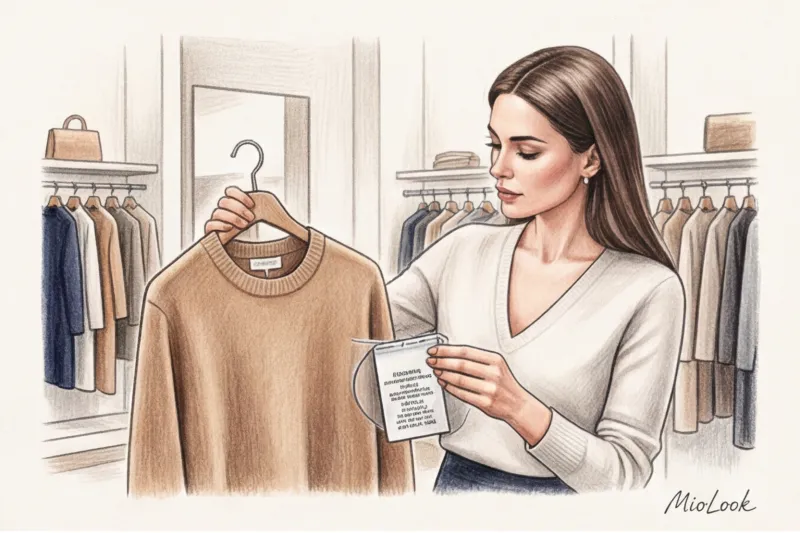
За 12 років роботи люксовим консультантом я виробила суворий алгоритм перевірки трикотажу, який використовую і Loro Piana, і COS. Перш ніж дивитися на цінник, я проводжу три фізичні тести.
- Тест на кручення (Twist Test). Я акуратно розсовую петлі на гладкій ділянці і дивлюся на нитку. Якщо вона виглядає як щільний, туго скручений канатик, то річ прослужить довго. Якщо нитка більше схожа на пухку вату, яка розпадається на волокна від одного дотику, я повертаю светр на полицю.
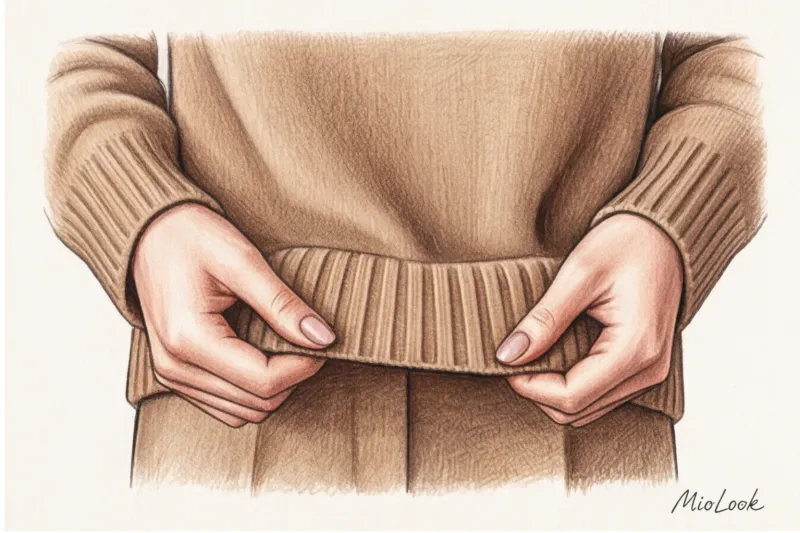
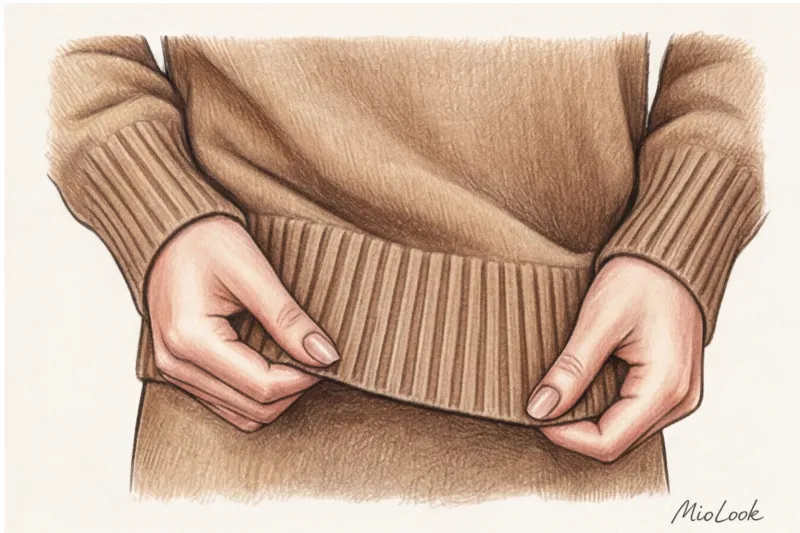
- Тест на відскок (Rebound Test). Я беру гумку на рукаві манжеті, м'яко, але впевнено розтягую її і різко відпускаю. Якісний трикотаж має феноменальну пружність: манжета повинна моментально, з клацанням повернутися у вихідний стан, не залишивши хвиль. Якщо край залишився розтягнутим — структурну цілісність порушено спочатку.
- Тест на густину (Density Check). Я піднімаю светр і дивлюсь крізь нього на світло ламп у бутіку. Чим менше просвітів між петлями, тим краще. Щільна в'язка означає, що нитки щільно прилягають одна до одної, вони не мають простору для тертя і зміщення.
Зрозуміло, я маю зробити важливе застереження: цей тест на щільність НЕ працює для виробів з мохера або альпаки. Їхня природна специфіка передбачає повітряну, напівпрозору в'язку. Але для базових мериносових чи бавовняних водолазок це абсолютний закон.
Інвестиції в базовий гардероб: чому дешевий кашемір це ілюзія
Коли ми обговорюємо бюджет на шопінг, я завжди пропоную клієнткам рахувати вартість одного виходу (Cost-per-wear). Бездоганно сконструйований светри мериноса з якісної гребенной пряжі обійдеться вам приблизно в 250-300 €. Ви одягнете його 100 разів за три сезони, і він залишиться гладким. Вартість виходу - 3 €.
Три кашемірові светри з мас-маркету по 100 € кожен втратять товарний вигляд після другого прання. Ви надягнете їх 10 разів, перш ніж переведете в розряд «тільки для дачі». Вартість виходу - 10 €, плюс постійне почуття невпевненості у своєму зовнішньому вигляді.
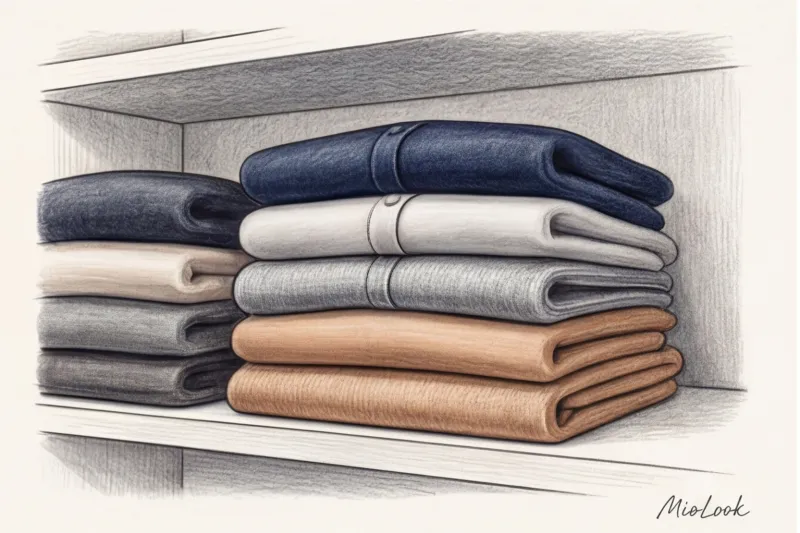
Преміальні бренди (і фабрики рівня Todd & Duncan, які виробляють пряжу для важкого люксу), закуповують сировину на аукціонах, суворо контролюючи довжину ворсу. Саме тому їхні речі формують ту саму «архітектуру затишку». Коли ви надягаєте структурну водолазку щільної в'язки в офіс, вона тримає форму, не обвисає на грудях і створює чіткий статусний силует. Щоб легко керувати такими інвестиційними речами та складати комплекти, я рекомендую оцифрувати шафу через MioLook — так ви завжди бачитимете, які базові елементи у вас уже є, а що справді варто докупити.
Превентивний догляд: як зупинити пілінгування до його початку
Навіть якщо ви вибрали ідеальний трикотаж, який не скочується за визначенням, неправильна експлуатація може його вбити. За стандартами тесту Мартіндейла (міжнародний метод оцінки зносостійкості) будь-яка тканина здається при агресивному терті.
Мій головний секрет догляду – давати шерсті відпочивати. Натуральне волокно є гігроскопічним. За день носіння воно вбирає вологу від тіла та розтягується. Світорові потрібно 24-48 годин у горизонтальному положенні в приміщенні, що провітрюється, щоб волокна висохли, скоротилися і повернули початкову пружність. Якщо носити той самий кашемір три дні поспіль — катишки неминучі.
Також звертайте увагу на підкладку верхнього одягу. Жорсткий поліестер усередині дешевого пальта спрацює як наждачний папір для вашого светра. Вибирайте пальто з підкладкою із гладкої віскози або купро.
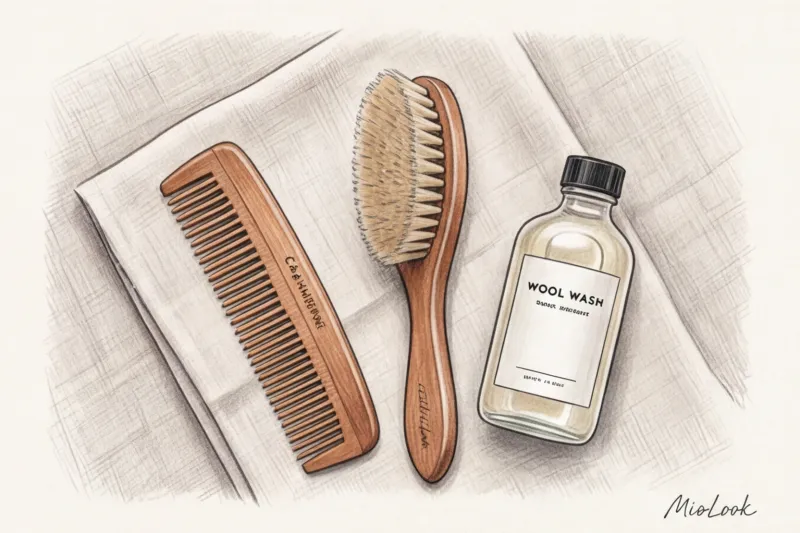
Що робити, якщо катишки все ж таки з'явилися (а поодинокі з'являтимуться в будь-якому випадку)? Експертне попередження: забудьте про електричні машинки для стрижки катишків на дорогих речах. Гострі леза, що обертаються, часто зрізають не тільки сам катишок, але і структурні волокна нитки-основи. Згодом светр стоншується і рветься. Використовуйте тільки ручний кедровий гребінь для кашеміру (cashmere comb), який делікатно вичісує вільний пух, не травмуючи пряжу.
Чи готові почати?
Спробуйте безкоштовний план MioLook - розумний помічник проаналізує ваш гардероб і запропонує нові ідеї без зобов'язань.
Почати безкоштовноЧек-лист: 5 кроків до покупки ідеального светра без катишків
Збережіть ці правила перед походом до магазину. Вони заощадять вам сотні євро та масу нервових клітин:
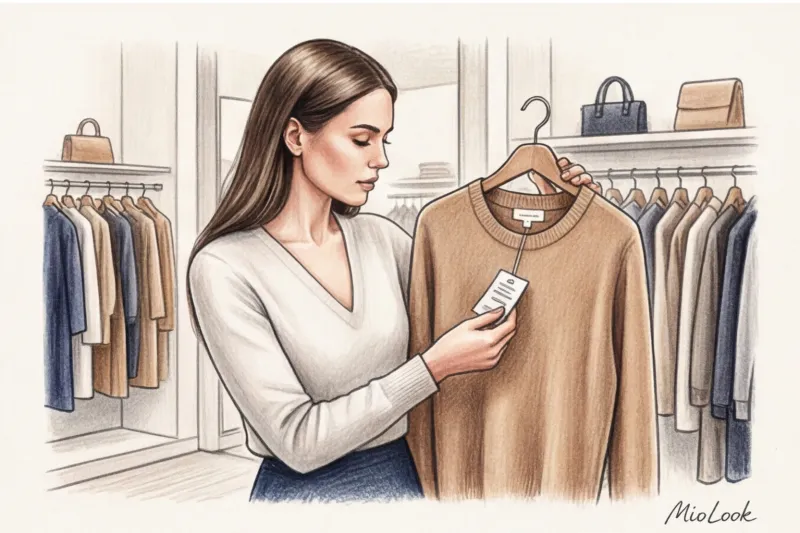
- Вивчіть етикетку: відмовтеся від акрилу (навіть 15% зіпсують річ). Шукайте 100% благородні склади (меринос, бавовна, шовк) або допустимі мікси з додаванням до 10% поліаміду для міцності.
- Оцініть пряжу візуально: вибирайте гладку, щільно скручену нитку гребенну без яскраво вираженого «волосатого» ореолу, якщо шукаєте базову річ на кожен день.
- Проведіть тест на просвіт: чим щільніше прилягають петлі один до одного, тим менше у волокон простору для зміщення та тертя.
- Перевірте архітектуру: зробіть тест на відскок манжети. Гнучкість - головний маркер довговічності.
- Враховуйте сценарій: Для офісних буднів та постійного тертя об стіл, сумку та ремінь безпеки вибирайте гладкий меринос. Кашемір залиште для розслаблених вихідних та виходів у світ.

Ідеальний гардероб будується не так на кількості речей, але в їх інженерному якості. Навчившись читати фактуру тканини до того, як подивіться на бренд, ви знайдете справжню свободу від нав'язаних трендів та маркетингу.