Main types of jewelry: glossary and anatomy of products
Have you ever felt that slight chill of uncertainty when a jewelry store consultant quickly pronounces, "This is a very secure English earwire, and the diamond in the prong setting ensures maximum light reflection"? Most women simply nod knowingly at that moment, afraid of appearing incompetent. And they'd be wrong. Understanding the different types of jewelry and how they work isn't just a matter of erudition. It's your primary defense against marketing gimmicks and unnecessary spending.
Over 12 years of working as a personal stylist, I've discovered a clear pattern: clients who understand basic terminology save 20 to 40% of their jewelry budget. They ask the right questions, don't overpay for a brand if the quality of the workmanship is compromised, and know exactly which details to examine with a magnifying glass. Before we move on to styling techniques, let's examine the anatomy of jewelry at a molecular level.
Remember these four basic terms that will instantly elevate your status in the eyes of any jeweler:
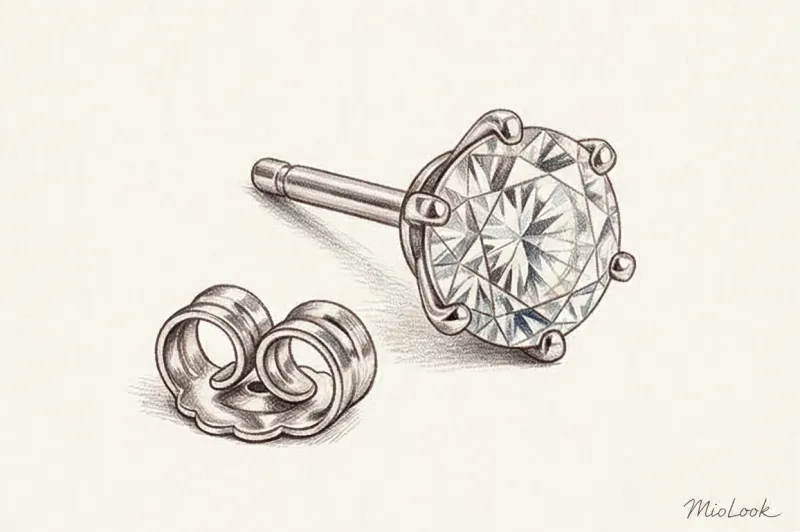
- Cast (frame) — a metal bowl or base in which the stone is set. A blind cast protects the stone from all sides, but steals its shine.
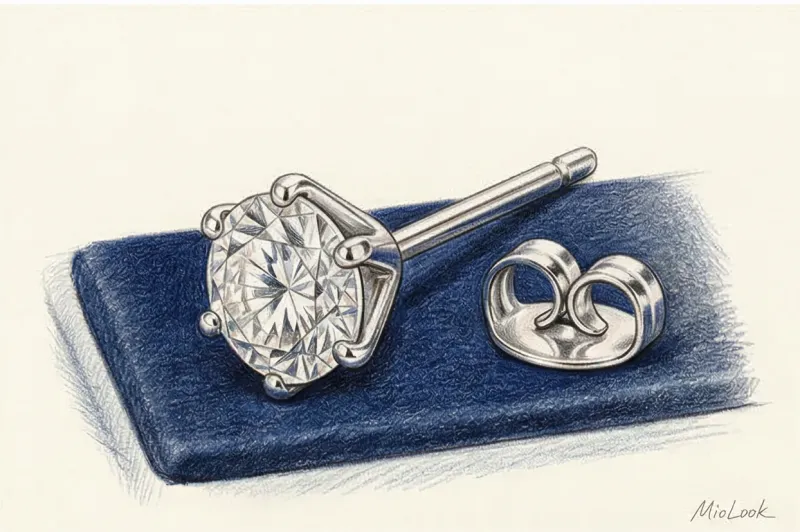
- Krapana - those same metal "paws" that hold the crystal. Insider Test: Run a claw hook along a nylon stocking or thin silk. If it snags, the hook is poorly made and will constantly ruin your clothes.
- Shvenza — a movable or fixed part of an earring that is inserted directly into the earlobe and secures the clasp.
- Bale — a connecting ring or loop (often decorative) that attaches the pendant to the chain. If the bail is too narrow, the pendant will get caught unsightly on the chain links.
"The shape of jewelry works like an optical illusion. What you wear can change the geometry of your face and body faster than contouring by a professional makeup artist."
Geometry dictates its own rules. A round face is visually elongated by long strand earrings, creating a vertical line. The common problem of "Venus rings" (horizontal wrinkles on the neck) is easily mitigated by abandoning chokers in favor of V-necklaces, which draw the eye to the décolleté. And chunky bracelets on a slender wrist emphasize the fragility of the bone thanks to the principle of volume contrast.
Neck jewelry: from chokers to sautoirs
Length is everything. The same braided design will look completely different depending on where exactly on the chest the piece ends. Jewelry standards classify neckpieces strictly by centimeters.
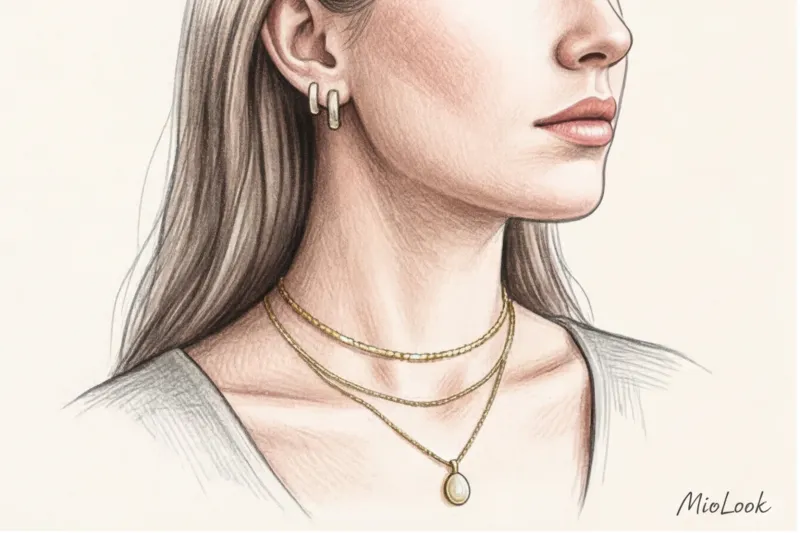
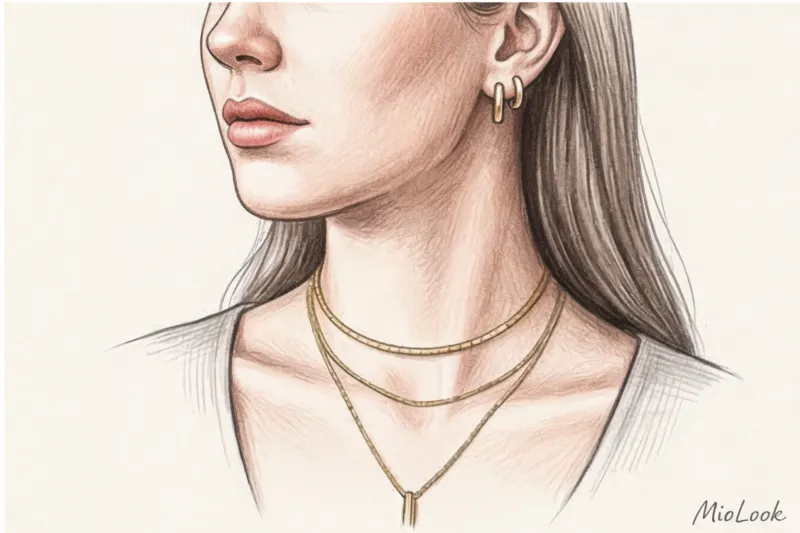
Collard (30-32 cm) And choker (35-40 cm) These are pieces of jewelry that require perfect posture. A collar fits snugly around the neck, while a choker rests at the very base, in the jugular notch. From an anatomical perspective, these types of jewelry visually "cut" the neck with a horizontal line. If your neck isn't naturally swan-length, it's best to avoid flat, wide chokers in favor of thin chains with a miniature pendant.
For office blouses, unbuttoned two or three buttons, and classic jackets, the ideal investment will be princess (42-47 cm) And matinee (50-60 cm) The princess-length skirt falls neatly on the collarbone, without clashing with the collarline. The matinee falls lower, toward the bustline, creating an elegant accent that's appropriate even for a formal dress code.
If your goal is to elongate your silhouette and add height, your choice is opera And sautoir (longer than 70 cm) A sautoir, often tipped with a tassel or a large stone, creates a powerful vertical line. One of my plus-size clients was amazed to see how a single long sautoir visually removed a couple of pounds from her bust line without any dieting.
But length is only half the story. It's important to understand the different types of chain weave, as they determine the durability of the product:
- Anchor weaving — the links are connected perpendicularly to each other. This is an absolute classic, boasting high tensile strength. If it breaks, a jeweler can solder it in five minutes.
- Armor weaving — the links lie in one plane (like chainmail). It's very reliable, doesn't twist, and shines brightly thanks to its diamond-cut edges.
- Snake (string) - It looks like a smooth metal snake. It's stunningly beautiful, but extremely fragile If you accidentally bend the snake at an acute angle (for example, by sleeping in it), a kink will form that cannot be straightened out.
- Bismarck — massive, intricate hand-woven fabric. Practically eternal, it's almost impossible to break under everyday conditions.
Types of earrings and types of clasps: comfort and safety
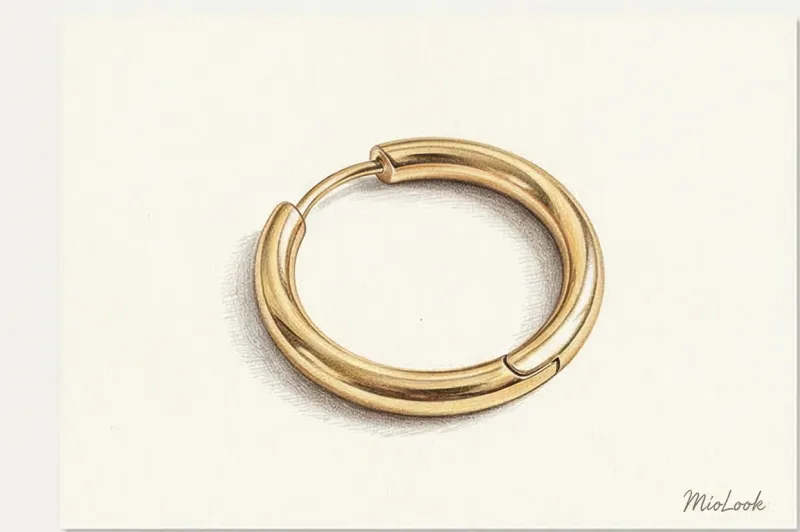
Earrings are closest to the face, so they're the first thing people notice. A basic jewelry wardrobe usually revolves around a few shapes. Studs — a universal option that is appropriate always and everywhere. Congo (rings) range from tiny to huge gypsy ones, and chuppahs and haggis (from the English hug - to embrace) - these are wide, often inlaid mini-rings that fit tightly around the earlobe.
Modern jewelry fashion has given us shapes that change the geometry of the ear. Climbers (or crawlers) "climb" up the lobe, creating the effect of multiple piercings in one puncture. Jackets They have a removable decorative part that is put on the stud from the back, peeking out from under the earlobe - a brilliant transformable decoration. Cuffs They don't require any piercing at all; they are attached by applying pressure to the cartilage.
But the most important thing about earrings is the clasp. It determines whether you'll lose your favorite €500 piece of jewelry on your first night out:
- English castle — the most reliable. You should hear a distinct click when closing. Cons: It's impossible to adjust the distance to suit the thickness of your earlobe.
- French castle (loop with loop at the bottom) - elegant, does not put pressure on the ear, but is easily deformed under pressure.
- Italian castle (Omega) is a premium option. It looks like a clip with an additional pin. It allows you to perfectly adjust the pressure on your earlobe.
- Carnation — There are pin-type (the clamp simply slides on) and screw-type (screws on). Screw-type is more secure, but takes longer to install.
- bracket — the oldest type of clasp, often used in heavy congo earrings. The movable bail fits into a hollow tube.
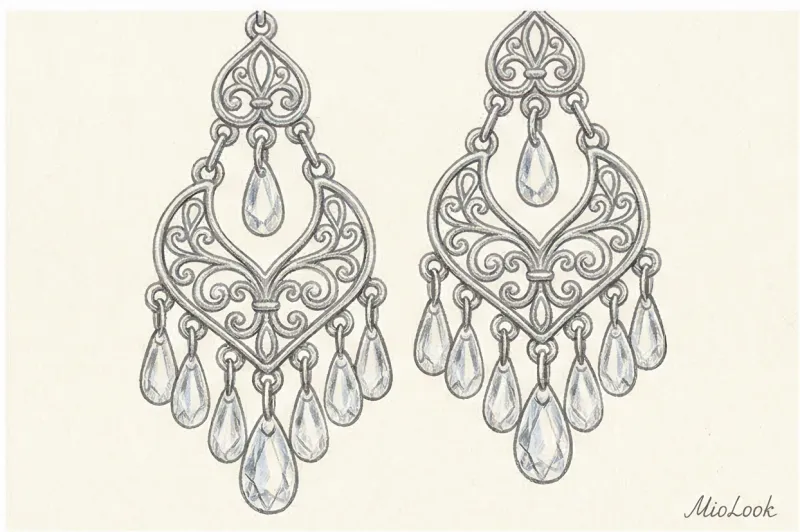
I'd like to touch on a sensitive topic separately: the weight of earrings. In pursuit of trends, girls often buy massive ones. chandeliers Made from inexpensive jewelry alloys (such as silumin). These earrings can weigh 15-20 grams each. With regular wear, heavy chandeliers can permanently stretch the piercing, turning a neat hole into an unsightly gap. A safe weight for everyday wear is no more than 5-7 grams per ear.
Rings, bracelets and accent pieces
Rings have the richest semantic load. Tapeworm (a ring with one large stone) is a classic engagement ring. If you're on a budget, choose a ring halo: the central stone is surrounded by a scattering of small diamonds, which optically increases its size by one and a half times. Trilogy (three stones) symbolizes the past, present and future, and cocktail rings with exaggeratedly large colored stones are designed to shine at parties with a martini in hand. For grunge lovers, there are phalangeal rings , which are worn on the upper or middle phalanx of the finger.
In the world of bracelets, several shapes rule the roost. Hard Bangles (closed rings or open cuffs) look great in layered sets. Tennis bracelet — a flexible band made of diamonds or cubic zirconia. It got its name in 1987, when tennis player Chris Evert lost her diamond bracelet during a US Open match, and play had to be stopped for a search. Since then, high-quality tennis bracelets have always been equipped with a double safety clasp. Also popular glider bracelets (consisting of hinged links) and bracelets for charms (memory pendants).
The return cannot be ignored brooches Forget the stereotype that this jewelry is something you'd find in grandma's chest. Today, brooches are worn asymmetrically on the lapels of oversized jackets, secured to the deep necklines of wrap dresses, pinned to shirt cuffs, and even to the fabric straps of bags. Life hack from a stylist: To prevent a heavy brooch from pulling or tearing a thin fabric (such as silk), place a regular cotton pad or a piece of thick felt on the inside of the garment and prick the fabric with a needle. The design will fit like a glove.
To help you remember which brooch goes perfectly with your new tweed jacket, I recommend digitizing your looks. You can upload photos of your jewelry and clothing to MioLook to create stylish combinations in advance and not waste time in the morning choosing accessories.
Rounding out our glossary questionnaires — anklets. Their appropriateness is strictly regulated by style. In an office with a dress code, anklets are taboo. But paired with cropped linen trousers, mules, or open sandals on vacation, they're a detail that lends a relaxed, bohemian chic look.
Fine Jewelry vs. Costume Jewelry: What's the Real Difference?
A paradox I regularly encounter when I'm shopping: a massive brass earring from a famous Parisian fashion house costs €550, while a simple solid 14-karat gold ring from a local jeweler costs only €150. How is this possible, and what are we really paying for?
To assemble a functional accessory wardrobe, it's important to understand a clear classification. Generally, all types of jewelry are divided into three categories:
- Fine jewelry (high jewelry art): This is your investment base. It's made exclusively from precious metals (gold, platinum) and first-class precious stones (diamonds, emeralds, rubies, sapphires). These pieces are chemically inert—they don't oxidize, don't cause allergies, and are literally designed to be passed down through generations.
- Costume jewelry: A trend legitimized by Coco Chanel, it's dominated by basic metals—brass, copper, and jewelry-grade steel. Artistic glass, crystals, and high-tech plastics are used as inlays. This is the land of bold, exaggerated design and fleeting trends.
- Demi-fine (costume jewelry): My favorite "golden mean," which is currently a leading choice in everyday styling, is 925 sterling silver jewelry, coated with a thick layer of gold, often enhanced with semi-precious stones (topaz, malachite, spinel).
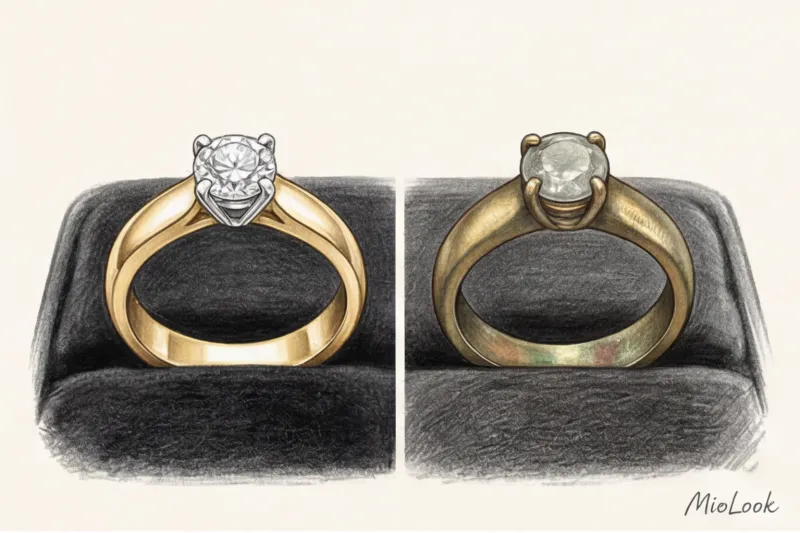
From a materials science perspective, the main quality indicator in the costume and demi-fine categories is the type of galvanic coating. Most mass-market brands use this technology. flash plating — a very thin gold coating (less than 0.5 microns). With constant friction from clothing and contact with the natural pH of our skin, this coating disappears within a couple of weeks. The degradation mechanism is simple: due to the microporosity of the thin layer, molecules of the base metal (for example, copper) begin to diffuse onto the surface, causing the greenish oxidation.
A quality alternative is coating vermeil (vermeil) According to international standards, this is a gold layer at least 2.5 microns thick, applied strictly over sterling silver. Vermeil is 5-10 times thicker than the base gold plating, guaranteeing the item's preservation for years.
Returning to the phenomenon of hidden cost: why can branded brass jewelry cost more than gold from no-name brands? The answer lies in the pricing structure. When you buy a statement necklace from a luxury brand, you're not paying for the individual grams of metal. The price includes the hours of work of renowned designers, the complex casting molds (which are technologically impossible to cast from soft gold without losing the rigidity of the structure), colossal marketing budgets, and the brand's historical heritage.
My advice: if you're looking for a long-lasting everyday base, invest in fine or demi-fine. If you're looking for a trendy, statement piece for a single season, go for costume jewelry, but be mindful of whether you're willing to pay extra for a logo on brass. And to visually evaluate how different metals fit into your everyday outfits, I recommend uploading them to a virtual closet.
Access to MioLook for €0.99 — one-time payment
A smart AI stylist will select the perfect look and help you intelligently integrate jewelry into your basic wardrobe.
Get access — €0.99 onceHow to determine the quality of costume jewelry: stylist's secrets
Take any large ring or chunky bracelet and simply bounce it in your palm. Do you feel a pleasant, confident heaviness? If so, you're holding something that will likely last for many seasons. Assessing a piece's physical properties is the first and most rigorous filter I apply when reviewing an accessories collection.
The weight test is a completely effective tool. High-quality jewelry is most often cast from brass (an alloy of copper and zinc) or bronze. These metals are highly dense and feel pleasantly cool on the skin. Cheap mass-market chains priced under 15–20 euros heavily utilize silumin, a brittle alloy of aluminum and silicon. Visually, the bulky silumin chains, when weighed, appear almost plastic, hollow inside. This cost-cutting by the manufacturer means the metal can crack in half with the slightest impact on a table edge.
The next step is a detailed check of the fastening. Remember the golden rule: high-quality types of jewelry Never use glue to assemble crystals. If you see cloudy yellow halos of dried adhesive around the crystal, don't hesitate to return it to the display case. The first sudden change in temperature (for example, leaving a warm café for freezing temperatures) will cause the glue to dry out, and the stone will fall out. Look for a closed setting, where the metal tightly grips the crystal around the entire perimeter, or neat prongs—thin metal "claws" that securely hold the setting.
Evaluating the coating requires good lighting. Long-lasting galvanic coating adheres only to a perfectly polished base. Rotate the piece under a lamp: the surface should be perfectly mirror-like. If you notice microbubbles, matte rough spots, or uneven metal deposits at the joints, these are manufacturing defects. This coating will begin to flake off after just a couple of weeks of active wear.
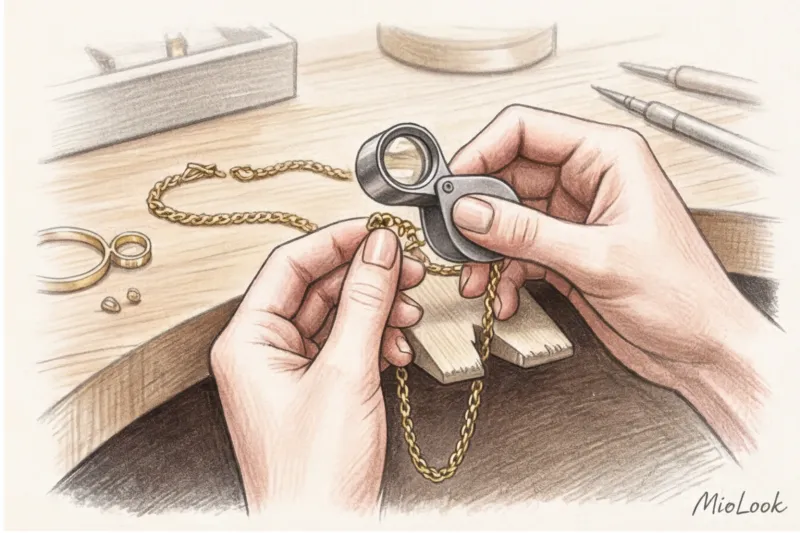
The quality of the workmanship is always revealed by the hardware, or more specifically, its sound. A proper English earring clasp should have a clear, resonant click when closed. If the earring clip fits into the groove as softly as if it were clay, without a distinctive sound, the metal is too soft. You risk losing the earring with the first awkward movement, even when removing a scarf.
"One time, a client of mine completely ruined a €300 silk blouse because of a poorly polished €15 ring. Since then, a tactile snag test has become a mandatory ritual for us before any purchase."
To help you avoid making the same mistakes as others, I've compiled a summary of my professional experience. Here's mine. Sophie Müller's personal checklist: 4 steps to inspect jewelry before buying:
- Step 1. Weigh in your hand: We are looking for a reliable density of brass, avoiding the “plastic” lightness of silumin.
- Step 2. Listen to the lock: We check for a loud clicking sound from the earrings and a smooth but tight movement of the carabiners on the chains.
- Step 3. Examine the stones using your smartphone camera: We use a zoom lens instead of a magnifying glass. We look for prongs and categorically exclude traces of glue.
- Step 4. Clothes snag test: Run the edges and back of the embellishment along a thin fabric (you can use a coat lining or even nylon tights). There should be no snags. A poorly sanded prong will instantly pull the thread out of your favorite knit.
When you buy truly high-quality jewelry that has passed all these tests, it becomes a long-term style investment. I always recommend adding such thoughtful finds to your MioLook By digitizing your jewelry collection, you can easily create layered sets and accessorize your looks right on your phone, saving precious morning minutes.
Sustainability in the world of jewelry
According to environmental reports, mining enough gold for just one wedding ring generates approximately 20 tons of industrial waste, often containing cyanide and mercury. Choosing different types of jewelry , we rarely think about their carbon footprint, but the industry is changing rapidly. Today, conscious brands—from global jewelry giants to niche Scandinavian labels—are switching en masse to recycled gold and silver (recycled gold and silver). Physically, it's the same precious metal, but its recycling reduces CO2 emissions by nearly 99%. In my practice, I increasingly see clients specifically seeking brands with the RJC (Responsible Jewellery Council) certification, which confirms the ethical nature of the entire supply chain.
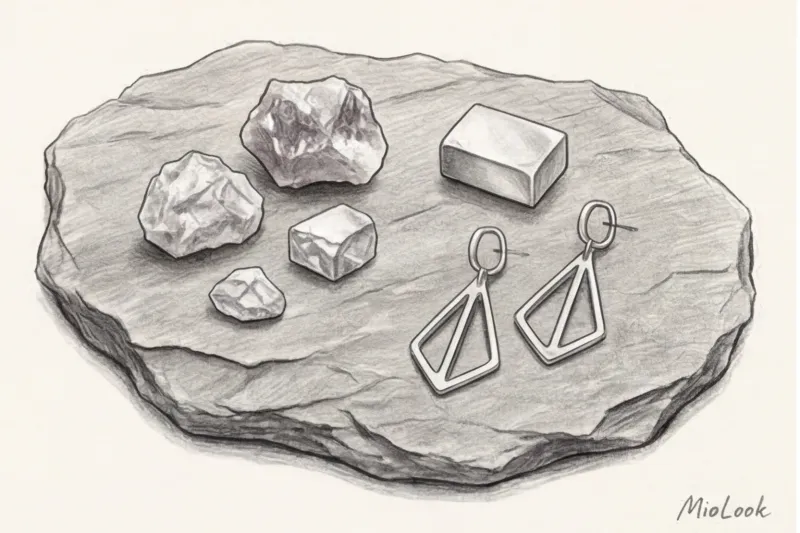
Another tectonic shift in the market is the growing popularity of lab-grown diamonds. Let's be clear: these are not cubic zirconia, moissanite, or jewelry glass. Optically, physically, and chemically, a lab-grown stone is absolutely identical to a mined one. They have the same crystal lattice of pure carbon. The difference lies only in their origin. By purchasing a lab-grown diamond, you make a conscious ethical choice—you don't support harsh labor conditions or the destruction of ecosystems. Furthermore, a stone of ideal clarity and cut will cost you, on average, 40-50% less. According to a 2023 Business of Fashion study, even the most conservative houses are beginning to incorporate lab-grown stones into their modern collections.
But frankly, the most eco-friendly move is a purchase that doesn't require the production of new materials at all. Vintage and upcycling have confidently moved from the niche hobby to the absolute fashion mainstream. Finding a vintage clip from the '80s or chunky bracelets from bygone eras is not only a way to protect the planet but also a guarantee that you won't encounter a style clone at your next event. Integrating such pieces into a modern look is easy: just add a striking retro brooch to the lapel of a crisp, minimalist jacket.
Access to MioLook for €0.99 — one-time payment
Start creating your perfect looks with the help of artificial intelligence. Upload your vintage and modern jewelry to your virtual wardrobe to always find flawless combinations.
Get access — €0.99 onceThe flip side of the coin is the ultra-cheap fast-fashion jewelry from nameless factories that has flooded popular marketplaces. Cheap rings and chains for 3-5 euros often pose not only mediocre design but also a real health hazard. Toxic heavy metals such as lead, cadmium, and nickel are regularly found in their composition.
The European Union strictly enforces the Nickel Directive (part of the REACH regulation), which severely limits the release of this metal in any products that come into contact with skin. However, products ordered directly from Asian platforms do not pass this strict control, leading to widespread contact dermatitis.
If you have a sensitive earlobe that instantly turns red, itches, or becomes inflamed from inexpensive earrings, this is a sure sign of a nickel allergy. My strong advice: don't tolerate discomfort for the sake of a short-term trend. Forgo dubious alloys in favor of pure titanium (it's completely biocompatible and even used in implantology) or high-quality 316L surgical steel. These materials are slightly more expensive than brass, but guarantee complete safety for daily wear.
Myths about choosing and wearing jewelry
Let's be honest: most so-called "jewelry etiquette rules" are hopelessly outdated. Today, eclecticism and deliberate violation of proportions are not a mistake, but a sign of high taste and discernment. We still cling to stereotypes that deprive our looks of individuality. Let's examine the four main misconceptions that I regularly combat when analyzing wardrobes.
Myth 1: You can't mix gold and silver
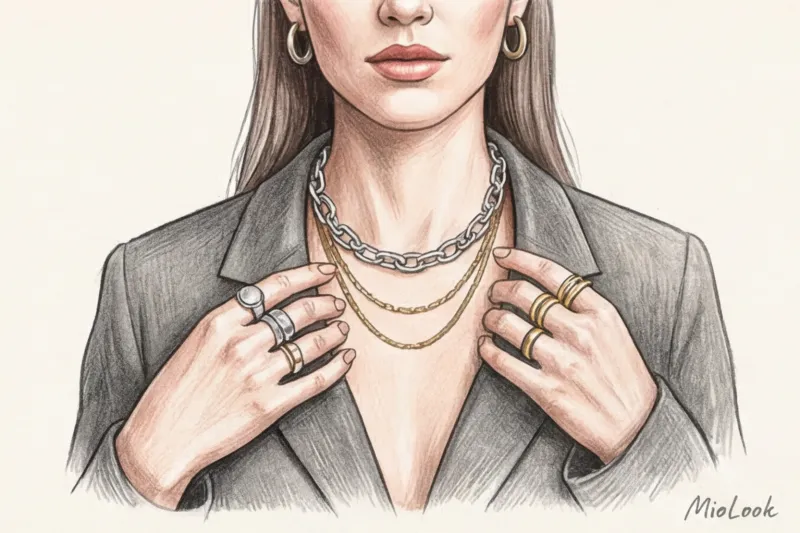
Just ten years ago, wearing gold stud earrings with a platinum necklace was considered a fashion crime. Now, bimetallic sets are absolutely trendy. The secret to a successful mix lies in the connecting link. I call it the "bridge rule": use at least one piece that already combines two metals (for example, a watch with a bicolor combination strap or a two-tone ring). Then the rest types of jewelry Pure gold and silver chains will come together to form a coherent composition. Layering also works beautifully: thin gold and chunky silver chains of similar weaves create a complex, vibrant texture.
Myth 2: Large jewelry is only suitable for evening wear.
Statement accessories have long since left the confines of theater boxes. The integration of massive pieces into casual attire is built on contrasting volumes and textures. Oversized chandeliers or a sculptural cuff bracelet in the spirit of Saint Laurent's latest collections look incredibly stylish not with an evening gown, but with a basic white T-shirt, straight jeans, and a men's jacket. The main rule for daytime attire: one accent piece against a neutral backdrop. To test how such bold shapes work with your basics, try creating virtual collages via the image composing function in MioLook - It's a great way to practice stylistic boldness without spending too much.
Myth 3: The more carats, the better
This dangerous misconception often leads to ruined items and moods. From a metal physics perspective, pure 24-karat gold (999 fineness) is an incredibly soft and malleable material. I've personally seen expensive rings made of this alloy deform into an oval shape simply from carrying a heavy leather shopping bag. According to the Gemological Institute of America (GIA), the optimal choice for everyday wear is 14K (585 fineness) or 18K (750 fineness) gold. These golds contain alloys (copper, silver, and zinc), which provide the necessary hardness and protect against deep scratches.
Myth 4: Pearls make you look older
Yes, if it's a perfectly round, short strand of pearls of the same caliber paired with a tailored tweed jacket—hello, conservative political aesthetic. But modern fashion offers a completely different approach. Opt for baroque pearls—irregular, asymmetrical minerals with a bumpy surface. Wear a large baroque pearl on a chunky leather cord, weave it into chunky metal chains, or choose asymmetrical earrings with an uneven stone. Try pairing such a strand with a voluminous gray hoodie—you'll see how the sporty texture of the thick cotton instantly downplays the arrogance of the "aged" material, making the outfit truly contemporary.
Investing in a Basic Jewelry Wardrobe
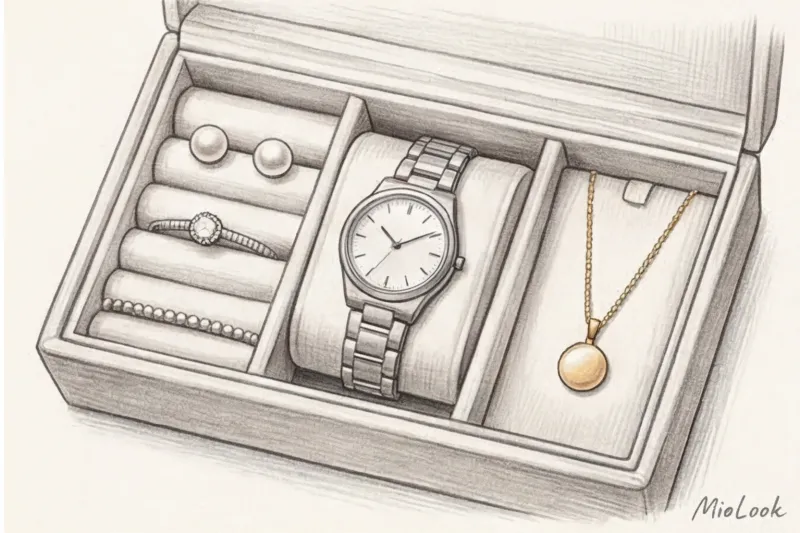
Do you know how much time we spend on average getting ready in the morning? The statistics are relentless: about 15-20 minutes are spent just choosing the right accessories to go with an outfit. The concept of a jewelry capsule collection solves this problem radically. Choosing the right jewelry collection isn't just a matter of aesthetics; it's about your personal time management. You open the box, pick out any items, and they're guaranteed to coordinate with each other and your outfit. The essence of a capsule collection is simple: a minimum of items, a maximum of stylistic combinations.
If you're just starting to build your jewelry arsenal, I strongly recommend avoiding impulse purchases and focusing on the foundation. Here are the top 5 items that will cover 90% of your needs:
- Basic hoops (hoop earrings). Choose smooth models with a medium diameter (1.5–2.5 cm) and a thickness of 3–4 mm. They highlight the face and are appropriate for both a boardroom meeting and a Sunday brunch.
- Men's type watch. A simple dial and metal bracelet (in the spirit of the classic Cartier Tank or vintage Seiko) instantly bring together a relaxed look, adding structure and status.
- Anchor weave chain. The optimal length is 45–50 cm. This is an absolutely versatile soldier: wear it solo over a turtleneck or use it as a base for accent pendants.
- Signet ring. A bold accent on the index or pinky finger. Smooth metal or a minimalist onyx inlay will make your hands appear more graceful.
- A strand of baroque pearls. Forget the round pearls from your grandmother's jewelry box. Asymmetrical, uneven baroque pearls tone down the pretentiousness and look luxurious even with a simple white T-shirt and jeans.
When we discuss purchasing a high-quality foundation, many of my clients are put off by the initial price tag. In such cases, I always ask to use the formula Cost per wear (cost per exit) is the main analytical tool of a stylist.
Wardrobe math is brutally honest: trendy plastic earrings for 30 euros, which you'll wear twice a season and then throw away, will cost you 15 euros per outing. And high-quality, basic gold hoops for 400 euros, which you'll wear 300 days a year for five years, cost just 0.26 cents per outing. Invest the lion's share of your budget in what touches your skin every day.
However, even the most expensive and well-designed capsule won't work if it clashes with your natural palette. How to adapt these types of jewelry To suit you? The key lies in your color type and the contrast in your appearance. Women with soft, muted coloring (for example, ash-blond hair and light eyes) should avoid flashy 18kt yellow gold—it will simply "eat up" your face, stealing all the attention. Your ideal choices are white gold, platinum, silver, or matte lemon gold.
On the other hand, those with high-contrast complexions (dark hair, bright eyes, fair skin) will look great in chunky, glossy pieces, deep metallic shades, and playing with bimetallic combinations. To avoid having to think about all these nuances and to see in advance how a new chain or signet ring will fit into your everyday looks, I recommend digitizing your database. Upload photos of your items and accessories to MioLook , you can create ready-made capsules right on your phone, saving those precious morning minutes.
Your perfect look starts here
Join thousands of users who look flawless every day with MioLook. Create your virtual jewelry capsule today.
Get access — €0.99 onceHow to choose jewelry to suit your dress code and look
In 2022, I was invited to style top executives for a major European TED-style business conference. During the dress rehearsal, a telling incident occurred: a brilliant speaker, the CEO of a tech company, took the stage wearing a set of several Cartier Love bracelets. Every active movement of her arms was accompanied by a loud metallic clang, which the lavalier microphone amplified tenfold, completely drowning out her speech. This is a common but critical mistake.
Public speaking and webinars dictate strict technical rules. The main enemies of good sound are jingling bracelets, multi-tiered necklaces, and long pendants that bang against jacket buttons. Another hidden threat is studio lighting. Spotlights or ring lights instantly turn large faceted stones into blinding white spots on camera, distracting the viewer. My professional choices for on-camera work: matte metal, smooth cabochons, or flat studs that fit snugly against the earlobe.
Let's move on to the classic office. Strict business formality tolerates no stylistic liberties and adheres to the steadfast "rule of three pieces of jewelry." A wedding ring and a classic watch already occupy two of the three positions. The third element can be simple stud earrings (strictly up to 7 mm in diameter) or a thin chain with a miniature pendant. Acceptable embellishments include perfectly shaped pearls, small diamonds, or discreet semi-precious minerals like onyx. No flashy enamel or large logos.
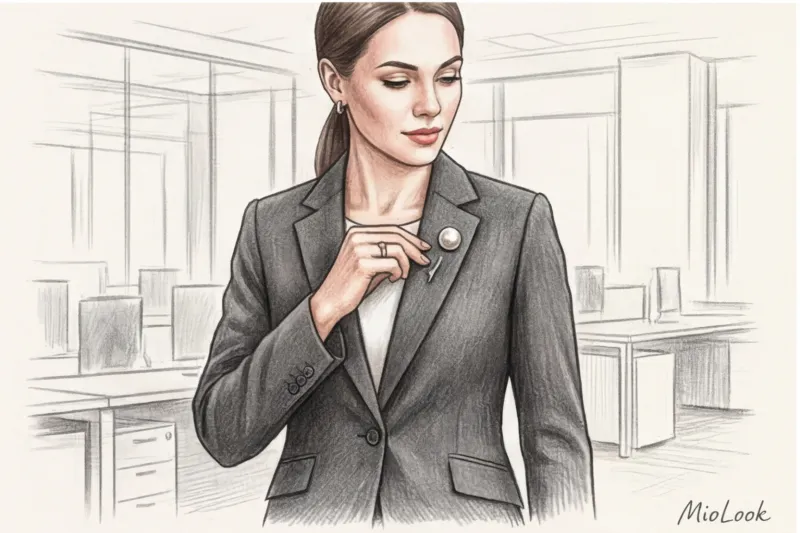
Smart casual offers us long-awaited freedom, but it requires a careful balance between relaxed and classy. This is where different types of jewelry work in synergy, toning down the formality. For example, a sharp men's chronograph pairs beautifully with a casual set of thin chain bracelets, while a classic tweed jacket gets a modern twist with an asymmetrical mono earring or a minimalist cuff. To avoid overloading the look and find that perfect balance, I recommend digitizing your accessories. MioLook The app's built-in functionality will help you visually assess whether the complex geometry of a ring clashes with the print of your blouse, even while you're planning your outfit.
An evening out often provokes the desire to wear "all your best at once." Analyzing the latest couture shows from Saint Laurent and Schiaparelli, one can notice a clear trend: evening fashion gravitates toward laconic dresses with exaggerated, sculptural accessories. However, the anatomy of visual perception is unwavering—a harmonious look should only have one accent zone.
If you choose a plunging neckline and a massive plastron necklace, leave your ears bare or wear subtle studs. If you've chosen architectural chandeliers that reach to the collarbone, the neck and décolletage should remain completely clear. Competition in the portrait area always cheapens an outfit, creating visual noise, even if you're wearing pieces costing tens of thousands of euros.
Style isn't just about what you wear, but also what you consciously choose to avoid in favor of clean lines. This rule applies reliably when choosing accessories for any occasion.
Care and storage: how to extend the life of your favorite items
According to statistics from the Gemological Institute of America (GIA), approximately 40% of visits to jewelers are related not to manufacturing defects, but to chemical burns of stones and deep corrosion of metals. We can spend hours choosing the perfect design, but one wrong move can irreparably ruin an item worth hundreds of euros. As a materials scientist, I want to translate care rules from the realm of "old wives' tales" to the realm of understandable physics and chemistry.
In the jewelry world, there's a golden "Last Touch Rule": jewelry is put on last before leaving the house and taken off first upon returning. Why is this so important? Jewelry's main enemies are perfume, skincare products, our own sweat, and chlorinated water. Alcohol and essential oils in perfumes instantly rob pearls of their natural luster (glow). Chlorine in swimming pools literally leaches the ligature molecules (zinc and copper impurities) from gold alloys, making the metal porous and brittle. And acids in body lotions mercilessly corrode even the highest-quality galvanic coating.
Where do you keep your everyday rings and earrings? If they're on a pretty ceramic dish near the sink, take them out immediately. Storage rules are categorical: never leave silver in the bathroom. The bathroom acts like a tropical greenhouse. High humidity, heat, and cosmetic fumes greatly accelerate the reaction of silver with hydrogen sulfide, which is always present in the air. This results in the formation of silver sulfide on the metal—that thick, black film that can't be washed off with regular water. The ideal storage location is a dry, dark drawer in the bedroom. My personal life hack: throw a couple of silica gel packets (the same ones you put in new shoe boxes) into the box; they absorb excess moisture very well.
Now let's talk about how to properly clean different types of jewelry. Today, marketplaces are full of home ultrasonic cleaners for €40–€50, promising a salon-quality shine in three minutes. Ultrasound works through cavitation—microexplosions of bubbles in liquid that aggressively dislodge dirt from hard-to-reach places. This works great for cast jewelry and hard minerals like diamonds, rubies, and sapphires.
But for porous stones, an ultrasonic bath is a death sentence. Opals, turquoise, coral, and especially pearls (which are composed of organic conchiolin) can become covered in a network of cracks or even split in half from such microexplosions. Emeralds, historically treated with cedar oil to conceal natural microcracks, will lose this impregnation and become cloudy in ultrasound. For such delicate gemstones, only a soft suede or flannel cloth, lightly dampened with filtered water, is acceptable.
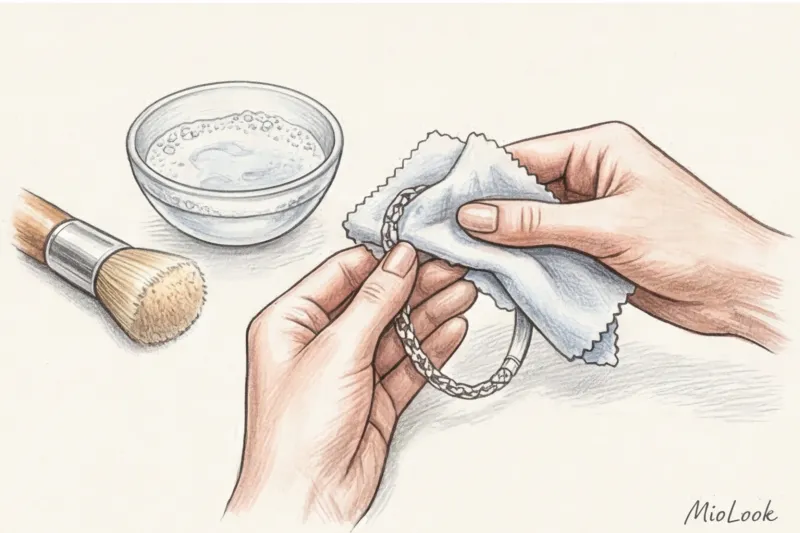
Caring for gold plating (whether vermeil or standard brass plating) requires special attention. The main mistake I see clients make is trying to polish a gold-plated ring with a special jewelry cloth until it shines. This is because professional cloths are impregnated with microabrasives. By vigorously rubbing the piece, you literally remove the precious gold layer, revealing the gray or copper base metal. To avoid rubbing off the plating when cleaning, use only a dry microfiber cloth without any chemical impregnations. Simply blotting the piece at the end of the day will remove any excess sebum.
"True style isn't just about what you buy, but how you care for your things. A well-maintained brass pendant will always look more expensive than a dull, hand cream-stained 18-karat gold piece."
To avoid having to keep all these nuances in my head, I use a digital approach. Once a season, I review my collection, and in MioLook I have tags for every item: "dry clean only," "ultrasonic safe," "keep away from water." This helps me instantly navigate care instructions and plan looks without worrying about ruining my favorite necklace with a drop of my morning perfume.
Building a jewelry wardrobe is a fascinating journey. Now you know how to distinguish high-quality settings from cheap glue, understand the difference between karats and alloys, and how to incorporate complex shapes into a strict dress code. Start small: this evening, take off your everyday jewelry, wipe it with a soft cloth, and store it in a dry jewelry box. It will only take a minute, but it's those minutes that will shape the longevity of your personal style.
Ready to get started?
Try the free plan—no commitments or hidden conditions. Digitize your wardrobe and start creating flawless looks today.
Get access — €0.99 once