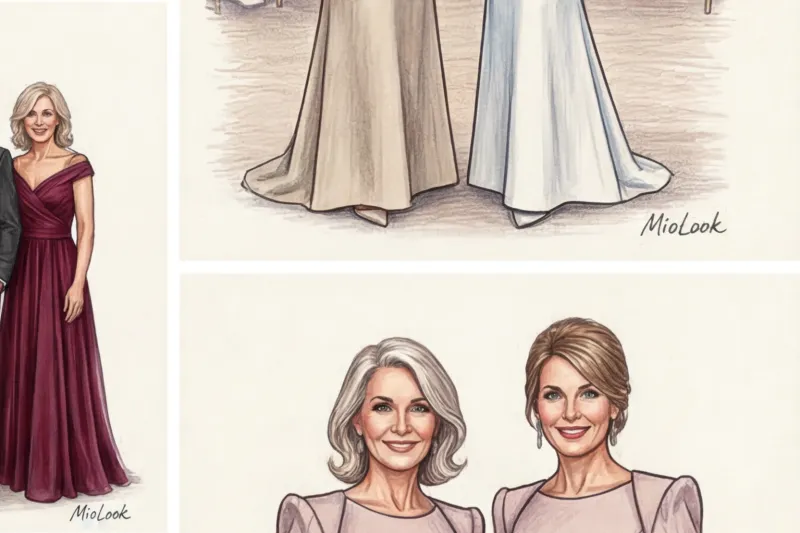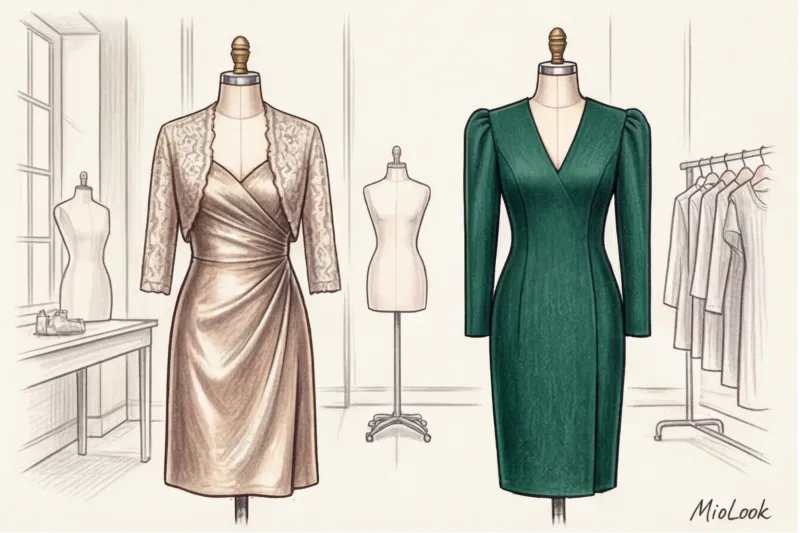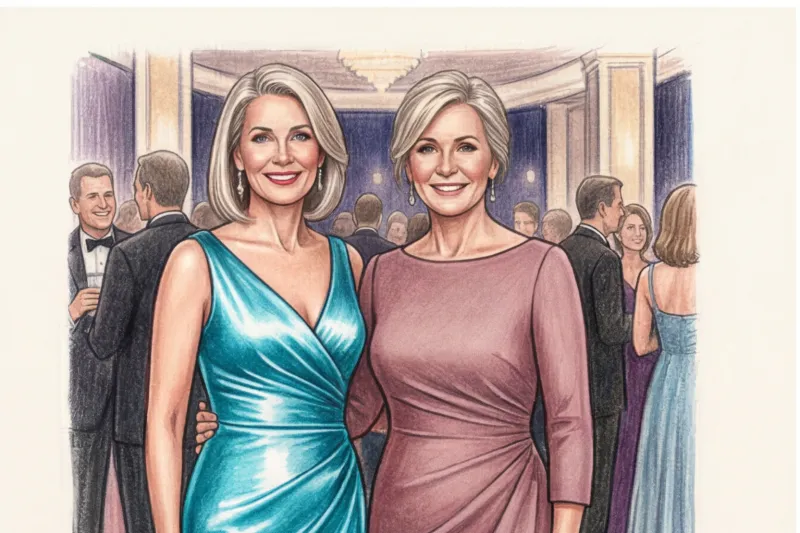
I've seen tears of disappointment dozens of times. After months of painstaking preparation, thousands of euros spent, and a long search for "the one," the mothers of the newlyweds open their wedding gallery and quietly despair. In person, they both looked flawless in front of the mirror. But when the dresses of the mothers of the bride and groom are photographed in the same frame, an inexplicable visual clash occurs. One figure appears larger than it actually is, while the other's image seems to dissolve into the background.
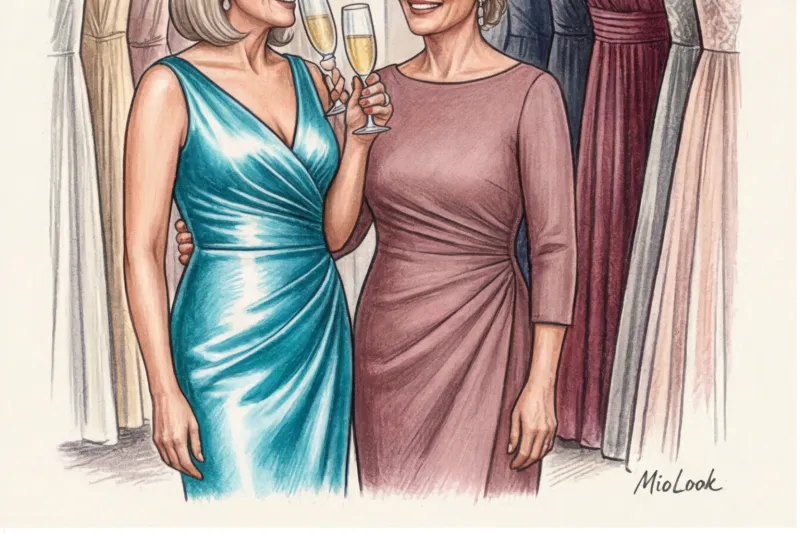
We've already covered the basic dress code rules for each party in more detail in our complete guide: The Perfect Mother of the Bride Dress: Stylist Tips But today we'll go further. We'll explore the ultimate in photography—the physics of group framing. How to make fabric texture, color temperature, and silhouette rigidity work for you, not against you.
Why do mothers of the bride and groom's dresses often look like they're from different worlds in photos?
The difference between how an outfit looks in the warm light of a showroom fitting room and how it appears under the unforgiving lens of a camera is colossal. The biggest mistake I see season after season is trying to coordinate only the color of dresses, completely ignoring the texture and density of the material.
"The camera doesn't understand how much your dress costs. It only reads how the fabric absorbs or reflects light. A glossy finish will always compete with a matte finish," notes Joanna Smith, lead photographer for Vogue Weddings.
I experienced a telling incident at a luxurious wedding in Provence. The bride's mother chose an expensive taffeta dress with a vibrant satin sheen, while the groom's mother wore an elegant matte silk crepe gown. In person, this combination seemed like an interesting contrast. But in the evening shots, using an on-camera flash, it was a disaster. The shiny taffeta acted as a reflector: it visually "eaten" the matte dress, making it appear flat, while the flash made the wearer of the glossy gown appear two sizes larger.
Reflection: Harmony's Number One Enemy
To understand why this happens, you need to understand a little about the physics of light. Shiny fabrics (satin, taffeta, sequin) act like a multitude of microscopic mirrors. Under studio lighting or flash, they draw all the focus to themselves, creating harsh white highlights—so-called "overexposed" highlights. Matte fabrics (wool crepe, heavy viscose, suiting silk), on the other hand, absorb light, creating deep, refined shadows.
According to a large-scale survey of wedding photographers conducted by The Knot (2023), 80% of older generations' dissatisfaction with their photos stem from the poor lighting of glossy fabrics on problem areas. If one mother chooses a matte dress, the other should also wear a matte one. Only a minimal, subtle satin sheen is allowed.
Access to MioLook for €0.99 — one-time payment
A smart AI stylist will select the perfect look based on the fabric texture and your body shape.
Get access — €0.99 onceTemperature Dissonance: How to Choose a Palette Without the "Twin" Effect
Forget the idea of dressing both mothers in the same powder pink shade. It looks like they're older versions of bridesmaids. For high-status, confident women, such a "uniform" is inappropriate.
The secret to a beautiful shot lies in working with color temperature and saturation. I always use the classic Itten color wheel to create complementary pairs. If you choose deep, saturated colors (jewel tones), they should match in depth but differ in spectrum.
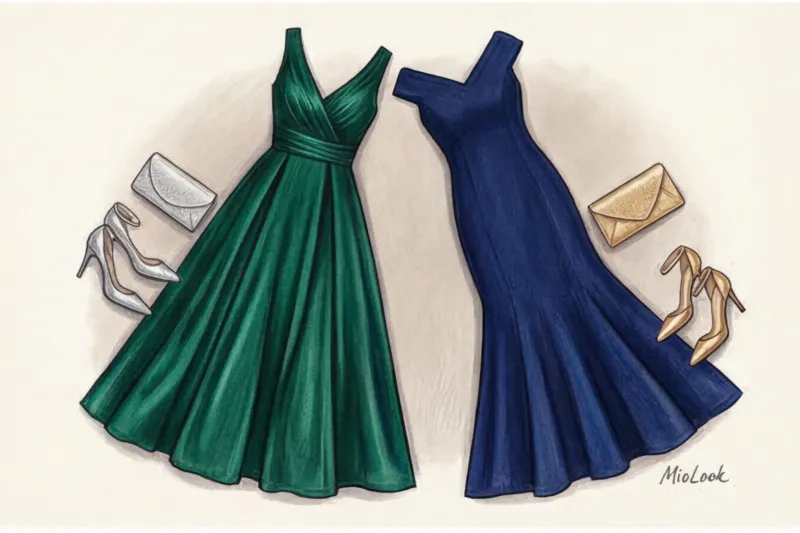
- A good example: A deep sapphire blue for the groom's mother and a refined emerald for the bride's mother. Both colors are cool, both rich—in the photo, it looks like a harmonious duo.
- Complex contrast: A combination of warm and cool shades of equal intensity. Terracotta next to muted olive creates a picturesque, cinematic image.
Of course, the choice of shade should be based on the appearance of the women themselves. It is useful to study 12 Color Types of Appearance: A Guide to Choosing a Palette to understand which tone will refresh your face and not highlight signs of fatigue.
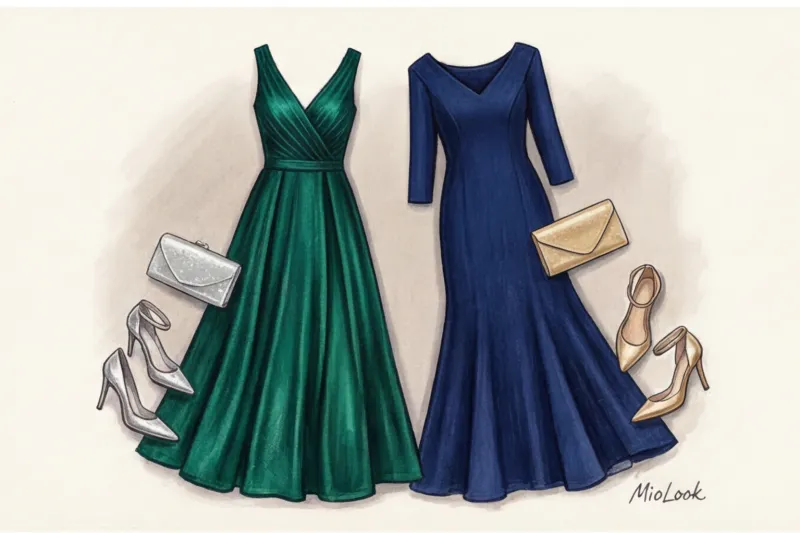
Silhouette balance: rejecting age stereotypes in favor of cut architecture
Lace boleros, shapeless chiffon capes, and multi-layered stoles are the main enemies of a sharp photo. They create unnecessary visual noise, hide the neck, and cut the figure into shapeless blocks. Moreover, these elements convey an outdated age stereotype: "a woman over 50 should hide."
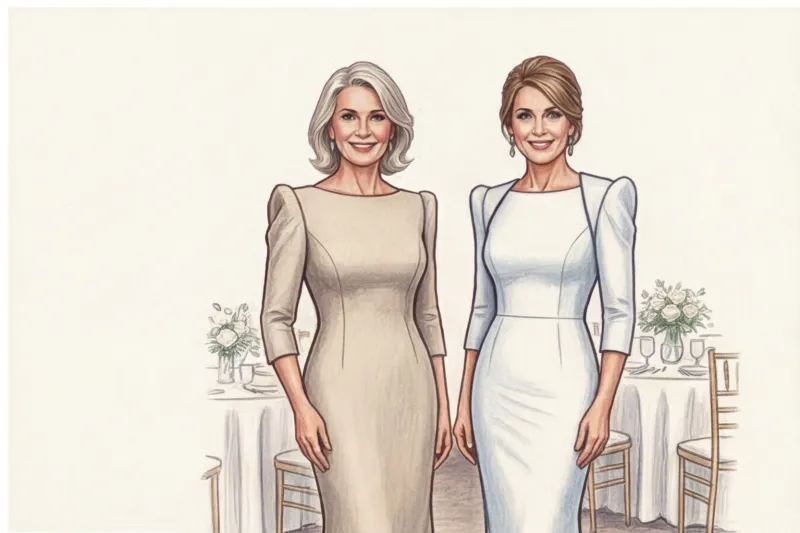
When I review the wardrobes of my elegantly mature clients, my first step is to replace delicate capes with structured cuts. Set-in 3/4 sleeves, defined shoulders, and thick crepe—these elements elongate the silhouette and create a truly regal posture. In photographs, structured cuts always look better than shapeless drapes.
The optimal fabric density for a formal photo is 250 to 350 grams per meter. This is the density of suiting viscose or crepe that doesn't bunch up in problem areas and doesn't reveal the contours of the underwear. We write more about this in the article. How to choose clothes for your body type without stereotypes.
Fair Limit: Of course, an architectural approach doesn't work in every scenario. If the ceremony is taking place on a beach in July at 35°C, a stiff jacket will become an instrument of torture. In such cases, we switch to flowing, but necessarily dense, matte textures—for example, heavy mulberry silk.
Your perfect look starts here
Join thousands of users who look flawless every day with MioLook. Plan paired looks in the virtual fitting room.
Get access — €0.99 onceDebunking the Myth: "The Bride's Mother Chooses First"
Where did this rule come from? From mid-20th-century etiquette, when the bride's family paid for and organized the entire wedding. Today, this hierarchy is hopelessly outdated and, frankly, only harms modern family relationships.
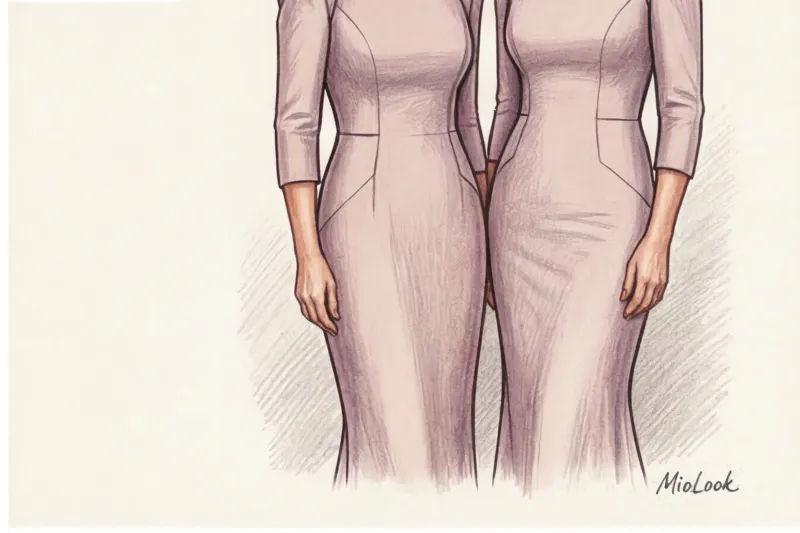
When the mother of the bride buys a dress in a vacuum, and the mother of the groom is forced to search for an outfit "on the fly," trying to match the color but still match the style, the dresses of the mothers of the bride and groom are guaranteed to look clashing in photos. One might choose a simple column dress, while the other, in desperation, buys a full ball gown. In the frame, it will look like a New York minimalist meeting a guest at a Viennese ball.
The new etiquette is a stylistic partnership. Create a joint mood board. Approach outfit selection the way professional costume designers do in films: the looks of key characters are developed in parallel.
What to do if your tastes are completely different
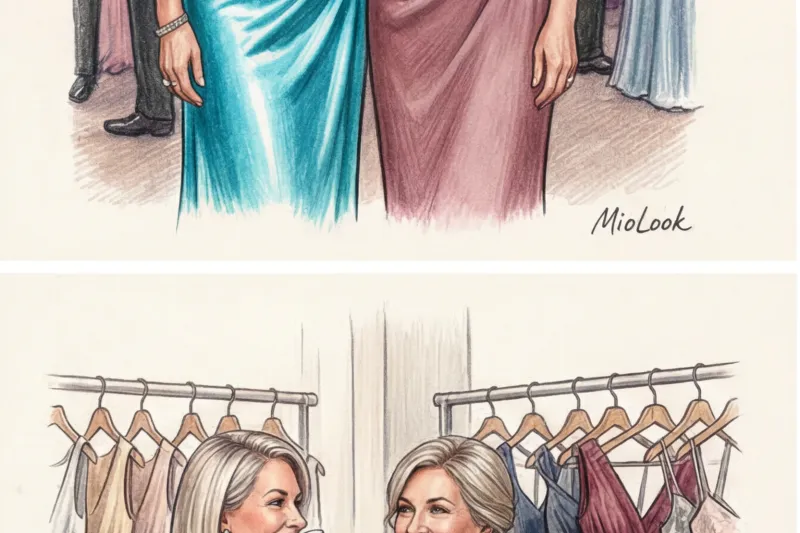
Style diplomacy requires subtle adjustments. If one mother prefers the austere minimalism of the COS brand, while the other gravitates toward the romanticism of lace, seek compromise through unifying elements. This could be the same metal color in jewelry, a similar texture in shoes (for example, both in matte suede), or an identical hem length.
Pre-purchase checklist: test drive your looks on camera
Before cutting off the tags, crash-test your dresses. These simple steps can be done right in the salon's fitting room or at home if you ordered delivery:
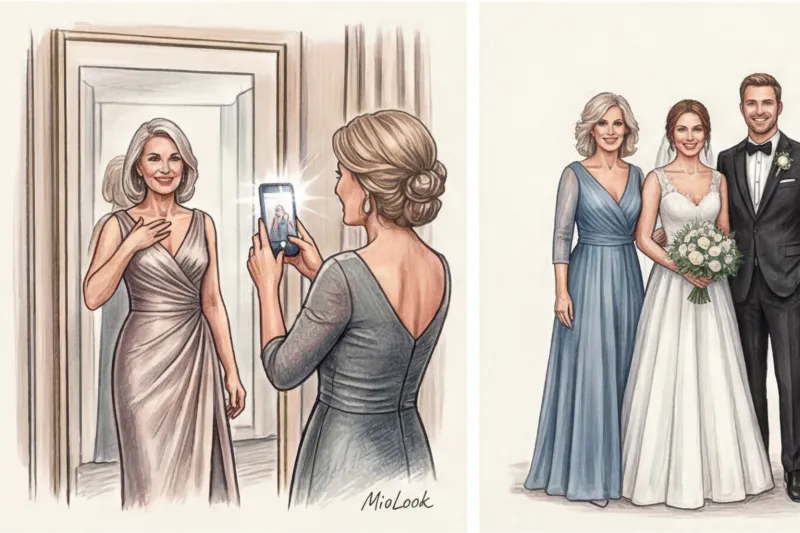
- Take a photo with flash: Stand close and ask to take a photo of you with a smartphone flash. The fabric shouldn't cast a cheap white glare or become translucent. Thin chiffon often reveals more leg than intended under bright light.
- Check the hem length: Ideally, in group photos, the hems should end at the same visual level. Midi with midi, maxi with maxi. If one mother is wearing a floor-length dress and the other a knee-length cocktail dress, the composition will be ruined.
- Check the fittings: Rhinestones, large glass beads, and shiny buttons can create unsightly reflections on a professional camera. Opt for matte or semi-matte hardware. We've covered accessories in more depth in this article. Key Rules and Outdated Myths: Choosing a Dress for the Mother of the Bride and Groom.
Ready to get started?
Try the MioLook plan for free—upload photos of your dresses and check their compatibility before purchasing. No obligation.
Get access — €0.99 onceConclusion: Elegance that will remain in the family archive forever
Creating a harmonious image isn't about finding two identical dresses. It's about a precise math of textures, temperature contrasts, and the right proportions. When you consider how fabric interacts with light and how silhouettes support each other, you achieve magazine-quality results.
Plan a shopping trip together, share a glass of champagne, and turn the difficult decision into a beautiful family bonding ritual. After all, what will remain after the celebration? The luxurious decor will be put away, the cake will be eaten, and your grandchildren will enjoy the photos. And beautiful, confident mothers are the best addition to any family archive.