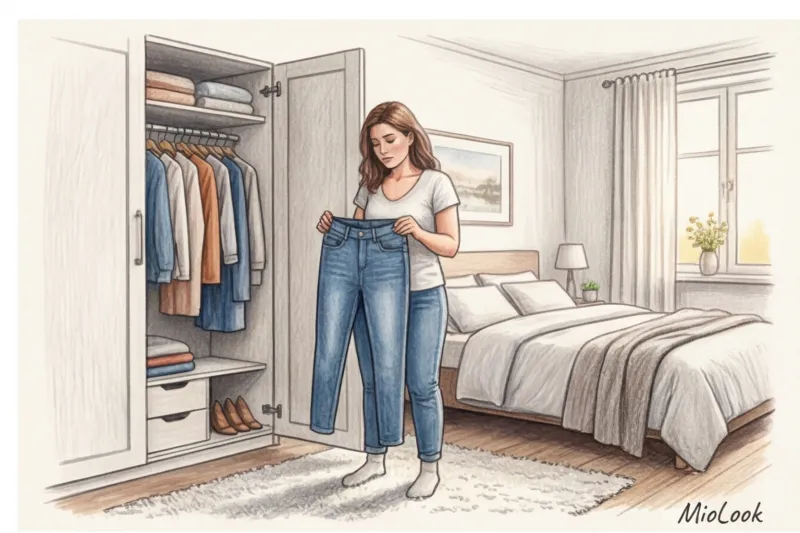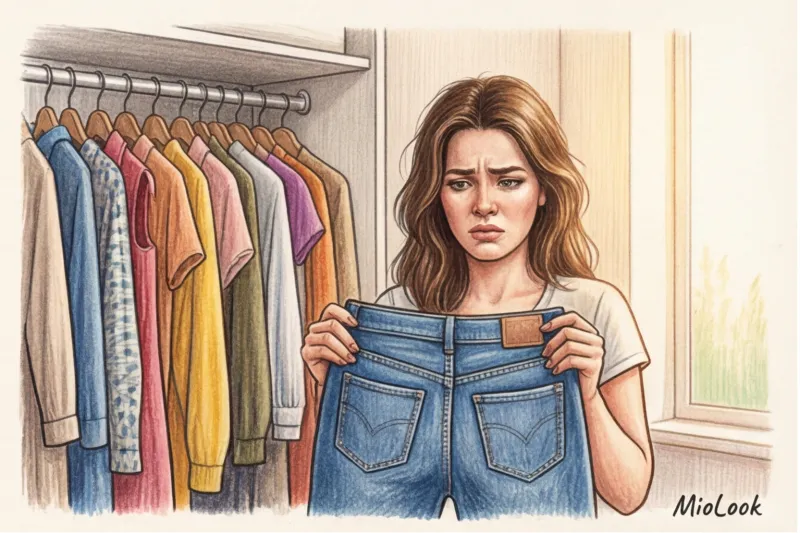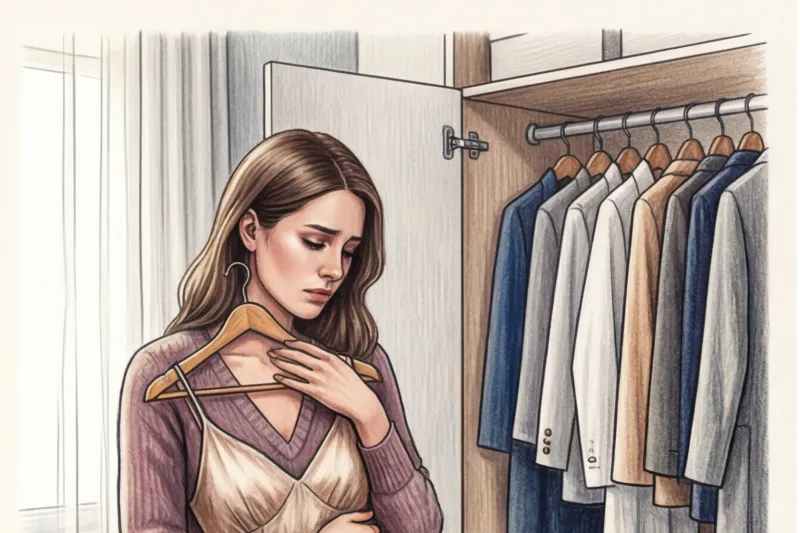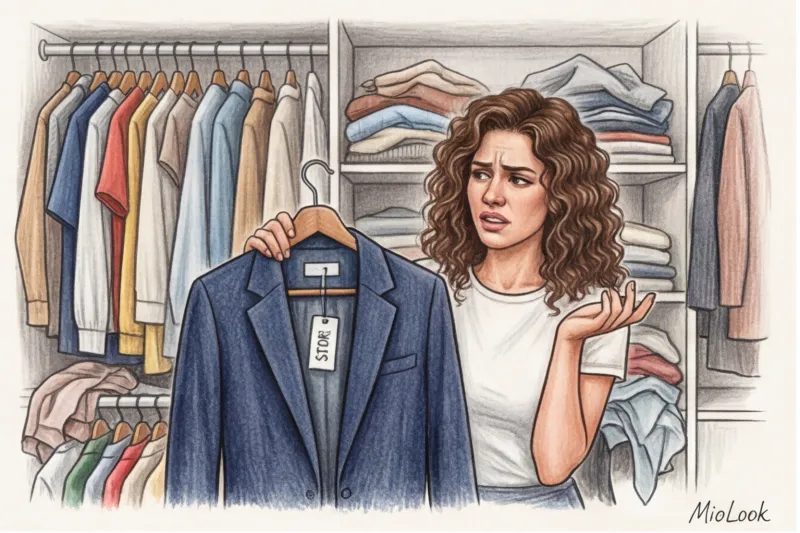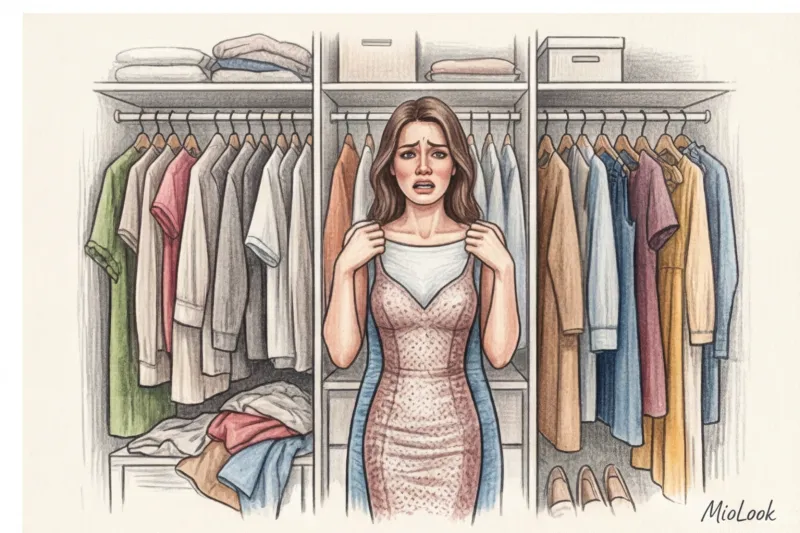
Open your closet. We bet somewhere on the back shelf, hidden behind a neat stack of basic t-shirts, They Those same "slim jeans" from college, that gorgeous sheath dress you bought at the final sale three years ago, or that skirt that only closes if you take a deep breath and hold it.
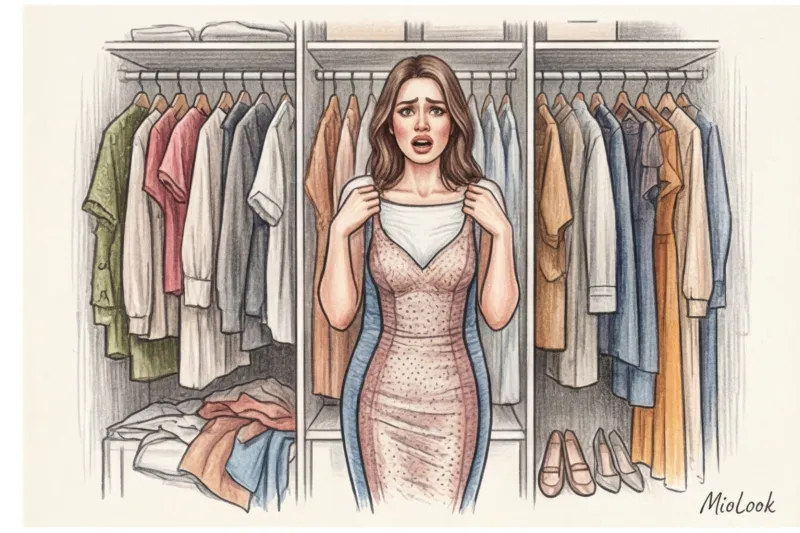
We call them "motivation items." We hoard them for years, carefully shuffling them from place to place during seasonal wardrobe cleanups. But if you're reading this, it's time to face the truth: these items don't motivate you. They destroy you.
We've already covered in detail how our closet reflects our inner state in our guide. How to Accept Your Body: The Psychology of Style and Wardrobe Today, we'll focus on a specific, purely practical task. If you've been searching for an answer to the question of how to get rid of small items, and are constantly overwhelmed by guilt, this article will provide you with a step-by-step, therapeutic algorithm.
What is a "toxic wardrobe" and why has your closet become a source of stress?
In my practice as an image consultant, a toxic wardrobe isn't about cheap, creaky synthetics. A wardrobe becomes toxic when most of the items in it convey a background message: "You're not good enough," "You're too sloppy," "You're out of shape."
In 2012, Northwestern University researchers Hajo Adam and Adam Galinsky introduced a stunning term into psychology: enclothed cognition (embodied cognition). Their research proved that clothing directly influences our cognitive processes, confidence levels, and even how we make decisions.
Now imagine putting on pants whose waistband digs mercilessly into your stomach every time you sit down at your desk. Your brain receives a physical signal of discomfort every minute. You unconsciously slouch to relieve the pressure on your waist, your breathing becomes shallower. Instead of focusing on a challenging work task or enjoying a get-together with friends, your psyche expends resources on maintaining this microstress. This is a true form of daily emotional self-harm, which for some reason we consider normal.
The Biggest Trap: Why Do We Keep "Motivational Stuff"?
I had a client, Anna, a successful financial analyst. Every morning she started with a ritual: she'd open her closet, look at her size XS sheath dress (her "gold standard" from five years ago), sigh, realize she wouldn't fit into it again today, and, in a bad mood, pull on an oversized sweater. She sincerely believed that this dress was her main incentive to go to the gym.
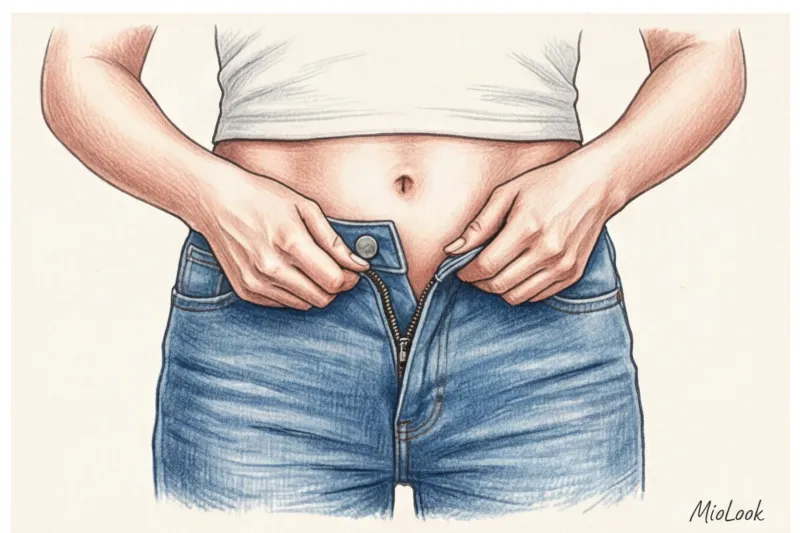
But here's a counterintuitive paradox that fitness bloggers rarely talk about: a visual reminder of one's own "imperfections" doesn't motivate, it saps one's energy.
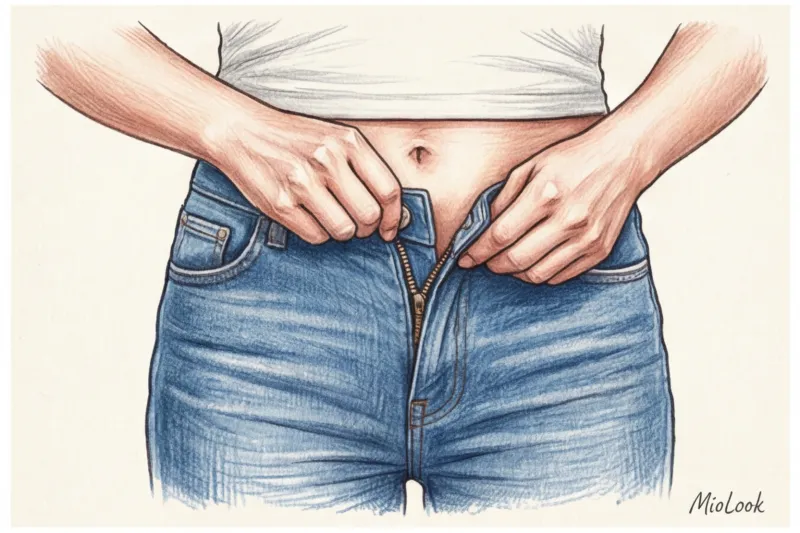
When you look at clothes that are too small or try to squeeze into them, your body experiences stress. In response, your adrenal glands produce cortisol. Chronically elevated cortisol levels physiologically block fat breakdown, cause water retention, and increase cravings for refined carbohydrates. In other words, your "motivational" jeans are literally preventing you from losing weight, triggering eating disorders.
The secret to true transformation is this: to start caring for your body, you first need to dress it in comfortable, beautiful clothes right now. In the size you are this morning.
Access to MioLook for €0.99 — one-time payment
A smart AI stylist will select the perfect look from your current items so you feel confident every day.
Get access — €0.99 onceHow to Get Rid of Small Items Without Feeling Guilty
Giving up smaller clothes is often perceived as a surrender. "If I give them away, it means I've given up and will stay at this weight forever." Let's shift the focus: you're not giving up. You're making physical and mental space for the version of yourself that lives, breathes, and acts in the here and now.
Here's the algorithm I use when reviewing wardrobes with clients:
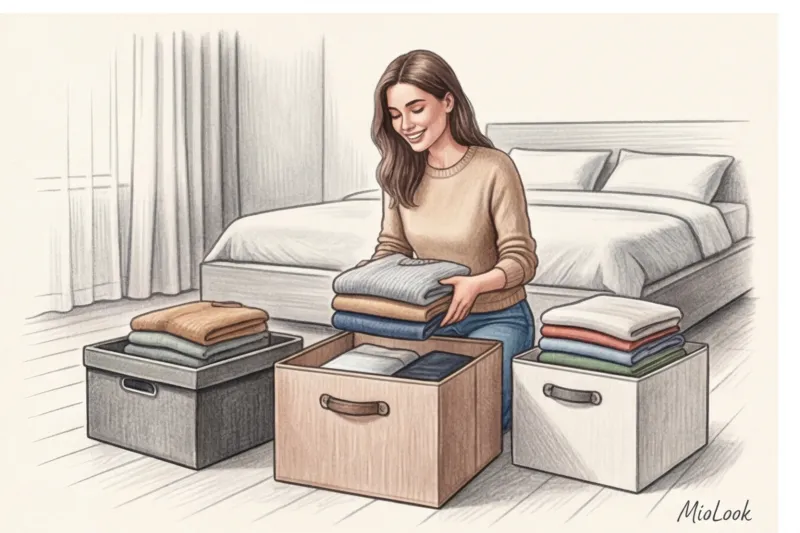
- The 15-minute rule. Set aside exactly 15 minutes. Take out of your closet all the items you know are too small. Don't try them on under any circumstances! Trying them on is a guaranteed trigger for tears and disappointment. Your job is simply to transfer them from the closet to the box.
- Sorting of value. Divide the items you've confiscated into three categories. The first is mass-market items that have lost their shape (for recycling). The second is high-quality mid-market items like COS, Massimo Dutti, or 12 Storeez (for a swap party with friends or for charity). The third is expensive designer items.
- Eco-friendly monetization. For the third category, use resale platforms (Oskelly, Vestiaire Collective, Avito). Selling an expensive dress that doesn't fit you and using the money to buy the perfect modern pants in your actual size isn't a waste. It's a smart investment in your current confidence.
The Illusion of Size: Why Size Labels Lie
If you're still having trouble letting go of old clothes, let's turn to math and the phenomenon of vanity sizing. Did you know that brands regularly change their sizes to make customers feel slimmer?
According to statistics from fashion industry research agencies, the current measurements for size M (46) at most brands are 4-6 centimeters wider than the measurements for the same size in the early 2000s. This means that those jeans from 2010 that you dream of fitting into might correspond to a size XS or S by today's standards.
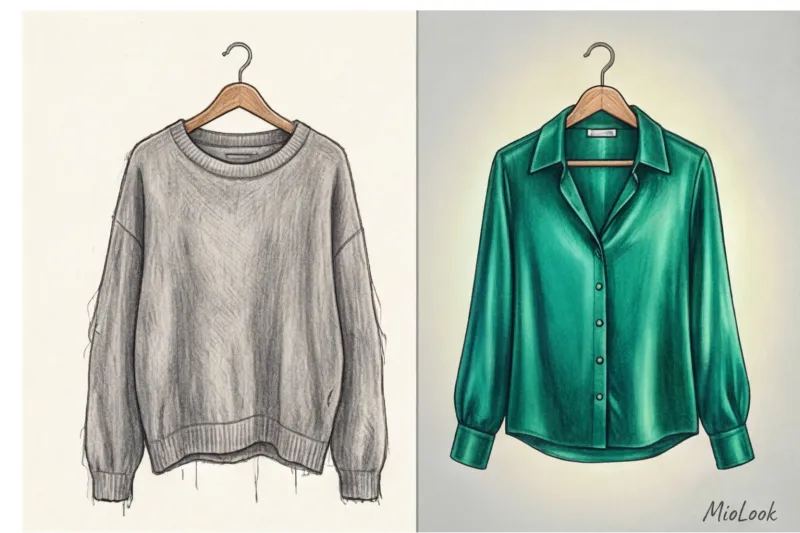
Keeping them is mathematically pointless—fit standards have changed. Today, a different waist height and a different hip measurement are in fashion. Even if you lose weight to the right size, the item will still look out of style. Stop identifying your value with the letter on the tag.
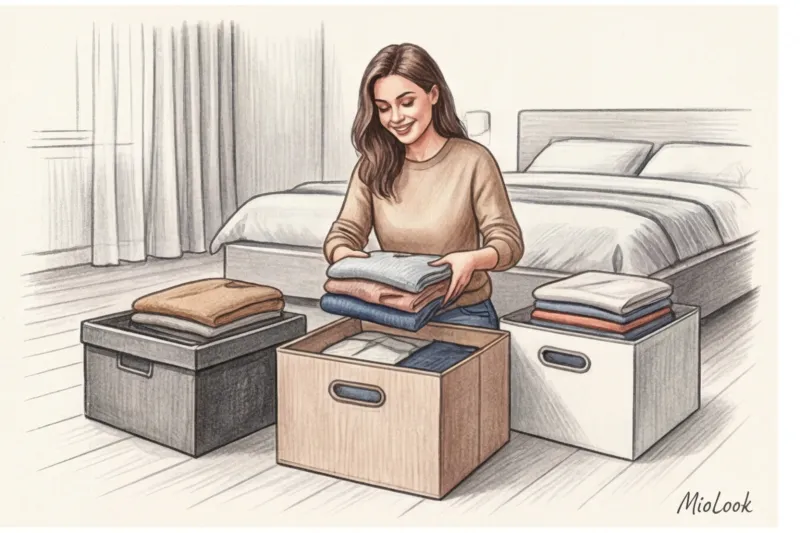
Clothes That Make You Invisible: Getting Rid of Things "For a Rainy Day"
A toxic wardrobe isn't just about tight belts. It's also about a shelf full of "cottage clothes," "home clothes," and "dog clothes for walking in the dark." Stretched sweaters, pilling T-shirts, and faded hoodies.
As a certified colorist, I can scientifically explain the damaging effects of such items. Washed-out, worn-out fabric loses its ability to evenly reflect light. Instead of illuminating your face, the dull, dusty hue of an old T-shirt casts micro-shadows on your under-eye area and nasolabial folds. You put on such a garment and physically look more tired, gray, and haggard in the mirror than you actually are.
The habit of wearing clothes you don't like on yourself in creates a classic "life on hold" syndrome. You tell yourself, "I'll get by today, and tomorrow (when I lose weight/get rich/there's a holiday) I'll dress nicely." But life consists of these ordinary Tuesdays and Wednesdays.
Your perfect look starts here
Join thousands of users who look flawless every day with MioLook. Create a capsule collection of items that truly enhance your appearance.
Get access — €0.99 onceDigitizing Your Wardrobe with MioLook: Therapeutic Effects
Once you've cleared out everything too small and too loose from your closet, the shock stage sets in: it feels like you have absolutely nothing to wear. This is where technology comes in, easing the emotional tension.
During my consultations, I ask my clients to digitize their remaining items. Why does this work? Because you shift the focus from emotions ("I have no waist") to hard data ("I have four shirts, three skirts, and two pairs of perfect pants").
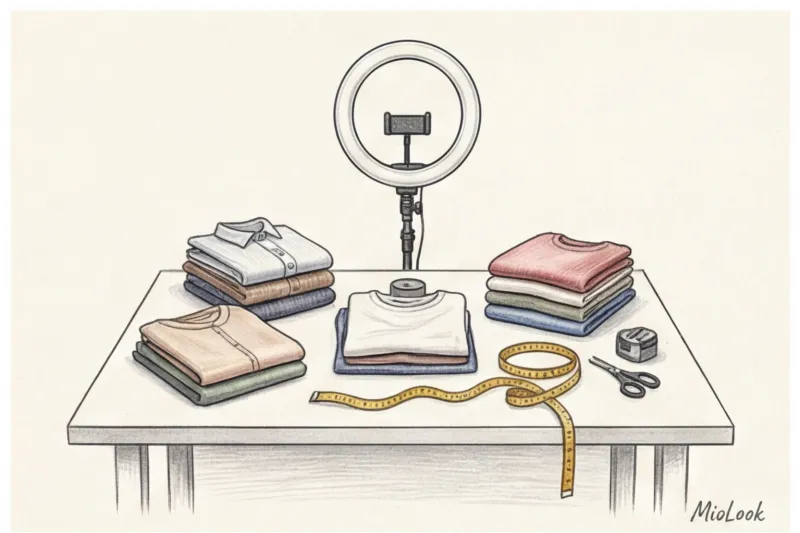
Use for this MioLook The app works like an impartial auditor. You upload your actual, current-sized items, and the smart algorithm begins to create combinations you never even considered. It turns out that that loose jacket looks great with a silk elasticated skirt, and basic loose jeans make a chic pair with a chunky, chunky knit sweater.
You're creating a safe capsule for the next month. A capsule in which everything works for you, not against you.
Checklist: Building a Wardrobe Your Body Loves Today
To be fair, one caveat should be noted: the ruthless rule of shedding clothes doesn't work if your weight fluctuates by one or two sizes every month due to hormone therapy, pregnancy, or specific medical protocols. In such cases, it's wise and environmentally friendly to have two "working" capsules for different phases. But for the vast majority of women, stable clothing is the key to stable self-esteem.
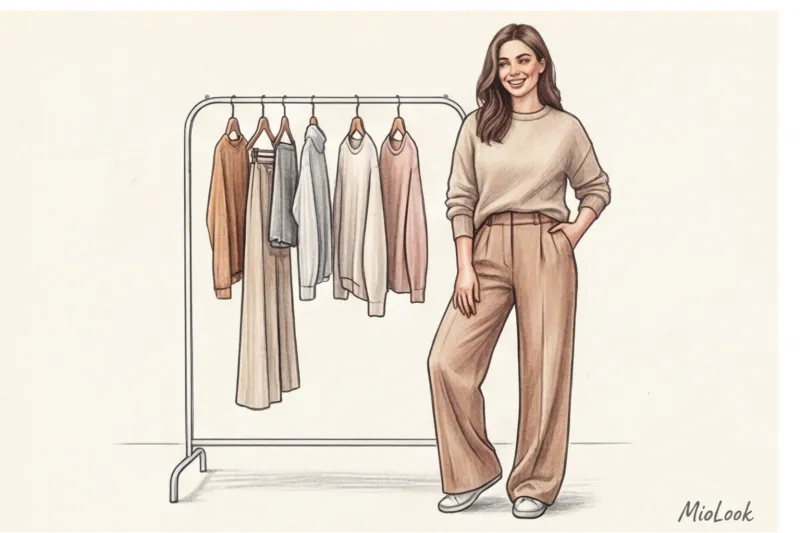
How can you buy new items without them becoming toxic? Use my three-point style checklist:
- Freedom of fit. There should always be some air between your body and the fabric. This doesn't mean you should always wear oversized pants. But if the buttons on your chest are stretched and your trouser pockets are bulging, you're wearing the wrong size. Go up a size and, if necessary, have your waist taken in by a tailor.
- Tactility above all else. Choose fabrics you'd love to live in. Instead of stiff, itchy synthetics, invest in heavyweight cotton (180 g/m² and up), flowing viscose with added elastane, silk blends, or high-quality merino wool. Your skin should rejoice in the touch of your clothes.
- Complimentary complexion. No compromises in portrait photography. The color of your top or jacket should enhance your eyes and even out your skin tone, not accentuate under-eye circles.
Your closet isn't a museum of past achievements or a warehouse of unfulfilled ambitions. It's your personal arsenal. A place of power that should give you support, comfort, and the confidence that you are beautiful right now, in this very moment, every morning. Keep only those items in it that reflect this.