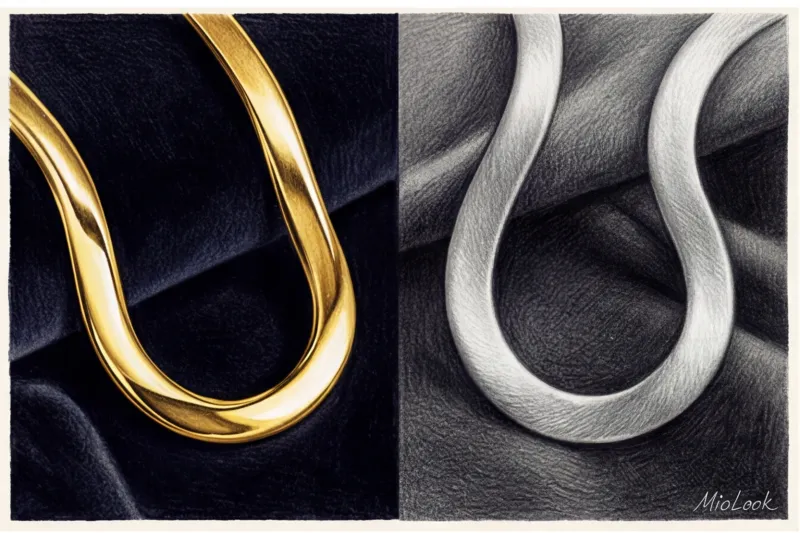
Десятилетиями продавцы в ювелирных бутиках и глянцевые журналы повторяли нам одно и то же правило: девушкам с теплым подтоном кожи нужно носить золото, а с холодным — исключительно серебро. Знаете, что я вам скажу? За 12 лет аудита ювелирных гардеробов я увидела сотни шкатулок, где 80% прекрасных, дорогих украшений лежат мертвым грузом. И проблема была вовсе не в цвете металла.
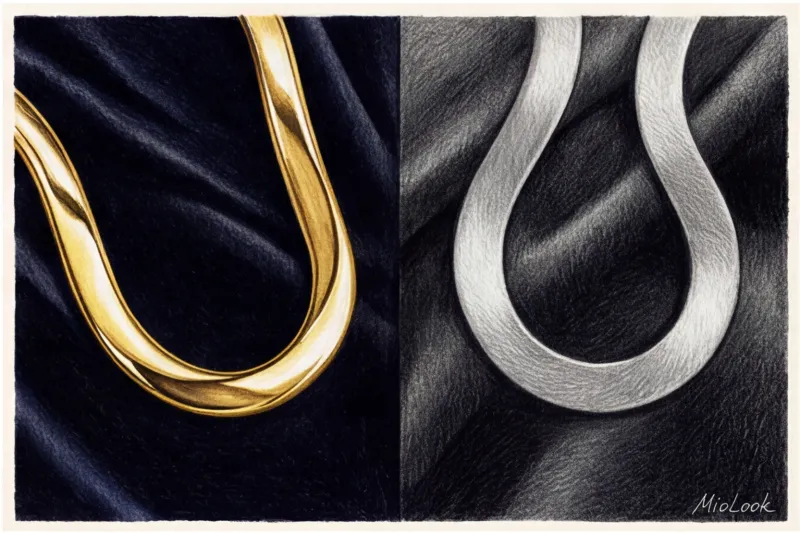
Подбирать украшения только по температуре кожи — это как выбирать автомобиль исключительно по цвету кузова, игнорируя мощность двигателя. Настоящая магия кроется в физике света. То, как металл блестить и как камень преломляет лучи, должно резонировать с вашей природной контрастностью. В этой статье мы навсегда забудем устаревший миф «золото-тепло, серебро-холод» и научимся выбирать украшения по контрастности внешности, опираясь на законы оптики и геммологии.
Свет, тень и блеск: почему украшения по контрастности внешности работают лучше цветотипов
Давайте обратимся к науке. В геммологии существует понятие Refractive index (индекс преломления света), который определяет визуальный вес камня и его способность «гореть». У бриллианта он высочайший, у матового розового кварца — низкий. То же самое с металлами: разница в коэффициенте отражения света между отполированным до состояния зеркала золотом (High polish) и сатинированным металлом (Satin finish) колоссальна. Глянец отражает до 90% света, создавая жесткий, резкий блик. Матовая поверхность отражает менее 40%, мягко рассеивая свечение.
По данным исследований визуального восприятия (Journal of Vision, 2023), правильный масштаб и степень блеска объектов в портретной зоне удерживает внимание собеседника на лице на 30% дольше. Если блеск украшения спорит с контрастностью вашего лица — зритель будет разговаривать с вашими серьгами, а не с вами.
Подробнее о том, как работает базовая разница между светлым и темным в лице, мы разобрали в нашем полном гиде по контрастности внешности и выбору цветов.
Высококонтрастная внешность: геометрия, драма и зеркальный глянец
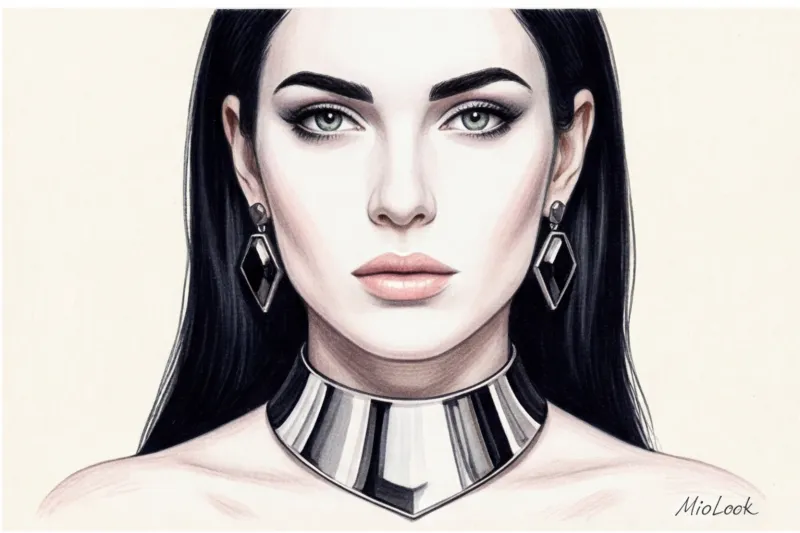
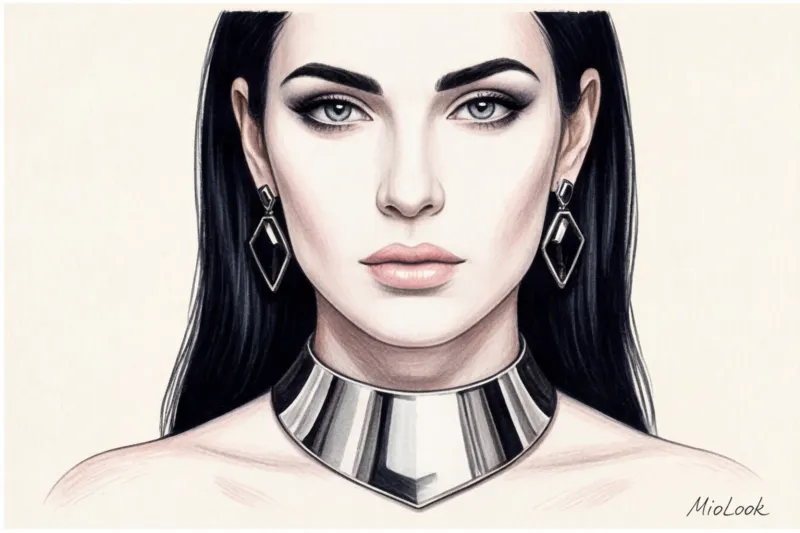
К высококонтрастному типажу относятся девушки с очень светлой, фарфоровой кожей и насыщенно-темными волосами и бровями. У такого лица от природы есть четкая графика, резкие тени и яркие блики.
Одна из моих клиенток, эффектная брюнетка Диана, годами избегала жемчуга и светлых металлов, считая, что они ее «старят» и делают лицо землистым. Она носила классическое матовое серебро, которое просто терялось на фоне ее яркой внешности. Как только мы заменили матовые фактуры на барочный жемчуг с сильным люстром (радужным блеском) в сочетании с черной шпинелью и глянцевым белым золотом — лицо буквально подсветилось изнутри.
- Металлы: Вам жизненно необходим High polish — зеркальная полировка. Матовые, искусственно состаренные или брашированные фактуры сделают высококонтрастную внешность уставшей и тусклой.
- Камни: Выбирайте камни с высокой степенью преломления света (бриллианты, сапфиры, изумруды, фианиты) или абсолютно глухие, плотные цвета (черный оникс, черная шпинель, гладкая белая эмаль).
- Форма: Четкая геометрия, острые углы, асимметрия, крупные гладкие поверхности.
У высококонтрастной внешности есть уникальная суперспособность — она выдерживает самую агрессивную геометрию и самый слепящий блеск, не теряясь на их фоне.
Ваш идеальный образ начинается здесь
Присоединяйтесь к тысячам пользователей, которые каждый день выглядят безупречно с MioLook. Умный алгоритм учтет вашу контрастность.
Начать бесплатноСреднеконтрастная внешность: сложная фактура и богатство нюансов
Средняя контрастность — это мягкие переходы: шатенки, русые девушки с яркими глазами или загорелые брюнетки, где разница между тоном кожи и волосами не достигает максимума. Это моя любимая средиземноморская эстетика, где правят бал сложные текстуры и полутона.
Если у вас средний контраст, чистый зеркальный глянец или абсолютная матовость будут простить ваш образ. Ваша стихия — это игра фактур.
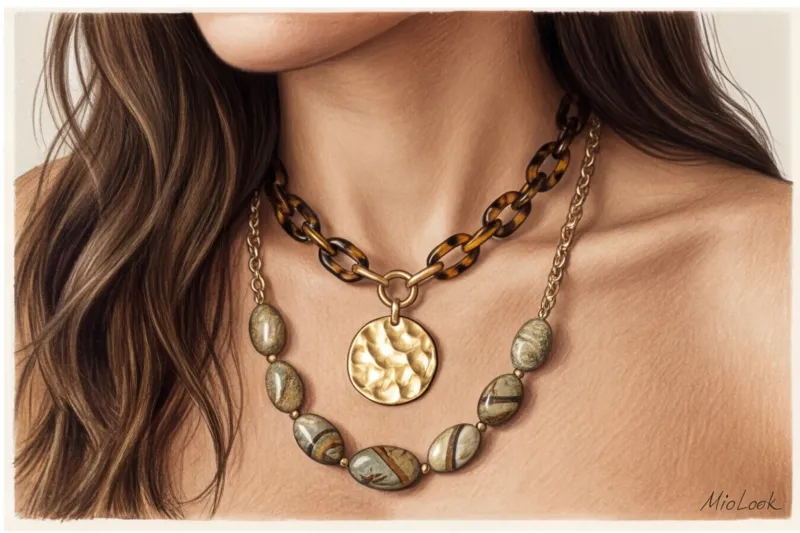
- Металлы: Идеальны hammered metals (кованый металл), эффект мятой фольги, легкое браширование. Именно средней контрастности больше всего идет глобальный тренд на биметалл — смешение золота и серебра в одном изделии.
- Камни: Полупрозрачные, с внутренними включениями, прожилками и узорами. Агаты, пейзажная яшма, тигровый глаз, малахит, рутиловый кварц (волосатик).
- Форма: Многослойность, эклектика, сочетание нескольких цепей разного плетения.
Кстати, в приложении MioLook функция «умный гардероб» часто предлагает девушкам со средней контрастностью миксовать кулоны на длинных цепочках с короткими колье-чокерами из мятого металла — это создает нужную динамику в портретной зоне.
Низкоконтрастная внешность: деликатность, акварель и внутреннее свечение
Низкий контраст характерен для блондинок со светлой кожей, русых девушек с пастельным колоритом или, наоборот, монохромных смуглых типажей, где кожа, волосы и глаза сливаются в единый карамельно-кофейный тон. Главная ошибка, которую я регулярно вижу на корпоративных тренингах — когда светловолосая девушка надевает на важное выступление массивное глянцевое золото или крупные граненые рубины. Зеркальный блеск мгновенно «перекрикивает» деликатные черты лица. Аудитория видит статусное украшение, но теряет зрительный контакт со спикером.
Ваша эстетика — это акварель, а не гуашь.
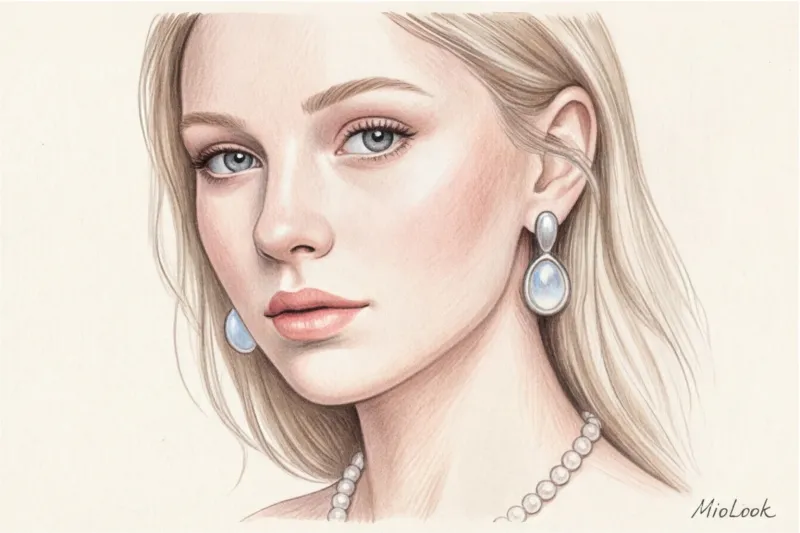
- Металлы: Сатинированные (Satin finish), матовые, слегка оксидированные (черненое серебро). Металл не должен пускать жесткие «зайчики» на солнце.
- Камни: Опалесцирующие, матовые, пористые. Идеально подойдут лунный камень, розовый кварц, бирюза, опалы, нефрит и классический матовый жемчуг.
- Форма: Плавные, текучие линии, флористические мотивы, каплевидные формы, отсутствие жестких геометрических рамок.
Когда это НЕ работает: Я обязана сделать оговорку. Деликатные матовые фактуры категорически не работают на вечерних мероприятиях с приглушенным светом (black-tie, клубы, рестораны). Без направленного света они выглядят как пластик или бижутерия из масс-маркета. Для вечера низкоконтрастным девушкам придется использовать хитрости, о которых пойдет речь ниже.
Попробуйте MioLook бесплатно
Умный AI-стилист подберёт идеальный образ для вашей контрастности за пару кликов.
Начать бесплатноМатрица стилиста: как нарушать правила и носить «чужие» камни
Что делать, если у вас низкий или средний контраст, но вы обожаете бриллианты, статусную геометрию и драматичный стиль? Стилистика — это не тюрьма строгих правил, это набор инструментов. Если очень хочется, то можно, но использовать нужно технику компенсации.
Прием «Понижение градуса»
Сочетайте несочетаемое. Выберите глянцевый, сверкающий камень (например, чистый бриллиант), но закажите для него глухую матовую оправу. Этот контраст фактур внутри самого изделия снизит его общую агрессивность.
Отодвигание от лица
Все правила контрастности критически важны только в портретной зоне (серьги, колье, чокеры). Руки — ваша свободная территория. Смело переносите неидеальные по фактуре, но любимые кольца и браслеты на запястья. Это отличный способ интегрировать акцентные изделия, собираясь, например, на первое свидание, где вы хотите блеснуть, но не перегрузить лицо.
Искусственное повышение контраста
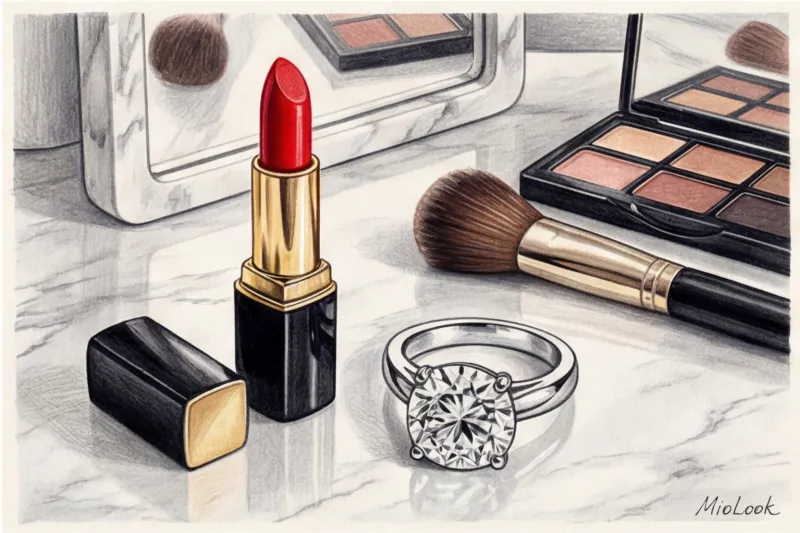
Это мой любимый инсайдерский секрет. Если вам нужно надеть массивное глянцевое колье, которое вам «велико» по контрастности — повысьте контрастность самого лица! Как отмечает Институт цвета PANTONE (2025), плотные пигменты в макияже меняют визуальное восприятие колорита. Плотная красная помада, активные графичные стрелки или даже контрастный белый воротничок рубашки, прилегающий к лицу, создадут необходимый фон, чтобы «вытянуть» массивные ювелирные изделия.
Не только ювелирка: применяем контраст к очкам, ремням и сумкам
Законы отражения света универсальны. Они работают не только с металлами, но и с кожей, пластиком и фурнитурой. Разница между сумкой из гладкой кожи и сумкой из замши — это та же самая разница между глянцевым и матовым золотом.
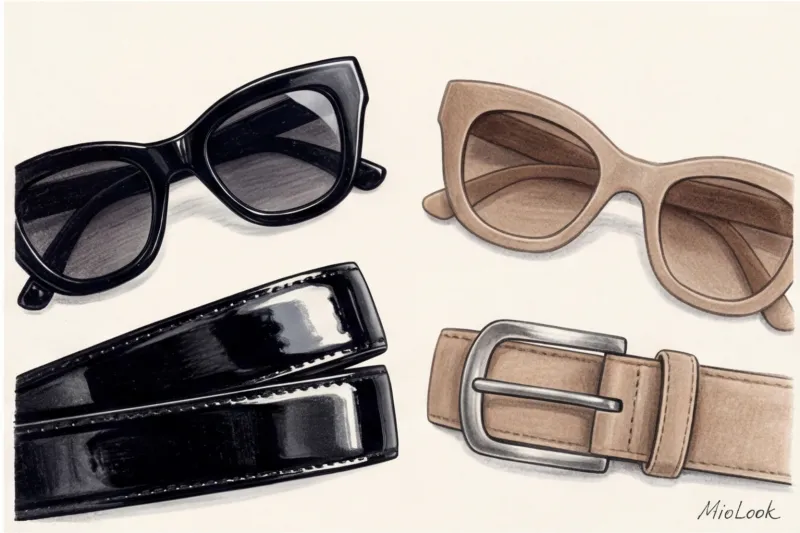
- Оправы очков: Для высокого контраста идеален глянцевый ацетат (как у классических моделей Celine) и черный полированный пластик. Для среднего — роговая оправа, градиент и черепаховый окрас. Для низкого — матовый металл (в духе Mykita) или полупрозрачный нюдовый пластик.
- Кожаные аксессуары: Лаковая кожа — это максимальный глянец и драма, подходящая высококонтрастным типажам. Замша и зернистая кожа поглощают свет, создавая мягкость для среднего и низкого контраста.
- Фурнитура: Выбирая базовую сумку (в бюджете от 100 до 300 € или в премиуме), всегда обращайте внимание на пряжки. Сияющая золотая цепь на сумке требует поддержки от вашей внешности, тогда как матовая или покрытая эмалью фурнитура будет вести себя гораздо спокойнее.
Аудит вашей шкатулки: 5 шагов к идеальной коллекции
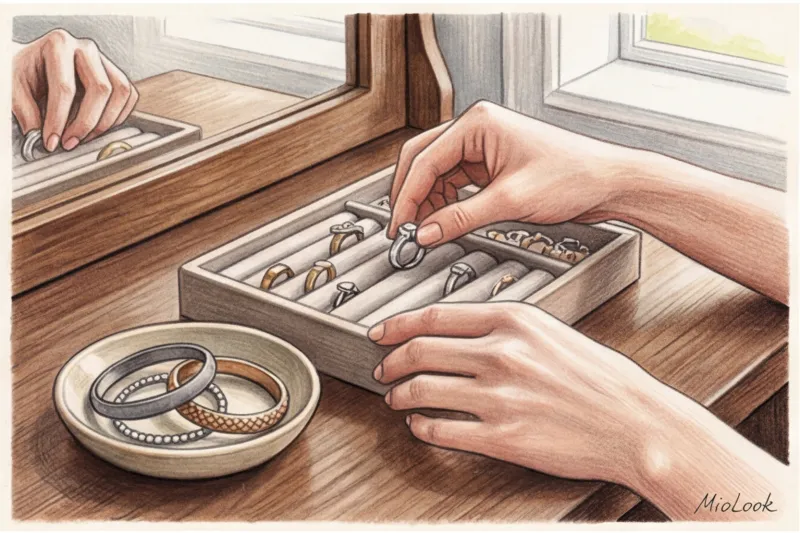
Теперь, когда вы знаете теорию, пришло время практики. Прямо сегодня вечером достаньте все свои украшения и проведите жесткий аудит.
- Сортировка по фактуре: Разделите все изделия на три кучки — глянцевые (отражают как зеркало), фактурные (мятые, кованые, поцарапанные) и матовые/сатинированные.
- Оценка камней: Отделите прозрачные граненого типа (сверкающие) от непрозрачных (поделочных, матовых, жемчуга).
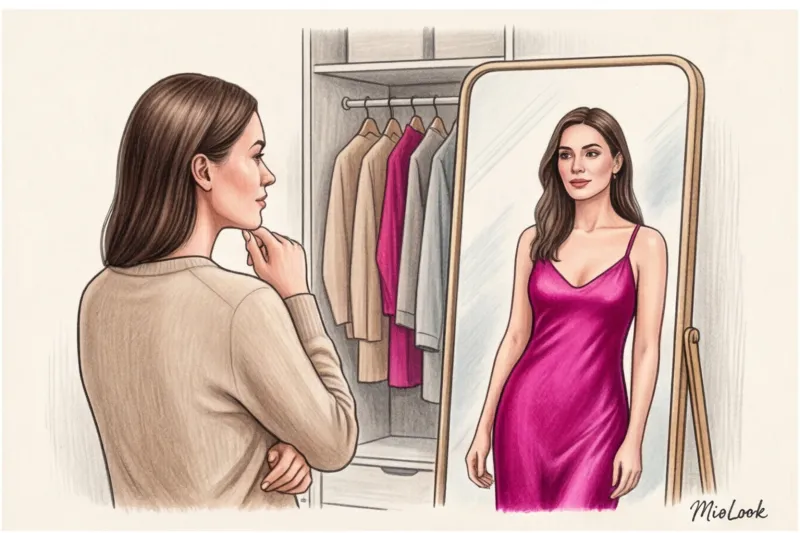
- Зеркальный тест: Подойдите к зеркалу при дневном свете без макияжа. Приложите серьги к лицу и честно ответьте на вопрос: «Что я вижу первым: себя или это украшение?».
- Карантинная зона: Отложите изделия, которые «забивают» вашу природную контрастность, в отдельную шкатулку. Не выбрасывайте их! Это ваш резерв для вечерних образов с активным макияжем или для ношения вдали от лица (если это кольца/браслеты).
- Инвестиционный план: Опираясь на свою реальную контрастность, составьте список покупок. Даже базовая цепочка за 50 € из масс-маркета вроде COS или Massimo Dutti будет смотреться на вас как дорогой эксклюзив, если ее фактура совпадает с вашей физиологией.
Осознанное потребление в ювелирном гардеробе начинается не с экономии, а с понимания физики света. Прекратите покупать украшения только потому, что вам понравился дизайн на витрине. Покупайте те изделия, которые делают ярче вас, а не живут отдельной жизнью на вашей шее.