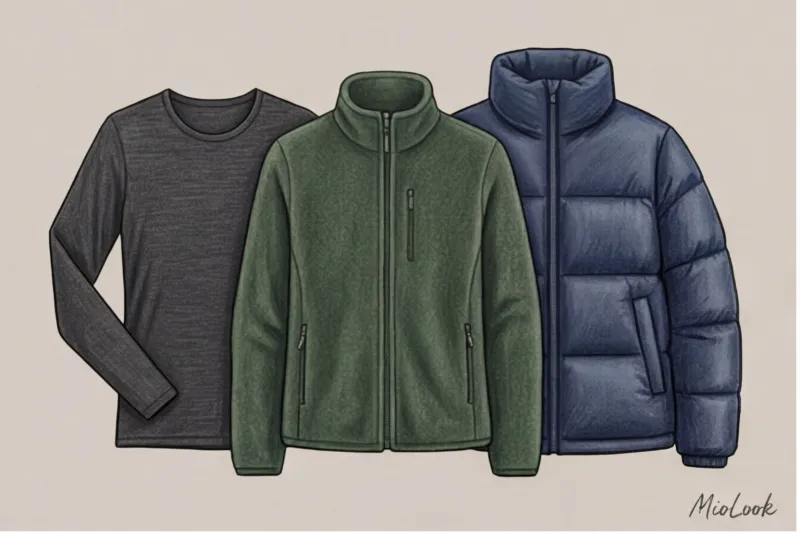
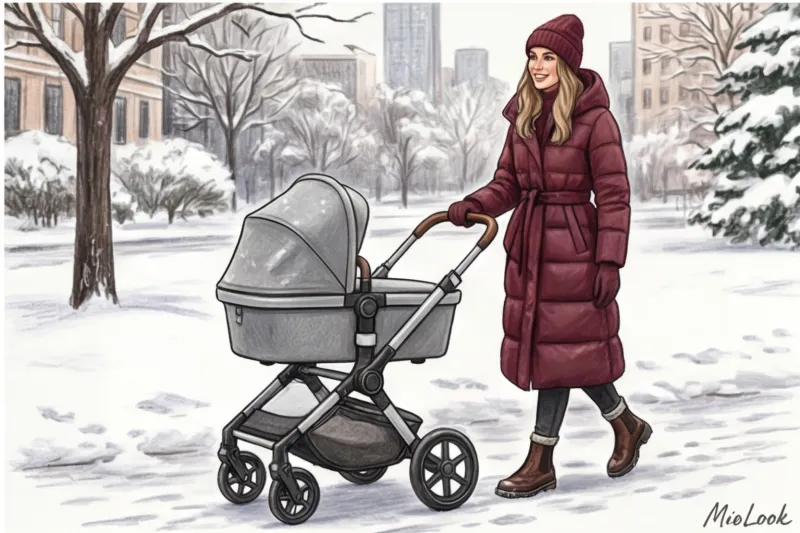
Знаете, сколько проходит среднестатистическая мама с коляской за неделю? Прошлой зимой я провела небольшой эксперимент: попросила пятерых своих клиенток не отключать шагомеры во время декретных будней. Ответ меня ошеломил: от 15 до 25 километров еженедельно. Это полноценный полумарафон по заснеженному парку, льду и слякоти.
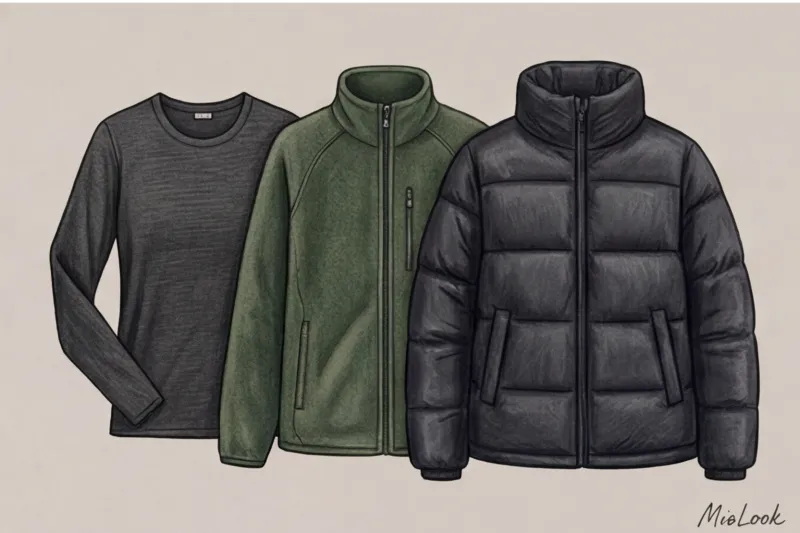
При этом большинство женщин одеваются на эту дистанцию так, будто им нужно просто добежать от подъезда до прогретой машины. Отсюда — промерзшие ноги, стянутая шея, невозможность нормально наклониться и, как следствие, испорченное настроение. Правильно собранный зимний гардероб для прогулок с ребенком — это не компромисс между «красиво» и «тепло». Это вопрос грамотной инженерии вашего образа. Подробнее о том, как выстроить базу без потери личного стиля, мы рассказали в нашем полном гиде по капсульному гардеробу для мамы в декрете.
За 12 лет работы стилистом я поняла главное: мамы мерзнут не потому, что на улице минус пятнадцать, а потому, что игнорируют современные технологии в одежде, делая ставку на устаревшие методы утепления.
Анатомия тепла: почему скандинавское правило «трех слоев» лучше толстого свитера
Главный враг мамы на зимней прогулке — перепад температур. Вы активно одеваете ребенка (и потеете), затем тащите коляску через сугробы у подъезда (потеете еще больше), а потом 40 минут медленно идете по аллее (влага остывает, и вы начинаете катастрофически мерзнуть).
Согласно протоколам Скандинавского института изучения холода (Scandinavian Outdoor Group), единственный способ разорвать этот порочный круг — отказаться от одного гигантского шерстяного свитера в пользу высокотехнологичной многослойности.
«Толстый свитер под плотным пуховиком создает эффект парника. Вы не можете регулировать температуру. Многослойность же работает как климат-контроль: она отводит влагу, удерживает теплый воздух и блокирует ветер», — это базовое правило аутдор-экипировки, которое идеально ложится на городскую кэжуал-эстетику.
Базовый слой: главная ошибка, из-за которой вы мерзнете
Здесь кроется самое контринтуитивное открытие для многих моих клиенток. 100% хлопок — худший выбор для нижнего слоя зимой. Да, нас с детства учили, что «хлопок дышит». Но проблема в том, что он блестяще впитывает влагу и категорически отказывается ее отдавать.
Лабораторные тесты тканей показывают: при намокании от пота хлопковая футболка теряет до 90% своих теплоизоляционных свойств. Вы выходите на мороз во влажной ткани, которая мгновенно становится ледяным компрессом на вашей пояснице. В то же время качественное термобелье из синтетики или шерсти мериноса (даже толщиной в пару миллиметров) сохраняет до 80% тепла даже во влажном состоянии, отводя пот от кожи.
Мой совет: замените любимую хлопковую лонгслив-базу на тонкую водолазку из 100% мериноса. Она не колется, выглядит как дорогая базовая вещь (можно смело снять пуховик в кафе) и греет в три раза лучше «бабушкиного» свитера крупной вязки.
Изолирующий и защитный слои: баланс между уютом и легкостью
Если базовый слой отвечает за сухость, то второй (изолирующий) — за удержание нагретого телом воздуха. Здесь в игру вступает флис (современный Polartec выглядит очень стильно в формате минималистичных зип-худи), плотный кардиган из смесовой шерсти или кашемировый джемпер.
Третий слой — защитный. Его задача не греть, а блокировать ветер и осадки. Именно поэтому технологичная мембрана или плотная смесовая ткань пуховика (с пропиткой DWR) важнее, чем количество пуха внутри. Вам нужна свобода движений в плечах, чтобы маневрировать коляской, а не чувствовать себя космонавтом в скафандре.
Попробуйте MioLook бесплатно
Умный AI-стилист подберёт идеальный многослойный образ из ваших вещей.
Начать бесплатноВерхняя одежда: как выбрать пуховик и не стать «капустой»
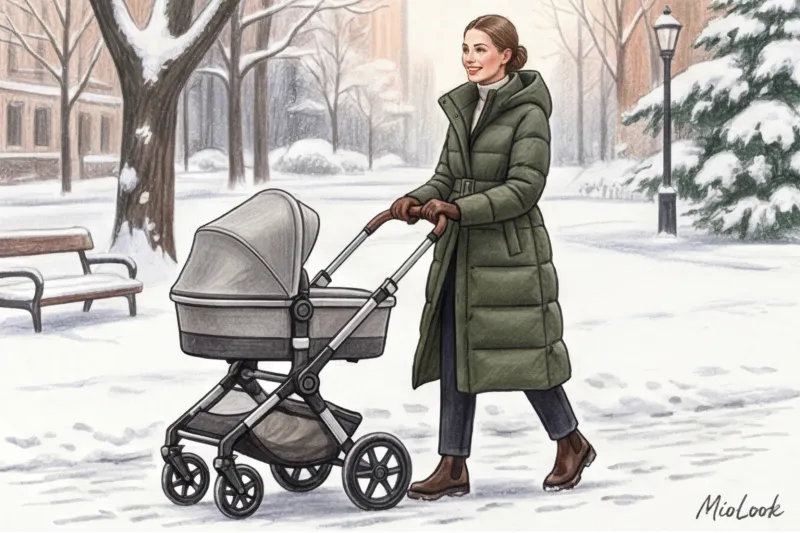
Одна из моих клиенток, Анна, готовясь к первой зиме с малышом, купила роскошную тяжелую дубленку. «Чтобы точно не замерзнуть», — сказала она. Через две недели мы срочно искали ей замену. В этой дубленке Анна физически не могла наклониться к коляске, чтобы поднять упавшую соску, а вес верхней одежды к концу часовой прогулки вызывал боли в спине.
Идеальный пуховик для декрета — это торжество функции, упакованной в лаконичный дизайн. Вот три критерия, на которые я всегда опираюсь при подборе:
- Архитектура кроя: Забудьте про приталенные пуховики-гусеницы с блестящим финишем. Выбирайте прямой силуэт (оверсайз или полуприлегающий) с матовой текстурой. Под него легко поместится худи или объемный кардиган, и визуально это выглядит гораздо дороже.
- Правильная длина и боковые разрезы: Пуховик должен закрывать поясницу и середину бедра (самые уязвимые для ветра зоны). Но чтобы он не сковывал широкий шаг при ходьбе, ищите модели с длинными боковыми разрезами на молнии или кнопках. Это абсолютный геймчейнджер для активных мам.
- Объемный капюшон-шлем: Сложные конструкции из шапок, которые сползают на глаза, пока вы несете на руках 10-килограммового ребенка, должны остаться в прошлом. Правильный капюшон, который держит форму, решает проблему осадков и пронизывающего ветра.
Обувь для зимних прогулок: тепло без ущерба для стиля
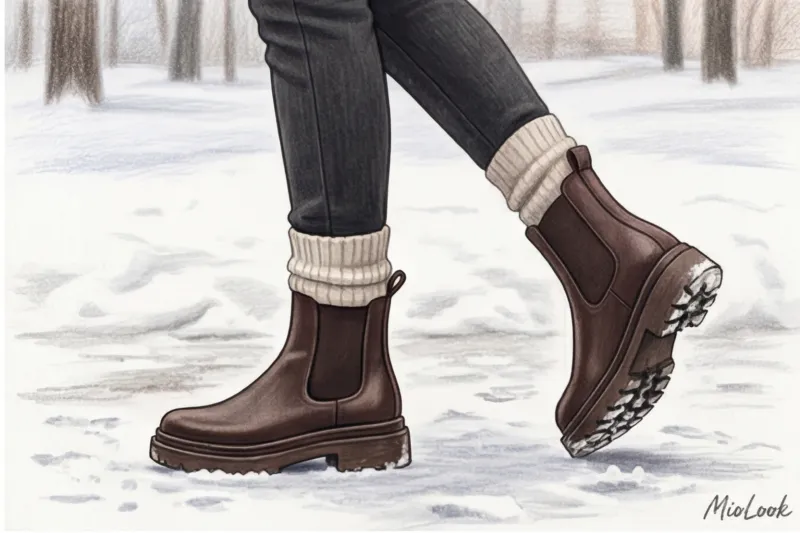
В вопросах зимней обуви я всегда руководствуюсь данными тепловизоров. По статистике (и это подтверждают исследования производителей обуви за 2024 год), при стоянии на промерзшем асфальте до 40% тепла уходит именно через стопы. И здесь работает «золотое правило трех сантиметров».
Толщина подошвы критически важнее, чем количество овечьего меха внутри. Если вы стоите в тонких кожаных сапожках на миллиметровой подошве (пусть и на натуральном меху), вы замерзнете через 15 минут. Прослойка воздуха и резины между вашей стопой и землей — вот что реально работает.
Отличные стильные альтернативы классическим уггам (которые быстро теряют форму от реагентов) или громоздким «дутикам»:
- Челси на массивной тракторной подошве (бренды от Vagabond до Massimo Dutti делают отличные утепленные варианты).
- Жокейские сапоги с широким голенищем — под них идеально прячутся плотные легинсы или термобелье.
- Городские трекинговые ботинки из нубука с мембраной Gore-Tex.
Важный нюанс: зимнюю обувь нужно покупать строго на полразмера-размер больше. В тесном ботинке нарушается кровообращение, а мех сминается. Воздушная прослойка внутри обуви греет не хуже самого материала.
Аксессуары, которые спасают: умные решения для рук и шеи

Длинные объемные шарфы смотрятся невероятно кинематографично на Pinterest. В реальности же, когда мама наклоняется, чтобы поправить одеяло в коляске, концы этого шарфа неизбежно оказываются в грязном снегу. Или, что еще хуже, открывают шею при каждом резком движении.
Современная альтернатива, которая стала мощным трендом — капор (балаклава) или манишка. Они закрывают грудь, спину и шею, создавая цельный кокон тепла под пуховиком. Честно признаюсь, капор подходит не каждому типу лица (это его главный минус), но в этом случае элегантная вязаная манишка в рубчик в сочетании с лаконичной шапкой бини решит проблему на 100%.
Что касается рук: классическая муфта на ручку коляски — гениальное изобретение. Но есть подвох. Вам постоянно нужно доставать руки на мороз: ответить на звонок, достать влажную салфетку, проверить малыша. Кожа моментально обветривается. Решение — надевать тонкие шерстяные перчатки с технологией Touch-screen (для работы со смартфоном), а уже их прятать в муфту.
Капсула «зимний гардероб для прогулок с ребенком»: формула MioLook
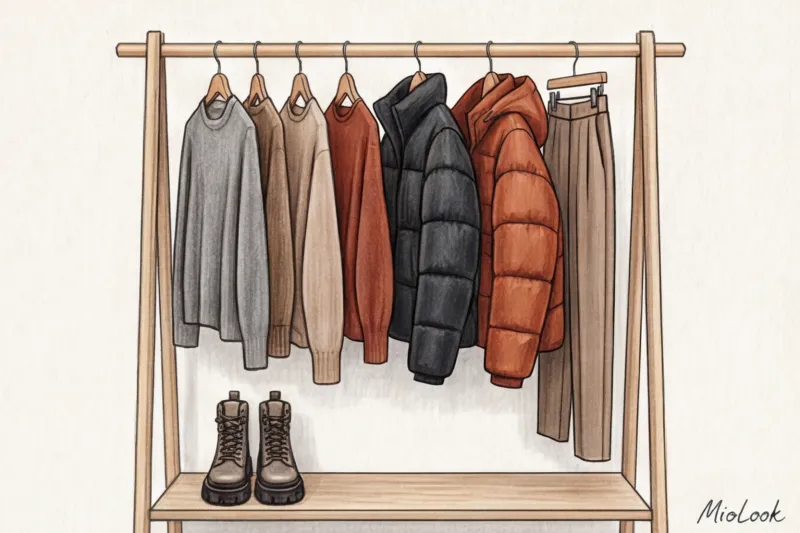
Чтобы каждое утро не стоять перед шкафом в панике, я предлагаю собрать жесткую, но функциональную капсулу из 8-10 вещей, которые сочетаются друг с другом вслепую.
База:
- 2 комплекта тонкого термобелья (меринос + вискоза/синтетика).
- 1 плотные джоггеры из футера с начесом (выбирайте крой без тугих резинок внизу).
- 1 прямые свободные джинсы плотностью не менее 12 унций.
Верх:
- 1 объемное худи (идеально ложится на водолазку).
- 1 свитер свободной вязки из смесовой шерсти (никакого 100% акрила, он не греет).
- 1 кашемировая или мериносовая водолазка.
Верхняя одежда и обувь:
- 1 пуховик прямого кроя с матовым финишем.
- 1 пара ботинок на толстой протекторной подошве.
Магия этой капсулы кроется в цвете. Уходите от тотального черного (на нем катастрофически видна любая грязь, пыль и слюни малыша). Выбирайте монохромные блоки: графитовый, цвет кэмел, глубокий изумрудный или сложный серо-бежевый оттенок (taupe).
Оцифровка такой базы творит чудеса. Загрузив эти предметы в приложение MioLook, вы можете заранее составить лукбук на неделю. Мои клиентки отмечают, что использование функции «умного гардероба» экономит им до 20 минут утреннего времени — ресурса, которого у молодых мам вечно не хватает.
Готовы начать?
Попробуйте бесплатный план MioLook — без обязательств, организуйте свою капсулу прямо сейчас.
Начать бесплатноКак выглядеть стильно, если на сборы есть ровно 3 минуты: чек-лист
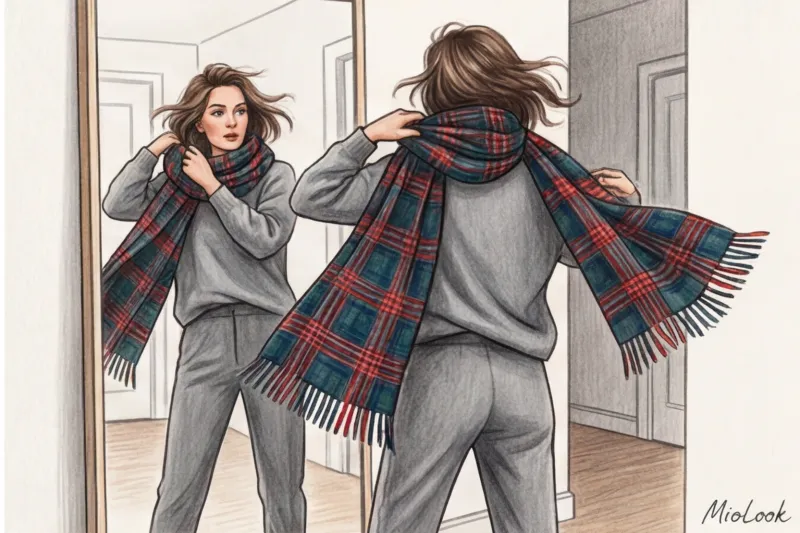
Дети не умеют ждать. Когда малыш уже одет и начинает перегреваться в коридоре, у вас есть максимум 180 секунд на сборы. Как не выглядеть при этом человеком, который одевался в темноте?
- Секрет монохрома. Наденьте вещи одного оттенка. Серые джоггеры + серое худи + серая шапка. Это визуально вытягивает силуэт, собирает образ воедино и всегда выглядит «дорого».
- Подготовка с вечера. Банально, но работает безотказно. Принцип «повесьте вещи на стул», включая чистое белье и носки, снижает когнитивную нагрузку мозга утром на 40%.
- Солнцезащитные очки (даже зимой). Это легальный чит-код молодых мам. Они мгновенно делают образ более фактурным и скрывают следы бессонной ночи.
- Чистая обувь важнее идеальной укладки. Можно выйти с небрежным пучком, но если ваши массивные ботинки очищены от грязи и соли, образ уже выглядит опрятным.
Заключение: тепло — это ваша суперсила

Стиль в декрете не требует жертв. Прошли те времена, когда ради красоты нужно было терпеть пронизывающий холод в тонком пальто, а ради тепла — превращаться в бесформенное нечто. Современные материалы, умный стайлинг и опора на технологии позволяют вам оставаться собой даже на детской площадке в минус пятнадцать.
Прямо сегодня проведите честный аудит своего зимнего шкафа. Отложите хлопковые футболки до лета, избавьтесь от обуви на тонкой подошве и вложитесь в один, но по-настоящему технологичный пуховик. Потому что ваше физическое тепло и комфорт — это фундамент вашего психологического равновесия. А счастливая и не замерзшая мама — это именно то, что нужно вашему ребенку больше всего на свете.