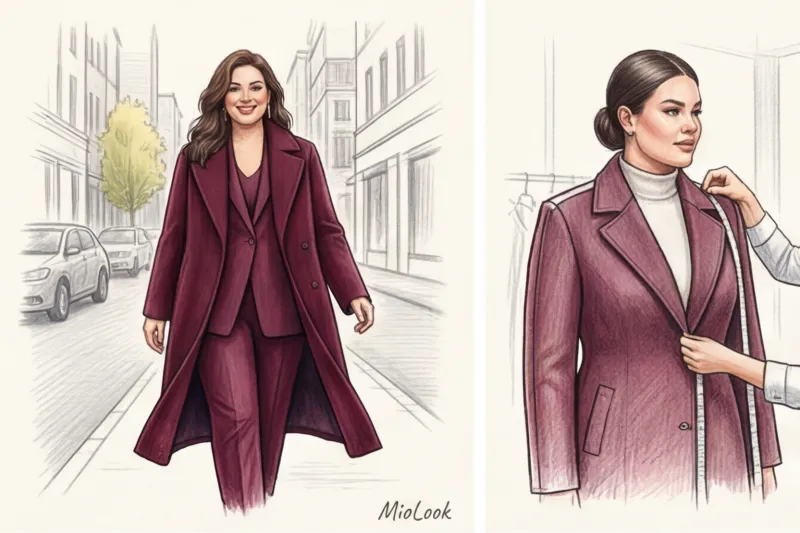
Скільки разів ви чули цю безапеляційну пораду: «Якщо хочеш здаватися стрункішою — купуй лише чорне та уникай пуховиків»? За 14 років роботи персональним стилістом я викинула із гардеробів своїх клієнток десятки безформних чорних балахонів, куплених саме через цей стереотип.
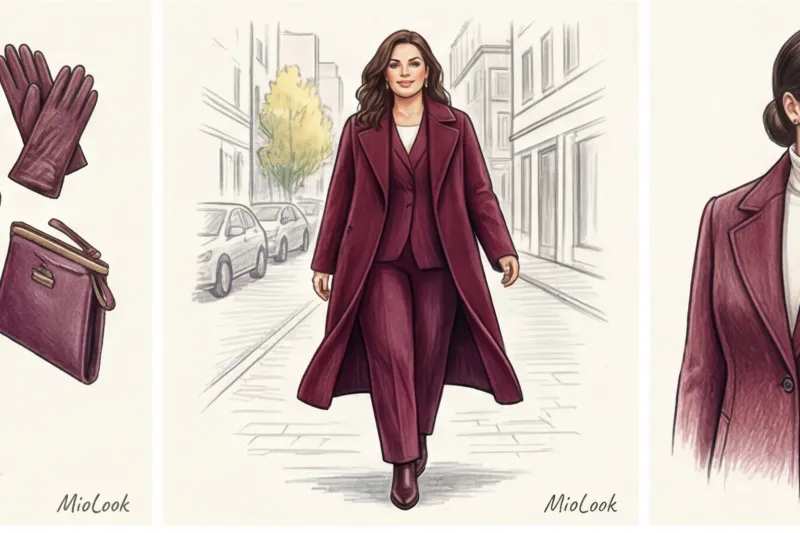
Давайте відверто: правильний верхній одяг для повних жінок - це не спроба сховатися в темний чохол. Це – чиста архітектура. Це вміння використовувати щільність тканини, напрям стібки та ширину лацканів так, щоб силует витягувався сам собою. Докладніше про те, як побудувати правильний фундамент гардеробу, я писала у нашому повному гіді базовий верхній одяг: збираємо розумну капсулу. Сьогодні ми розберемо конкретні механіки, які працюють для фігур plus-size.
Головний міф: чому чорний верхній одяг для повних жінок не завжди струнить
Чорний колір дійсно приховує обсяги, але тільки коли йдеться про прилеглі речі або тонкі тканини. Коли ми говоримо про пальто або зимову куртку, в гру входить фізика візуального сприйняття. Масивне чорне пальто без чіткого крою створює ефект «монументальної брили» — темної, важкої плями, яка візуально приземлює фігуру.
На моїй практиці був показовий випадок. Клієнтка Олена (розмір 54) прийшла до мене в чорному пальто-оверсайзі, впевнена, що воно приховує стегна. Насправді пальто прало будь-які вигини, перетворюючи силует на прямокутник. Ми замінили його на структуроване відтінкове пальто «гіркий шоколад». Обличчя миттєво посвіжішало, а за рахунок благородного кольору та чіткої лінії плеча Олена візуально втратила кілька розмірів.
Якщо ви хочете досягти ефекту стрункості кольором, використовуйте глибокі відтінки: марсала, темний сапфір, смарагд, стигла слива. За даними Інституту кольору PANTONE, ці тони мають ту ж універсальність, що і чорний, але мають внутрішнє «підсвічування». Ще один потужний прийом – вертикальний колор-блок. Одягайте базовий образ в одному кольорі (наприклад, бежевий светр і штани), а зверху накидаєте розстебнуте пальто контрастного темного відтінку. Дві вертикальні лінії бортів пальта буквально "зрізають" зайві сантиметри з боків.
Спробуйте MioLook безкоштовно
Розумний AI-стиліст підбере ідеальний образ та допоможе скласти капсулу з урахуванням особливостей вашої фігури.
Почати безкоштовноАрхітектура силуету: 3 правила вибору крою, які працюють краще дієт
Одяг може бути вашим особистим пластичним хірургом, якщо розуміти закони пропорцій. У конструюванні одягу для plus-size є жорсткі правила, про які мас-маркет часто забуває.
Правило пропорційності деталей. Маленькі гудзики, вузькі лацкани та крихітні кишені на великій фігурі створюють ефект Гулівера в країні ліліпутів — вони наголошують на контрасті. Для розміру 50+ ширина лацкана пальта має бути не менше ніж 8-10 сантиметрів.
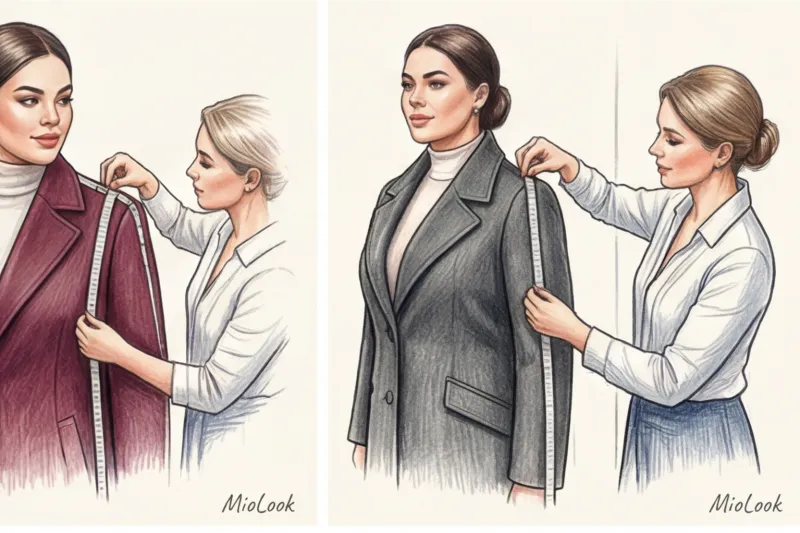
Чітка лінія плеча. Забудьте про гіпероверсайз і сильно спущене плече (коли шов знаходиться десь на середині передпліччя). Такий крій робить верхню частину тіла похилим і важким. Втачний рукав з чітким, трохи акцентованим плечем збирає фігуру в єдину конструкцію.
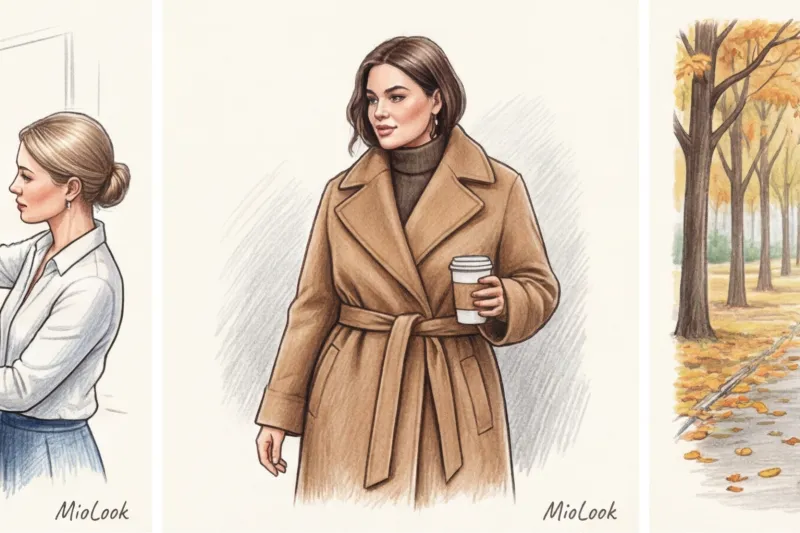
Магія V-подібного вирізу. Тут працює класична ілюзія Мюллера-Лайєра з психології сприйняття: лінії, що розходяться вгору, подовжують шию та полегшують грудну клітину. Англійський комір — ваш найкращий друг.
«Головна помилка при виборі верхнього одягу plus-size — купівля речі на розмір більше зі страху, що вона буде тісною. Ви купуєте не комфорт, ви купуєте зайвий обсяг. Шукайте свій розмір, але у правильному, напівприлеглому крої».
Найкращі фасони пальто та плащів для plus-size: огляд від стиліста
Давайте пройдемося по конкретних фасонах, які я регулярно використовую у роботі з клієнтками.
Золотий стандарт - це напівприлягаюче пальто (честерфілд). Воно має виточки, злегка позначає талію, але не обтягує її. Це ідеальний баланс між свободою та структурою.
Пальто-кокон Добре працює для фігури типу «яблуко» (коли основний обсяг зосереджений в області живота). Але тут є строгий нюанс: звуження кокона донизу не повинно бути надто різким, інакше ви отримаєте силует чупа-чупс на тонких ніжках.
Довжина вирішує все. Довжина до середини стегна - найпідступніша, вона візуально ріже фігуру в найширшому місці. Оптимальна довжина, яка стрункує всіх - це міді (5-7 см нижче коліна або до середини ікри). Поділ повинен закінчуватися у найвужчому місці вашої ноги.
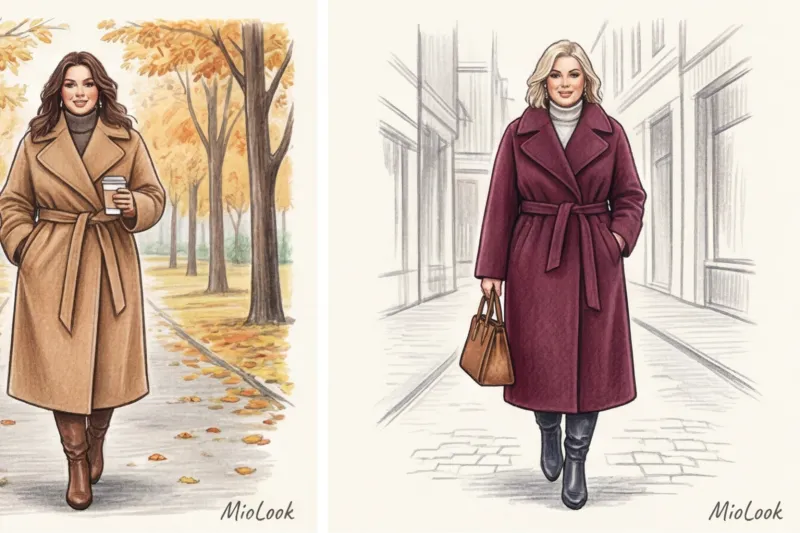
Як носити правильно при пишних формах.
Багато хто боїться пальто на запах через «ефект банного халата». Цього легко уникнути, якщо дотримуватися двох умов. По-перше, тканина має бути щільною (про це трохи нижче). По-друге, зав'язуйте пояс не суворо на талії, а на 3-4 сантиметри вище за природну лінію. Цей мікро-прийом візуально подовжує ноги і маскує животик.
Пуховики та зимові куртки: як не перетворитися на «кульку»
Ще одна моя клієнтка зізналася, що 5 років мерзла взимку в тонкому вовняному тренчі, бо боялася, що пуховик зробить її «величезною». Це застарілий стереотип із двохтисячних, коли куртки набивали товстим шаром синтепону.
Сьогодні технології зробили крок вперед. Сучасні утеплювачі (тінсулейт, ізософт, альполюкс) при густині всього 150-200 г/м² гріють як товста перина, але залишаються тонкими. Ви отримаєте тепло без об'єму.
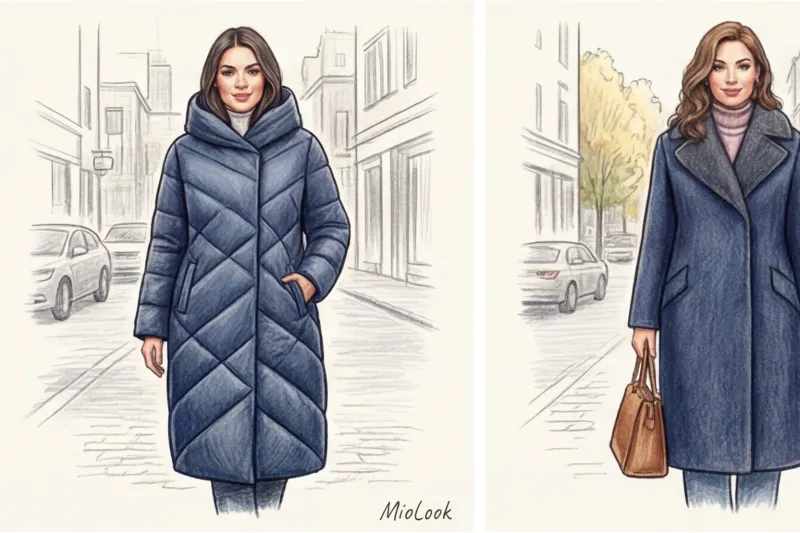
При виборі пуховика звертайте увагу на два критичні фактори:
- Фактура тканини: Лише матова. Глянцеві, блискучі тканини відбивають світло і візуально додають вам щонайменше один розмір.
- Напрямок стібки: Широкі горизонтальні смуги перетворюють фігуру на гусеницю. Шукайте діагональну, ромбоподібну або асиметричну стібку. Геометрія ромба витягує силует по вертикалі.
Ваш ідеальний образ починається тут
Приєднуйтесь до тисяч користувачів, які щодня виглядають бездоганно з MioLook. Оцифруйте свій гардероб та створюйте стильні поєднання.
Почати безкоштовноТканини та фактури: що видає вагу, а що його прикрадає
Щільність тканини – ваш головний союзник. Пальто зі 100% тонкого акрилу або дешевого поліестеру не має форми. Воно обвисає, збирається в складки і зрадницько підкреслює кожну нерівність фігури, включаючи те, що ви надягли під низ.
Ідеальний склад для демісезонного пальта: від 50 до 80% вовни з додаванням нейлону або поліаміду. Синтетика в невеликій кількості необхідна - вона не дає шерсті скочуватися і захищає річ від деформації.
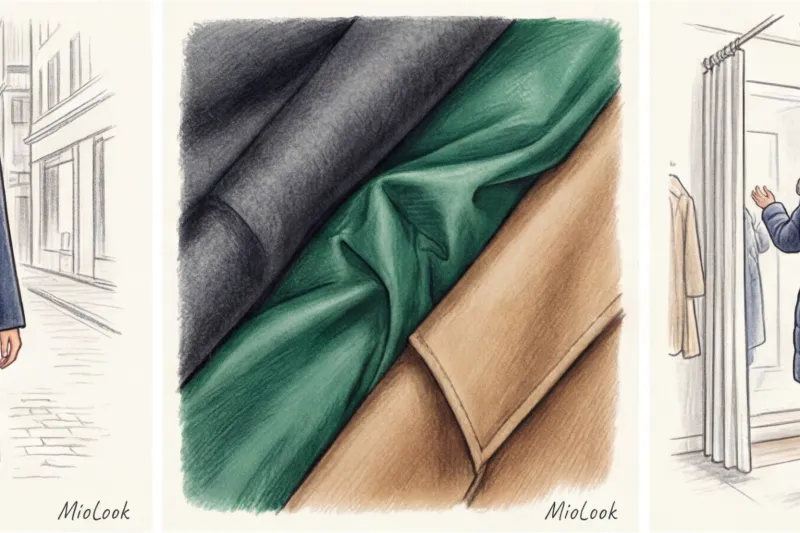
У магазині завжди проводжу простий тест: стискаю край пальта в кулаку на 10 секунд і відпускаю. Якщо тканина залишилася сильно зім'ятою — річ не варта своїх грошей, вона виглядатиме неохайно вже після першої поїздки до таксі.
Будьте обережні з трендовими фактурами. Пальто-тедді (чебурашка), букле та довговорсові матеріали гарантовано додадуть вам обсяг. Вибирайте гладкі фактури: сукно, щільний габардин, матову плащівку.
Чек-лист перед покупкою: тест-драйв верхнього одягу в примірочній
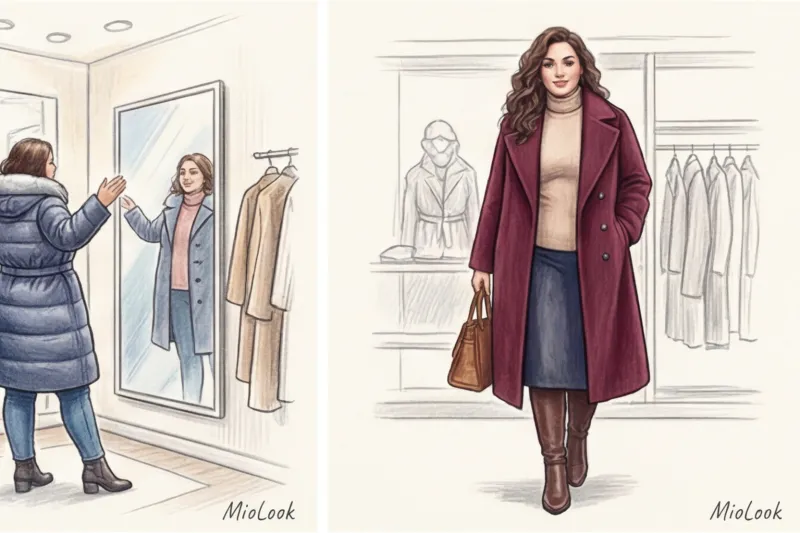
Ніколи не купуйте верхній одяг, просто покрутившись перед дзеркалом. У примірювальній потрібно провести справжній краш-тест.
- Тест на свободу облягання. Приміряйте пальто чи куртку на самий товстий светр чи жакет, який плануєте носити. Між тілом і верхнім одягом повинен залишатися повітряний прошарок - саме він зберігає тепло.
- Тест у русі. Підніміть руки вгору (чи не тягне в проймах?), зімітуйте керування автомобілем, обов'язково сядьте на пуф. Якщо пальто розходиться на стегнах, коли ви сидите, це не ваш розмір чи фасон.
- Оцінка ККД (коефіцієнта корисної дії). Це поняття я запровадила для своїх клієнток. Якщо ви 90% часу проводите за кермом, довге вовняне пальто має низький ККД — його поділ мажеться, а вам буде незручно. В цьому випадку ваш вибір - укорочений бушлат або куртка до середини стегна з бічними шліцями на блискавці.
Як інтегрувати нову куртку чи пальто в капсульний гардероб
Верхній одяг не існує у вакуумі. Це логічне продовження базового гардеробу. Часта помилка - купити розкішне об'ємне пальто і носити його з мікро-сумкою на тонкому ланцюжку. На контрасті з маленьким аксесуаром фігура видається більшою. Вибирайте структуровані сумки середнього та великого розміру (тоути, шоппери жорсткої форми).
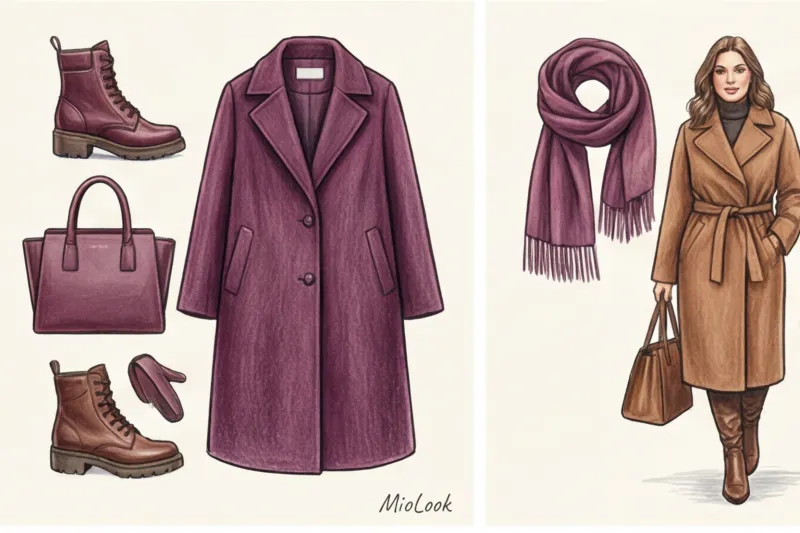
Щоб не гадати, чи підійде нова куртка до ваших улюблених чобіт і сукні, я рекомендую використовувати сучасні технології. У додатку MioLook ви можете завантажити фотографії своїх речей і віртуально приміряти до них новий верхній одяг перед покупкою. Це страхує від імпульсних витрат і ситуацій «повна шафа, а одягти нічого».
Пам'ятайте головне правило стилю, яке залежить від розміру на бирці: річ повинна працювати на вас, а не ви на неї. Шукайте щільні тканини, чіткі лінії плеча та правильну довжину, і тоді верхній одяг стане вашою найнадійнішою бронею у холоди, підкреслюючи переваги фігури.