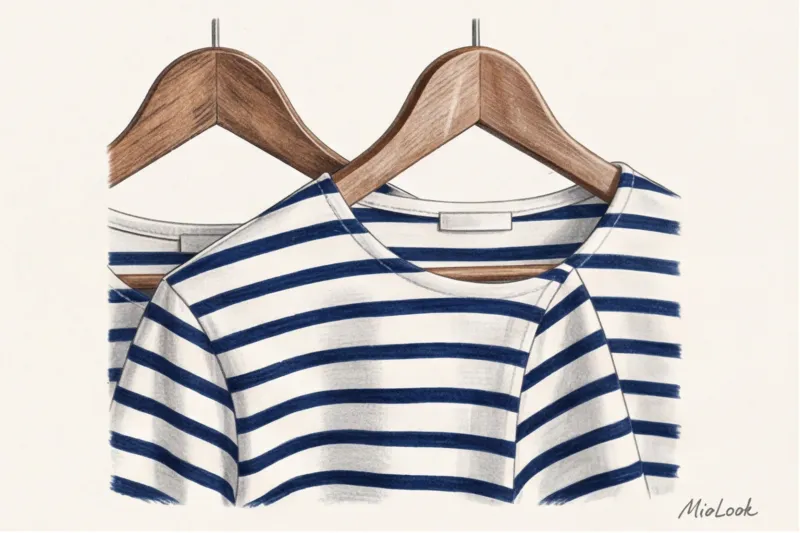
Однажды клиентка заявила мне: «Я выбросила все тельняшки, потому что кто-то сказал, что горизонталь безжалостно полнит». Спойлер: она совершила огромную ошибку и лишила свой гардероб мощного архитектурного инструмента. Гладкая базовая капсула, состоящая только из однотонных вещей, мертва. Ей нужен визуальный ритм, графичность, и именно полоска справляется с этой задачей лучше всего. Подробнее об этом мы рассказали в нашем полном гиде по сочетанию принтов в гардеробе, но сегодня я хочу поговорить о самом утилитарном и одновременно самом сложном паттерне.
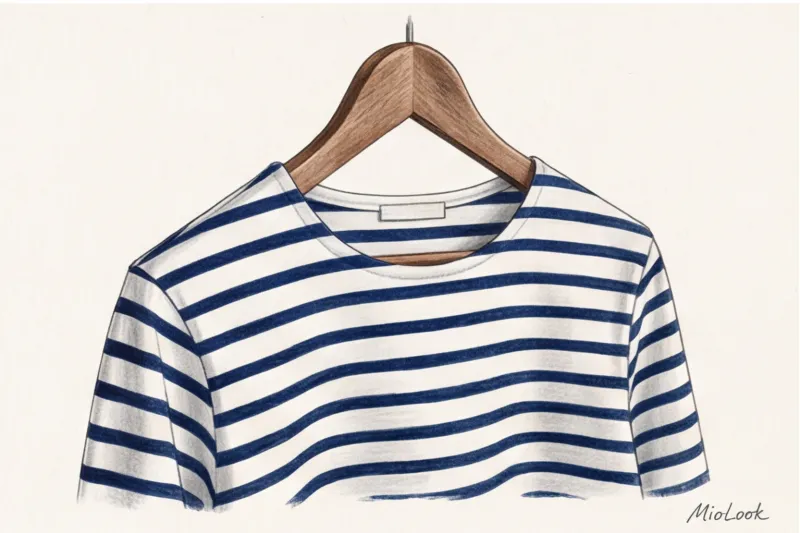
Как стилист, работающий с премиальным сегментом, я часто вижу, как одна неверно выбранная вещь обрушивает весь образ. И вопрос того, с чем носить полоску, вторичен по отношению к тому, какую именно полоску вы выбираете. Давайте разберем этот принт через призму люкс-стандартов: от правильного плетения нитей до физики оптических иллюзий.
Анатомия дорогой вещи: как выбрать правильную полоску
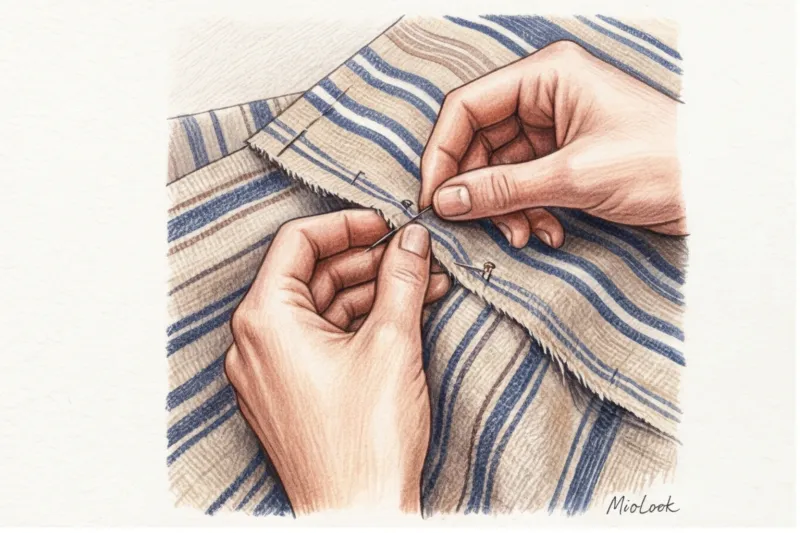
Когда закупщики люксовых бутиков в Милане оценивают новые коллекции, они не смотрят на логотип. Первое, что они делают с полосатой вещью — складывают её по боковому шву. Если горизонтальные линии на полочке и спинке не образуют идеальный «шеврон» (елочку), вещь возвращается на фабрику.
В масс-маркете полоски часто «едут» в разные стороны. Глаз считывает эту асимметрию за долю секунды, и мозг выдает вердикт: «дешево». Идеальное совпадение геометрии принта на боковых швах, плечах и накладных карманах — золотое правило люкса. Это требует большего расхода ткани при раскрое, поэтому стоит дороже, но именно это делает вещь статусной.
Второе железное правило — технология yarn-dyed. Дорогая полоска всегда выткана из предварительно окрашенных нитей. В бюджетном сегменте рисунок часто просто печатают поверх белого трикотажа. Растяните такую ткань руками в примерочной: если между синими полосами проступают белые «проплешины» основы — возвращайте вещь на вешалку. Она потеряет вид после первой же стирки.
Тельняшки: от бретонского хлопка до тяжелого шелка
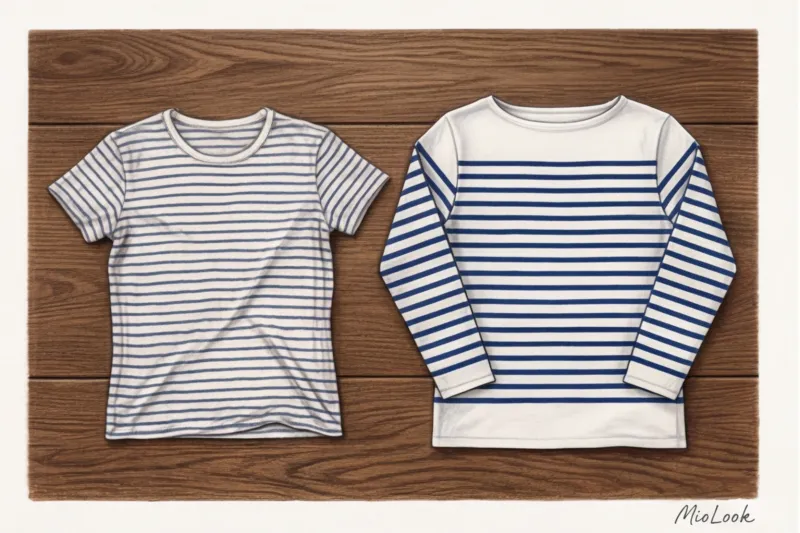
Исторический стандарт бретонского трикотажа был закреплен законом ВМФ Франции в 1858 году: ровно 21 полоса на груди (по числу побед Наполеона). Изначально тельняшки шили из плотного, почти сурового хлопка. И в этом кроется секрет их посадки.
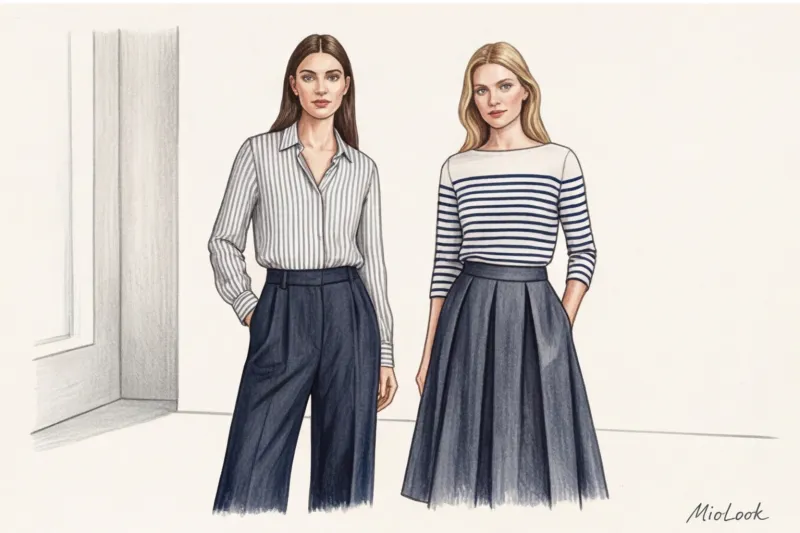
Плотный, сухой хлопок (весом от 180 г/м²) держит архитектуру образа. Он не облегает тело, а создает собственный структурный силуэт. Вырез «лодочка» (bateau), характерный для аутентичных брендов вроде Saint James, элегантно открывает ключицы, создавая баланс между закрытым торсом и хрупкой линией шеи.
Рубашки в полоску: секрет правильного кроя и ткани
Для рубашек правила игры меняются. Здесь правит бал поплин высокого качества (high thread count). В отличие от рыхлого льна или фланели, плотный поплин дает четкую, графичную линию.
- Bengal stripe (бенгальская полоска): классическая полоса шириной около 6 мм (равная ширина белого и цветного). Идеальна для строгих деловых образов.
- Hairline (волосяная полоска): ультратонкая линия, которая издалека сливается в единый пастельный фон, но вблизи демонстрирует сложную фактуру. Отлично работает для миниатюрных девушек.
Оптические иллюзии: разрушаем миф о том, что горизонталь полнит
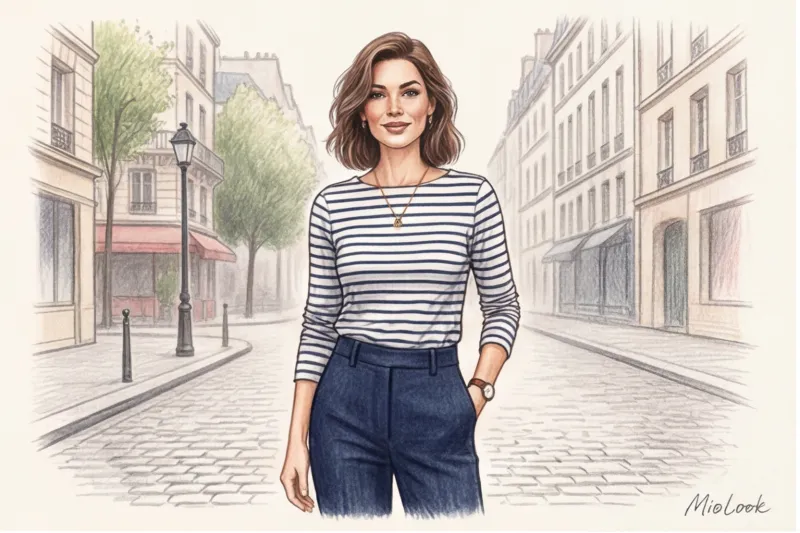
Вернемся к моей клиентке, выбросившей тельняшки. Стилистическая физика гласит: горизонтальная полоска делает фигуру выше и стройнее. Звучит как бред? Обратимся к науке.
В 1867 году немецкий физик Герман фон Гельмгольц провел исследование и доказал оптическую иллюзию: квадрат, заполненный горизонтальными линиями, кажется человеческому глазу выше и уже, чем точно такой же квадрат с вертикальными линиями. Горизонталь заставляет наш взгляд двигаться вверх и вниз, «сканируя» ступеньки, что визуально вытягивает объект.
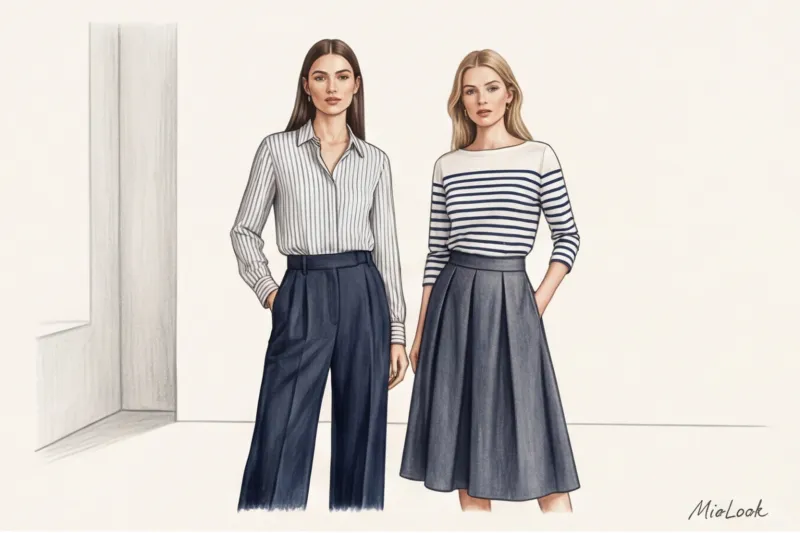
Но у этого правила есть одно жесткое ограничение (когда совет точно НЕ работает). Иллюзия Гельмгольца спасает только на гладких, плотных тканях. Если вы надеваете тонкий вискозный трикотаж с добавлением 5% эластана, который облегает каждую складку, прямая линия искажается. Она превращается в топографическую карту ваших объемов. Виновата не горизонталь, а дешевая, предательски мягкая ткань.
«Масштаб принта должен быть соразмерен вашим природным данным. Мелкая, частая полоска украсит миниатюрную девушку, но 'потеряется' на статной фигуре. И наоборот — широкие контрастные полосы требуют высокого роста и крупных черт лица».
Доступ к MioLook за €0,99 — разовый платёж
Умный AI-стилист подберёт идеальный образ с учетом ваших пропорций и покажет, с чем сочетать любимые вещи в полоску.
Открыть доступ — €0,99 разовоС чем носить полоску в деловом и повседневном гардеробе
На моей практике был показательный кейс. Ко мне обратилась руководительница IT-департамента, чей пятничный кэжуал-образ состоял из скучной белой блузки и джинсов. Она выглядела аккуратно, но недостаточно статусно. Мы заменили блузку на мужскую рубашку из плотного поплина в голубую бенгальскую полоску, расстегнули две верхние пуговицы и добавили структурный двубортный жакет.
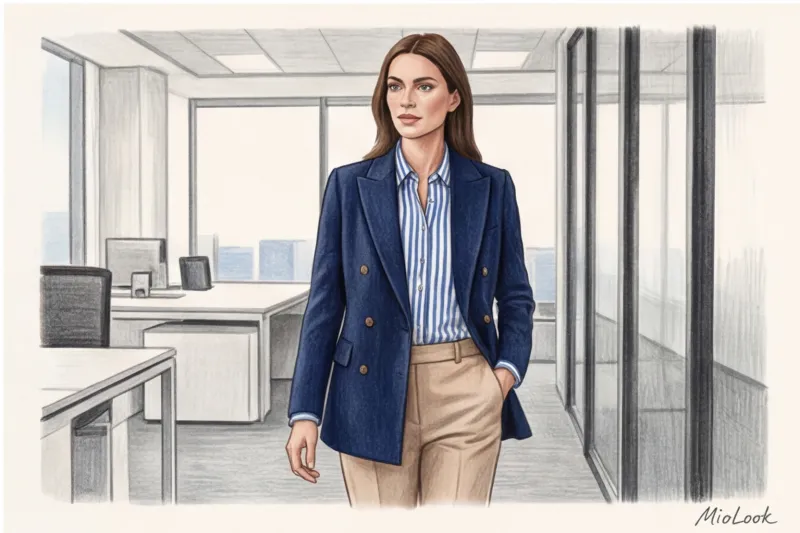
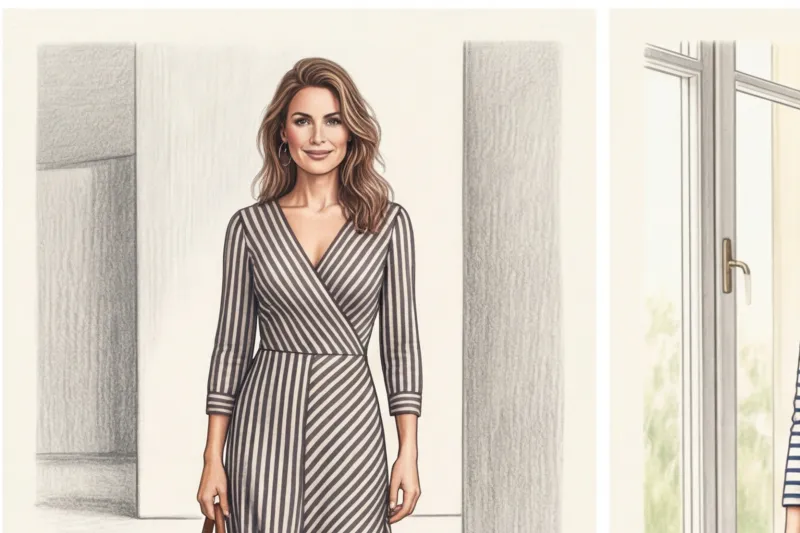
Градус статусности взлетел мгновенно. Рубашка в вертикальную полоску — это гениальная альтернатива белой базе, когда вам нужно выглядеть собрано, но не пресно. В сочетании с шерстяными брюками-палаццо и шелковым шейным платком она создает образ в эстетике «тихой роскоши».
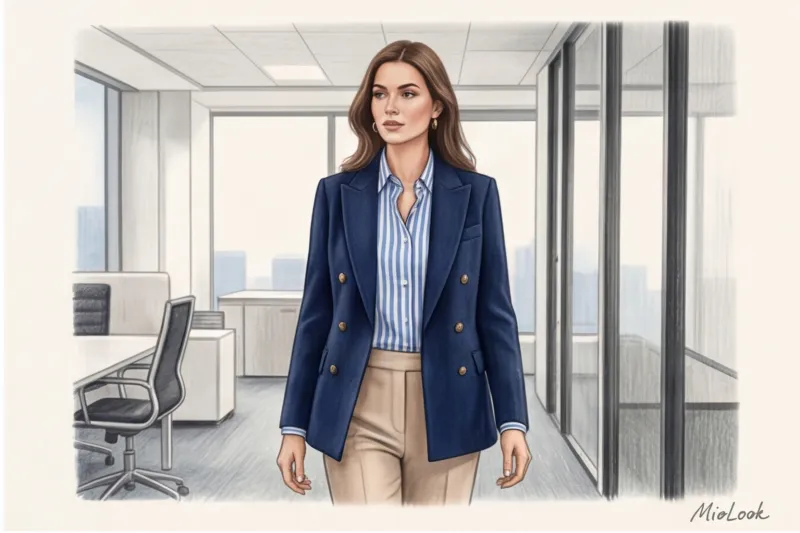
Главный секрет того, с чем носить полоску — правило контраста фактур. Гладкий хлопковый принт умоляет о сложном соседстве. Сочетайте тельняшку с рыхлым твидом, винтажной замшей или грубой кожей. Именно разница текстур делает образ многослойным и визуально «вкусным». Если вы сомневаетесь в комбинациях, загрузите свои вещи в MioLook — функция «умный гардероб» сгенерирует десятки сложных сочетаний на каждый день.
Искусство mix & match: как сочетать полоску с другими принтами
Многие боятся миксовать принты, считая это прерогативой стритстайл-блогеров. Но в стайлинге полоска давно считается «принтом-нейтралитетом». Она работает как однотонный фон, выдерживая соседство почти с любым активным рисунком.
Безопасная формула для новичков: Полоска + Цветочный принт. Условие успеха — совпадение хотя бы одного цвета. Например, классическая сине-белая тельняшка отлично успокоит юбку с активным флоральным рисунком, если в нем тоже есть элементы синего (Navy).
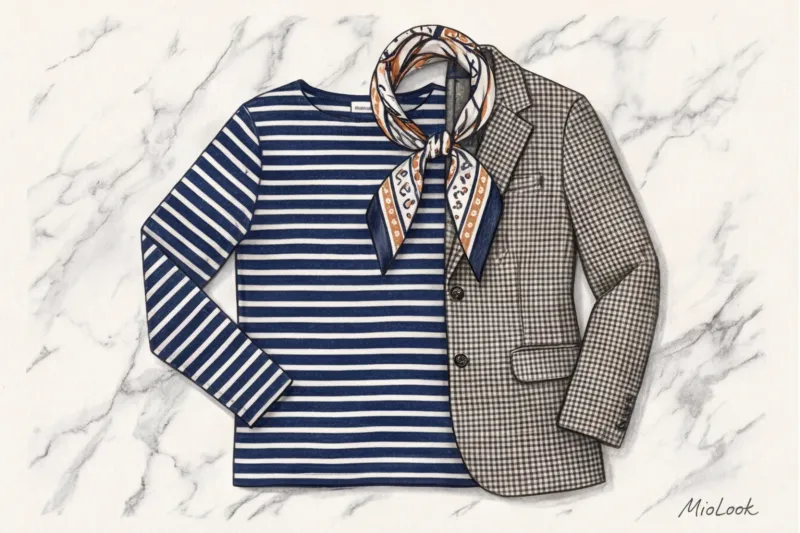
Продвинутый уровень: Полоска + Клетка (гусиная лапка, гленчек) или Леопард. Здесь работает формула, которую часто используют на съемках для Vogue: балансировка масштабов. Никогда не сочетайте два принта одинакового размера. Если полоска тонкая (hairline), клетка должна быть крупной. Если леопардовые пятна мелкие, выбирайте широкую бретонскую полосу.
Ваш идеальный образ начинается здесь
Присоединяйтесь к тысячам пользователей, которые каждый день выглядят безупречно с помощью персональных рекомендаций MioLook.
Открыть доступ — €0,99 разовоИнвестиции в гардероб: когда за базовую вещь стоит переплатить
Покупка базовых вещей часто кажется зоной для экономии. Зачем платить 150 € за хлопковую кофту, если в масс-маркете она висит за 15 €? Ответ кроется в концепции Cost-per-wear (стоимость за одно надевание).
Дешевая тельняшка потеряет форму после трех стирок. Знаете, почему у недорогого трикотажа боковой шов часто «перекручивается» на живот? Из-за жесточайшей экономии ткани на производстве лекала раскладывают не по долевой нити, а по косой или так, чтобы впихнуть максимум деталей на один метр ткани. После первой же встречи с водой напряжение нитей возвращается к естественному состоянию, и вещь навсегда деформируется.
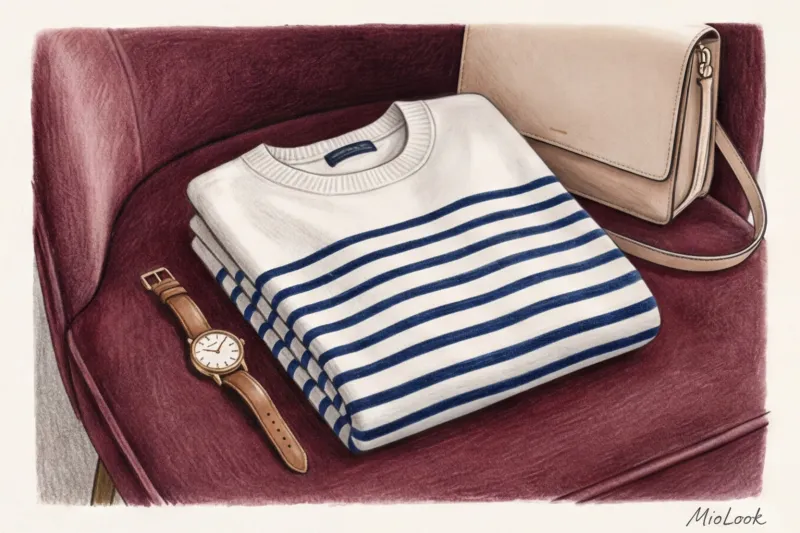
Аутентичная тельняшка из мерсеризованного хлопка за 150 € прослужит вам 5–7 лет без потери формы. При надевании 30 раз в год её Cost-per-wear составит сущие копейки. Для сохранения контраста белого и темно-синего стирайте такие вещи при температуре не выше 30 градусов с использованием специальных салфеток-ловушек для цвета — они не дадут белым полосам приобрести грязновато-серый оттенок.
Чек-лист от стилиста: 5 признаков дешевой вещи в полоску
Чтобы сэкономить ваше время и деньги на неудачных покупках, я составила жесткий чек-лист. Если, стоя в примерочной, вы видите хотя бы один из этих признаков — не покупайте вещь.
- Рисунок напечатан, а не выткан. Слегка потяните ткань в стороны. Видите белые просветы между окрашенными волокнами? Это печать, которая скоро потрескается.
- Полоски не сходятся в елочку. Посмотрите на боковые швы. Если одна линия выше другой хотя бы на пару миллиметров — это брак кроя, который визуально искривит вашу фигуру.
- Тонкая, хлипкая горловина. У качественной тельняшки вырез обработан плотной бейкой. Если горловина уже на вешалке идет легкой «волной» — после стирки она растянется до плеч.
- Просвечивающая фактура. Вложите руку внутрь рукава. Если вы отчетливо видите контуры пальцев сквозь белые полосы, эта вещь будет демонстрировать миру фактуру вашего белья.
- Дешевый блеск эластана. Если ткань подозрительно поблескивает под лампами магазина и на ощупь напоминает скользкий синтетический бинт (часто бывает при 8-10% эластана в составе) — она безжалостно подчеркнет малейшие неровности тела.
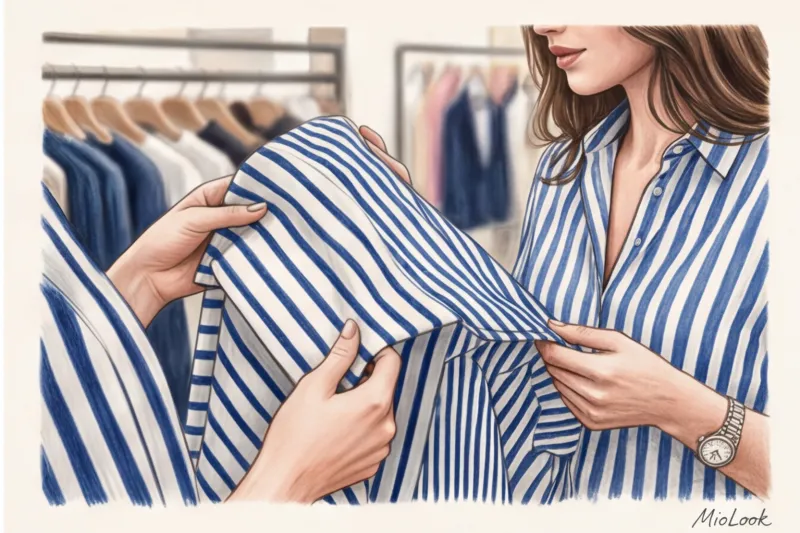
Полоска — это не просто расцветка. Это геометрический каркас вашего образа. Перестаньте скупать стопками посредственные тельняшки, которые превращаются в домашнюю одежду через месяц. Инвестируйте в одну безупречно скроенную, структурную вещь, и она заставит работать даже самые простые джинсы и жакеты на уровень выше. А если вы хотите навести порядок в своих покупках и научиться составлять капсулы без лишних трат, используйте MioLook для умного управления гардеробом.