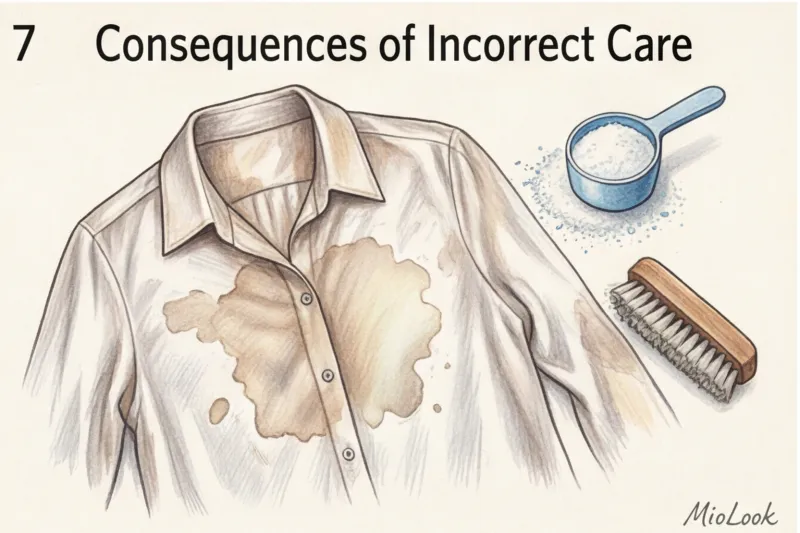
Three years ago, a client of mine brought me a $400 silk Zimmermann blouse in tears. On the eve of an important dinner, she'd dropped some soy sauce on the sleeve and quickly scrubbed the stain in the sink with regular liquid soap. The result? A whitish, permanently dulled look had formed where the stain had been. The structure of the expensive fabric was irreparably destroyed simply because she hadn't understood the physiology of protein fibers and how... How to wash silk Right.
As a personal stylist raised in the culture of Mediterranean elegance, I treat silk with particular reverence. My personal ritual before purchasing is to always test the density of the fabric by crumpling it in my fist. But even the highest-quality material can be ruined by the first wash. I've written more about how to recognize truly prestigious fabrics in the store in our complete guide. How to distinguish natural silk: tips from a stylist.
In this article, we'll forget the clichéd advice on the tags. I'll share a scientifically proven care formula that will preserve the pearly glow of your silk garments for decades, and explain why dry cleaning isn't always your wardrobe's best friend.
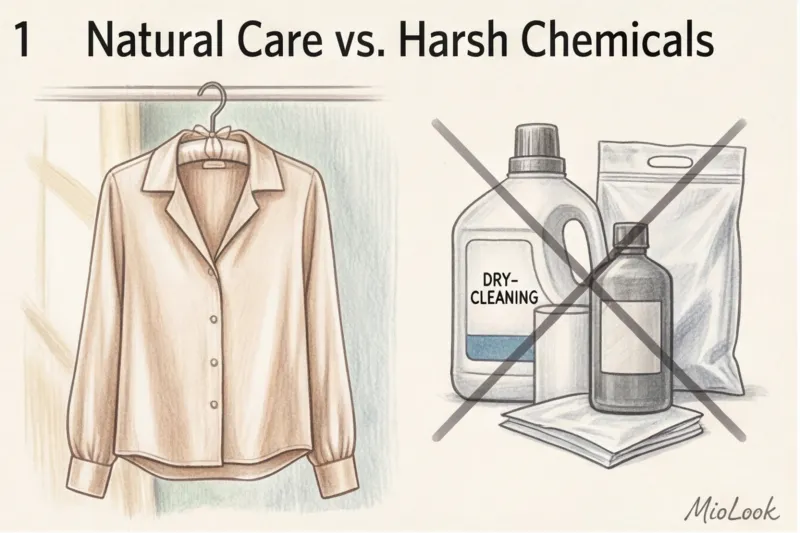
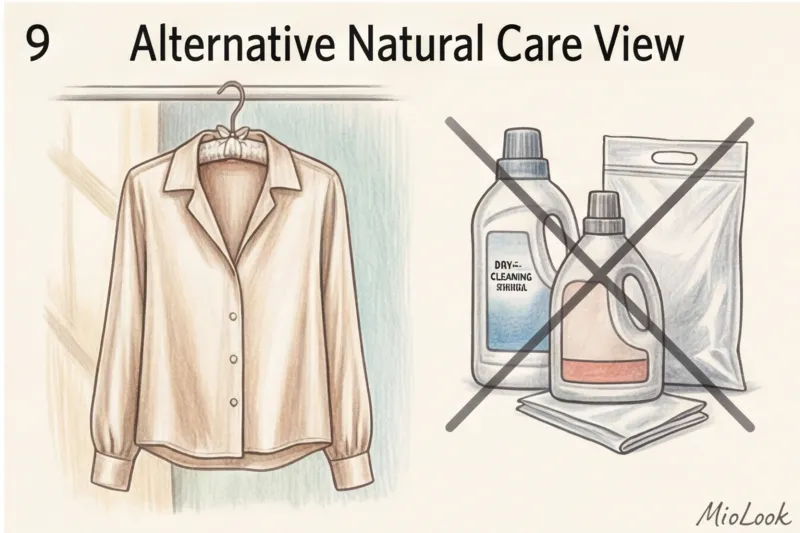
Dry Cleaning Myth: Why It's Better to Wash Natural Silk at Home
Look at the tags on your silk blouses. 90% of the time, you'll see a categorical "Dry clean only" label. Now, here's the truth from industry insiders: this label is brands' legal insurance against returns of damaged items, not an act of care for your wardrobe.
According to textile industry institutes, silk thread consists of two proteins: an internal core (fibroin) and a protective adhesive (sericin). Sericin is responsible for that "expensive" prismatic glow for which we so love this material. The problem is that aggressive chemical solvents (such as perchloroethylene) used in dry cleaning regularly wash out the natural sericin.
Over 12 years of experience, I've seen dozens of designer dresses that, after the fifth dry cleaning, became dull, stiff, and looked indistinguishable from cheap mass-market polyester. Proper hand washing isn't drudgery. It's an investment in the status of your wardrobe.
It is important to remember: When wet, silk loses up to 20% of its strength. Therefore, the main rule when fabric comes into contact with water is an absolute minimum of friction and tension.
Your perfect look starts here
Join thousands of users who look flawless every day with MioLook.
Get access — €0.99 oncePreparation: 3 Golden Rules Before Washing Silk
Before you turn on the water, you need to prepare it properly. Different types of weave behave completely differently. A dense silk twill (the kind used to make Hermès bobble) will withstand more wear than the finest translucent chiffon or gliding charmeuse.
- No enzymes. Ever. 95% of conventional laundry detergents and gels contain enzymes (proteases). Their job is to break down protein stains (blood, sweat, sauces). But silk is an animal protein! Regular detergent literally begins to "digest" your blouse, making it brittle.
- Use pH-neutral products. Look for shampoos specifically designed for silk. If you don't have any on hand, use a high-quality baby shampoo. What's safe for babies is safe for the protein fibers.
- Take off the rings. It's a cliche, but snags from jewelry in water form instantly, as the wet thread swells and clings to the metal more easily.

How to Perform a Dye Fastness Test (Must Do!)
Silk has one weakness: it doesn't hold bright dyes well, especially red, emerald, and deep blue. If you're washing an item for the first time, be sure to do a patch test.
Take a cotton swab, moisten it with warm water, and gently rub the inside seam of the garment (where it won't be visible). If even a slight tint of color remains on the cotton swab, stop. This is the rare case when home washing is strictly prohibited, and the item really should be taken to a professional dry cleaner (preferably a wet cleaner). If the cotton swab is clean, proceed to the water cleaning process.
Step-by-step formula: how to hand wash silk so it doesn't shrink
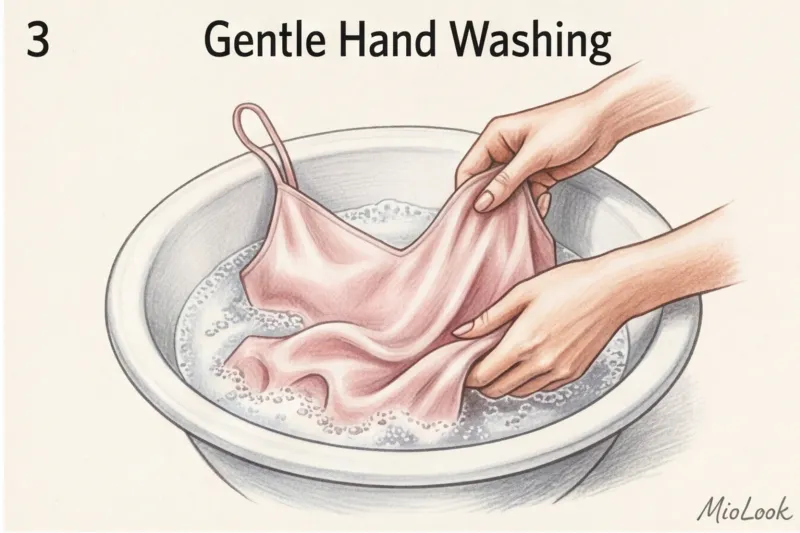
I call this process "bathing" because silk should be treated like your face. To prevent shrinkage, follow a strict temperature regime.
- The temperature is strictly 30°C. Not "room temperature," not "cool," but exactly 30 degrees. Test the water with your wrist—it should feel slightly cooler than your body temperature. Hot water instantly shrinks the protein spirals, and your dress will shrink a size.
- The technique of "immersion". Dissolve the detergent in water BEFORE adding the item. Submerge the silk in the water and gently squeeze the fabric with your hands, like a sponge. Avoid twisting or rubbing the stains together.
- The 5-minute rule. Silk should not be soaked. Prolonged soaking in water loosens the fibers. The entire washing process should take no more than five minutes.
- Double rinse. Drain the soapy water and replace it with clean water (at the same temperature!). Gently rinse the item. Repeat twice to completely remove any remaining shampoo.
Access to MioLook for €0.99 — one-time payment
A smart AI stylist will select the perfect look based on your current wardrobe.
Get access — €0.99 onceA Stylist's Secret: How to Restore Silk's Pearly Shine (pH Trick)
This is the key insight of the entire article, used by restorers of historical costume and rarely reported in the media. Have you noticed that after contact with water, silk often becomes stiff, squeaky, and matte? It's a chemical reaction.
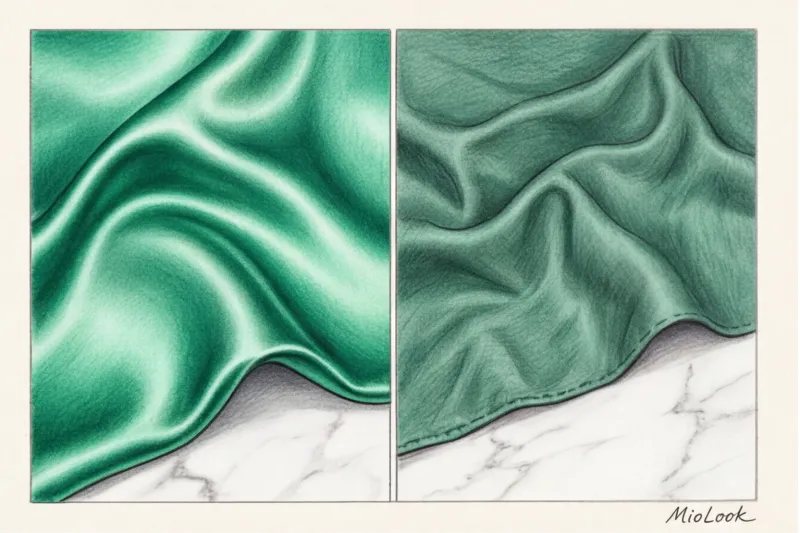
Silk's natural pH is approximately 5.5 (slightly acidic). Tap water and detergents have an alkaline pH. Alkalinity causes the microscopic scales of the silk thread to open, causing the fabric to lose its smoothness and stop reflecting light.
How to fix it:
During the final rinse, add 2 tablespoons of regular white vinegar to a basin of water (about 5 liters). The acidic environment will instantly neutralize the alkali and smooth the fiber scales back into place. The vinegar smell will completely disappear during drying, and the silk will regain its signature flowing glow.
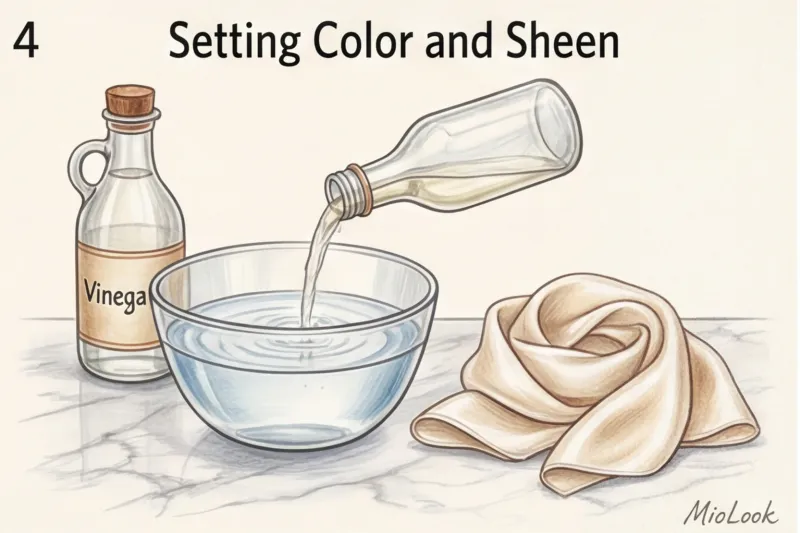
If you don't have vinegar, a drop of your hair conditioner is a great alternative—it works on the same principle of closing the cuticle.
How to dry silk items correctly (without creasing or losing shape)
Mistakes during the drying stage are just as fatal as those during washing. Never wring silk! You'll simply break the threads.
Use towel burrito method Lay a clean, thick terry towel (preferably white to prevent staining) on a flat surface. Place the wet silk item on it, unfolded. Begin rolling the towel and item into a tight roll (like a burrito). Apply gentle pressure to the roll—the terry cloth will absorb 80% of the excess moisture within ten seconds.
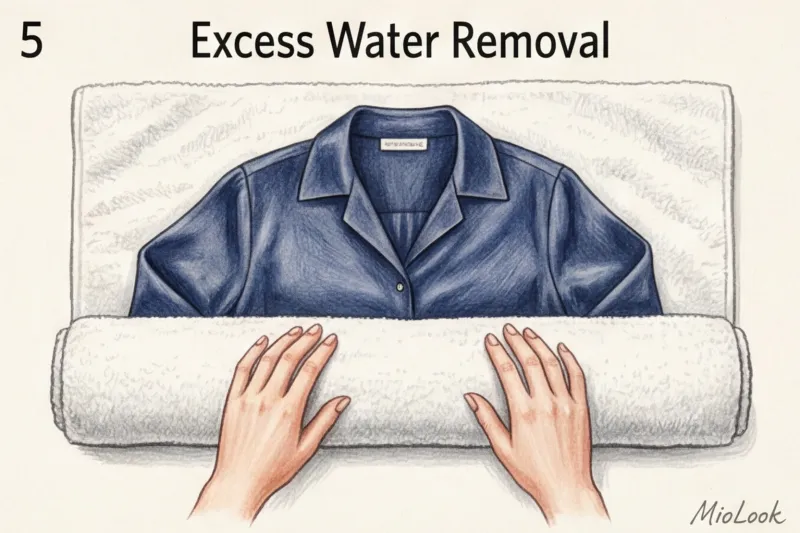
After this, unfold the item. How to dry it next depends on the cut:
- Shirt-style blouses and pajamas can be hung on soft, fabric-covered hangers (no metal or thin plastic!).
- Dry bias-cut dresses (slip dresses), knitted silk and heavy skirts only horizontally Under the weight of its own wet weight, the bias cut will inevitably stretch out, and the hem will become asymmetrical.
An honest observation from practice: When you remove wet silk from the towel, it will feel like hard cardboard or thick paper. Many of my clients panic at this point, thinking they've ruined the garment. Relax—this is a normal physical reaction of the fabric. The softness and fluidity will return with ironing.
Ironing and steaming: the finishing touch for a classy look
Iron silk while it's still slightly damp. If the item is too dry, don't spray it—it will leave clear water marks. It's better to hang it in the bathroom while you shower; the fabric will absorb the moisture from the air.
Always iron silk on the reverse side only. If you iron the right side with a hot iron, you risk leaving marks. Lasy - glossy, unnaturally shiny traces of flattened fibers that are impossible to get rid of.
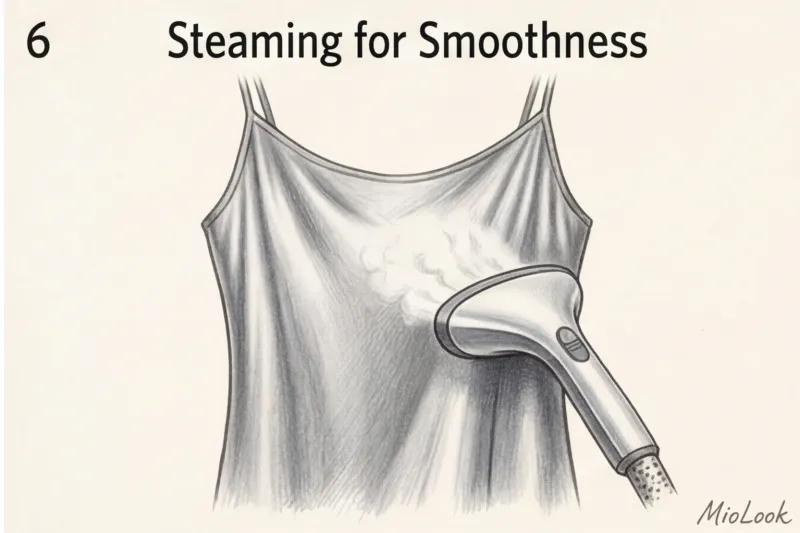
Steamer or iron?
As a stylist, I differentiate between these tools. An iron (on the "Silk" setting, without steam) is needed to create structure. I use it for formal silk shirts, where crisp collars and cuffs are essential. A steamer, however, is ideal for lingerie-style dresses, chiffon, and skirts. Steam straightens the threads without flattening them, preserving the volume and airiness of the fabric.
Ready to get started?
Try the MioLook plan for free—no commitments required. Organize your wardrobe like a pro.
Get access — €0.99 onceChecklist: 5 Fatal Mistakes When Washing Silk
Let's recap. Here's what you absolutely mustn't do if you don't want to turn a premium item into a rag:
- Wash out stains locally. What my client at the beginning of this article did. If you wash only a small section of the fabric, after it dries, a hard water mark (halo) will form around the stain, which will have to be rewashed in its entirety.
- Use oxygen and chlorine bleaches. Chlorine dissolves animal protein. Your white silk won't become whiter—it'll turn yellow and literally fall apart in your hands.
- Tumble dry. The hot air of the drum is a guaranteed death for silk (shrinkage will amount to up to 3 sizes).
- Spray perfume on fabric. Alcohol reacts immediately with the dye, leaving a yellowish stain. Apply perfume only to the skin BEFORE wearing the silk garment.
- Use clothespins. Plastic clips will leave permanently deformed marks on damp fabric.
Honest answer: can you machine wash silk?
A practitioner's confession: we're all busy people, and not everyone is ready to stand over a bowl of vinegar every week. So, I'll answer frankly: yes, machine washing is sometimes acceptable, but with strict restrictions.
In the car Can Wash dense silk twill, heavy crepe de chine, silk pajamas, and pillowcases. That is, high-density fabrics (19 count and above).
Categorically it is forbidden Do not put fine charmeuse, chiffon, complex cut dresses (especially bias cut) and items with lace inserts in the drum.
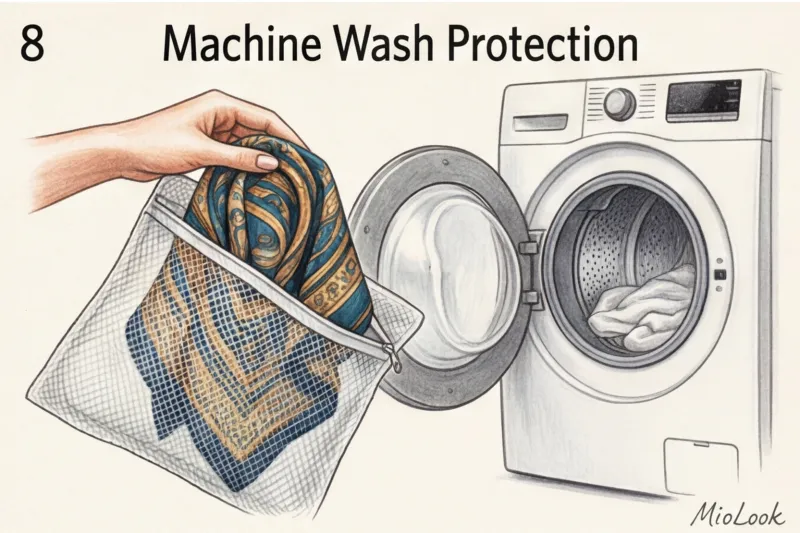
If you decide to machine wash, follow these safety precautions:
- Be sure to place the item in a special mesh bag for washing (the size should exactly match the item so that it does not move around inside).
- Select the "Silk" or "Hand Wash" mode.
- Temperature: cold water (not higher than 30°C).
- Most importantly: turn off the spin cycle completely! The machine should simply drain the water. Remove the wet item and use the "towel burrito" method described above.
Silk is a living, breathing material that reciprocates care. Yes, it requires a little more attention than a cotton T-shirt. But it's this conscious ritual of caring for your clothes that creates a truly respectful attitude toward yourself and your wardrobe. And if you're looking for inspiration on what to wear with your shiny silk blouse, check out MioLook — a smart algorithm will help you create dozens of elegant looks based on your individual parameters.