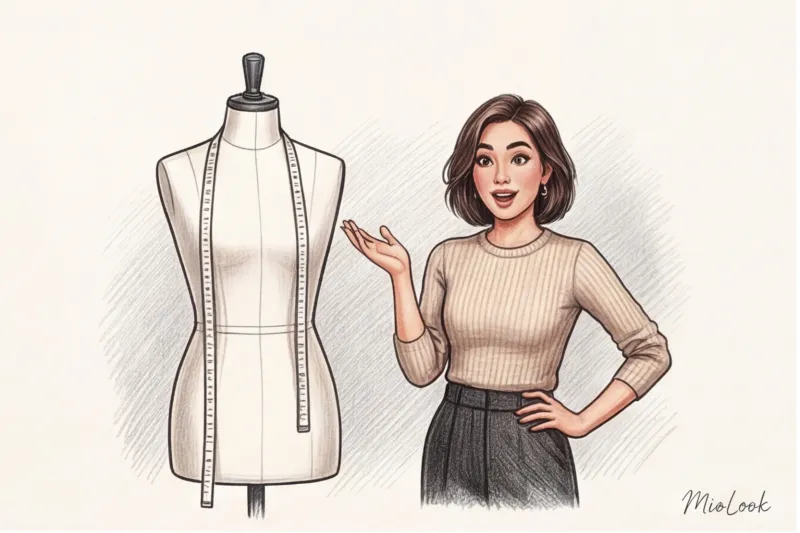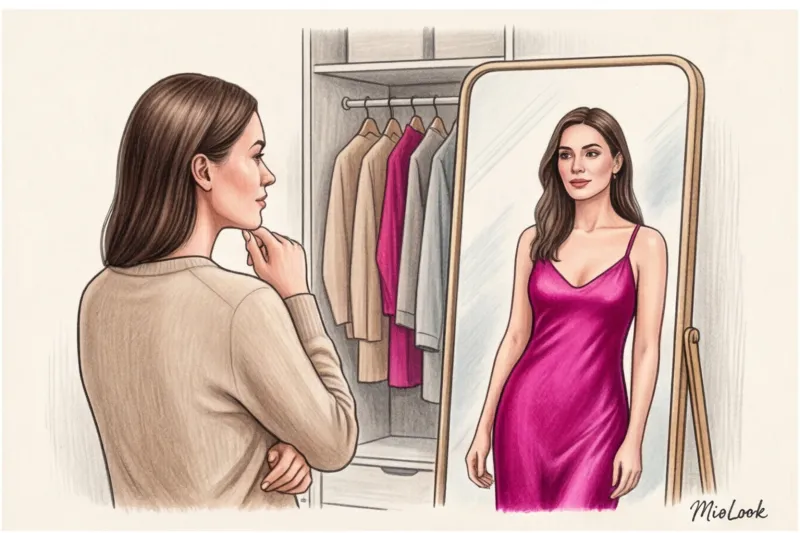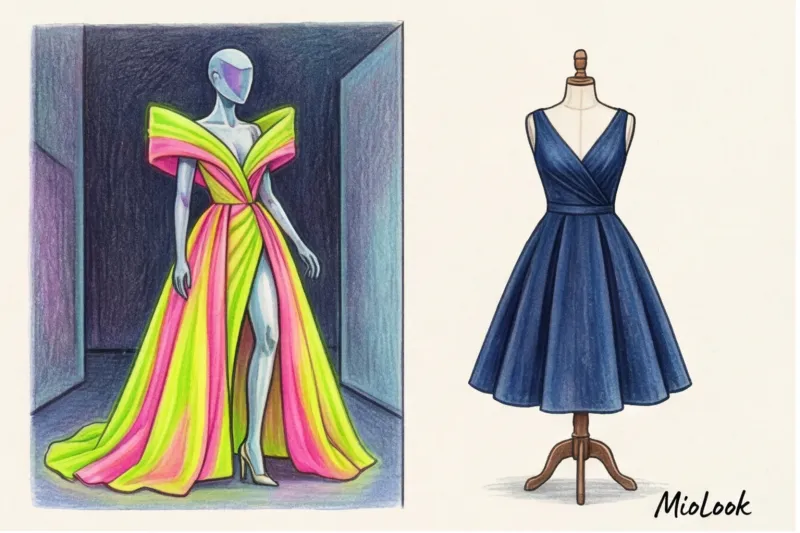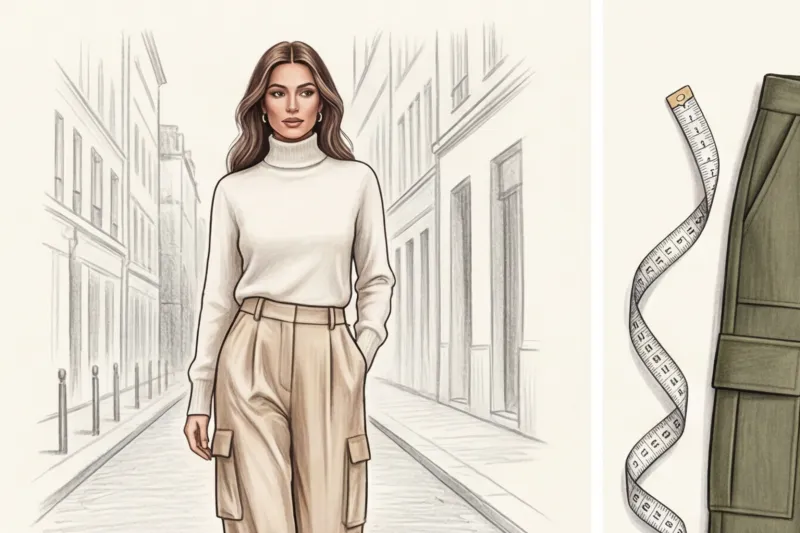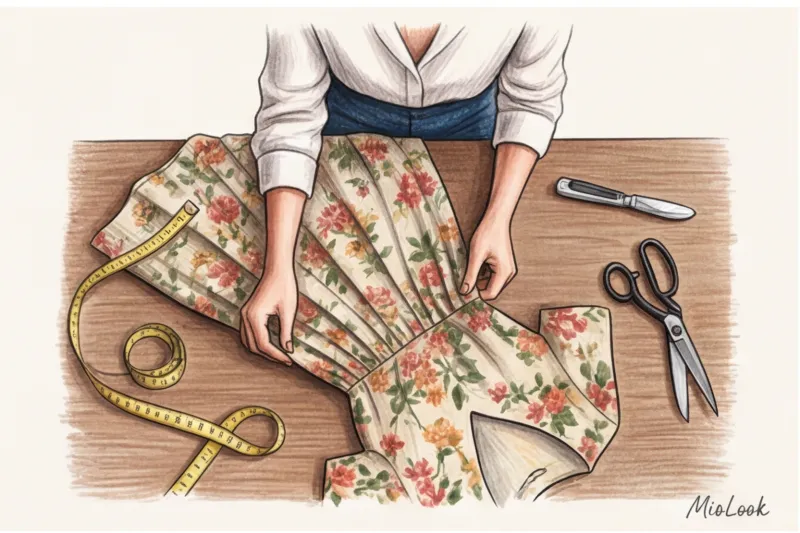
Знаєте, що об'єднує гардероби 70% жінок, із якими я працювала за останні 14 років? У кожній шафі висить хоча б одна сукня, яка не одягалася більше трьох років. Воно ціле, сидить по фігурі, з ним пов'язані приємні спогади, але фасон безнадійно застарів. І щоразу під час розбору гардеробу звучить питання: «А може його якось перешити?». Сьогодні я розповім, як переробити стару сукню так, щоб вона виглядала на 500 €, а не як дитячий виріб з уроку праці.
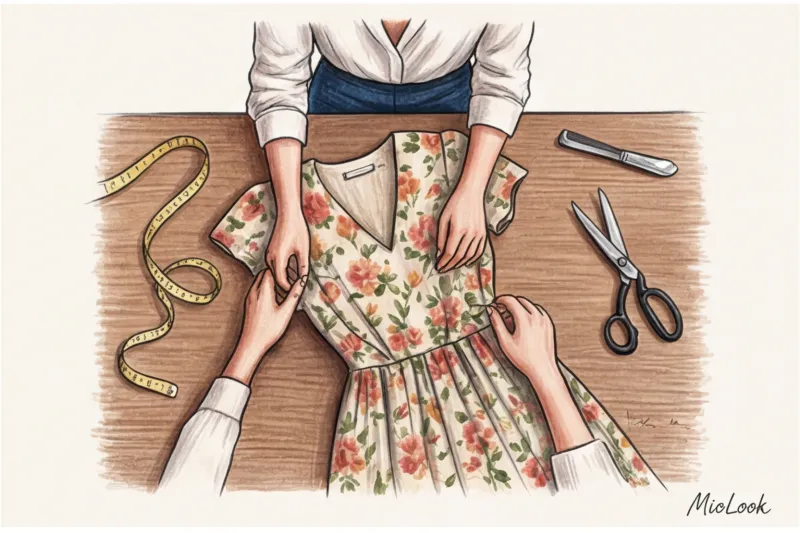
Докладніше філософію усвідомленого гардеробу ми вже розбирали у нашому повному гіді з апсайклінгу одягу. А в цій статті ми перейдемо до жорсткої практики: від оцінки тканини до постановки технічного завдання кравця.
Чи варта гра свічок? Аудит старої сукні перед переробкою
Найпопулярніша і найнебезпечніша помилка, яку транслюють в інтернеті: «Будь-яку стару сукню можна врятувати». Ні, не можна. Якщо ви почнете перешивати річ з дешевого матеріалу, що втомився, ви просто витратите гроші на ательє і отримаєте старомодну річ у новому крої. Інвестувати час та кошти потрібно лише в якісну базу.
Згідно зі звітом Ellen MacArthur Foundation за 2023 рік, середній термін служби сучасної речі скоротився майже вдвічі за останні 15 років. Одяг з мас-маркету часто не переживає й десяти прань. Тому, якщо у вас в руках сукня п'ятирічної давності, яка зберегла фактуру, — це вже чудовий кандидат на порятунок.
Я завжди використовую «правило трьох секунд» або тест тканини. Стисніть поділ сукні в кулаку на три секунди, а потім відпустіть. Якщо тканина залишилася сильно пом'ятою, як паперовий лист, перешивати її в складний архітектурний фасон безглуздо - ви замучитеся її гладити. Також я шукаю «точку неповернення»: якщо тканина в зоні пахв потоншала або на стегнах з'явилися нескінченні катишки, річ настав час відпустити.
З чим працює стиліст: які сукні варто рятувати
- Якісні склади: натуральний щільний шовк, бавовна (щільністю від 180 г/м²), добротна костюмна вовна та щільна віскоза. Вартість хорошої тканини сьогодні така, що перешити стару сукню зі 100% вовни коштуватиме вам 50–80 €, тоді як нова аналогічна якість коштуватиме від 250 €.
- Речі формату оверсайз: сукні, які вам великі, - це чисте полотно. З ними працювати набагато легше, ніж із тими, що тріщать по швах.
- Урожай з гарною фурнітурою: часто ми знаходимо розкішні сукні з 80-х або 90-х з важкими металевими гудзиками, але шаленими підплічниками. Прибрати плечі – справа 15 хвилин, а річ стає ультрамодною.
Спробуйте MioLook безкоштовно
Розумний AI-стиліст підбере ідеальний образ та допоможе інтегрувати оновлені речі в гардероб.
Почати безкоштовноЯк переробити стару сукню без швейної машинки: стайлінг та ілюзії
Іноді, щоб повністю змінити сприйняття речі, ножиці не потрібні. Перш ніж різати, спробуйте змінити силует за допомогою стайлінгу. Це мій улюблений прийом на примірках, коли клієнтка не готова морально розлучитися з сукнею-міді, у якого застарів ліф, але збереглася приголомшлива спідниця, що летить.
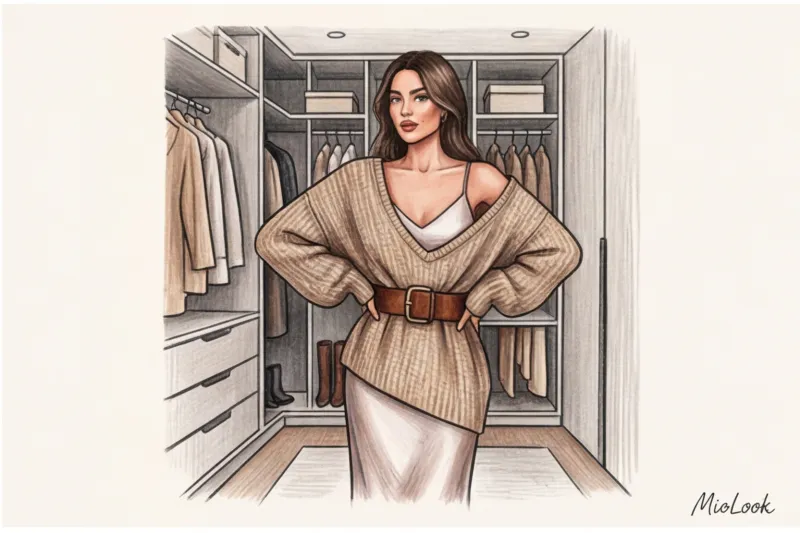
Просто надягніть поверх сукні об'ємний светр великої в'язки або щільне худо. Сукня миттєво перетворюється на актуальну спідницю. Щоб светр не висів безформним мішком, використовуйте мій улюблений стилістичний лайфхак із ременем.
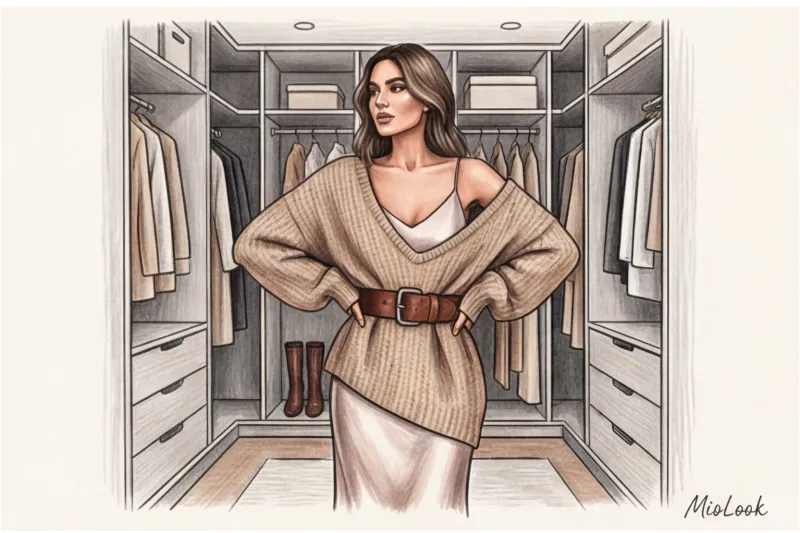
На журнальних зйомках ми часто робимо так: надягаємо поверх сукні тонкий шкіряний ремінець, застібаємо його на талії, а потім витягуємо край светра нагору, щоб він утворив гарний напуск, повністю приховавши ремінь. Створюється ідеальна пропорція укороченого верху без необхідності заправляти товстий в спідницю трикотаж.
Ще один варіант – багатошаровість. Застаріле плаття-комбінацію з невдалим декольте можна врятувати, одягнувши його поверх базової білої футболки або тонкої кашемірової водолазки. А якщо сукня має неактуальний м'який силует, накиньте зверху жорсткий архітектурний жакет (чоловічого крою) — він збере образ і задасть правильну геометрію.
Базові трансформації: мінімум зусиль, максимум ефекту
Якщо стайлінг не рятує, переходимо до легких модифікацій. Ви здивуєтеся, але зміна довжини сукні всього на 5–7 см може кардинально змінити пропорції ваших ніг та зростання в цілому (про це ми детально говорили у статті про підбір одягу за типом фігури ).
Як знайти свою ідеальну довжину? Встаньте перед дзеркалом у взутті, з яким плануєте носити сукню. Візьміть поділ і поступово повертайте його нагору. Ваше ідеальне «міді» має закінчуватися на найвужчому місці ікри (під коліном або над щиколоткою). Якщо зріз потрапить на найширшу частину ікри, ноги візуально стануть повнішими.
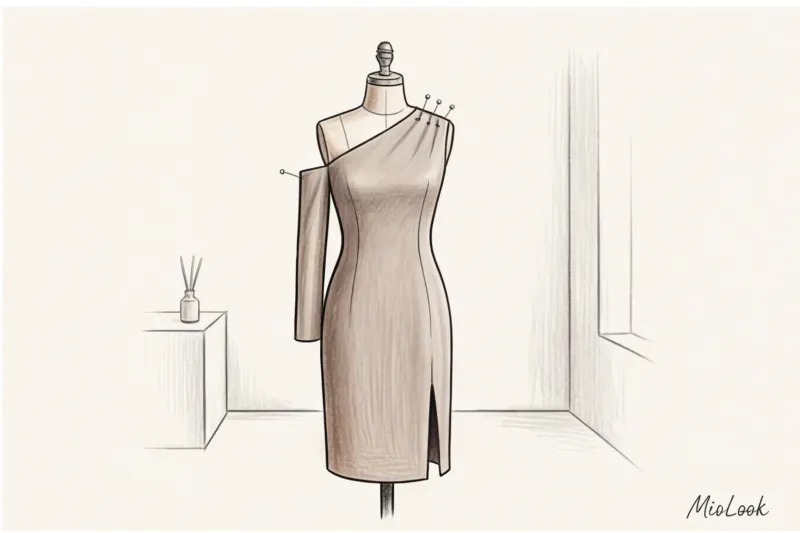
Друга базова трансформація – звільнення від рукавів. Трикотажні сукні з рукавом три чверті з 2010-х років сьогодні виглядають вкрай неактуально. Відріжте їх, обробіть пройму, і ви отримаєте стильний мінімалістичний сарафан, який виглядає набагато дорожче за свою початкову версію.
І не забувайте про плечовий пояс. Сучасний силует вимагає чіткої лінії плеча. Іноді досить просто пришити невеликі підплічники до сукні з м'якої віскози, щоб вона перетворилася з «домашнього халата» на статусне міське вбрання.
Ваш ідеальний образ починається тут
Приєднуйтесь до тисяч користувачів, які щодня виглядають бездоганно з програмою MioLook.
Почати безкоштовноГлибокий апсайклінг: як повністю змінити фасон сукні
Сучасний апсайклінг багато в чому базується на принципах деконструкції, які ще в 90-х ввів на подіуми Maison Margiela. Сенс не в тому, щоб просто вкоротити поділ, а в тому, щоб переосмислити архітектуру речі та її призначення.
Торік до мене прийшла клієнтка з приголомшливою, але набридлою сукнею-сорочкою із щільного шовку. Ми розрізали його по центру переда до самого низу, акуратно обробили краї і отримали розкішну літню накидку-пильник. У розстебнутому вигляді поверх джинсів та топу ця річ стала зіркою її літньої капсули.
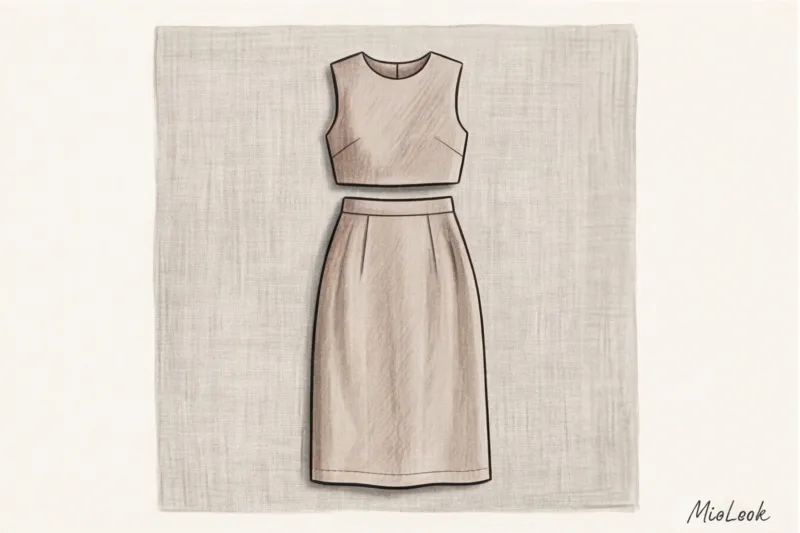
Ще один геніальний хід - поділ сукні на кроп-топ та спідницю-міді. З однієї застарілої речі ви отримуєте повноцінний костюм. Ви можете носити їх разом, створюючи ілюзію сукні з актуальним вирізом на талії, або розбивати: носити топ з джинсами на високій посадці, а спідницю — з об'ємними светрами.
Як переробити надто вузьку сукню
Що робити, якщо сукня стала замало? Викидати не обов'язково, якщо тканина гарна. Ось три робочі прийоми з ательє:
- Бічні панелі: розпорюємо бічні шви і вставляємо широкі смуги (лампаси) з контрастної тканини. Якщо вставити матову еко-шкіру або щільний трикотаж у рубчик, сукня придбає спортивно-шикарний вайб.
- Колорблок: розрізаємо сукню по горизонталі (наприклад, під грудьми) та вставляємо широку смугу іншого кольору, подовжуючи та розширюючи виріб.
- Перетворення на сарафан: якщо сукня вузько в плечах і грудях, сміливо відрізайте весь верх по прямій лінії над грудьми, пришивайте широкі бретелі і носіть поверх сорочок.
Головні помилки при переробці: що видає дешевий «самороб»
Відразу зазначу: цей розділ — біль будь-якого стиліста. Якщо ви відкриєте Pinterest на запит «як подовжити сукню», вам виваляться сотні порад з 2015 року в дусі «пришийте гіпюрове мереживо на поділ». Будь ласка, ніколи так не робіть.
Пришивання дешевого блискучого мережива до трикотажного подолу не врятує річ, воно кричить: «Мені не вистачило тканини, і я спробувала це приховати». Статусна, дорога річ відрізняється чистотою ліній та бездоганною якістю обробки, а не кількістю декоративних елементів.
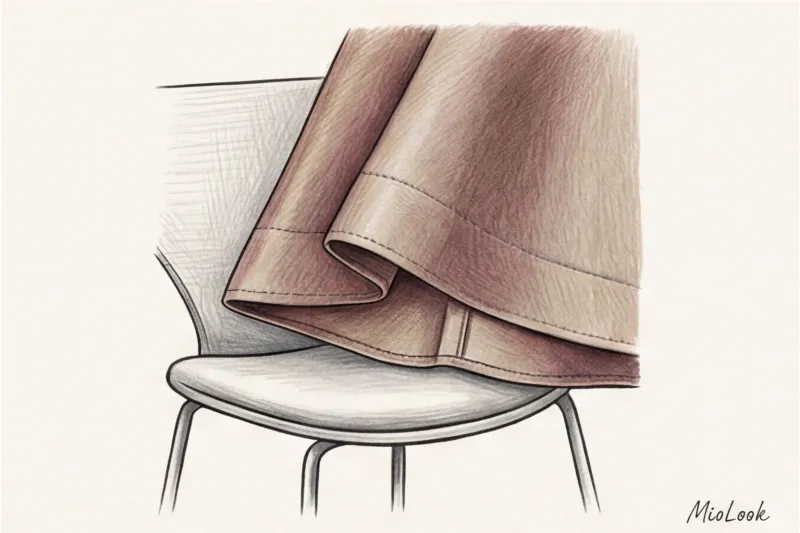
Ось 4 помилки, які гарантовано зіпсують річ:
- Ігнорування пайової нитки: якщо при перекрої майстер викроїть нову деталь поперек пайової нитки, після першого прання сукню перекосить.
- Велика кількість декору для маскування: стрази, термоаплікації чи текстильні брошки, приліплені на пляму чи дірку, виглядають інфантильно. Краще зробити гарний архітектурний защип чи виточку у цьому місці.
- Неправильний шов: якщо край делікатної віскози оброблений грубим зигзагом замість оверлока чи витонченого французького (закритого) шва – річ втратить блиск.
- Контрастні нитки не в тон: якщо це не усвідомлений дизайнерський задум (як фірмові білі стібки Margiela).
Чек-лист: Як правильно працювати з ательє при апсайклінгу
За роки роботи з кравцями я зрозуміла одну важливу річ: майстри в ательє мислять категоріями "як пошити правильно за ГОСТом", а стилісти - "як зробити модно". Кравці часто пропонують дуже консервативні рішення (наприклад, зробити класичну виточку там, де потрібен прямий чоловічий силует). Вам доведеться обстоювати своє бачення.
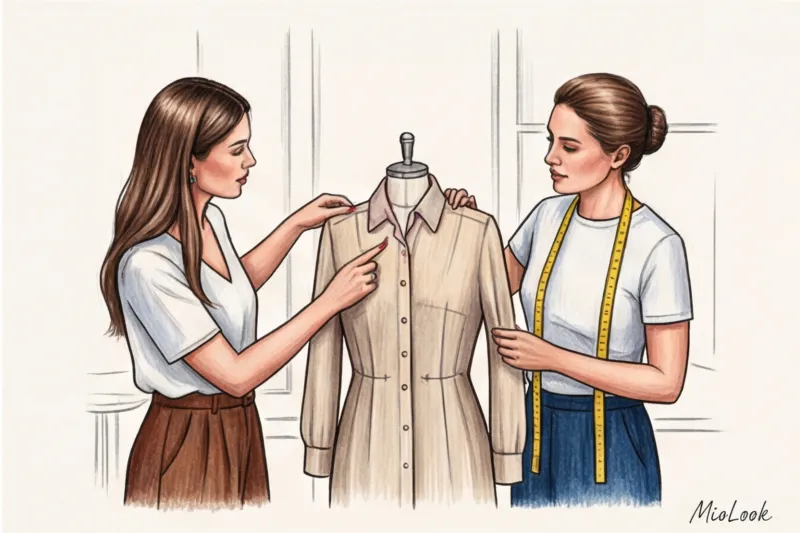
Щоб результат вас порадував, дотримуйтесь цього алгоритму:
- Не пояснюйте на пальцях – несіть референси. Знайдіть фото сукні Zara, COS або Massimo Dutti з тим вирізом, який ви хочете отримати. Покажіть кравцю фото: «Хочу таку горловину».
- Оцінюйте рентабельність на березі. Якщо перешивши коміра, припасування по фігурі та зміна довжини коштують сумарно 150 €, а саму сукню ви купували за 40 € - це нерентабельно. Вкладайтеся лише у перекрій якісних речей.
- Просіть закриті шви. Для шовку та тонкої бавовни просіть французький шов. Це коштує трохи дорожче, але виворот буде виглядати як у люксового бренду.
- Ніколи не пропускайте проміжну примірку. Одна річ — намітити шпильками довжину, і зовсім інша — побачити, як тканина поводиться в русі.
Від старої сукні до капсули: нове життя вашої речі
Головний тест на успіх будь-якої ситуації - це правило трьох образів. Якщо до вашого оновленого плаття (або спідниці, яка вийшла з нього) ви не можете відразу підібрати мінімум три комплекти з вашим поточним взуттям і верхнім одягом - ви обрали не той фасон.
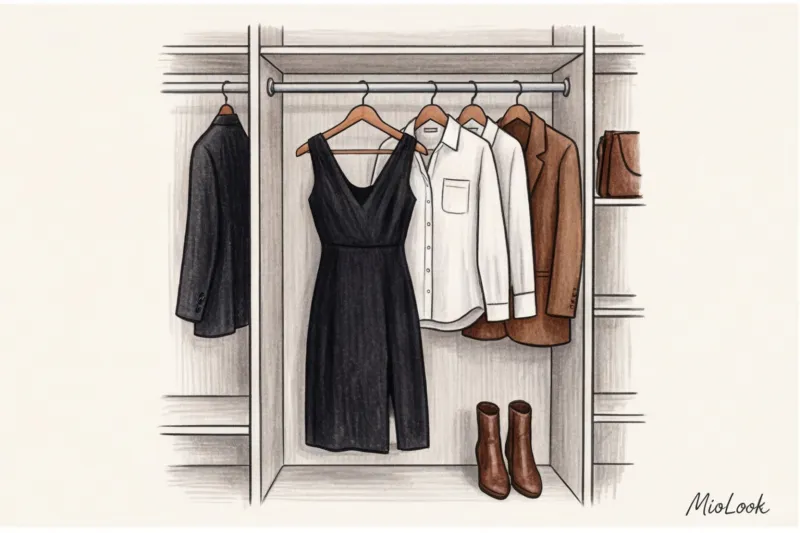
Апсайклінг - це не просто спосіб заощадити. Це перший крок до справді усвідомленого, статусного гардеробу, де кожна річ працює на вас на 100%. Щоб візуалізувати нові поєднання, я рекомендую оцифрувати оновлену річ. Завантажте фото переробленого плаття в функцію «розумний гардероб» програми MioLook , І штучний інтелект відразу підкаже, з якими жакетами та туфлями з вашої бази воно становитиме ідеальний метч.
Не бійтеся експериментувати зі старими речами, але підходьте до цього з розумом конструктора, а не просто любителя хендмейду. Оцінюйте тканину, забирайте зайве, робіть ставку на чисті лінії — і ваш гардероб поповниться унікальними речами, яких немає більше ні в кого.