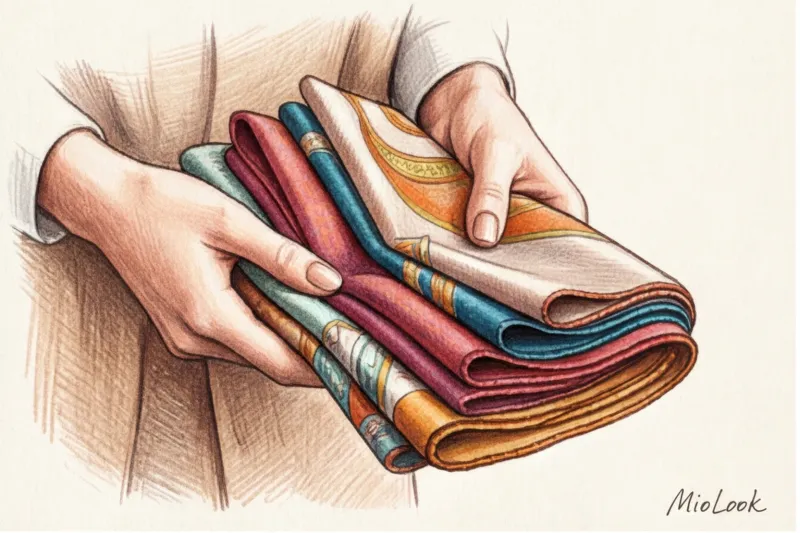
Анатомия идеального шелкового платка: что нужно знать до первого узла
За кулисами показа Max Mara в Милане я наблюдала, как главный стилист ловко фиксировал крошечный шелковый квадрат на шее модели с помощью... обычного двустороннего портновского скотча. Это был момент профессионального просветления. Многие клиентки годами ищут инструкции, как красиво завязать платок на шее, ожидая увидеть сложные схемы морских узлов. Но секрет эффектного образа кроется не в ловкости пальцев, а в понимании «архитектуры» ткани.
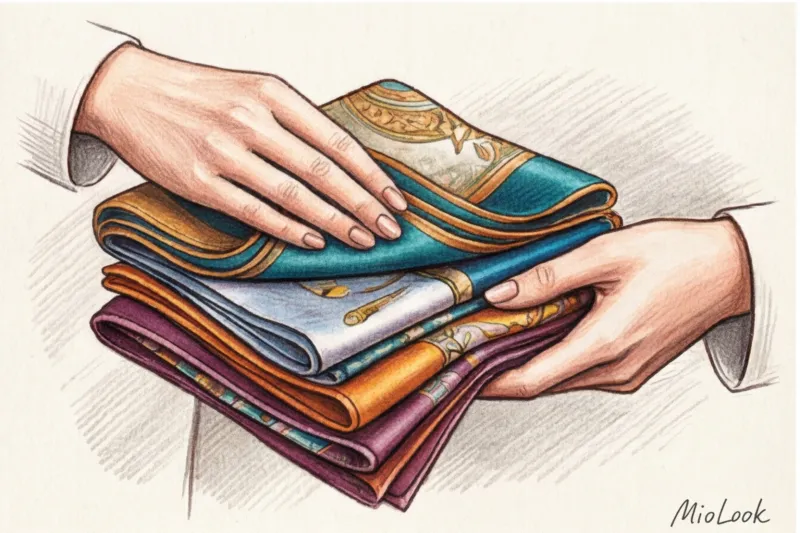
Согласно отчету Business of Fashion за 2024 год, инвестиции покупателей в категорию «статусные аксессуары из шелка» выросли на 28%. И это логично. Шелк — самая умная микро-инвестиция в гардероб. Качественный платок стоимостью 100–150 € способен визуально удорожить базовый образ из футболки и джинсов до уровня интеллектуального минимализма. Подробнее об этом мы рассказали в нашем полном гиде по тому, как модные аксессуары меняют образ в текущем сезоне.
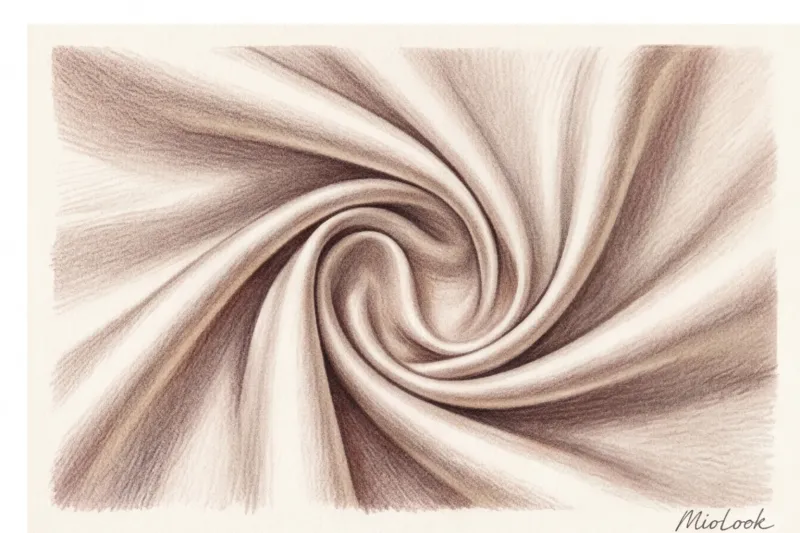
Но чтобы драпировка смотрелась благородно, платок должен обладать правильными характеристиками. Забудьте про скользкий атлас (satin) — он предательски развязывается через полчаса. Золотой стандарт индустрии — это шелковый твилл (twill), ткань диагонального плетения в мелкий рубчик. Именно он создает те самые скульптурные, упругие складки, которые мы видим в кампаниях люксовых брендов.
«Идеальная плотность шелка измеряется в момми (momme). Если вы хотите, чтобы узел держал форму, ищите показатель 14–16 момми. Все, что тоньше 12 — будет висеть грустной тряпочкой», — базовое правило текстильных байеров.
Второй маркер премиальности, который я всегда проверяю при разборе гардероба — обработка края. Технические стандарты легендарного Дома Hermès (и всех уважающих себя марок) требуют, чтобы край подворачивался на лицевую сторону и подшивался вручную потайным швом — так называемым «руликом». Никакой машинной строчки.
Как красиво завязать платок на шее: 3 классических способа с парижским шиком
Любая стилизация начинается с правильной подготовки. Чтобы узел получился аккуратным, каре нужно сложить в «базовую ленту». Я всегда учу этому трюку на мастер-классах: положите платок изнанкой вверх, загните противоположные углы к центру, а затем продолжайте складывать пополам, пока не получите ровную полоску нужной ширины. Только так драпировка ляжет без неряшливых заломов.
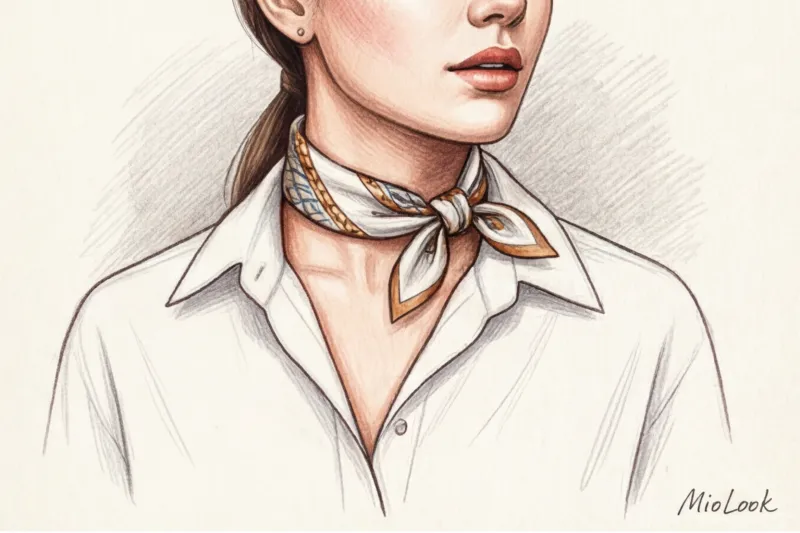
Французский чокер из «гавроша» (45х45 см)
Существует распространенный миф: чтобы платок смотрелся эффектно, он обязательно должен быть большим. На практике всё ровно наоборот. Огромные платки часто добавляют возраст и визуально «съедают» шею. Самый современный прием — микро-платок (его называют «гаврош»), туго завязанный как чокер.
Сверните платок 45х45 см в узкую ленту (шириной не более 3-4 см), плотно оберните вокруг шеи и завяжите двойной микро-узелок. Главное правило: узел должен располагаться асимметрично, чуть сбоку. Это создает острую фокусную точку и идеально работает с глубоким V-образным вырезом базовой белой рубашки или оверсайз-жакета, надетого на голое тело.
Узел «Аскот» для статусного каре (90х90 см)
Этот способ — квинтэссенция эстетики «old money». Он требует классического каре 90х90 см. Сложите платок в треугольник, накиньте на шею так, чтобы угол оказался впереди. Скрестите концы сзади, выведите их вперед и завяжите аккуратным узлом прямо над или под основным треугольником.
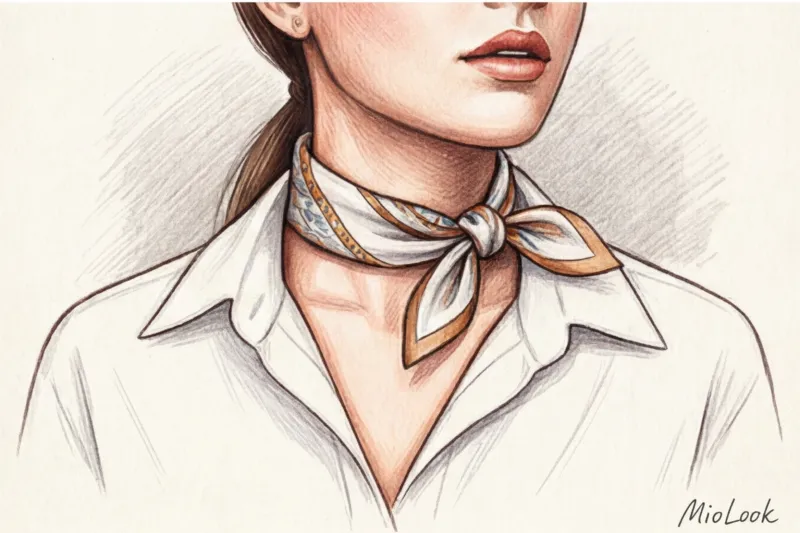
«Аскот» великолепно заполняет пространство в вырезах круглых джемперов и плотно сидит под воротником классического тренча. Если вы сомневаетесь, подойдет ли принт к вашему свитеру, загрузите оба предмета в функцию «умный гардероб» в MioLook — алгоритм покажет, насколько гармонично они сочетаются.
Ковбойский треугольник с мягкой драпировкой
Классика стритстайла, которая требует осторожности, чтобы не стать похожей на героиню вестерна. Секрет стилистов заключается в сдвиге оси. Свернутый треугольник нужно расположить не строго по центру груди, а сместить на плечо.
Если шелк скользит и конструкция съезжает, используйте тот самый миланский лайфхак — крошечный кусочек двустороннего скотча для одежды на ключице. Это незаметно, но гарантирует идеальную форму узла на весь день.
Ваш идеальный образ начинается здесь
Присоединяйтесь к тысячам пользователей, которые каждый день выглядят безупречно с помощью искусственного интеллекта MioLook.
Начать бесплатноАрхитектура образа: 3 способа вписать платок в деловой дресс-код
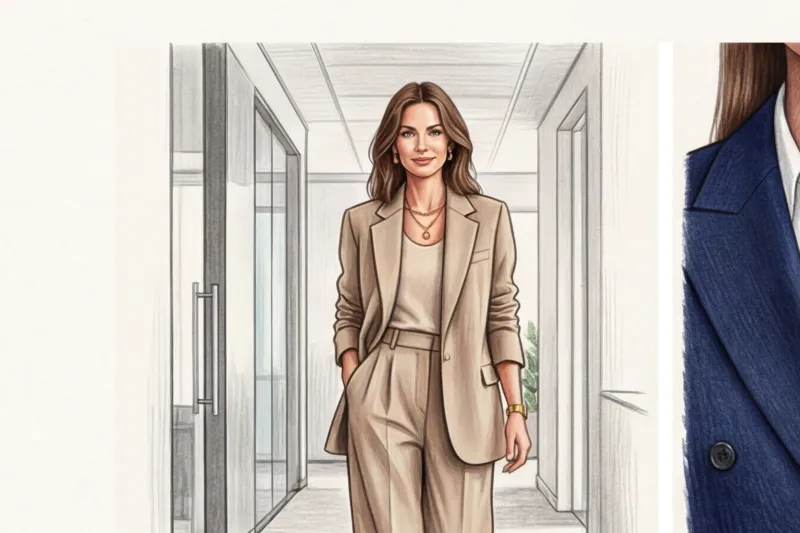
Работа с корпоративными клиентами научила меня одной вещи: строгий дресс-код убивает индивидуальность, если не использовать аксессуары как инструмент влияния. Платок способен снять излишнюю жесткость формального костюма, сохранив ваш статус. Кроме того, шелк в портретной зоне работает как фото-отражатель. Жемчужные, светло-голубые или пудровые оттенки подсвечивают лицо, стирая следы усталости лучше любого консилера.
Галстучный узел: женская интерпретация power dressing
Возьмите вытянутый платок (твилли) или сложенное в узкую ленту каре. Используйте классический мужской узел «Пратт» или «Четвертной», но не затягивайте его слишком туго под самое горло. Оставьте немного воздуха.
В сочетании со строгим брючным костюмом и мужской сорочкой этот прием транслирует уверенность и легкую самоиронию — качества, которые всегда считываются как признак высокого профессионализма.
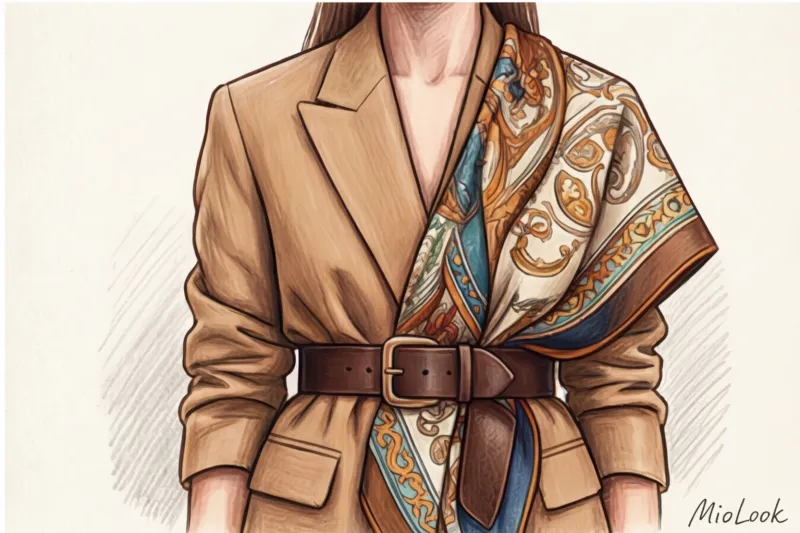
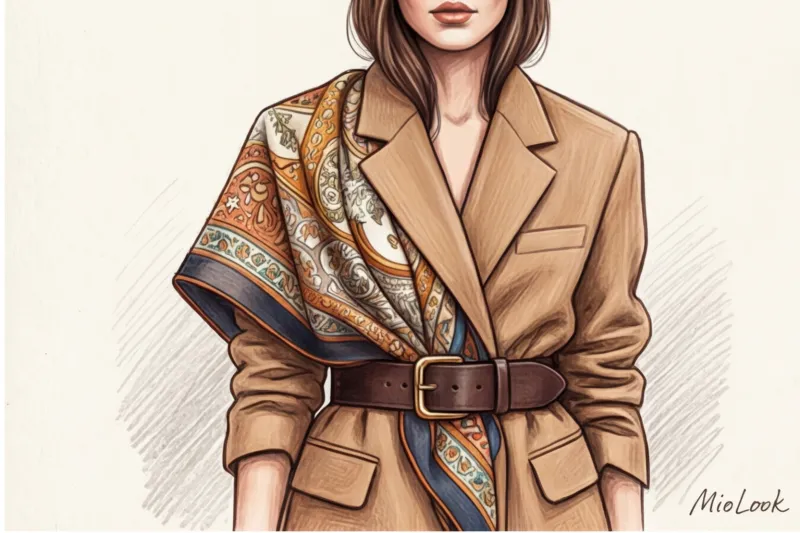
Интеграция под ремень: сложная геометрия
Мой любимый прием для создания вертикали, которая визуально вытягивает рост. Возьмите платок 90х90 см, накиньте его на шею (не завязывая) так, чтобы концы свободно свисали поверх жакета. Затем закрепите всю эту конструкцию на талии широким кожаным ремнем.
Честное ограничение: я должна предупредить, что этот метод работает не для всех фигур. Если у вас пышная грудь (от чашки D) или выраженный объем в зоне живота, платок под ремнем добавит ненужной массивности именно там, где вы, скорее всего, хотели бы ее скрыть. В таком случае лучше перенести акцент на запястье или сумку.
Скрытая роскошь: под воротником рубашки
Техника «заполнения пустоты», идеальная для офисов с дресс-кодом business casual. Платок завязывается плоским узлом непосредственно на шее, а сверху надевается базовая рубашка (например, из плотного хлопка), расстегнутая ровно на две пуговицы. Окружающие видят лишь небольшой, интригующий фрагмент дорогого шелка с принтом.
Больше, чем классика: 4 нетривиальных приема стилизации шелка
На показах Dior и Gucci мы регулярно видим, что шелковый квадрат давно перестал быть исключительно шейным аксессуаром. Если вам некомфортно носить что-то на шее, или ваши пропорции требуют открытого декольте, платок все равно должен работать на вас.
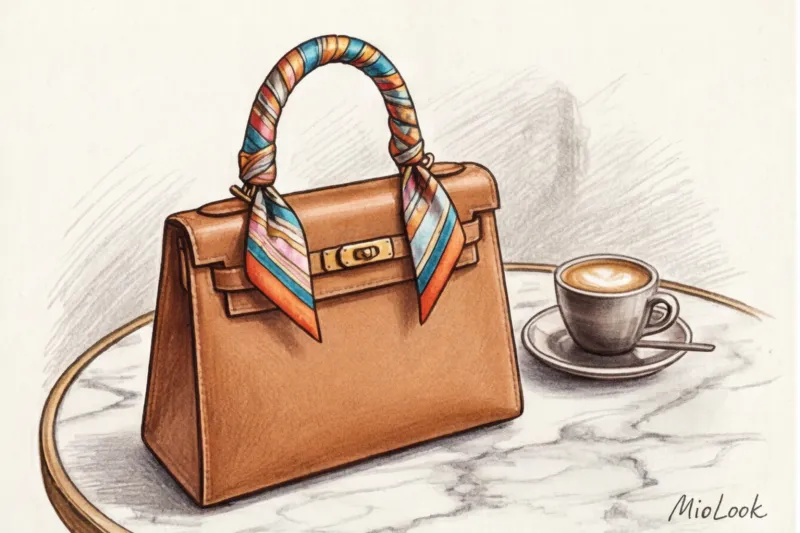
- На ручке сумки. Узкая лента твилли, плотно обмотанная вокруг ручки вашего тоута, выполняет сразу две функции. Во-первых, это яркий цветовой акцент. Во-вторых, шелк защищает дорогую кожу сумки от пота и крема для рук. В премиальном сегменте это абсолютный must-have для сохранения внешнего вида изделия.
- Шелковый браслет. Оберните платок «гаврош» несколько раз вокруг запястья. Лайфхак для надежности: проденьте платок через жесткий металлический браслет-основу, чтобы конструкция не съезжала на кисть.
- Интеграция в прическу. Парижская небрежность в чистом виде. Вплетите длинный шелковый лоскут в низкую косу или оберните им резинку небрежного хвоста. Это мгновенно делает образ более романтичным и сложным.
- Вместо ремня. В летний сезон длинное свернутое каре, продетое в шлевки белых льняных брюк или классических голубых джинсов, работает в разы интереснее стандартного кожаного ремня.
Попробуйте MioLook бесплатно
Умный AI-стилист подберёт идеальный образ на каждый день на основе вашего текущего гардероба.
Начать бесплатноЧастые ошибки: почему ваш платок выглядит «как у бабушки»
При ревизии гардеробов клиенток я регулярно вижу, как одна маленькая деталь разрушает весь образ. Шелк — материал требовательный. Вот четыре сценария, когда что-то пошло не так.
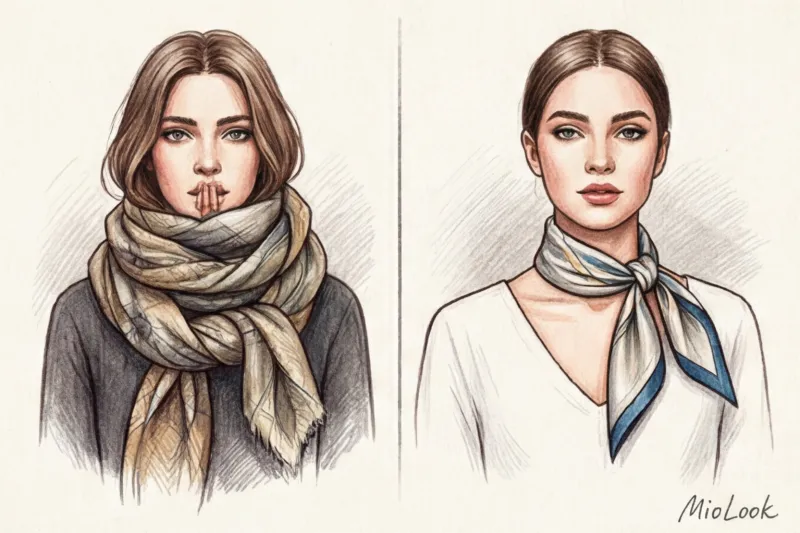
- Избыточный объем при короткой шее. Если природа не наградила вас лебединой шеей, огромный узел из платка 90х90 см визуально сделает так, будто голова сразу переходит в плечи. Выбирайте только микро-форматы 45х45 или узкие ленты твилли.
- Математическая симметрия. Идеально ровные концы, расположенные строго по центру груди, выглядят архаично. В современном стайлинге узел всегда должен быть слегка небрежным и смещенным на пару сантиметров вбок.
- Устаревшие принты на дешевой фактуре. Мелкий, «грязный» цветочек в сочетании с навязчивым синтетическим блеском дешёвого полиэстера убьет любой наряд. Если бюджет ограничен (в диапазоне 20–40 €), ищите матовую вискозу с геометричным принтом в брендах масс-маркета, а не имитацию люкса.
- Синдром «всё лучшее сразу». Правило стилистики непреклонно: в портретной зоне должен быть только один фокус. Если вы надели сложный шелковый платок, откажитесь от массивных серег-шандельеров и тяжелых колье. Оставьте лаконичные пусеты или гладкие кольца (хупы).
Чек-лист стилиста: как выбрать и ухаживать за шелковым каре
Шелк требует инвестиционного подхода. Не покупайте пятый платок с абстрактными разводами, если у вас не закрыта база. Для начала соберите мини-капсулу из трех принтов: строгая геометрия для офиса, спокойная анималистика (без кислотных цветов) для кэжуал-образов и монохромный вариант с контрастным кантом — это абсолютная классика.
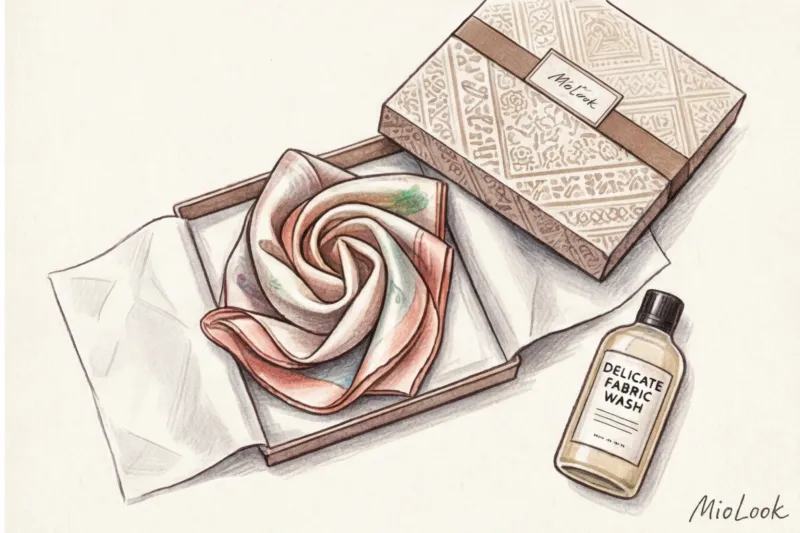
Как проверить качество прямо в магазине? Сожмите край платка в кулаке на несколько секунд и отпустите. Качественный твилл плотностью от 14 момми расправится практически мгновенно, оставив лишь легкую волну. Плохой материал покроется мелкими, стойкими заломами.
Что касается ухода — я умоляю вас забыть о ручной стирке в раковине с шампунем, что бы ни писали на форумах домохозяек. Вода и трение необратимо разрушают тонкий слой серицина (шелкового клея), который и придает ткани благородный блеск. Премиальный шелк чистят только в профессиональной сухой химчистке. Хранить такие аксессуары на вешалках категорически нельзя: они вытягиваются по косой. Сворачивайте их в неплотные рулоны или храните в «родных» коробках, проложив бескаслотной бумагой тишью, вдали от прямых солнечных лучей.
Шелковый платок — это не просто кусок красивой ткани, это инструмент управления вниманием. Он задает ритм, диктует геометрию и способен за пару секунд изменить температуру всего образа от расслабленной до ультимативно строгой. Экспериментируйте с размерами, смещайте асимметрию и помните: идеальный узел тот, который выглядит так, будто вы завязали его не глядя, выбегая из парижского кафе.