За 12 років роботи персональним стилістом я чула цю фразу сотні разів: «Я не можу купити цю сумку, у неї срібний ланцюг, а я ношу лише золоту обручку». Через цю вигадану заборону жінки відмовляються від ідеальних аксесуарів і роками носять нудні, передбачувані комплекти. За статистикою, близько 78% жінок штучно обмежують свій вибір сумок, взуття та ременів виключно через страх змішати «несполучену» фурнітуру.
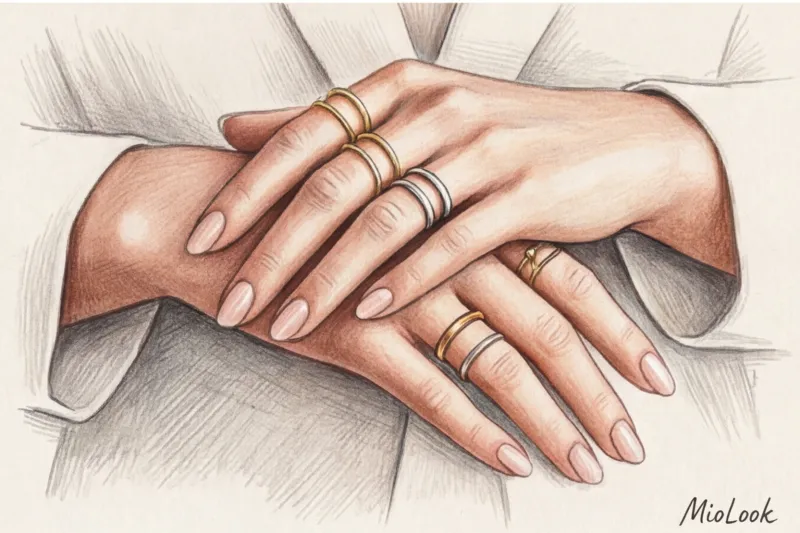
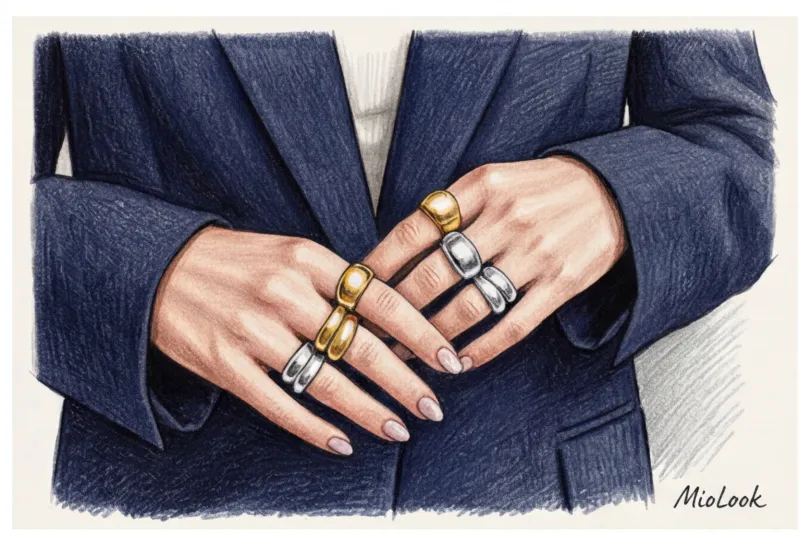
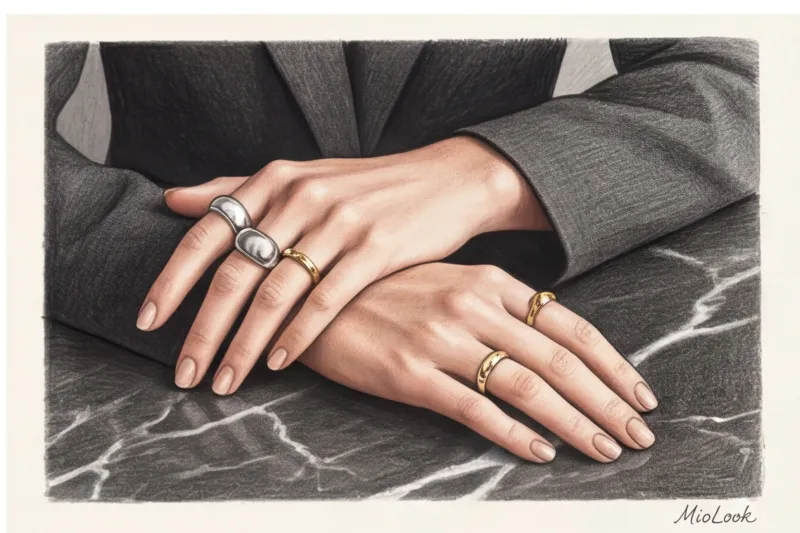
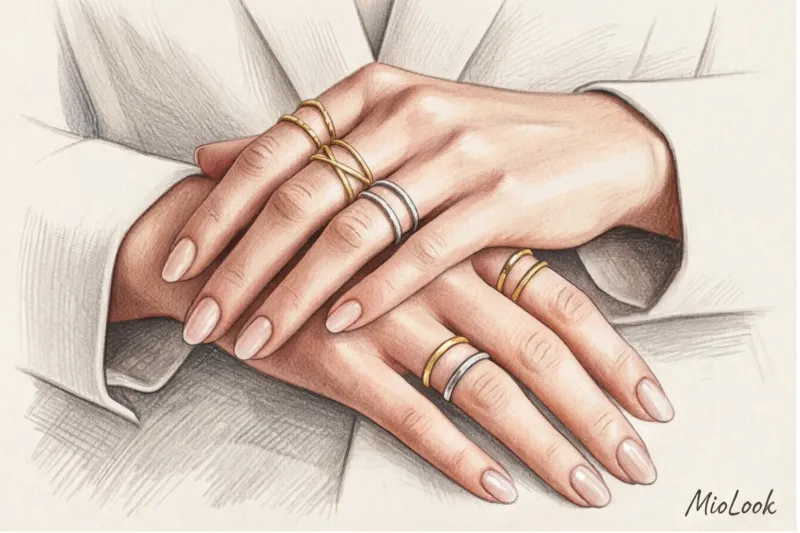
Якщо ви все ще гуглите, чи можна носити золото та срібло разом , У мене для вас чудові новини: не просто можна, а стилістично необхідно. Сучасний стайлінг розглядає мікс металів не як ювелірну помилку, бо як складний архітектурний інструмент. Докладніше про архітектуру стилю ми вже говорили в нашому повному гіді з підбору аксесуарів до одягу Але сьогодні перенесемо фокус безпосередньо на металеві елементи: від тонких кілець до масивних пряжок.
Чи можна носити золото та срібло разом: руйнуємо маркетинговий міф
Ідея про те, що метали завжди повинні ідеально збігатися – це не правило гарного тону, а геніальний маркетинговий міф. У середині XX століття ювелірні будинки активно просували концепцію парюр (повних гарнітурів із кольє, сережок, браслета та кільця). Мета була виключно комерційною: змусити клієнта купити одразу чотири предмети замість одного.
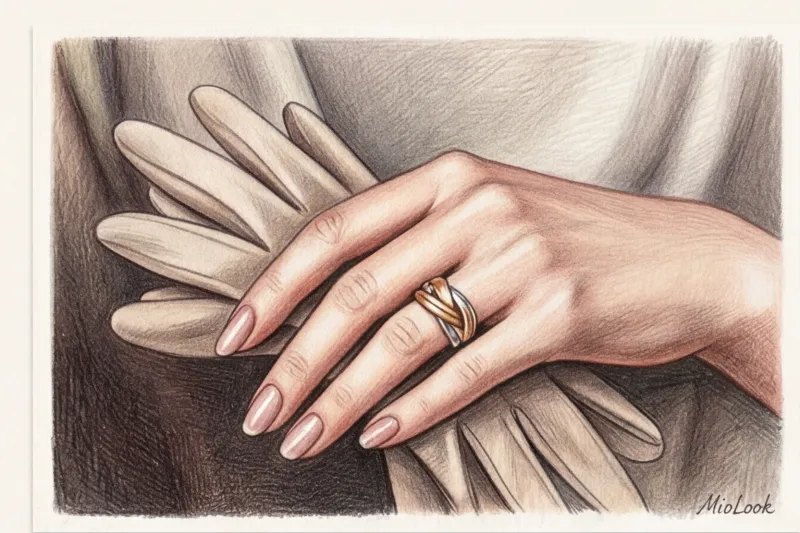
Перший легальний удар по цій системі завдав Луї Картьє ще в 1924 році, створивши культове кільце Trinity, що складається з переплетених смуг жовтого, білого та рожевого золота. Як відзначають історики моди, коли французький письменник Жан Кокто почав носити два такі обручки на мізинці, це стало маніфестом стилістичної свободи.
Сьогодні ідеальний збіг всіх металів у образі виглядає старомодно. Англомовні стилісти називають це "too matchy-matchy" — коли видно, що ви дуже старалися. Дорогий, статусний образ завжди містить легку недбалість, ніби ви одягли улюблені речі, не замислюючись.
Математика стилю: чому правило 80/20 важливіше за інтуїцію
Головна помилка, яку я помічаю у клієнток, які намагаються міксувати метали, — це розподіл у пропорції 50/50. Коли на вас три золоті ланцюги та три срібні, око не може сфокусуватися. Виникає візуальний хаос, у якому прикраси сперечаються одна з одною за лідерство.
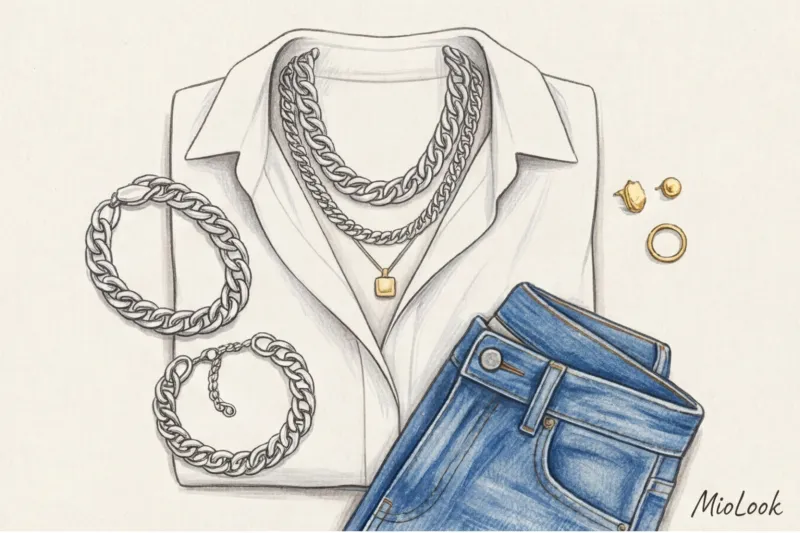
Секрет у математичному правилі 80/20. Ви повинні призначити один метал домінантним (базою), а другий - акцентним.
- Домінанта (80%): Наприклад, масивний срібний годинник, срібна пряжка ременя і велике срібне кільце.
- Акцент (20%): Тонкий золотий ланцюжок з кулоном або мінімалістичний золоті пусети.
На моїй практиці впровадження цієї простої формули вирішує проблему за п'ять хвилин. Ви перестаєте хаотично нашарувати прикраси і починаєте візуально зважувати їх.
Як температура образу диктує вибір провідного металу
Щоб зрозуміти, який метал зробити базовим (ті самі 80%), подивіться на палітру вашого одягу.
Теплі відтінки - кемел, гіркий шоколад, теракота, оливковий - вимагають золота як основу. Воно підсвічуватиме теплоту тканини. Холодні відтінки — графіт, смарагд, крижаний синій — виводять на перший план срібло чи біле золото. Якщо ви одягнені в ахромати (чорний, білий, чистий сірий), перед вами ідеальне полотно для будь-яких експериментів.
Ваш ідеальний образ починається тут
Приєднуйтесь до тисяч користувачів, які щодня виглядають бездоганно з MioLook. Оцифруйте свої аксесуари та плануйте мікси заздалегідь.
Відкрити доступ — €0,99 разовоТеорія «Мостика»: як візуально подружити різні метали
Якщо вам страшно почати змішувати метали, використовуйте інструмент, який я називаю «bridge piece» (виріб-місток). Це біколорні прикраси або аксесуари, в яких вже змішані два метали від виробника.
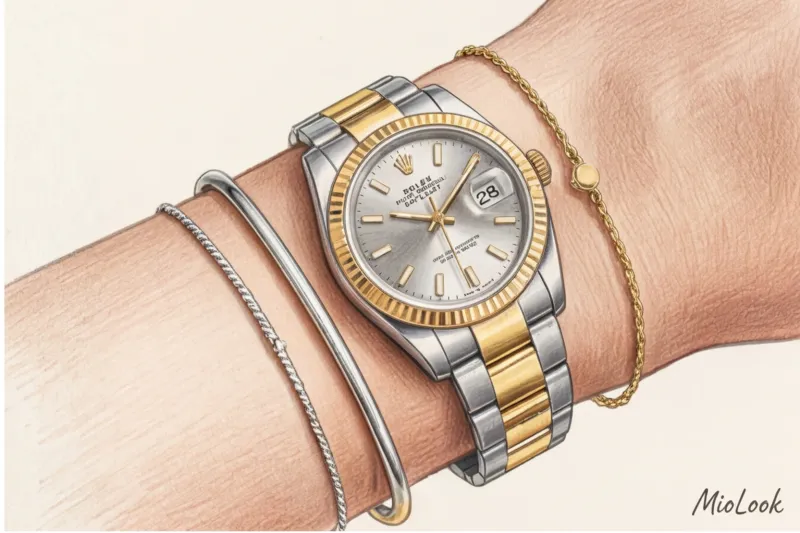
Найпотужніший місток — це двосплавний годинник зі сталі та золота. Як тільки на вашому зап'ясті з'являється такий аксесуар, він видає вам офіційну стилістичну роздільну здатність носити будь-які комбінації золота та срібла в рамках одного образу. Це може бути і модель преміум-сегменту, і відмінний базовий варіант COS за 150 €.
«Біколорний виріб працює як візуальний перекладач. Воно показує оточуючим, що ваше поєднання різних металів це не випадковість, а продуманий стилістичний хід».
Якщо ви не носите годинник, містком може стати кільце з двох металів або підвіска, де на срібному ланцюзі висить золотий кулон. До речі, такі біколорні елементи чудово поєднуються і з іншими матеріалами – наприклад, ми докладно розбирали це у статті як носити перли сучасно.
Архітектура образу: фурнітура одягу та сумок як повноправний учасник міксу
Фокусуючись на ювелірному гардеробі, багато хто забуває про «скелет» образу - фурнітуру. Блискавки на куртці-косусі, заклепки на джинсах, клепки на взутті і, звичайно, ланцюжки сумок - це такі ж металеві акценти, як і ваші браслети.
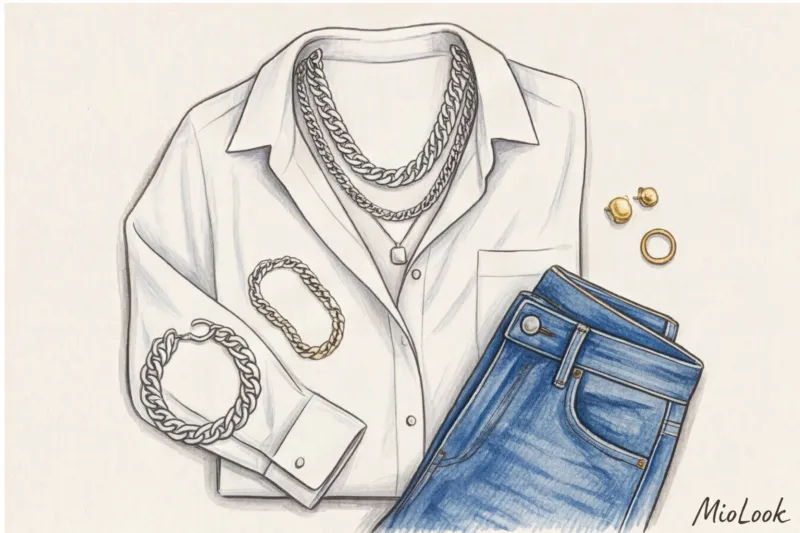
У мене була клієнтка, яка три місяці накопичувала на статусну структуровану сумку вартістю близько 2500 євро. Коли ми прийшли в бутік, вона впала в ступор: сумка мала масивну срібну застібку, а клієнтка носила виключно жовте золото. Ми купили сумку, але додали до неї один широкий срібний каф на вухо та біколорне кільце. Сумка стала тим домінантним акцентом (20%), який вивів базовий гардероб на новий рівень.
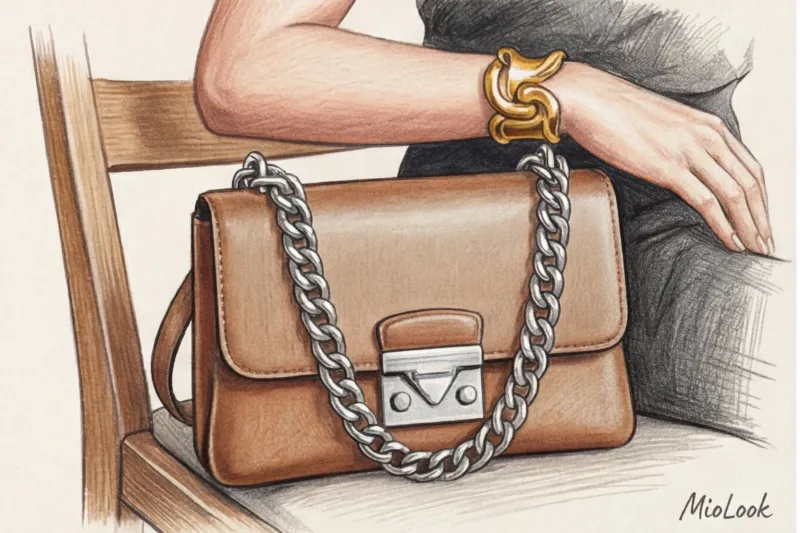
Згідно з концепцією «Ефекту ореолу» (Halo Effect), одна дорога деталь з масивною, якісною фурнітурою підтягує до свого рівня весь інший образ, навіть якщо це базова футболка з мас-маркету за 20 €.
Окуляри та ремені: приховані пастки
Найпідступніші елементи – це оправи окулярів та пряжки ременів. Дужки окулярів знаходяться у особи і вступають у пряму візуальну суперечку із сережками. Якщо ви надягаєте окуляри в тонкій золотій оправі, не варто додавати масивні срібні сережки-кільця.
Пряжка ременя – це візуальний центр вашого силуету. Якщо метали ременя і кулона категорично не поєднуються стилістично, використовуйте правило рознесення по зонах: розсуньте елементи, що конфліктують, максимально далеко один від одного (наприклад, срібні сережки і золота пряжка на взутті).
Доступ до MioLook за €0,99 — разовий платіж
Розумний AI-стиліст підбере ідеальний образ з урахуванням ваших аксесуарів та фурнітури.
Відкрити доступ — €0,99 разовоКонфлікт фактур: коли золото та срібло справді не поєднуються
Щоб бути чесною, я маю позначити обмеження: іноді золото та срібло дійсно не можна міксувати. І проблема криється не у кольорі, а у фактурі.
Ви ніколи не зможете стильно поєднати чорне, грубе етнічне срібло (в стилі балійських прикрас) з глянсовим, ідеально відполірованим рожевим золотом. Це виглядає так, ніби ви одягли шовкову вечірню сукню з трекінговими черевиками.
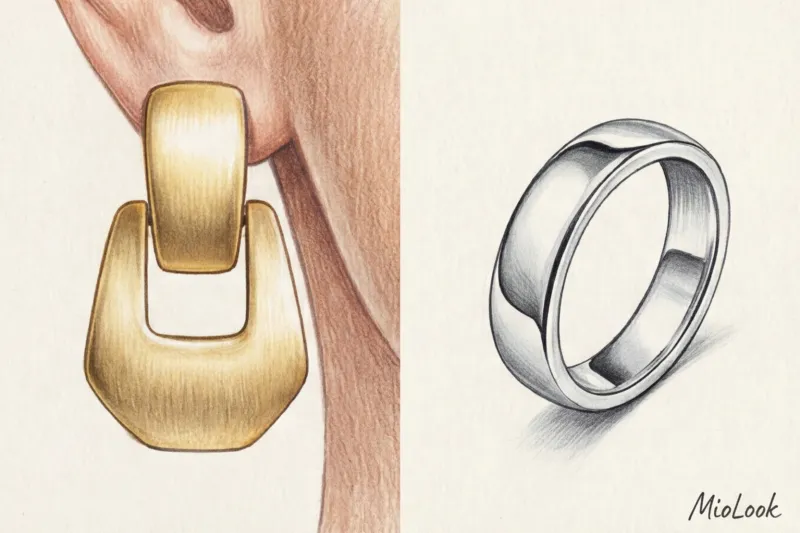
За даними дослідження ювелірних трендів WGSN (2024), фокус споживачів змістився із кольору металу на його обробку. Правило єдиного стилю свідчить: геометрія тягнеться геометрії, вінтаж до вінтажу. Вибирайте вироби зі схожою фінішною обробкою. Матове (brushed) срібло розкішно виглядає з матовим золотом. А глянсові мінімалістичні обручки з білого і жовтого золота чудово живуть на одній руці.
Цифрова стилістика: як планувати аксесуари в MioLook
Досвід оцифрування більше 500 гардеробів у додатку MioLook показав цікаву закономірність: найстильніші та найдорожчі образи створюються тими користувачами, хто навмисно порушує правило одного металу, але робить це обдумано.
Коли ви стоїте перед дзеркалом у ранковому поспіху, легко розгубитись і надіти звичний нудний комплект. Розумний гардероб дозволяє вирішити цю проблему заздалегідь. Ви фотографуєте свої сумки, ремені, годинники та базові прикраси, завантажуєте їх у додаток та збираєте капсули прямо на екрані смартфона.
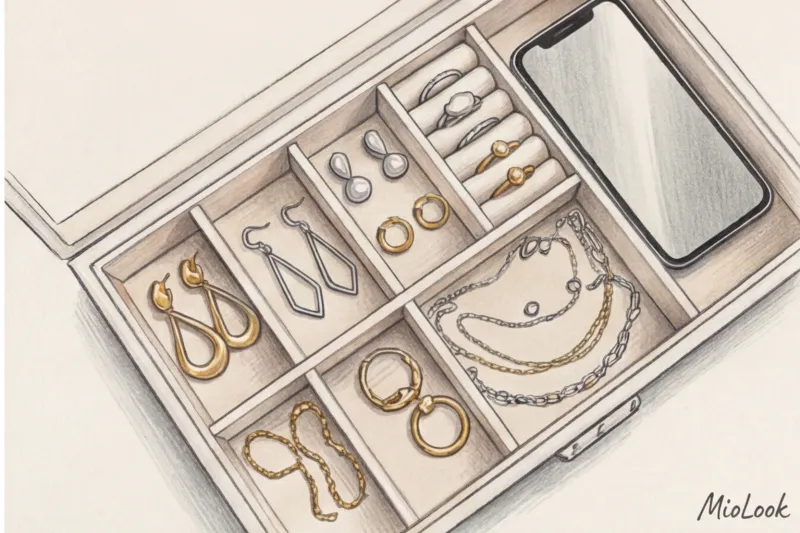
Наприклад, для п'ятничного дрес-коду в IT-компанії, де всі ходять у джинсах, але ви хочете виглядати трохи більш зібрано, можна заздалегідь зібрати віртуальний образ: об'ємний жакет, футболка, джинси, масивний шкіряний ремінь зі срібною пряжкою та каскад із тонких золотих та сірих. Ви бачите результат до того, як одягнете речі, і можете оцінити пропорцію 80/20.
Чек-лист: 5 кроків до дорогого образу з різними металами
Архітектура ідеального образу починається з усвідомленого підходу до деталей. Давайте переведемо теорію на практику.
- Визначте домінанту: Виберіть який метал займе 80% візуального простору, а який стане акцентом (20%).
- Додати «місток»: Інтегруйте біколорну прикрасу або двосплавний годинник, щоб зв'язати елементи воєдино.
- Синхронізуйте фактури: Перевірте, щоб метали мали загальну стилістику (наприклад, тільки глянець або м'ятий метал).
- Перевірте фурнітуру: Переконайтеся, що замки сумок, пряжки ременів та заклепки враховані у загальній пропорції.
- Оцініть образ на повне зростання: Відійдіть від дзеркала на два метри. Якщо прикраси не зливаються у візуальний шум, а розставляють чіткі акценти, ви все зробили правильно.
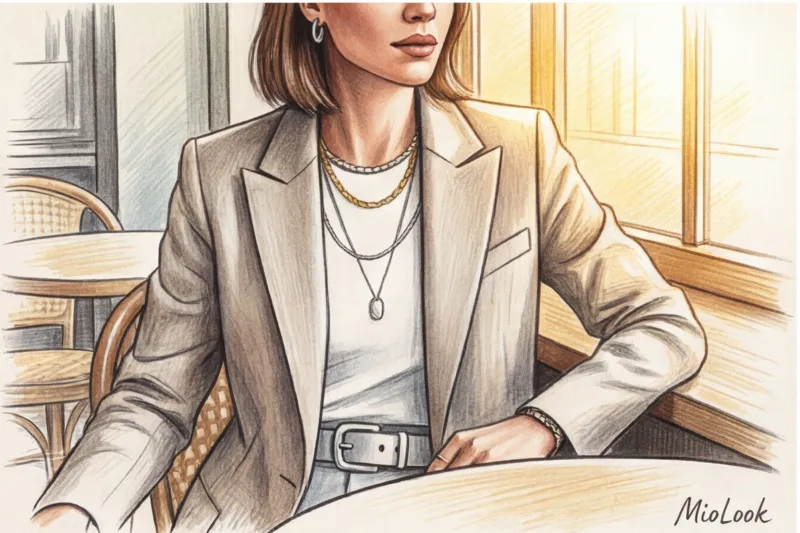
Забудьте про правила, вигадані маркетологами минулого століття. Справжній стиль народжується на стику правил та вміння їх елегантно порушувати. Змішуючи золото зі сріблом, ви транслюєте оточуючим упевненість у собі та показуєте, що ваш смак складніший, ніж просто купівля готового комплекту у вітрині.