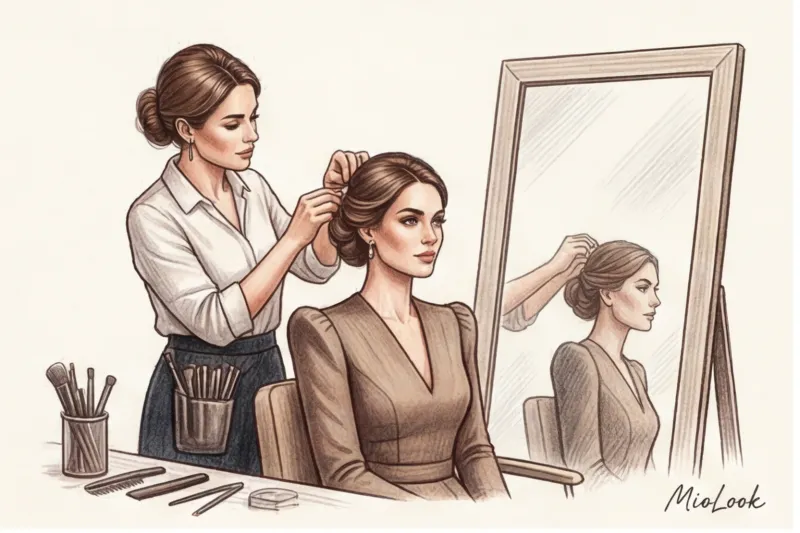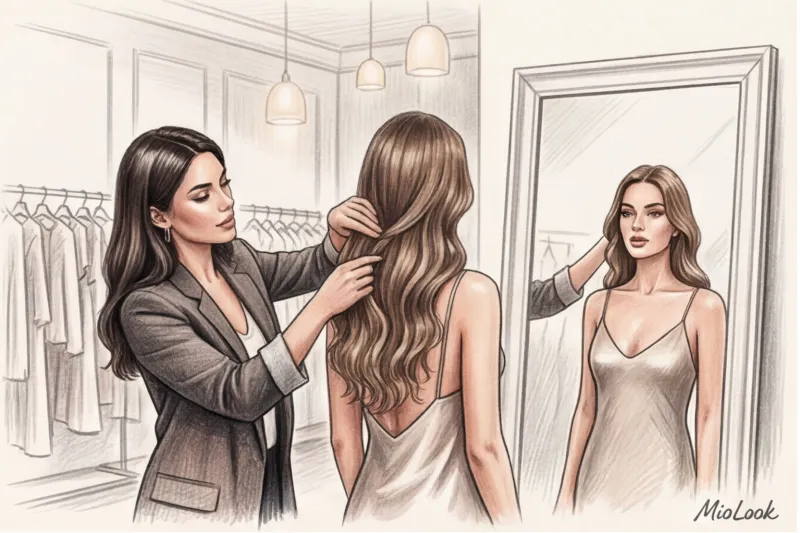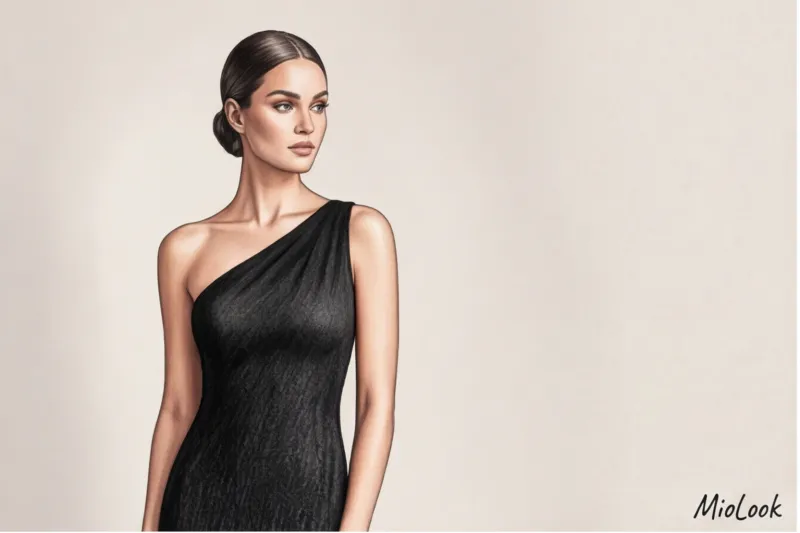
Last week, my client nearly burst into tears in front of the mirror. She was wearing a stunning asymmetrical Tom Ford dress in a deep emerald shade, bought for a charity dinner. But instead of an elegant silhouette, we saw a bulky, heavy figure in the reflection. The culprit wasn't the dress, but her hair: the hairdresser carefully placed her heavy Hollywood curls directly onto her bare shoulder, arguing that "there was too much space there and the look needed to be balanced."
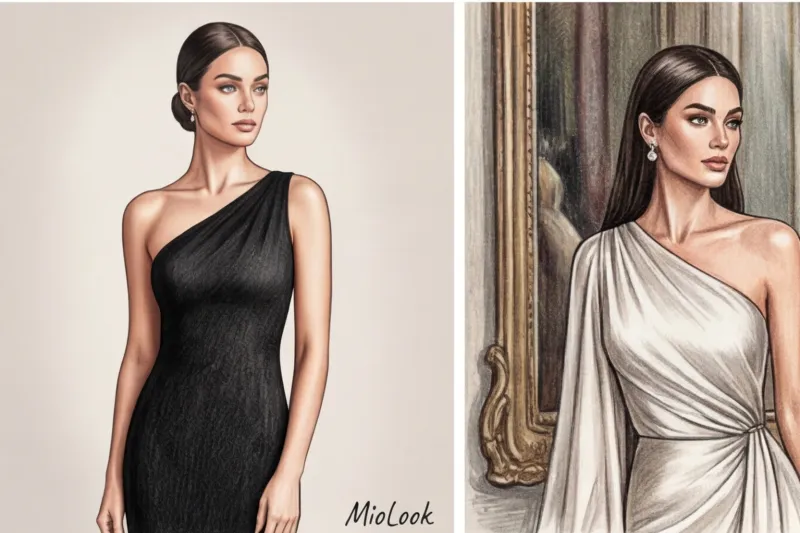
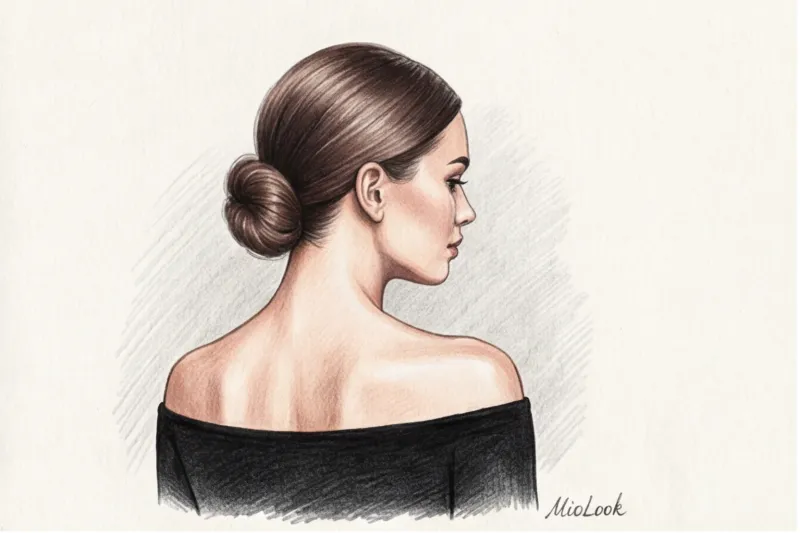
I gathered her hair with my hands into a tight low bun, and the magic worked instantly: her neck lengthened by five centimeters, her collarbones became fragile, and the dress finally sounded the way the designer intended. Perfect hairstyle for a one-shoulder dress It's not about hiding a void. It's about working with your body's architecture and cut. We've already covered the fundamental rules for creating such silhouettes in more detail in our complete guide. The Perfect Hairstyle for a Dress Neckline: The Architecture of the Look.
As a stylist with years of experience working with luxury brands, I constantly see women ruin expensive outfits with poor styling choices. Today, we'll explore the anatomy of asymmetry and learn how to use "negative space" to create a truly prestigious silhouette.
The Anatomy of Asymmetry: Why a One-Shoulder Dress Requires Special Geometry
Asymmetry isn't just a designer's fantasy. It's a powerful visual accent, a sharp diagonal that disrupts the figure's traditional proportions. Great masters of couture draping, such as Madame Grès and Roy Halston, built their iconic asymmetrical dresses on the principle of "negative space." In luxury styling, exposed skin functions as a fully-fledged part of the design, not as a flaw to be concealed.
Eye-tracking research in the fashion industry proves an immutable rule: 80% of your conversation partner's attention is focused on the head-neck-chest triangle. When you create a conflict between the diagonal line of your dress and your loose hair, visual noise arises. The image instantly cheapens, even if you're wearing €2,000 silk.
Over 12 years of practice, I've developed a strict rule for my clients: never treat your hair as a separate element from your dress. If you've chosen asymmetry, your head and neck should be an extension of the designer's intended geometry. Want to know? How to look expensive: secrets of a status wardrobe are hidden precisely in such nuances.
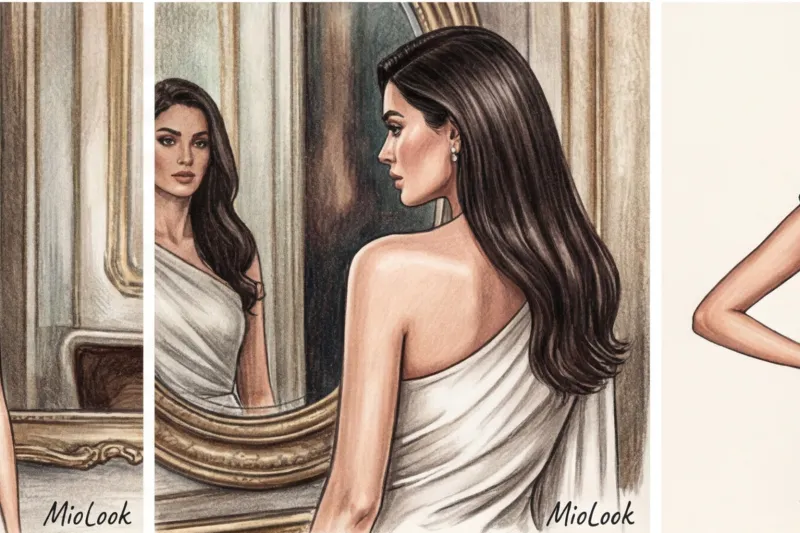
The biggest styling myth: where should you actually style your hair?
The worst crime against the cut, circulated on forums and in mid-level glossy magazines, is the advice to "throw your hair over your bare shoulder for balance." This destroys the entire idea of asymmetry. By covering your exposed collarbone with hair, you visually cut off your neck and transform an elegant diagonal neckline into a closed horizontal collar.
By leaving your bare shoulder exposed, you're using the same negative space technique. The air around your neck lightens your figure. The diagonal of the neckline should flow freely, drawing the eye upward to your face.
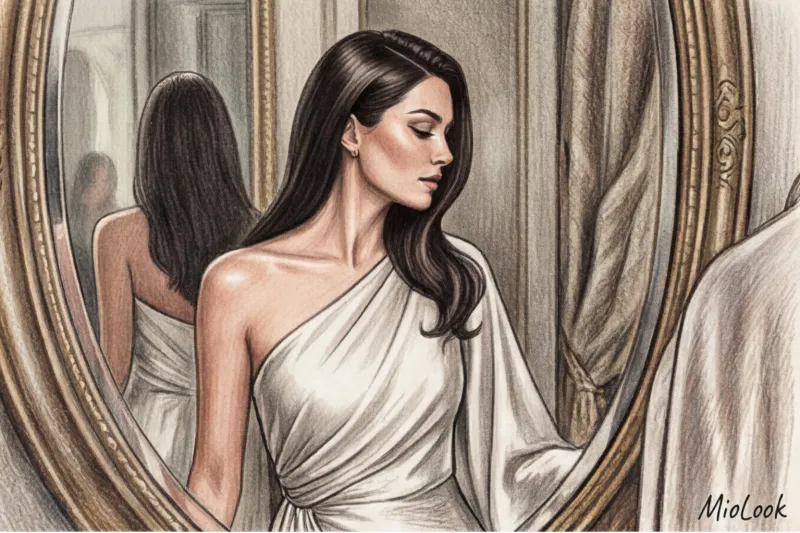
Option 1: Hair on a closed shoulder (Increasing the accent)
If you don't like your hair up, style it strictly to the side where the dress fabric meets. This solution is ideal for sleek textures and minimalist cuts. Tossing your hair over a covered shoulder enhances the dramatic effect: on one side, it creates maximum volume (fabric + hair), while on the other, it completely exposes and deforms the collarbone. This technique is often used on the red carpet for Saint Laurent dresses.
Option 2: Hair pulled back (Aristocrats' choice)
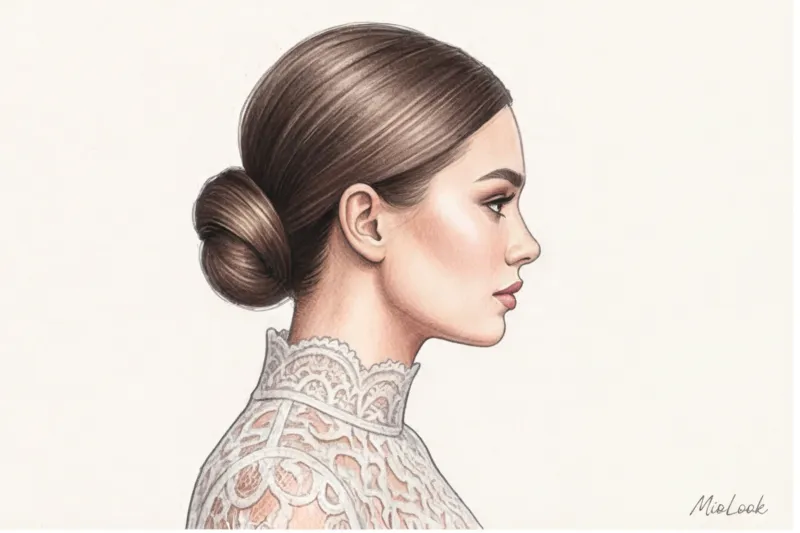
This is the perfect solution for 90% of situations. A sleek low bun, a classic shell, or a tight knot at the nape of the neck. By keeping your hair away from your face, you elongate your neck and let your dress "do the talking." These are the hairstyles we choose when looking for the perfect look. Wedding hairstyles for guests - They look appropriate, expensive and don’t draw attention to themselves.
Your perfect look starts here
Join thousands of users who look flawless every day with MioLook. Artificial intelligence will analyze your proportions and select the perfect combinations.
Get access — €0.99 onceThe perfect hairstyle for a one-shoulder dress, depending on your hair length.
There's no one-size-fits-all hairstyle. The choice depends on your starting point. The legendary Vidal Sassoon introduced the concept of the "architectural haircut" back in the 1960s, proving that hair shape should be consistent with the facial bone structure and the lines of clothing.
- Short haircuts (pixie, garcon): This is the perfect canvas for asymmetrical outfits. Nothing interferes with the cut. The secret is in the right texturing. Use a matte paste or clay to direct the hair away from the face. Lightly smooth the temples to highlight the cheekbones.
- Bob and medium length: If you have a bob or long bob, a sleek, flat-iron style is ideal. Create a deep side parting so the bulk of your hair falls over your covered shoulder, and comb the hair on the bare shoulder side smoothly behind your ear and secure with a bobby pin. Avoid "beach waves"—they clash with the geometry of your dress. I recommend reading our article about Anti-aging bob: who it suits and how to style it stylishly.
- Long hair: The rule of extremes applies here. Either a strict high ponytail (ideal for young girls and avant-garde cuts) or a low, sleek bun with a center parting.
I have a telling example. A client was going to an awards ceremony in a dress with an architectural flounce on one shoulder. She begged for voluminous curls. I persuaded her to opt for a sleek, mid-length ponytail, the base of which we wrapped with a strand of hair. The next day, her photos were discussed as "the most prestigious minimalism of the evening." Curls would have transformed this complex look into a provincial prom.
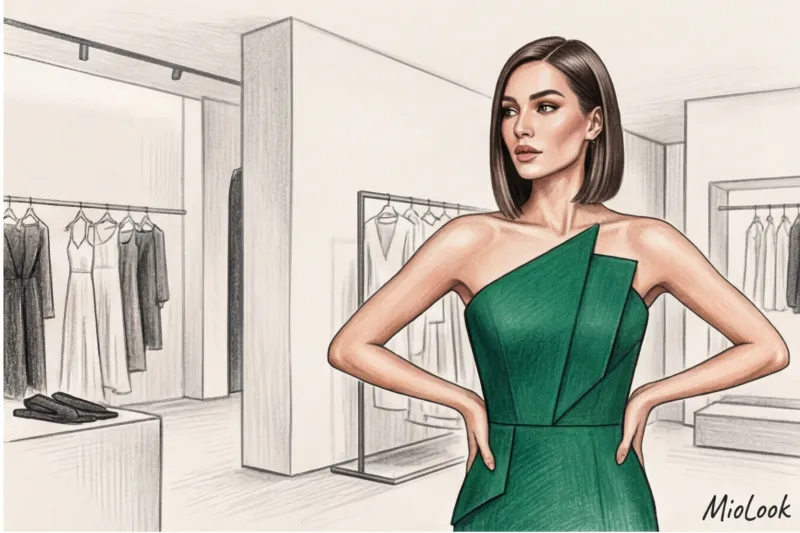
The Influence of Fabric and Decor: When Texture Dictates Styling
The way light refracts on the fabric of your dress directly affects the texture of your hair. This is a subtlety that many hairdressers overlook, but world-class stylists understand perfectly.
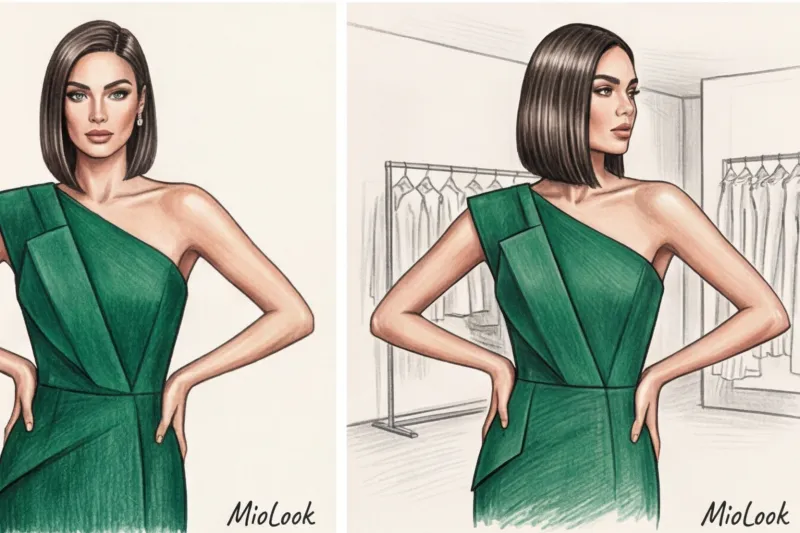
Smooth silk, satin, and viscose (linen style) require a perfectly smooth finish. A "glass hair" effect or a damp, gel-inspired style are appropriate. Matte, tousled textures will appear unkempt and dusty against the shimmer of silk.
Complex embellishments—ruffles, large taffeta bows, sequin embroidery on a closed shoulder—strictly require tied-back hair. Leaving your hair loose will cause it to catch on the embellishments, visually blending in with them, and the look will become unkempt. The more prominent the dress's shoulder, the more minimalist the headpiece.
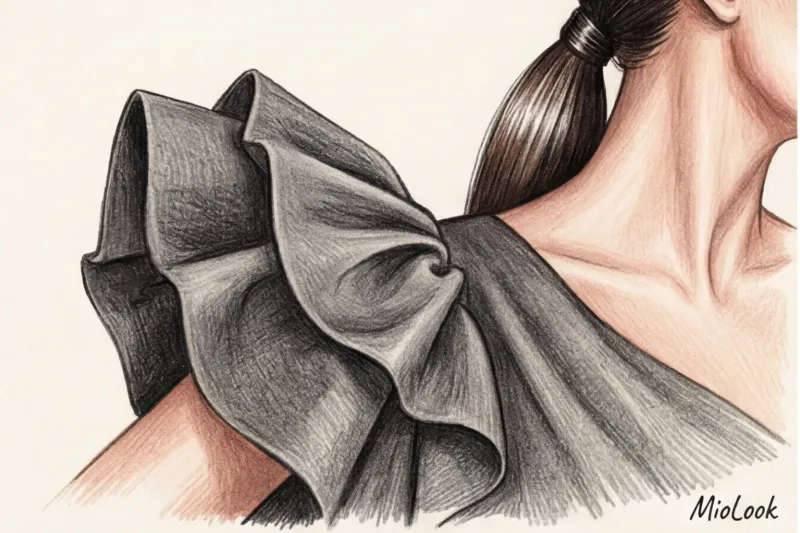
Let's be honest, there is an exception to this rule. When does perfect smoothness not work? If your dress is made of very thin, cheap knitwear (which is not a good idea), a hyper-sleek, "expensive" hairstyle will create dissonance and only highlight the low quality of the fabric. Luxurious, smooth hair requires an appropriate base—thick cotton (at least 180 g/m²), heavy crepe, or high-quality suiting wool. For soft, flowing chiffon, a light but controlled looseness in a low bun is acceptable.
Embellishments and asymmetry: how to avoid overloading the portrait area
We've reached the most common mistake I see on the red carpet and at corporate events. A woman chooses a one-shoulder dress, styles her hair just right, and then... puts on a necklace. It's a disaster.
Necklaces, chains, and pendants are strictly prohibited with an asymmetrical neckline. They cut across the diagonal of the neckline, creating a visual grid across your chest. Leave your neck free.
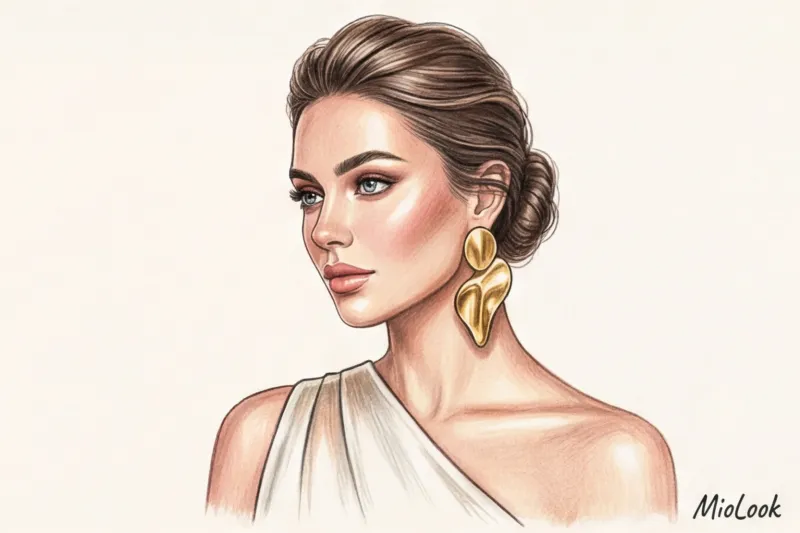
Instead, invest in the right earrings. Since we've pulled our hair back (or tucked it behind our ear on the off-shoulder side), we have the perfect platform for statement jewelry. A single earring on the off-shoulder side is the ultimate styling statement. A high-quality, sculptural single earring in the €200-€500 price range from conceptual jewelry brands will say much more about your taste than a standard set.
Access to MioLook for €0.99 — one-time payment
A smart AI stylist will select the perfect look based on your dress style, body type, and current trends. No more hesitation before going out.
Get access — €0.99 onceStylist Checklist: 5 Steps to Perfect Balance Before You Go Out
To be 100% confident in your look, I offer my clients a simple checklist. Follow it 15 minutes before leaving home:
- Estimate the volume of decoration. Look at the closed shoulder of the dress. If there are gathers, a shoulder pad, or draping there, the hair should be pulled back from that area.
- Take a full-length photo. This is my main professional secret. The eye in the mirror focuses on details, but a smartphone camera instantly reveals silhouette disproportions (2D format is unforgiving). If your head appears too large in comparison to your shoulders in a photo, trim your hair.
- Check your jaw line. Your jawline should be clearly visible. If your hair blends into your jawline and the fabric of your dress, the look loses its visual appeal.
- Measure the visual length of the neck. Has it gotten shorter since styling? If so, move the bun down or make the parting more defined.
- Final test of dynamics. Vigorously twist your head left and right. Make sure your hair doesn't get caught in the sequins or collar of your dress. If it does, secure it tighter.
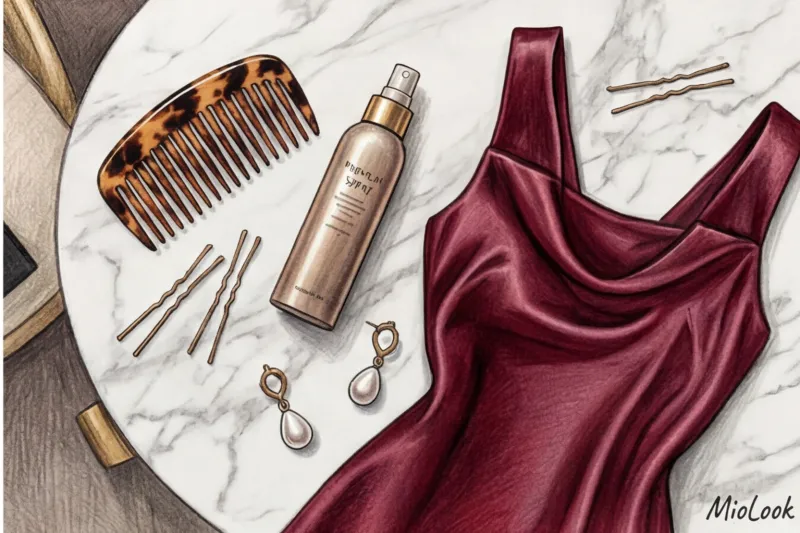
When choosing a hairstyle for a one-shoulder dress, always remember one simple rule: the dress is the frame, and your face is the painting. The goal of your hairstyle isn't to steal the show or fill the "emptiness" of your bare shoulder. Its purpose is to direct the eye to your face, using clean lines and negative space. Avoid excess volume in favor of architectural sleekness, and your look will always look like it was created by a team of stylists.