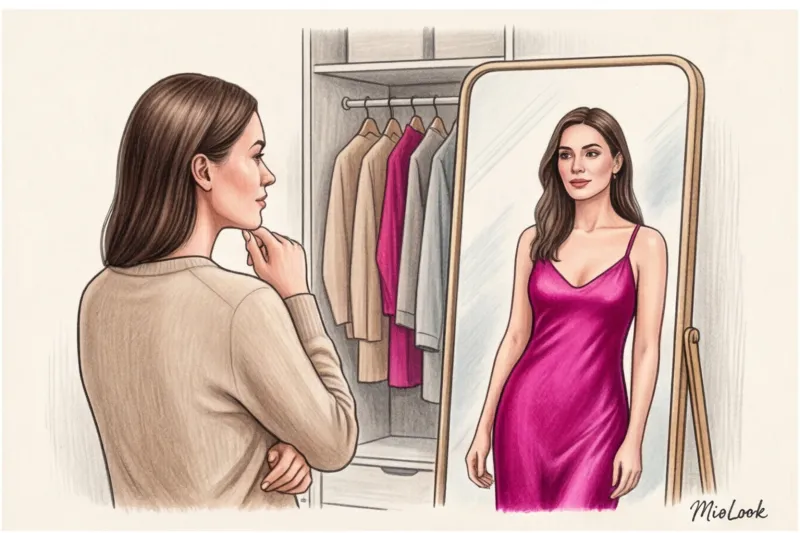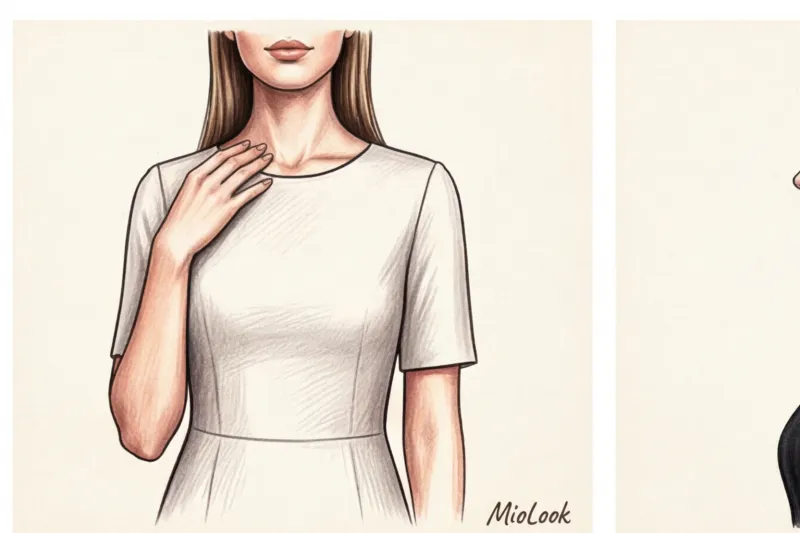
Помічали, що іноді ви надягаєте абсолютно ідеальну по фігурі сукню, дивіться у дзеркало і відчуваєте, що шия кудись зникла, а силует став важким? Більшість жінок у цей момент звинувачують крій одягу чи власну вагу. Але за 12 років роботи персональним стилістом я засвоїла одне залізне правило: у 90% випадків проблема не в тілі та не в сукні. Проблема в тому, що ваша зачіска конфліктує із горловиною.
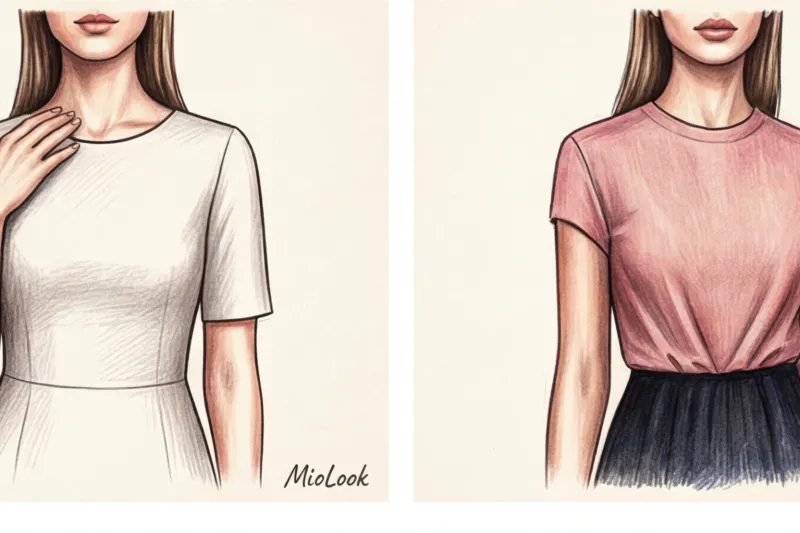
Чесно кажучи: базова футболка або сукня з круглим коміром (crew neck) вважаються універсальними речами. Але ж це міф. Це найвибагливіша горловина для лінії щелепи. Докладніше про архітектуру портретної зони ми вже розповідали у нашому повному гіді по підбору зачіски під виріз Але сьогодні я хочу розібрати цей конкретний, найпідступніший випадок. І так, правильно підібрана зачіска під круглий виріз сукні здатна візуально скинути пару кілограмів ефективніше за будь-яку дієту.
Геометрія портретної зони: чому круглий виріз – це завдання із зірочкою
Нещодавно я проаналізувала понад 1000 комбінацій образів, завантажених користувачами до програми MioLook. Дані вразили навіть мене: 68% базового капсульного гардеробу сучасної жінки складається з речей із круглим вирізом. І саме з ними пов'язано рекордну кількість стилістичних помилок.
Головна проблема — ілюзія «голови, що ширяє». Високий круглий виріз повністю закриває ключиці та груди, створюючи суцільну кольорову пляму. Якщо ви залишаєте розпущене волосся лежати поверх цієї тканини, ви буквально з'їдаєте довжину своєї шиї. Візуальний центр ваги зміщується приблизно на 30%.
Ще в 1960-х роках легендарний Відал Сассун вивів принципи геометричної стрижки, довівши, що волосся має працювати в тандемі з кістковою структурою, а не існувати окремо. Волосся має власну «візуальну вагу». Закриті груди плюс об'ємне волосся дорівнює важкому, присадкуватому силуету.
Архітектура довгого волосся: як повернути вертикаль та врятувати шию
Минулого року до мене звернулася клієнтка Ганна. Вона скаржилася, що у строгих сукнях-футлярах (ми вибирали відмінні моделі від COS та Massimo Dutti у сегменті 100–180 €) вона здається собі «повноватою». Ми стали перед дзеркалом. Я просто зібрала її густі локони, що спадають на груди, у високий хвіст. Ефект був миттєвим: плечі розправилися, шия стала довгою, а зайва вага випарувався.
Запам'ятайте правило компенсації обсягів: якщо тканина закриває зону декольте, обличчя та шия мають бути максимально відкриті. Розпущене волосся створює ефект «штор», ховаючи ваші найвитонченіші лінії — ключиці та бічну поверхню шиї.
Ваш ідеальний образ починається тут
Приєднуйтесь до тисяч користувачів, які щодня виглядають бездоганно з AI-стилістом.
Почати безкоштовноВисокі пучки та хвости (Створюємо вертикаль)
Гладкий високий хвіст - це оптична ілюзія, що витягує зростання. Він продовжує лінію хребта нагору. Якщо класична бавовняна сукня щільністю від 180 г/м² здається занадто нудною, текстурний недбалий пучок додасть образу сучасної розслабленості. Контраст суворого глухого воріт і злегка розпатланого волосся працює бездоганно.
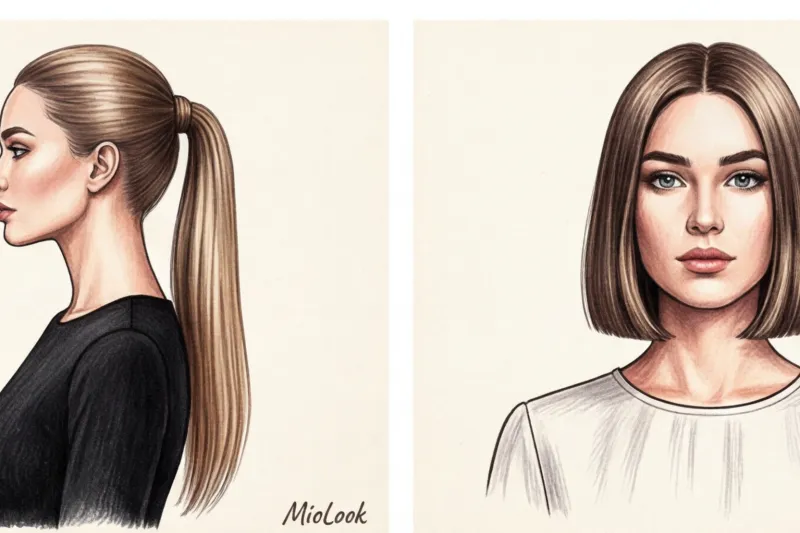
Гладкий зачіс назад (Мінімалізм та статус)
Тренд на «wet hair look» (ефект вологого волосся), який ми бачили на останніх показах Prada та Saint Laurent, ідеально лягає на базовий гардероб. Волосся, гладко зачесане назад і закладене за вуха, миттєво додає статусності. Це найкраще рішення для вечірньої шовкової сукні з круглим коміром: ви прибираєте візуальний шум від обличчя, дозволяючи тканині говорити за себе.
Небезпечна зона: каре, боб та лоб у поєднанні з круглим коміром
Існує шкідливий міф, що класичне каре підходить до всього. Як практикуючий стиліст, я повинна його спростувати. Каре у поєднанні з високим круглим вирізом – це зона колосального ризику.
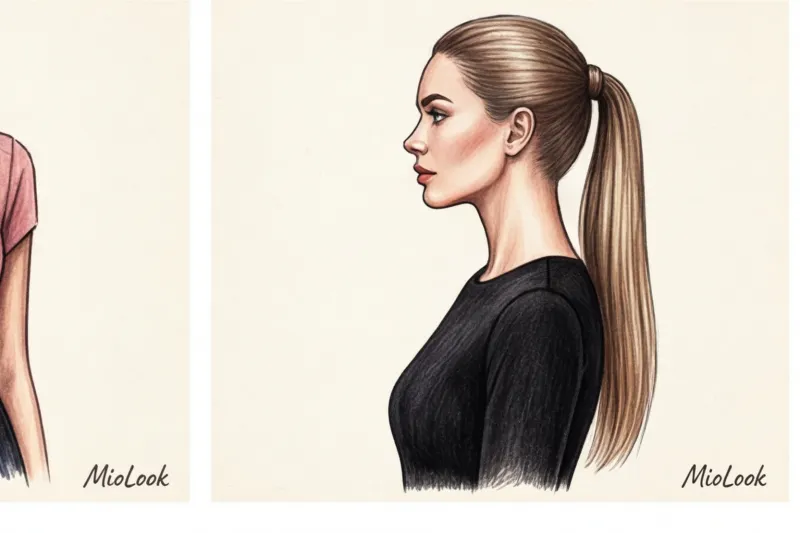
Відбувається геометричний конфлікт: пряма лінія зрізу волосся зустрічається із напівкруглою лінією горловини. Якщо кінчики волосся стосуються краю сукні, утворюється масивний горизонтальний блок, який візуально розширює нижню щелепу і зрізає шию під корінь.
«Щоб уникнути конфлікту ліній, використовуйте правило двох дюймів: між кінчиками вашого волосся та лінією горловини має бути відстань не менше 5 сантиметрів (близько 2 дюймів). Або волосся має бути помітно довше вирізу, або закінчуватися строго вище за нього».
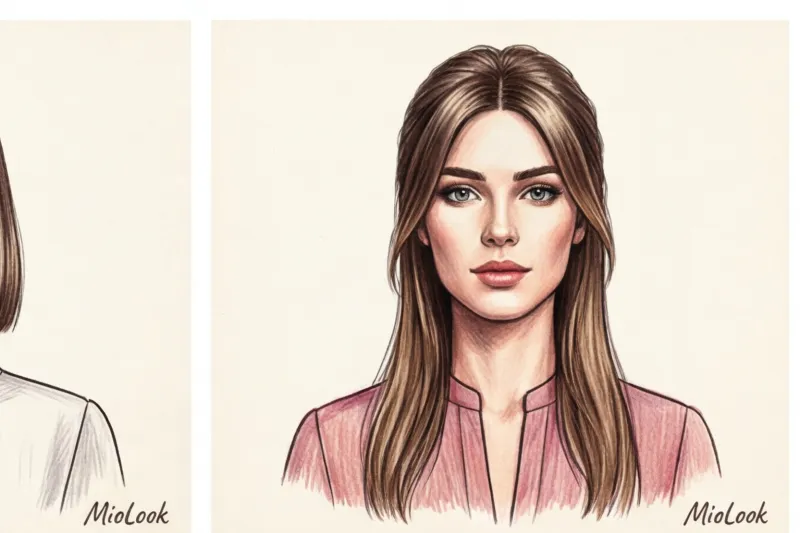
Що робити, якщо у вас зараз середня довжина (чоло), і волосся якраз дістає до ворота футболки? Рятує асиметрія. Зробіть глибокий бічний проділ та заправте волосся за одне вухо (техніка tucked-in hair). Це зламає жорстку горизонталь і поверне вишуканість.
Короткі зачіски (піксі, гарсон): ідеальна зачіска під виріз сукні?
Ультракороткі стрижки – це справжній чит-код для круглих вирізів. Вони працюють безвідмовно. Згідно з навчальними методичними посібниками Fashion Institute of Technology (FIT) за 2023 рік, балансування портретної зони вимагає оголення кутів нижньої щелепи в тому випадку, якщо ключиці приховані одягом. Піксі справляється із цим на 100%.
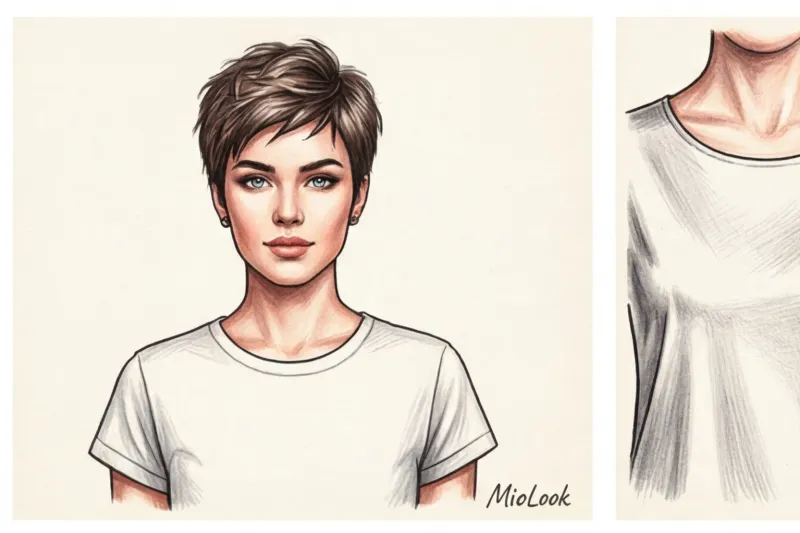
Але тут є важливе обмеження, про яке часто замовчують. Коли це НЕ працює? Коротка стрижка в парі з простою сірою трикотажною сукнею crew-neck може зробити образ надмірно утилітарним, стерши жіночність. Щоб уникнути ефекту "занадто просто", вам знадобляться акценти: графічні стрілки, яскрава помада або масивні скульптурні сережки.
Спробуйте MioLook безкоштовно
Розумний AI-стиліст підбере ідеальний образ з урахуванням вашої стрижки та форми обличчя.
Почати безкоштовноЯк текстура тканини диктує правила укладання
Ми звикли мислити формами, але забуваємо про матеріали. Величезна помилка - намагатися поєднувати об'ємні пухнасті локони з щільним вовняним светром під горло. Ви перетворитеся на одну велику хмару без чітких контурів.
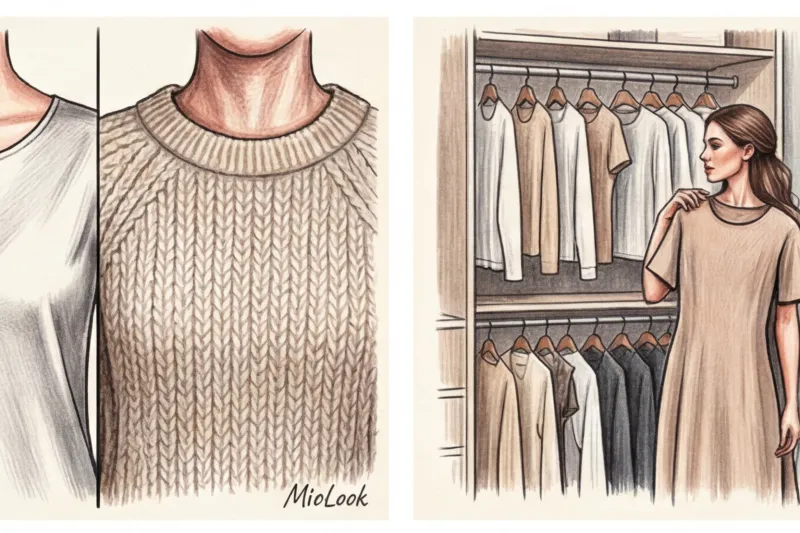
Гладкі тканини (Шовк, віскоза, атлас)
Якщо ваша сукня з тканини (наприклад, базова модель із сумішової віскози за 50–80 €), їй не вистачає фактурності. Тут зачіска бере цю роль він. Легкі пляжні хвилі (але обов'язково прибрані назад!), текстурований хвіст або недбалий пучок створять потрібний контраст із глянсовою поверхнею шовку.
Щільні та фактурні (Трикотаж, твід, шерсть)
Чим щільніша і активніша тканина в обличчя, тим спокійніше має бути голова. Гладкі геометричні укладання, тугі пучки, випрямлене «скляне» волосся (glass hair) знижують візуальний шум від об'ємної в'язки або складного переплетення твідових ниток.
Оцифрування стилю: як тестувати формули в MioLook
Збирати образи у голові складно. Я давно перевела свій гардероб у цифровий формат і закликаю клієнток робити те саме. У додатку MioLook функція тегування речей на кшталт вирізу змінює все.
Мій особистий лайфхак: я зробила три селфи з різними укладаннями (розпущені прямі, високий пучок, низький гладкий хвіст) і завантажила їх у додаток як своєрідні «аксесуари». Тепер у конструкторі капсул я можу накласти свою зачіску на будь-яку сукню з круглим коміром ще до того, як дістану її з шафи.
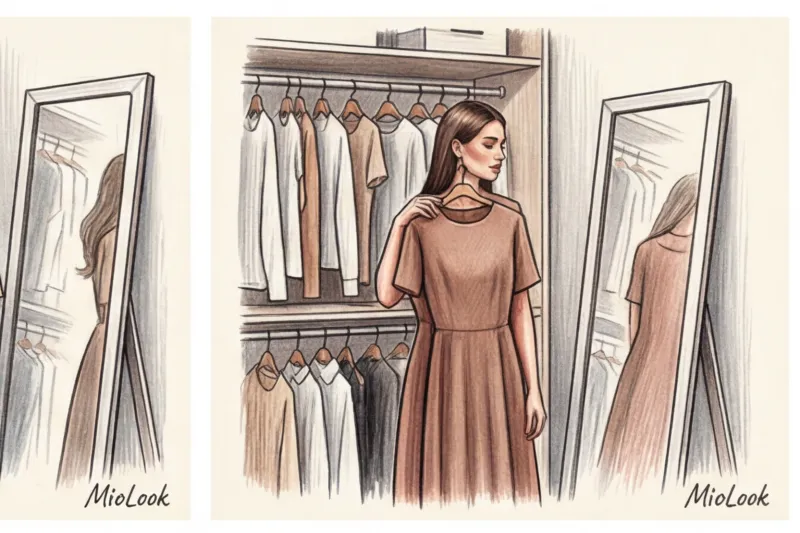
Я заздалегідь знаю: якщо сьогодні у мене немає часу мити голову і я роблю гладкий пучок, мені ідеально підійде та сама чорна сукня із щільної бавовни. Ця персональна формула заощаджує мені до 15 хвилин щоранку.
Чек-лист: 3 питання перед тим, як робити укладку під круглий виріз
Наступного разу, коли ви одягнете сукню з круглим вирізом, встаньте перед дзеркалом і задайте собі три запитання. Ця хвилинна перевірка убереже вас від зіпсованих пропорцій:
- Де закінчується волосся? Переконайтеся, що немає прямого торкання. Волосся має бути або зібране нагору, або заправлене за вуха, або опускатися значно нижче лінії грудей (але якщо тканина гладка).
- Яка щільність тканини? Балансуйте обсяг. Щільний светр = гладка голова. Тонкий шовк = текстурне укладання.
- Куди я хочу звернути погляд? Круглий виріз відрізає декольте, отже весь фокус зміщується на обличчя. Чи готові ви відкрити вилиці? Якщо так - сміливо прибирайте волосся назад.
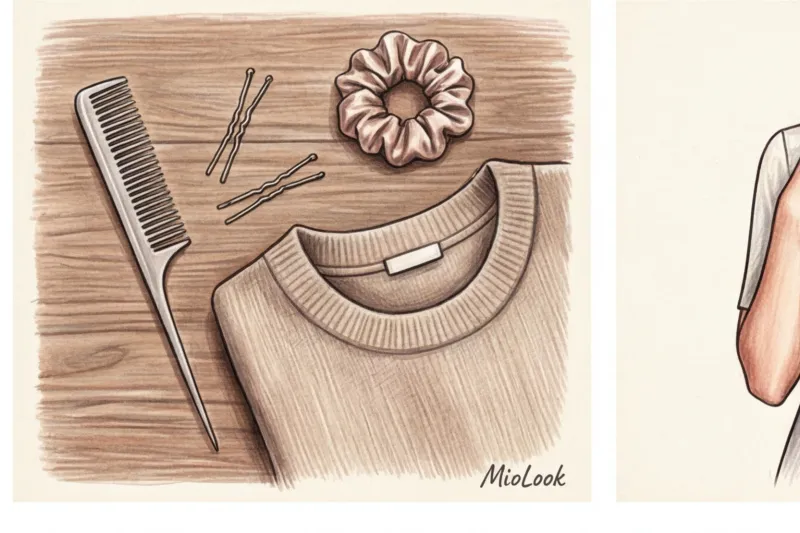
Ставтеся до свого волосся не як до окремої б'юті-рутині, а як до найважливішого архітектурного елементу образу, такого ж, як сумка чи взуття. Зачіска – це фінальний блок у тетрісі вашого стилю. І коли вона ідеально збігається з вирізом сукні, ви отримуєте той самий ефект «дорогого мінімалізму», який неможливо купити за жодні гроші.