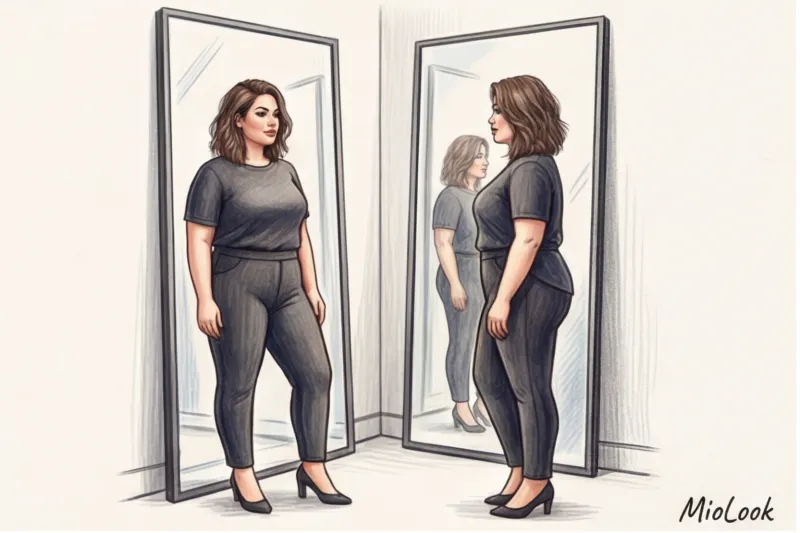
Have you ever noticed that 90% of articles about hairstyles for curvy women boil down to one banal piece of advice: "hide your cheeks with the front strands"? As a stylist and colorist with an artistic background, I am categorically against such a superficial approach. Hair is not just a frame for the face, hiding some "imperfections." It is the architectural roof of your silhouette. When we select haircuts for plus size women , we should rely on the rules of the golden ratio and Gestalt psychology, and not on attempts to disguise the oval of the face.
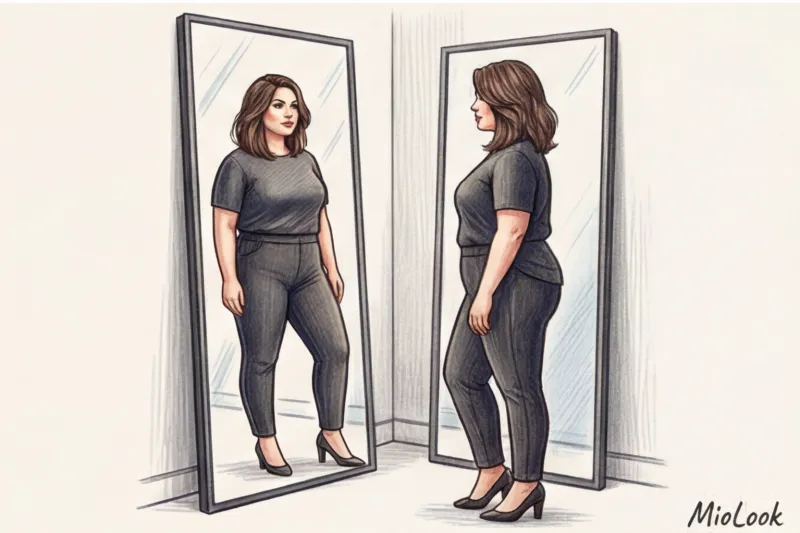
We have discussed this fundamental rule in more detail in our a complete guide to haircuts for your body type , which details how body geometry dictates styling lines. In this article, we'll go even deeper. I'll share insider tips from my 12 years of practice and explain how to balance wide hips, broad shoulders, and a large bust using visual weight and length.
Your perfect look starts here
Join thousands of users who look flawless every day with MioLook.
Get access — €0.99 onceSilhouette architecture: why haircuts for plus-size women shouldn't be chosen based solely on face shape
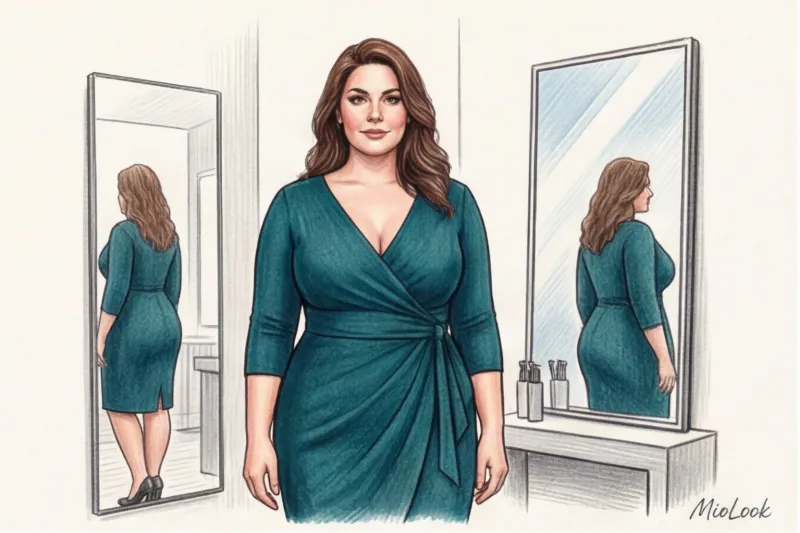
Let's start with a somewhat unexpected, yet critically important aspect: Gestalt psychology. The law of completeness and proximity states that people perceive our image as a whole, as a single silhouette. No one in real life sees you as a "levitating head," cut out of the context of your body, like in a passport photo.
In styling, there's a concept called "visual weight." Imagine a monumental, beautiful building with a wide façade. If we top it with a tiny, flat roof, the building will appear unnaturally heavy. The same thing happens with body proportions. The main mistake I see in new clients is choosing a hairstyle solely to flatter a round face. They ask the stylist to elongate the oval shape, removing all the volume, completely ignoring the width of the shoulders and the size of the hips.
"The ideal head-to-body ratio in reality is approximately 1:7.5. But with a plus-size figure, the physical dimensions of the body increase, while the skull size remains the same. Therefore, we need to artificially compensate for this balance by increasing the volume of hair in the upper third of the silhouette."
The main myth: does a short haircut make a plus-size figure look slimmer?
"The older or heavier a woman is, the shorter her hair should be" is the most damaging cliché in hairstyling. Ultra-short boyish cuts or classic sleek pixies do NOT make plus-size women look slimmer and certainly don't make them look younger by default.
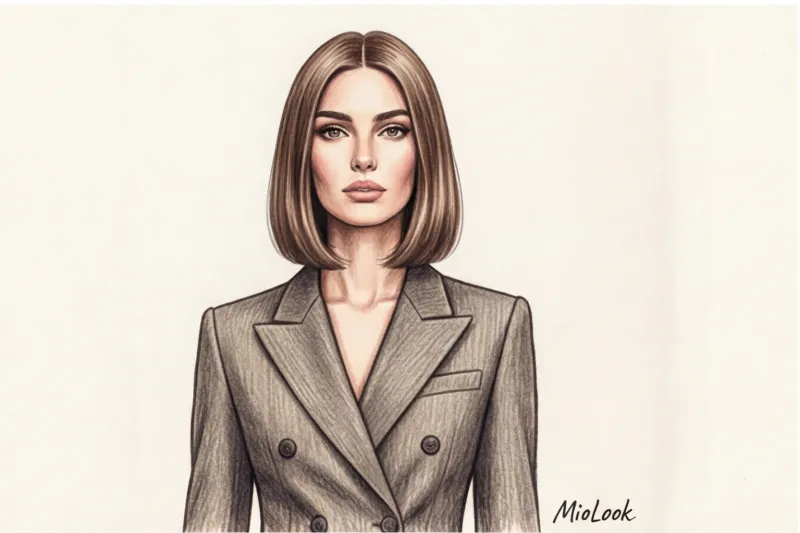
Why doesn't this work? The so-called "pinhead effect" kicks in. Straight, sleek hair visually reduces the size of your head by 15-20%. In contrast to the tiny crown, your shoulders, chest, and back immediately begin to appear monumental and much more massive than they actually are.
One of my regular clients, Elena, had been wearing a sleek pixie for five years to "look neat at the office." When we started growing it out into a textured, long bob (lob), something incredible happened. The right amount of volume made her neck appear more graceful and her shoulders slimmer. People started asking her what diet she was on, even though her weight hadn't changed a bit. She actually dropped two dress sizes.
When does a short haircut actually work? (Exceptions to the rule)
My advice isn't absolute. A short haircut is acceptable and even chic for a plus-size figure if: you're tall (at least 170 cm), have a stately, upright posture, and the stylist creates a bold, architectural volume on top that offsets the width of your shoulders. Without these factors, it's best not to risk it.
Access to MioLook for €0.99 — one-time payment
A smart AI stylist will select the perfect look, from hairstyle to wardrobe.
Get access — €0.99 onceIdeal Length Formula: The Rule of Thirds and the Golden Ratio
How do I find my safe length? I use the methodology of the renowned Pivot Point school. The secret lies in the rule of thirds and finding a harmonious cut.
Many women with large busts and apple-shaped figures intuitively choose a mid-neck length. This is a huge mistake. The cut line always attracts the eye and creates a horizontal line. A mid-neck cut visually shortens the neck and makes the face appear wider. The safest area for plus-size figures is the collarbone and décolleté. This length elongates the vertical line and works beautifully with any figure. office wear for plus size women , creating an elegant look.
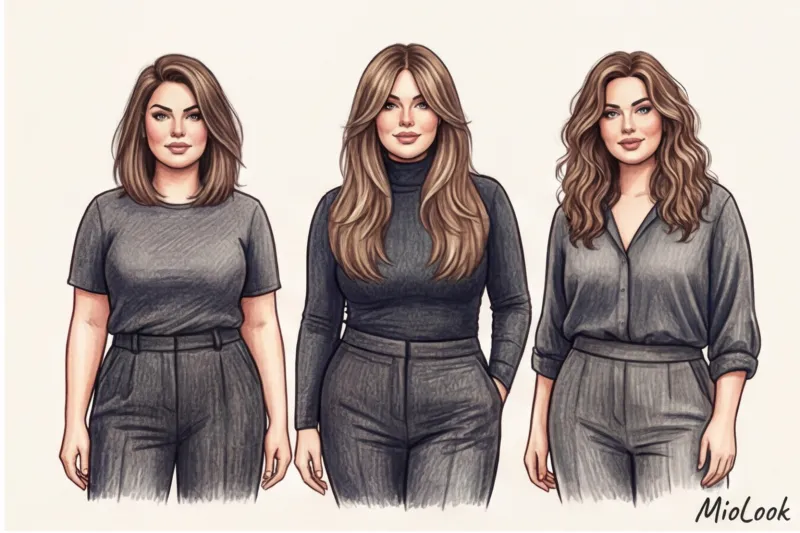
Collarbone-Length Hair (Long Bob): A Versatile Balance
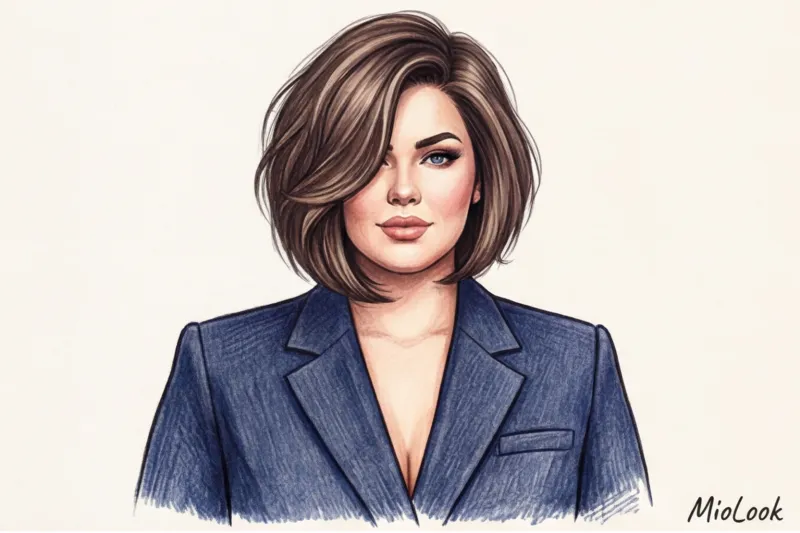
The long bob (or lob) is a true Swiss army knife of haircuts. It's flattering on 95% of plus-size women. But there's a catch: avoid a blunt, straight cut, like a ruler. A straight, tight edge will weigh down the jawline. Ask your stylist to profile or texture the ends so they lay softly and breathe.
Long Hair: How to Avoid the "Heavy Curtain" Effect
If you adore long hair (below the shoulder blades), be careful. Static, perfectly straight strands of the same length act like two heavy curtains on the sides of the face. They physically "pull" the entire silhouette down, grounding the figure and making it appear bulky. The solution? Style the strands near the face with trendy curtain bangs or a soft layered fringe starting at the cheekbones or chin. This breaks up the monolithic volume.
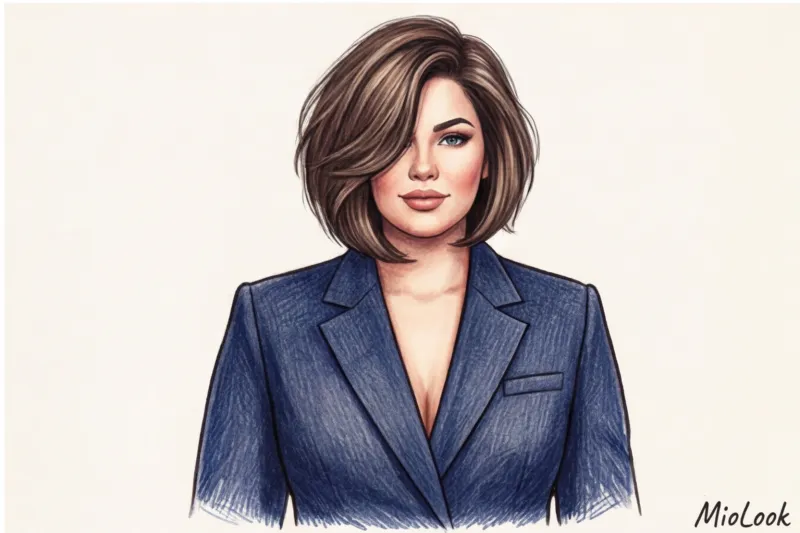
Volume and Texture: How Hair Controls the Visual Weight of the Body
The width of your hairstyle should be in harmony with the width of your hips. This is a basic rule of balance. Sleek, slicked-back hair (like a tight bun) leaves your figure vulnerable. The eye immediately shifts to your body's curves.
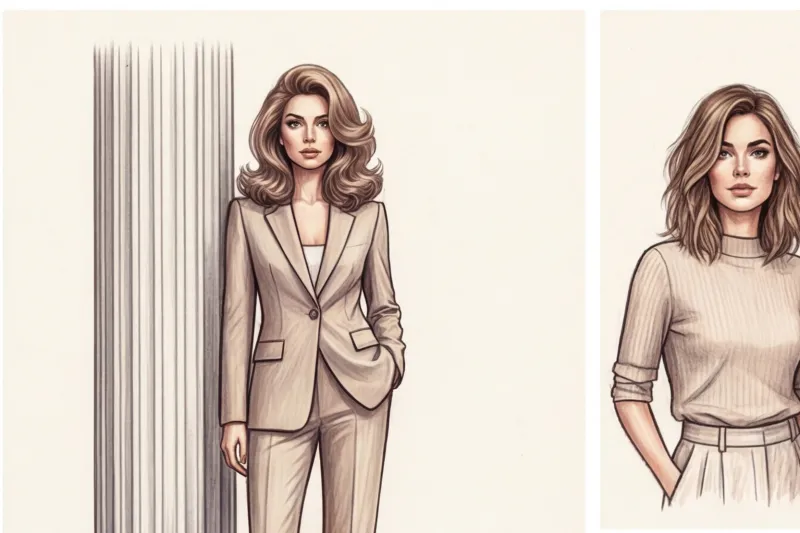
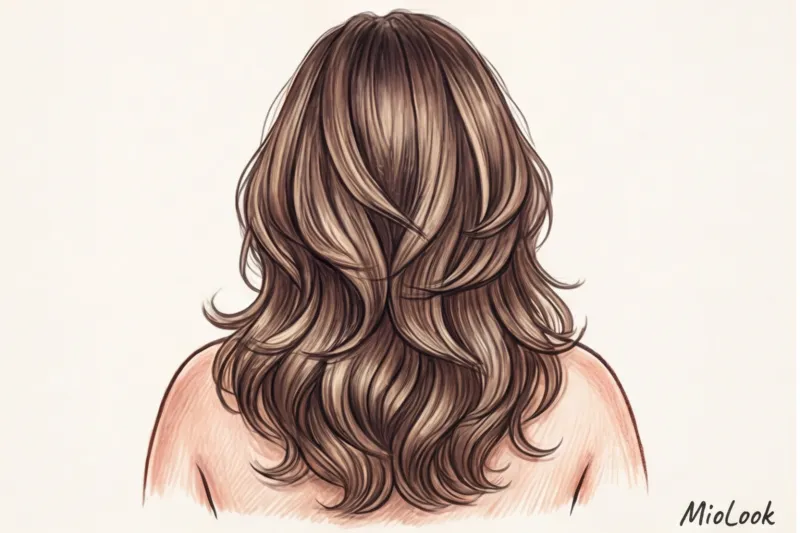
Dynamic texture is our main tool. Light waves, layers, a well-executed cascade, and asymmetry create diagonal lines. To the human eye, a diagonal line always creates a slimming effect and creates dynamism (incidentally, this is why in choosing clothes according to your body type without stereotypes We love wrap dresses so much).
Instead of slathering your hair in hairspray, allow it to move. Air in your hair visually lightens the entire silhouette.
Ready to get started?
Try the MioLook plan for free—no commitments required. Find the perfect haircut from a photo.
Get access — €0.99 onceColor Geometry: How Coloring Enhances the Corrective Effect of a Haircut
A haircut is only half the battle. Color can either enhance your shape or completely ruin it. A solid, deep black or very dark chestnut color without highlights works like a heavy hat. It emphasizes density, weighs down the crown, and accentuates any imperfections.
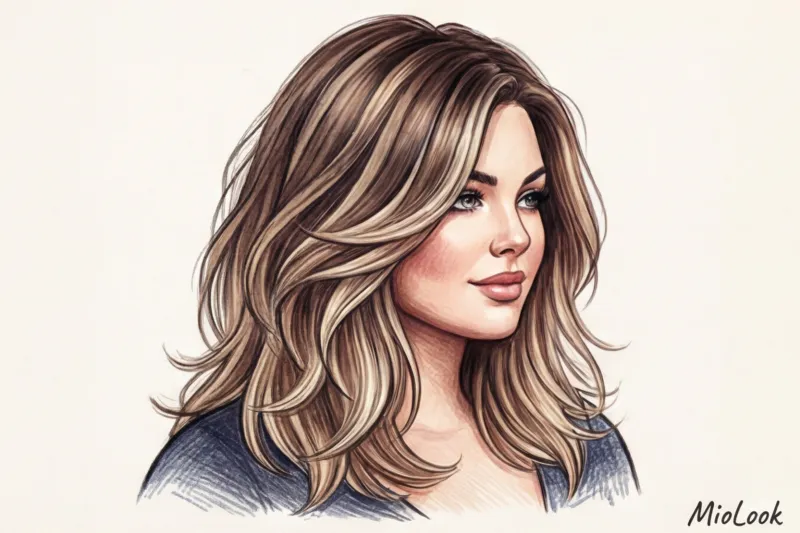
We need 3D volume. Complex coloring techniques like balayage, shatush, or babylights create the illusion of thickness and airiness without the need for old-fashioned backcombing. Light strands near the face (money pieces) act as contouring: they highlight the skin and visually narrow the cheeks.
Yes, a high-quality, complex coloring service at a reputable salon isn't cheap (in Europe, it will cost between €120 and €350), but it's a direct investment in your facial architecture. If you're unsure which highlight palette is right for you, I recommend studying this material. 12 Color Types of Appearance: A Guide to Choosing a Palette.
Checklist before going to the salon: how to explain the task to the stylist
The most common problem women come to me with after a bad salon experience is a communication problem. The hairdresser cut the "head," not the whole woman. Save this checklist for your next post:
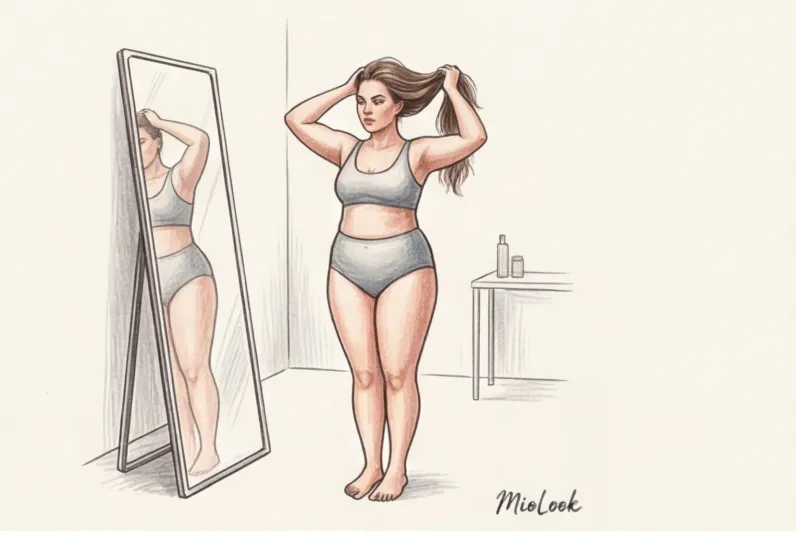
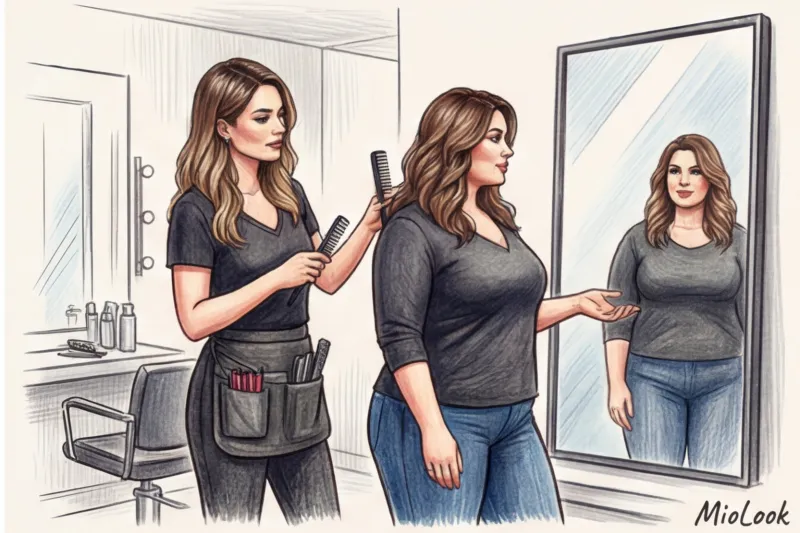
- Get up from your chair. Assess the intermediate results ONLY while standing. Ask the technician to step back a few meters and look at you full-length in a large mirror.
- Don't ask for "just a bob." Point to specific areas: “I need to visually balance my broad shoulders” or “I want to lengthen my neck.”
- Avoid rigid fixation. Strong-hold hairspray will lock in your style, adding heft. Switch to light texturizing sprays and powders for root volume.
If you find it difficult to imagine the result in advance, use the try-on function in MioLook This AI assistant allows you to upload a photo and try out different volumes and textures, so you can go to your stylist with a ready-made, verified reference.
Summary: Your Personal Balance of Shape and Volume
Remember this: your haircut is as important a wardrobe item as a perfectly tailored jacket or expensive shoes. It doesn't exist separately from your body and should work in perfect synergy with your clothes.
Abandon outdated stereotypes about "plus-size hairstyles" that force women to hide behind featureless locks or cut their hair short for the sake of a false slimness. Explore your body structure, and don't be afraid to experiment with texture, subtle casualness, and complex color highlights.
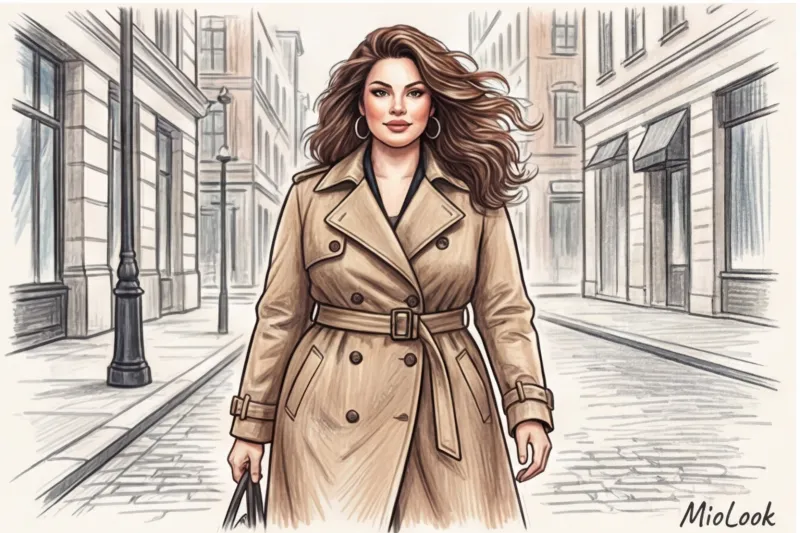
Style doesn't start with the size on the tag, but with the proper distribution of visual weight. Find your balance, and you'll see how not only your reflection changes, but also how you feel about yourself.