Відкрийте свою шафу прямо зараз. Скільки пар осіннього взуття там коштує? Три? П'ять? Дванадцять? А тепер чесно дайте відповідь собі: скільки з них ви одягали за останній дощовий тиждень? За 12 років роботи персональним стилістом та аудиту сотень гардеробів я помітила сувору закономірність. Типова клієнтка володіє в середньому сімома парами демісезонного взуття, але 80% часу носить лише дві улюблені.
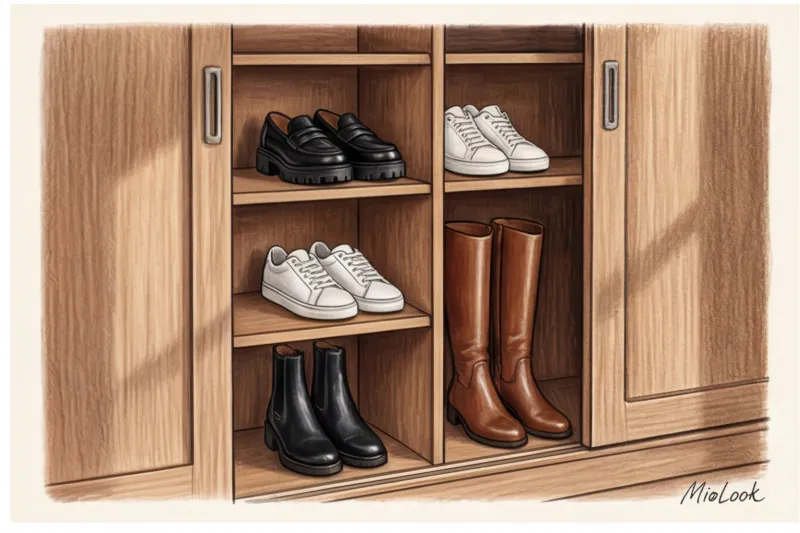
Це не просто моє особисте спостереження. За даними вбудованої аналітики нашої програми MioLook за 2024 рік, жінки регулярно використовують лише п'яту частину свого взуттєвого арсеналу. Решта – імпульсивні покупки, навіяні красивими картинками з глянцю, які зовсім не витримують зіткнення з реальними калюжами, заморозками та гравітацією. Докладніше про те, чому так відбувається і як будується правильна архітектура шафи, ми вже розповідали у нашій повному гіді за базовим гардеробом взуття та створення ідеальної капсули..
Сьогодні ми розберемо, якою має бути по-справжньому базове осіннє взуття жіноче. Я не даватиму вам шаблонних списків із серії «5 пар, які мають бути у кожної». Ми підійдемо до питання як архітектори: через призму клімату, вашого особистого способу життя та законів візуальних пропорцій. І попереджаю одразу: деяким глянцевим міфам доведеться сказати жорстке "ні".
Анатомія ідеальної бази: чому списки з Інтернету не працюють
Глянцеві журнали люблять публікувати універсальні чек-листи. Проблема в тому, що «універсальність» у моді – це міф. База дівчини, яка проходить 10 000 кроків бруківкою старого міста, кардинально відрізняється від бази топ-менеджера, чий маршрут складається з теплого паркінгу, шкіряного салону авто та ковроліну в офісі.
Тут у гру входить концепція «індексу життя». Перш ніж купити нову пару, проаналізуйте свої маршрути, звичний транспорт та навіть якість асфальту у вашому районі. Взуття – це буквально фундамент вашого образу. Якщо фундамент хитається або промокає, ніяке розкішне кашемірове пальто ситуацію не врятує.
Випадок з моєї практики: одна з клієнток кожен вересень купувала 5-7 пар трендового, але абсолютно непрактичного взуття (найтонша шкіряна підошва, замша, текстильні вставки). До листопада ці пари перетворювалися на жалюгідне видовище. Ми кардинально змінили тактику. Проаналізувавши її індекс життя, ми замінили ці сім пар-одноденок на три пари преміальної якості з правильним глибоким протектором. Результат? Бюджет врятований, ранкові збори скоротилися на 15 хвилин, а образи стали виглядати у рази дорожчими.
Спробуйте MioLook безкоштовно
Розумний AI-стиліст проаналізує ваш гардероб та підбере ідеальний образ на кожен день.
Почати безкоштовноРання осінь: жіноче базове взуття для сухого сезону
Перехідний період (коли термометр показує від +10 до +15 градусів) - найпідступніший. Вистрибувати з літніх сандалів відразу в утеплені черевики - значить приректи себе дискомфорт і перегрів. Нам потрібні закриті, але дихаючі моделі, які легко інтегруються у багатошарові образи.
Лофери на потовщеній підошві: сучасна класика
Коли в 1953 Альдо Гуччі представив свої культові лофери з пряжкою-трензелем, вони замислювалися як витончене взуття для розслабленого відпочинку аристократії. Сьогодні тонка підошва в умовах мегаполісу – це естетичний моветон та гарантована застуда.
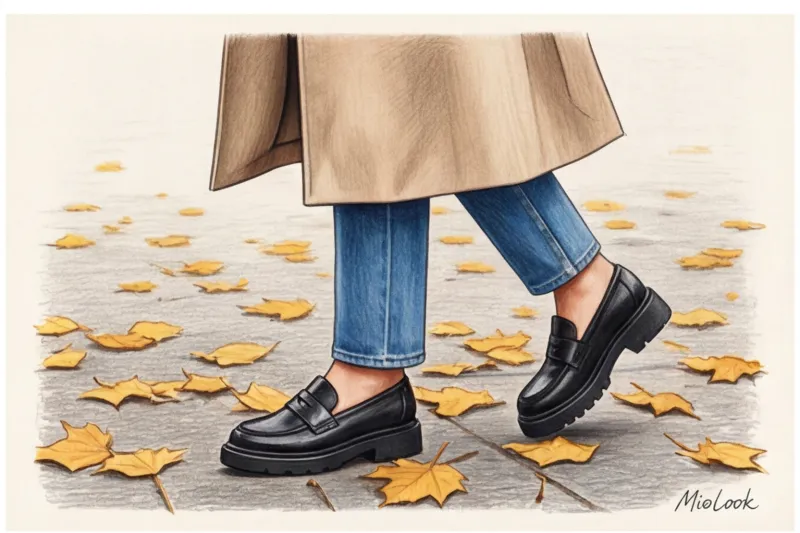
Сучасна база потребує масивності. Потовщена підошва не тільки захищає від холодного асфальту, а й служить відмінним балансиром для об'ємних осінніх тренчів та жакетів із широкими плечима. Із чим їх носити? Майже з усім: від строгих офісних костюмів (що відмінно вписується в смарт кежуал для жінок ) до прямих вінтажних джинсів.
«Головне правило стилізації лоферів восени – жодних капронових слідків. Використовуйте щільні бавовняні шкарпетки: або тон візуального подовження ноги, або контрастні білі або бордові як акцентний мікро-тренд».
Мінімалістичні шкіряні кеди
Помічали, як часто спортивні кросівки бігові дешевшають елегантне вовняне пальто? Поєднувати відвертий спорт із класикою - це прийом, що вимагає феноменальної стилістичної нагляду. Якщо ви не впевнені на 100%, відмовтеся від цієї ідеї.
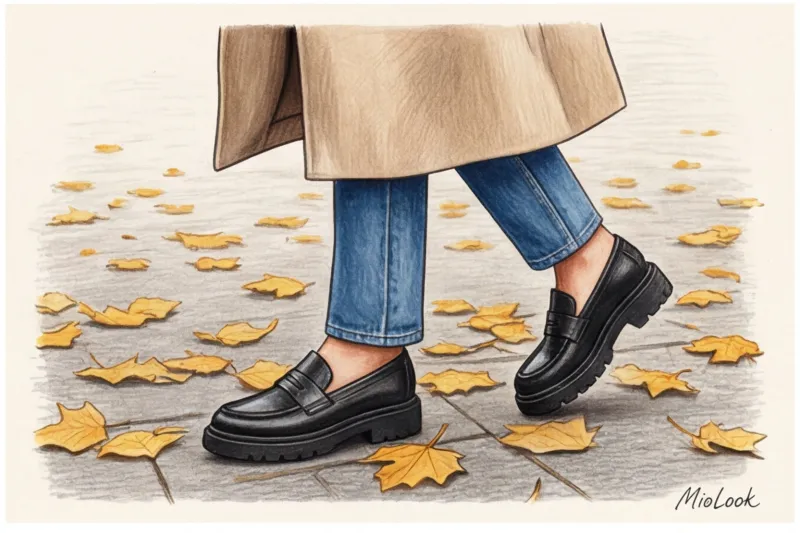
Для базового гардеробу вибирайте мінімалістичні міські кеди із гладкої шкіри. Жодних логотипів на півчеревика, неонових вставок або складних сіток. Чистий білий чи кремовий колір, щільна шкіряна фактура. А щоб біла підошва не стала сірою після першого дощу, заздалегідь обробіть її водовідштовхуючим нано-спреєм і тримайте вдома меламінові губки - вони стирають осінній бруд за секунди.
Глибока осінь: захист від сльоти без втрати стилю
Коли температура знижується від +5 до 0 градусів, правила гри змінюються. За 10 років подорожей на світові Тижні моди я засвоїла один жорстокий урок. Лондон у листопаді не вибачає стилістичних ілюзій. Пам'ятаю, як 2018 року на показах у Сомерсет-хаусі мені довелося назавжди відмовитися від елегантних шкіряних туфель — вони промокли наскрізь за 15 хвилин під дощем, що мрячить. Справжній стрітстайл сьогодні це утилітарність.
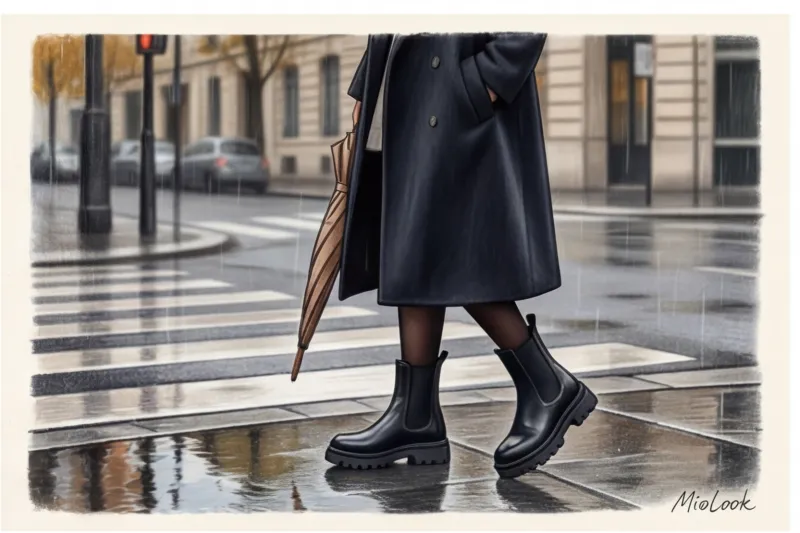
Черевики челсі: міська броня
Спочатку створені взуттьовиком Джозефом Спаркс-Холлом для королеви Вікторії як взуття для верхової їзди, челсі еволюціонували до головної міської уніформи. Їхня суперсила — відсутність шнурків. Еластичні бічні вставки дозволяють надіти їх за секунду, що безцінно рано холодним ранком.
Він криється у висоті халяви. Слідкуйте, щоб край черевика закінчувався на вузькому місці вашої щиколотки. Якщо челсі ріжуть ногу на широкій частині ікри, вони візуально додадуть вам 5 кілограмів і з'їдять зростання. Для суворої осені шукайте моделі з прогумованим мисом (так звані rubber-dipped) - вони буквально не вбиваються.
Жокейські чоботи (Equestrian boots)
Якщо ви відмовляєтеся переходити на штани з настанням холодів, високі чоботи на плоскому ходу – ваша інвестиція номер один. Вони бездоганно «приземлюють» романтичні сукні, що летять, і рятують шовкові міді-спідниці від осіннього вітру.
Як вибрати ідеальну посадку? Використовуйте правило двох пальців. Між вашим стегном і халявою чобота повинно вільно поміщатися два пальці. Занадто щільне облягання, як у панчохи, сьогодні виглядає неактуально, а надто широка халява-труба підходить далеко не кожній фігурі.
Ваш ідеальний образ починається тут
Приєднуйтесь до тисяч користувачів, які щодня виглядають бездоганно з програмою MioLook.
Почати безкоштовноІнвестиції в якість: як вибрати пару, яка переживе листопад
Давайте поговоримо про нудне, але найважливіше — технології та матеріали. Гарний дизайн не зігріє вас у листопаді.
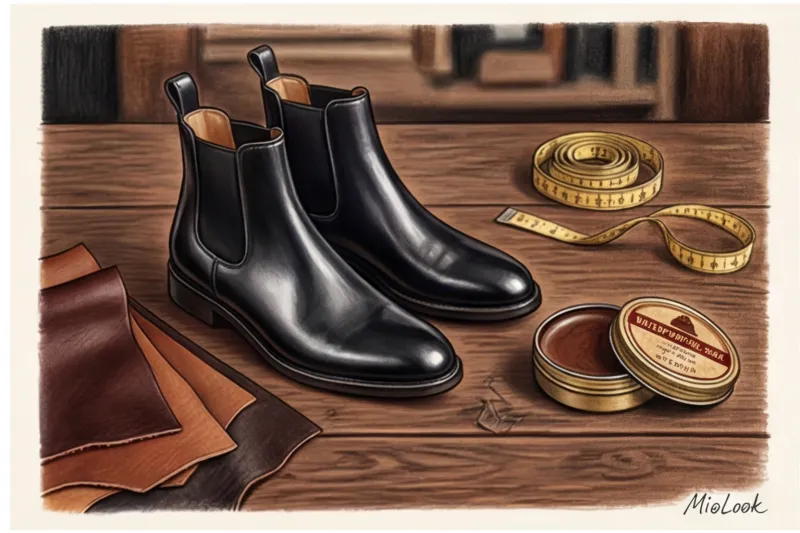
За рекомендаціями Американської асоціації подіатрів (APMA), мінімальна товщина підошви для холодної та сирої землі має становити не менше 1.5–2 сантиметрів. Все, що тонше - це прямий шлях до переохолодження суглобів, хоч би яку теплу устілку ви поклали.
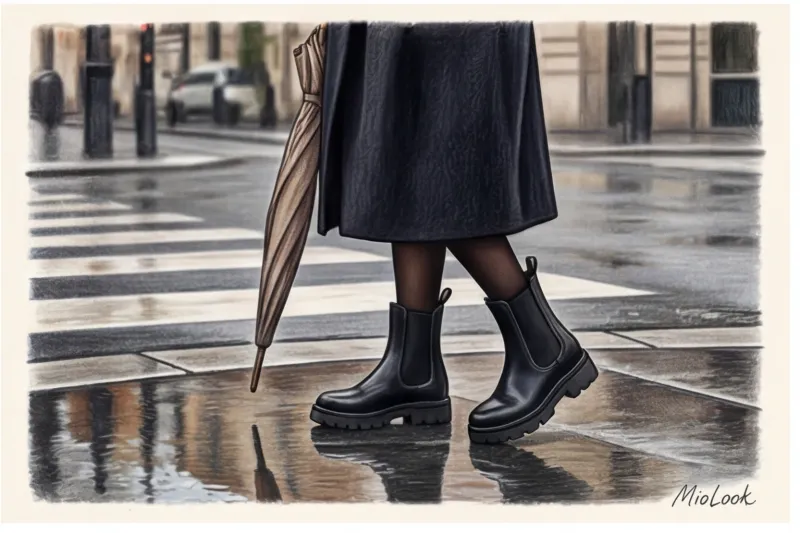
Звертайте увагу на маркування шкіри. Уникайте взуття зі спилка (split leather) з поліуретановим покриттям. При температурі нижче за нуль таке покриття тріскається на згинах буквально за місяць. Шукайте позначку «Full-grain leather» - це цільнозернова шкіра найвищої якості, яка згодом набуває благородної патини.
А тепер контрінтуїтивна рада, з якою часто сперечаються: замшеве взуття не повинно бути вашою першою чи другою базовою парою. Глянець любить рекомендувати замшеві ботильйони кольору кемел для затишних осінніх образів. Але в реаліях нашої сльоти замша – це примхливий матеріал. Справжня основа має витримувати реагенти і калюжі.
При покупці використовуйте формулу Cost per Wear (ціна за вихід). Черевики за 25 000 €, прошити рантовим методом (Goodyear welt), які ви одягнете 150 разів за три сезони, обійдуться вам в 166 € за вихід. Пара зі шкірозамінника на клею за 5 000 €, яка розвалиться через 15 шкарпеток, коштує 333 рублі за вихід. Що із цього справжня економія?
Секрети стиліста: правило «двох подолів» для осіннього взуття
Головний стилістичний біль осені це геометрія довжин. Як поєднувати довжину штанів, висоту черевиків та край пальта так, щоб не виглядати як капуста?
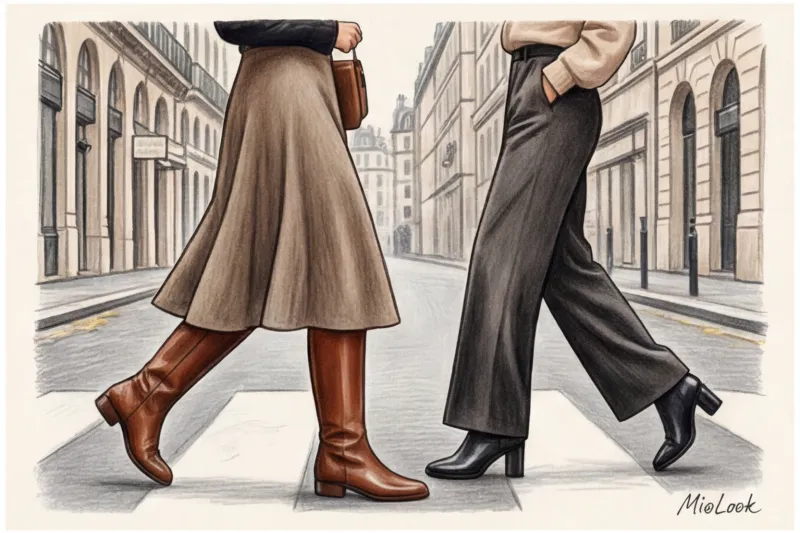
У своїй практиці я використовую жорстке правило «двох підолів». Ваше завдання мінімізувати кількість горизонтальних ліній, які візуально ріжуть фігуру. Ось як це працює на практиці:
- Для спідниць міді: Край пальто повинен перекривати край спідниці, а край спідниці повинен знаходити на халяву високих чобіт. Якщо між краєм спідниці та початком ботильйонів залишається 5 сантиметрів голої ноги – пропорція зламана.
- Для укорочених штанів: Якщо ви носите челсі, штани повинні або злегка торкатися верху черевика, або відкривати не більше 1-2 см. Цей зазор обов'язково перекривається щільними шкарпетками або колготками. Докладніше про цей нюанс ми писали у статті про правила вибору та щільність колготок.
- Для широких штанів (палаццо): Під них категорично не підходить взуття із вузьким, делікатним мисом. Ви виглядатимете так, ніби у вас немає ступнів. Вибирайте масивні лофери або черевики з квадратним або виразним круглим носком, які зможуть утримати об'ємну тканину.
Чек-лист: збираємо вашу особисту капсулу осіннього взуття
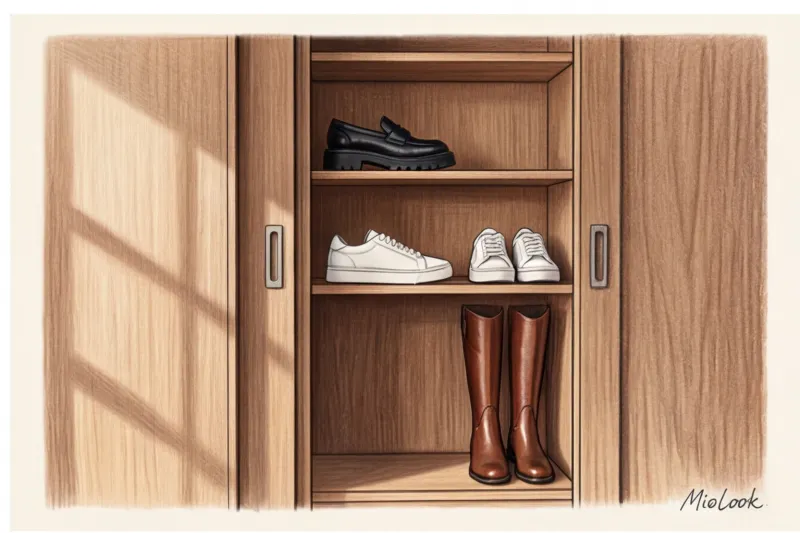
Отже, ми розібрали анатомію бездоганної бази. Щоб назавжди закрити питання «Мені нема з чим це одягнути», я рекомендую спиратися на формулу капсули «3+1». Цього набору достатньо, щоби закрити 95% міських сценаріїв.
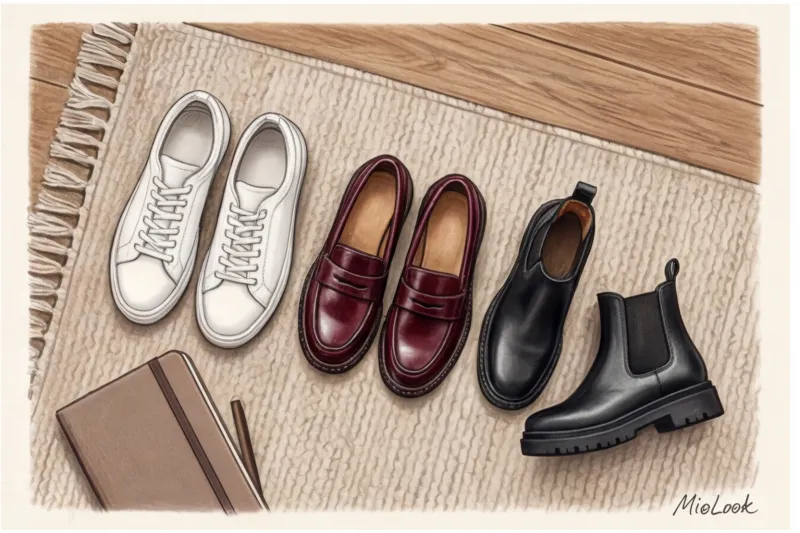
- Одна пара на плоскому ходу для ранньої осені: Шкіряні лофери на потовщеній підошві (для офісу та сухих днів).
- Одна утилітарна пара для негоди: Черевики челсі на глибокому протекторі або шнуровані combat boots (ваша броня від калюж).
- Одна пара для динамічного комфорту: Мінімалістичні світлі кеди із гладкої шкіри.
- "Плюс один" (опціонально, для елегантності): Жокейські чоботи до коліна або лаконічні ботильйони на стійких підборах не вище 5 см, якщо ви часто носите сукні.
Базовий гардероб — це не те, що ви носите у свята. Це те, у чому ви живете щодня. Відмова від імпульсивних покупок на користь вивіреної капсули дарує приголомшливе відчуття контролю над своїм часом. Нехай ваше осіння взуття буде таким же сильним, надійним і впевненим, як і ви самі.
Чи готові почати?
Спробуйте безкоштовний план MioLook без обов'язків. Організуйте свій гардероб та створюйте стильні образи в один клік.
Почати безкоштовно